The Ultimate Puppy Starter Kit: Essential Gear Buyer's Guide
Discover the ultimate puppy starter kit with our expert buyer's guide. Compare top crates, beds, and bowls to prepare your home for a new dog.
Bringing Your New Puppy Home: The Ultimate Buyer's Guide
Welcoming a new puppy into your home is one of the most exciting milestones in life, but it can also be incredibly overwhelming. Walking into a pet supply store or browsing online retailers reveals thousands of products, all claiming to be absolute necessities for your new furry family member. According to the American Kennel Club (AKC), preparing your home before your puppy arrives is crucial for a smooth transition and establishing early routines. However, not all pet products are created equal, and many new owners end up wasting money on overhyped gear that their dogs will never use.
This comprehensive buyer's guide cuts through the marketing noise to help you build the ultimate puppy starter kit. We will explore the specific measurements, materials, and product types you need to ensure your puppy's safety, comfort, and proper development. Whether you are adopting a rescue mix or bringing home a purebred, having the right equipment on day one sets the foundation for a lifetime of good behavior and health.
1. The Crate: Your Puppy's Safe Haven
A crate is not just a tool for house training; it is your puppy's personal sanctuary. The Humane Society of the United States strongly advocates for crate training, noting that it taps into a dog's natural denning instinct while keeping them safe from household hazards when unsupervised. But choosing the right crate requires careful consideration of size, material, and longevity.
Sizing and the Divider Panel Rule
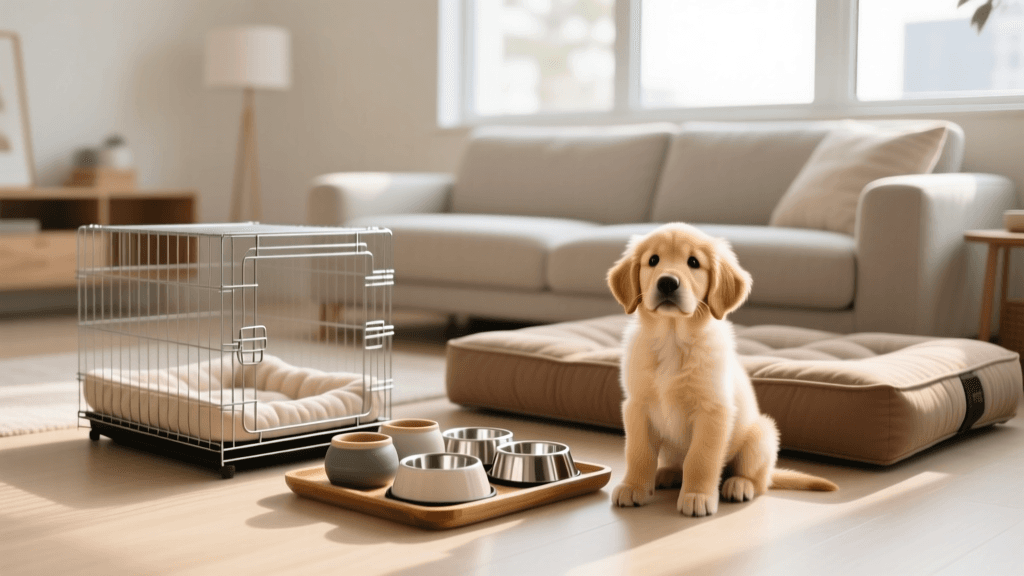
The most common mistake new owners make is buying a crate that is too large. A puppy should have just enough room to stand up, turn around, and lie down comfortably. If the crate is too big, they may use one corner as a bathroom and sleep in the other, completely defeating the purpose of crate training for housebreaking. Look for wire crates that come with an adjustable divider panel, such as the MidWest iCrate or the Frisco Double Door Crate. This allows you to buy a crate sized for your dog's estimated adult weight and expand the space as they grow.
Material Matters: Wire vs. Plastic vs. Soft-Sided
- Wire Crates: Best for puppies and heavy chewers. They offer maximum visibility and ventilation, and the metal construction is highly durable. They also fold flat for easy transport.
- Plastic Crates: Ideal for travel and dogs that prefer a darker, more enclosed den-like environment. However, they offer less ventilation and are harder to clean if accidents occur.
- Soft-Sided Crates: Skip these for puppies. A teething puppy will easily chew through mesh and fabric, creating a choking hazard and an escape artist.
2. Bowls and Enrichment Feeders
Food and water bowls seem like a simple purchase, but the material you choose can impact your puppy's health. Avoid plastic bowls at all costs. Plastic develops micro-scratches over time, which harbor bacteria that can cause canine acne and skin infections on your puppy's chin and muzzle.
The Best Materials for Puppy Bowls
Opt for high-quality stainless steel or heavyweight ceramic. Stainless steel is virtually indestructible, dishwasher safe, and non-porous. Brands like Yeti Boomer or basic stainless options from Chewy or AmazonBasics are excellent choices. For water bowls, ensure the base is weighted or features a non-slip silicone ring to prevent your enthusiastic puppy from spilling water across your hardwood floors.
Enrichment and Slow Feeders
Puppies are notorious for inhaling their food, which can lead to dangerous bloat (gastric dilatation-volvulus) and poor digestion. Incorporating a slow feeder, such as the Outward Hound Fun Feeder Slo Bowl, forces your puppy to use their brain and tongue to extract kibble from maze-like ridges. Additionally, consider a snuffle mat or a KONG Classic stuffed with puppy-safe peanut butter and frozen. These enrichment tools turn mealtime into a mental workout, tiring out your puppy's brain and reducing destructive chewing behaviors.
3. The Right Harness and Leash Combo
Many new owners default to a standard flat collar and a retractable leash, but this combination is highly discouraged by veterinary behaviorists. Puppies have delicate tracheas and neck structures; pulling against a flat collar can cause severe injury and teach them that pulling is the only way to move forward.
Why a Front-Clip Harness is Essential
A well-fitted, front-clip harness is the gold standard for puppy leash training. When a puppy pulls, the front attachment point gently redirects their momentum back toward you, naturally discouraging pulling without causing pain or injury. The Ruffwear Front Range Harness and the 2 Hounds Design Freedom No-Pull Harness are top-tier options that offer both front and back clip points, allowing you to transition as your puppy's leash manners improve.
Ditch the Retractable Leash
Retractable leashes teach dogs to pull to get more slack, offer zero control in emergency situations, and feature thin cords that can cause severe friction burns to your hands or your dog's legs. Instead, invest in a standard 4-foot to 6-foot leather or Biothane leash. Biothane is highly recommended for puppies because it is waterproof, easy to wipe clean after muddy potty breaks, and won't absorb odors like nylon or cotton.
Puppy Crate Comparison Chart
To help you visualize the best confinement options for your specific living situation, refer to the comparison table below:
| Crate Type | Best For | Pros | Cons | Estimated Cost |
|---|---|---|---|---|
| Wire Crate (with Divider) | House training, general home use | Ventilation, visibility, adjustable size, easy to clean | Heavy, can be noisy if puppy shakes it | $40 - $80 |
| Plastic Travel Crate | Air travel, car rides, den-loving dogs | Secure, enclosed feeling, airline approved | Poor ventilation, harder to clean, fixed sizes | $50 - $150 |
| Soft-Sided Crate | Adult, fully trained dogs only | Lightweight, portable, cozy | Easily destroyed by teething puppies, not washable | $30 - $70 |
| Heavy-Duty Aluminum | Severe escape artists, anxiety cases | Virtually indestructible, highly secure | Extremely expensive, very heavy, overkill for most | $400 - $900 |
4. Chew Toys and Teething Relief
Between the ages of 12 weeks and 6 months, your puppy will lose their baby teeth and grow their adult set. This teething phase is notoriously painful, leading puppies to chew on baseboards, shoes, and furniture to find relief. Providing appropriate, safe chew toys is non-negotiable.
Avoid cheap rawhide chews, which are often treated with harsh chemicals and pose a severe intestinal blockage risk. Instead, stock up on natural, single-ingredient chews like bully sticks or Yak cheese chews. For durable, long-lasting play, the KONG Puppy (made from a softer, pink or blue rubber formula designed specifically for developing jaws) is a must-have. You can also freeze damp, twisted washcloths to provide soothing, cold relief for inflamed gums.
Budgeting for Your Puppy Starter Kit
Understanding the financial commitment of dog ownership is a critical part of the decision-making process. According to the ASPCA, the initial setup costs for a dog can range significantly based on the quality of gear you choose, while annual recurring costs must also be factored into your household budget.
Expert Tip: Do not skimp on the essentials like the harness, crate, and food. Investing in high-quality, durable gear upfront will save you money in the long run by preventing replacements and reducing the risk of veterinary bills caused by unsafe products.
Expect to spend between $250 and $450 on your initial puppy starter kit (including crate, bed, harness, leash, bowls, and initial toy assortment). This does not include veterinary costs for initial vaccinations, spay/neuter surgery, and microchipping, which can add an additional $300 to $600 depending on your region and whether you adopt from a rescue that includes these services in their adoption fee.
What to Skip: Overhyped Puppy Products
Saving money is just as important as knowing what to buy. Here are a few popular items you should leave on the store shelf:
- Puppy Pee Pads: Unless you live in a high-rise apartment or have a puppy with a medical condition, avoid pee pads. They teach puppies that it is acceptable to eliminate indoors on soft, rectangular surfaces (which translates to your rugs and bathmats). Take them outside every two hours instead.
- Designer Clothing: While a functional sweater is necessary for short-haired breeds in winter climates, expensive costumes and booties are usually an unnecessary stressor for young puppies who are still getting used to wearing a collar.
- Chemical Stain Removers: Skip generic household cleaners that contain ammonia. Ammonia smells like urine to a dog, which can actually encourage them to re-soil the same spot. Always use an enzymatic cleaner like Nature's Miracle to break down the proteins in pet stains.
Final Thoughts on Preparing for Your Puppy
Building the perfect puppy starter kit is about prioritizing safety, durability, and behavioral development over aesthetics. By investing in a properly sized wire crate, a front-clip harness, stainless steel bowls, and safe enrichment toys, you are setting your new dog up for success from the very first day. Remember that gear is only half the equation; patience, consistency, and positive reinforcement training are the true keys to raising a happy, well-adjusted companion.
hannah-wickes
All our authors care for dogs every day — read more of their work on the authors page.