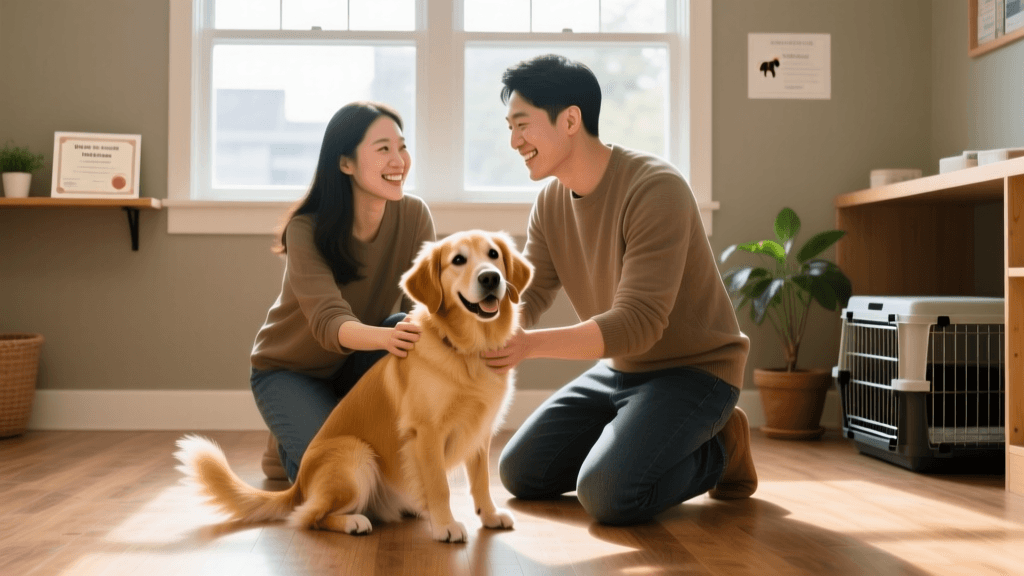
Puppy-Proofing Your Home: A Before and After Guide
Discover the ultimate before and after guide to puppy-proofing your home. Learn costs, essential products, and room-by-room transformations for new dogs.

The 'Before' State: Assessing Your Home's Hidden Dangers
Bringing a new dog home is an exhilarating milestone, but the transition from a human-centric household to a dog-friendly environment requires a critical shift in perspective. Before your new dog arrives, your home is likely filled with hidden hazards that you, as a bipedal adult, effortlessly navigate without a second thought. Electrical cords snake behind entertainment centers, toxic houseplants sit on low pedestals, and cleaning supplies rest under the kitchen sink. To ensure a safe, stress-free integration, we must adopt a 'Before and After' transformation mindset. By viewing your home through the lens of a curious, teething puppy or an anxious rescue dog, you can proactively eliminate dangers and set the stage for a harmonious relationship.
The Living Room Transformation: From Hazard Zone to Haven
Before: The Minefield of Wires and Toxic Foliage
In the 'before' state, the living room is a scavenger's paradise and a safety hazard. Exposed TV and lamp cords run along baseboards, inviting a teething puppy to chew, which risks severe electrical burns or fatal electrocution. Furthermore, popular decorative houseplants like the Monstera Deliciosa, Aloe Vera, and Peace Lily are often placed on low coffee tables or floor stands. According to the ASPCA's comprehensive list of toxic and non-toxic plants, many common indoor plants contain insoluble calcium oxalates or saponins that can cause severe gastrointestinal distress, vomiting, and oral irritation in dogs.
After: A Curated, Dog-Safe Environment
The 'after' transformation focuses on elevation, concealment, and substitution.
- Cable Management: All loose wires are routed through split-loom cable sleeves (such as the Yecaye 10-Foot Cable Management Kit, approx. $15) or secured behind furniture using adhesive cable clips. Any cord that cannot be hidden is treated with a bitterant spray like Grannick's Bitter Apple ($12) to deter chewing.
- Botanical Swaps: Toxic plants are relocated to hanging planters suspended at least 60 inches from the floor, or they are entirely replaced with pet-safe alternatives. Spider plants, Calatheas, and Boston ferns provide the same lush aesthetic without the toxic risk.
- Decor Elevation: Fragile items, remote controls, and children's toys (which can cause fatal intestinal blockages if swallowed) are moved to shelving units that are at least 36 inches off the ground, well beyond the reach of a jumping medium-to-large breed puppy.
Kitchen and Dining: Securing the Scavenger's Paradise
Before: Open Bins and Counter-Surfing Opportunities
Before the transformation, the kitchen poses immense dietary risks. An open or easily nudged trash can exposes dogs to cooked bones (which can splinter and puncture the digestive tract), xylitol-sweetened gum, and allium family scraps (onions and garlic). Furthermore, human medications or vitamins left on the kitchen island are easily mistaken for treats by a foraging dog.
After: Fortified Food Storage and Hygiene
The 'after' kitchen is a fortress of food security.
- Trash Containment: The open bin is replaced with a heavy-duty, locking step can, such as the Simplehuman 13-Gallon Semi-Round Step Can ($80), which features a lockable lid that prevents even the most determined Golden Retrievers from accessing the garbage.
- Cabinet Security: Lower cabinets containing cleaning supplies, dishwasher pods, and toxic foods (like chocolate or macadamia nuts) are fitted with magnetic childproof locks (e.g., Safety 1st Magnetic Locking System, $25). These locks remain invisible from the outside but require a magnetic key to open.
- Hygiene Zones: To prevent cross-contamination and protect both human and canine health, dog bowls are moved to a designated feeding station away from human food prep areas, aligning with hygiene best practices outlined by the Centers for Disease Control and Prevention (CDC) regarding pet care and zoonotic disease prevention.
The Bathroom & Laundry: The Overlooked Danger Zones
Before: Accessible Toiletries and Chemicals
Bathrooms are frequently overlooked during puppy-proofing. Before the transformation, toilet lids are often left up, presenting a drowning hazard for small breeds and a tempting drinking bowl for larger dogs. Laundry detergent pods, often stored in low baskets, look remarkably like chew toys and contain highly concentrated, corrosive chemicals.
After: Locked Down and Dry
The 'after' bathroom is strictly managed. Toilet lids are kept closed at all times, and for households with highly inquisitive puppies, a simple adhesive toilet lid lock ($8) is installed. All laundry supplies are moved to high shelves or locked cabinetry. Furthermore, the bathroom door is equipped with a hook-and-eye latch at the top of the door frame to prevent the dog from pushing the door open and accessing the room unsupervised.
The Yard: Creating a Secure Perimeter
Before: Gaps, Toxic Mulch, and Escape Routes
Before the outdoor transformation, standard wooden privacy fences often have 3-to-5-inch gaps at the bottom due to soil erosion. Garden beds are frequently lined with cocoa bean mulch, which smells like chocolate but is highly toxic to dogs. Swimming pools lack safe exit points for a dog that might accidentally fall in.
After: Dig-Proof Barriers and Safe Landscaping
The 'after' yard is a secure, enriching playground.
- Fencing Upgrades: Gaps under the fence are eliminated by installing an 'L-footer' barrier. This involves attaching heavy-gauge chicken wire to the base of the fence and burying it 12 inches deep, bending it outward in an L-shape to thwart digging breeds like Terriers and Huskies.
- Mulch Substitution: Cocoa mulch is entirely removed and replaced with dog-safe alternatives like cedar or pine bark mulch, which are non-toxic and naturally repel fleas.
- Pool Safety: If a pool is present, a 'Skamper-Ramp' or similar floating escape ramp ($45) is installed on the pool steps, providing a visual and physical exit route for a dog that falls into the water.
Before and After Puppy-Proofing Cost & Product Breakdown
Transforming your home requires an upfront investment, but it pales in comparison to the cost of an emergency veterinary visit. Below is a structured breakdown of the essential 'After' products required for a comprehensive home transformation.
| Room / Area | Transformation Product | Est. Cost | Primary Hazard Prevented |
|---|---|---|---|
| Living Room | Split-Loom Cable Sleeves | $15.00 | Electrocution, wire ingestion |
| Kitchen | Locking Step Trash Can | $80.00 | Toxic food ingestion, bone splinters |
| Kitchen / Bath | Magnetic Cabinet Locks (8-pack) | $25.00 | Chemical poisoning, medication overdose |
| Hallways | Regalo 38.5' Extra Wide Baby Gate | $45.00 | Unsupervised roaming, stair falls |
| Yard | Galvanized Chicken Wire (L-footer) | $35.00 | Escaping, digging under fences |
| Total Estimated Investment | $200.00 |
The First 30 Days: Managing the Behavioral Transformation
Before: Expecting Instinctual Obedience
Before the dog arrives, many new owners operate under the assumption that the dog will instinctively understand the rules of the house, or that verbal corrections like 'No!' will suffice to keep them off the furniture or out of the trash. This mindset inevitably leads to frustration, scolding, and a breakdown in trust during the critical first month.
After: Implementing Management and 'Umbilical' Training
The 'after' mindset recognizes that management precedes training. During the first 30 days, the environment does the heavy lifting. When the dog is not in their crate or a puppy-proofed pen, they are attached to the owner via a 6-foot leash tied to the owner's waist—a technique known as 'umbilical cord training.' This prevents the dog from practicing unwanted behaviors like counter-surfing or chewing baseboards, because they simply cannot reach them. By combining the physical 'After' transformations of your home with strict behavioral management, you remove the opportunity for failure, allowing your new dog to build confidence, trust, and lifelong good habits in their newly transformed, safe haven.
hannah-wickes
All our authors care for dogs every day — read more of their work on the authors page.