Puppy Proofing: Diagnosing Hidden Home Hazards & Fixes
Diagnose hidden household hazards for new dogs and learn practical puppy proofing solutions, costs, and product recommendations to keep your pet safe.
The Diagnostic Approach to Puppy Proofing
Bringing a new dog or puppy into your home is an exhilarating milestone, but it often comes with a hidden set of challenges that new owners fail to anticipate until an accident occurs. Unlike human babies, puppies explore their environment primarily through their mouths, and adult rescue dogs may arrive with unknown anxieties or destructive coping mechanisms. To truly prepare your home, you must adopt a 'Problem Diagnosis and Solutions' mindset. This means walking through your living space not as a human, but from the eye level of a curious, four-legged creature.
According to the American Kennel Club, thousands of pets are treated in emergency veterinary clinics every year for household poisoning and foreign body ingestion. The good news? Nearly all of these incidents are entirely preventable with proactive, strategic puppy proofing. Below, we diagnose the most common hidden hazards in your home and provide exact, actionable solutions, complete with product recommendations, measurements, and estimated costs.
The Living Room: Electrical and Botanical Dangers
Problem 1: Exposed Electrical Cords
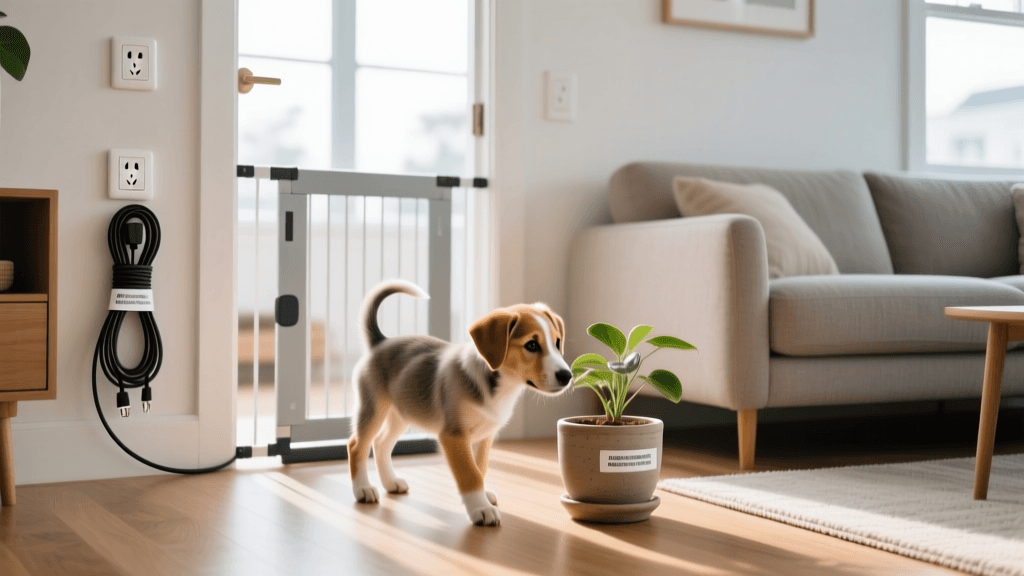
To a teething puppy, a dangling laptop charger or a tangle of TV wires looks remarkably like a chew toy. Biting into a live wire can cause severe oral burns, electrocution, or even fatal cardiac arrhythmias. Taping cords to the wall is a temporary and easily defeated fix.
The Solution: Invest in rigid cord concealers or split loom tubing. Products like the J-Channel Cord Raceway or Alex Tech Cord Protector encase the wires in hard or thick ribbed plastic that is unappealing and difficult to chew. For lamps, use spiral cable wraps. Expect to spend between $15 and $30 per room, and allocate about 45 minutes to measure, cut, and install the raceways along your baseboards.
Problem 2: Toxic Houseplants
Many popular houseplants are highly toxic to dogs. Sago palms, pothos, peace lilies, and aloe vera can cause symptoms ranging from oral irritation to acute liver failure. Dogs may chew on leaves out of boredom or to induce vomiting if they feel unwell.
The Solution: Audit your indoor greenery against the comprehensive database provided by ASPCA Animal Poison Control. Relocate toxic plants to high, inaccessible hanging planters (at least 6 feet off the ground) or gift them to pet-free friends. Replace them with dog-safe alternatives like spider plants, calatheas, or Boston ferns. If you use fertilizers, ensure they are stored in locked cabinets, as bone meal and blood meal are highly attractive to dogs but can cause severe gastrointestinal blockages.
Kitchen and Bathrooms: The Toxicity Zones
Problem 3: Access to Human Foods and Cleaners
The kitchen and bathroom harbor the highest concentration of lethal hazards. Xylitol (an artificial sweetener found in sugar-free gum, peanut butter, and baked goods) is notoriously deadly to dogs, causing rapid hypoglycemia and liver failure. Similarly, bleach, ammonia, and pod-based laundry detergents are frequent culprits in emergency vet visits.
The Solution: Standard childproof latches are often easily nudged open by a determined snout. Instead, install Safety 1st Magnetic Cabinet Locks. These require a magnetic key to open, making them 100% dog-proof while remaining convenient for humans. Cost: roughly $25 for a pack of 12. Additionally, never store human medications or vitamins on the bathroom counter; dogs can easily knock over pill bottles and ingest the contents.
Problem 4: The Open Trash Can
Scavenging is a natural canine instinct. An open or easily tipped trash can is an invitation to ingest cooked bones (which splinter and puncture intestines), coffee grounds, or toxic food scraps like onions and grapes.
The Solution: Upgrade to a heavy-duty, step-on trash can with a secure, locking lid. The Simplehuman Step Trash Can (priced around $100-$150) features a weighted base and a lid that cannot be pried open by paws. Alternatively, mount your trash can inside a lower cabinet secured with the aforementioned magnetic locks.
Outdoor Spaces: Escape and Ingestion Risks
Problem 5: Fence Gaps and Toxic Mulch
Before letting your new dog into the yard, you must diagnose the perimeter. Furthermore, many homeowners use cocoa bean mulch in their garden beds. Because it smells like chocolate, dogs will eat it, leading to theobromine poisoning.
The Solution: Apply the '4-Inch Sphere Rule.' Walk your entire fence line with a 4-inch diameter ball or measuring tape. If a gap under or between fence boards is larger than 4 inches, a small-to-medium dog can escape or get their head stuck. Use galvanized hardware cloth or chicken wire, secured with heavy-duty landscape staples, to seal the bottom 12 inches of the fence. Replace cocoa mulch with pet-safe cedar or pine mulch. The Humane Society of the United States heavily emphasizes perimeter checks as the first line of defense against lost pets.
Puppy Proofing Product & Cost Comparison
To help you budget and plan your weekend of preparation, refer to the diagnostic solutions table below:
| Hazard Category | Product Solution | Estimated Cost | Time to Install |
|---|---|---|---|
| Electrical Cords | J-Channel Cord Raceway | $15 - $25 | 45 mins / room |
| Lower Cabinets | Magnetic Cabinet Locks | $25 (12-pack) | 2 hours (whole house) |
| Trash Scavenging | Weighted Step-On Trash Can | $100 - $150 | Immediate |
| Fence Gaps | Hardware Cloth & Landscape Staples | $30 - $50 | 1 - 2 hours |
| Room Access | Pressure-Mounted Baby Gate (30' tall) | $40 - $60 | 10 mins |
The Ultimate Solution: Creating a 'Safe Zone'
The most common mistake new owners make is giving a new dog full access to the entire house on day one. This leads to sensory overload, anxiety, and inevitable destructive behavior. The ultimate solution to undocumented hazards is space management.
Set up a designated 'Safe Zone' or decompression area. This should be a quiet room or a sectioned-off area using a sturdy gate like the Regalo Easy Step Walk Thru Baby Gate (ensure it is at least 30 inches tall to prevent jumping). Inside this zone, place a properly sized crate (the dog should be able to stand up and turn around, but not have enough extra space to soil one corner and sleep in the other), a washable bed, and safe chew toys like Kongs stuffed with frozen pumpkin.
'Gradual introduction to the home is critical. A puppy or rescue dog does not understand the rules of your house. By restricting space and slowly expanding their boundaries as they prove trustworthy, you prevent the formation of bad habits and keep them out of unseen danger.' - Canine Behavioral Experts.
Final Thoughts on Proactive Ownership
Getting a dog requires shifting your perspective from reactive cleanup to proactive diagnosis. By spending a weekend identifying chewing hazards, securing toxins, and establishing a secure safe zone, you are not just protecting your belongings—you are safeguarding your new best friend's life. Invest the time and the modest financial cost into proper puppy proofing, and you will enjoy a stress-free transition into dog ownership.
aaron-whyte
All our authors care for dogs every day — read more of their work on the authors page.