The Ultimate Step-by-Step Puppy Potty Training Guide
Master puppy potty training with our step-by-step guide. Learn schedules, crate tips, and accident cleanup for a stress-free housebreaking experience.
Introduction to Puppy Potty Training
Bringing a new puppy home is an exhilarating experience, but it quickly becomes apparent that housebreaking is one of the most daunting challenges for new dog owners. Puppies do not instinctively know where they are supposed to eliminate, and their tiny bladders require frequent, scheduled trips outdoors. According to the American Kennel Club (AKC), consistency, patience, and positive reinforcement are the foundational pillars of successful potty training. This comprehensive, step-by-step guide will walk you through the exact methodologies, schedules, and products you need to housebreak your puppy efficiently and humanely.
Essential Supplies for Housebreaking Success
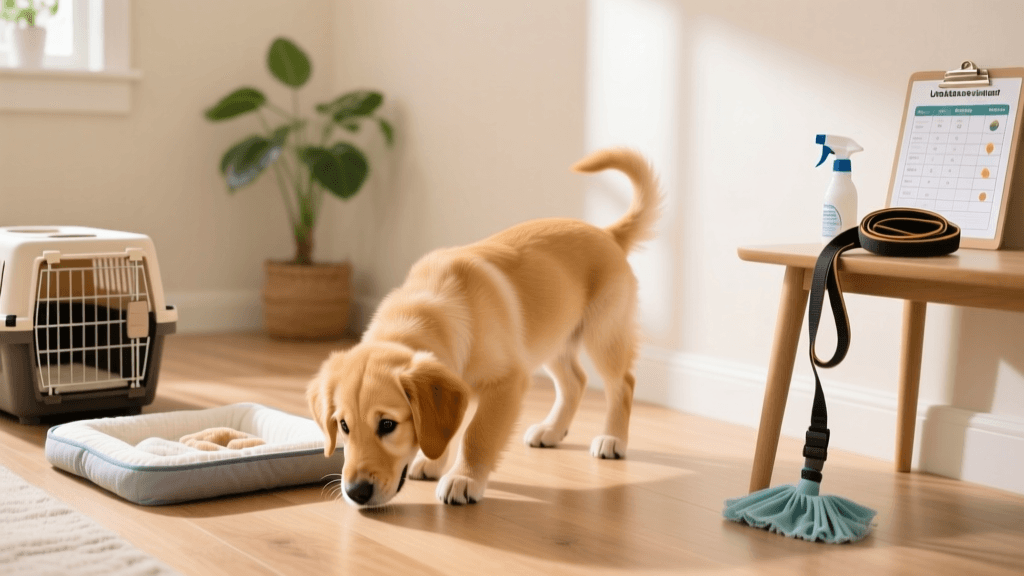
Before you begin your training journey, you must gather the right tools. Having the proper supplies on hand eliminates excuses and ensures you are prepared for every potty break and inevitable accident. Below is a breakdown of the essential items, their specific purposes, and estimated costs to help you budget accordingly.
| Item | Purpose | Recommended Brand/Type | Estimated Cost |
|---|---|---|---|
| Enzymatic Cleaner | Breaks down uric acid crystals to prevent repeat offenses | Nature’s Miracle Advanced or Rocco & Roxie | $15 - $25 |
| High-Value Treats | Immediate positive reinforcement for outdoor elimination | Zuke’s Mini Naturals or boiled chicken | $8 - $15 |
| Properly Sized Crate | Leverages a dog's natural den instinct to hold bladder | MidWest Homes for Pets (with divider) | $40 - $80 |
| Long Training Lead | Keeps puppy focused in the designated potty area | 15-foot cotton or biothane leash | $15 - $30 |
| Poop Bags & Holder | Hygienic cleanup and environmental responsibility | Earth Rated unscented bags | $10 - $15 |
The Step-by-Step Potty Training Method
Potty training is not about teaching a puppy to simply hold it; it is about teaching them where it is appropriate to go. Follow these four steps meticulously to build a lifelong habit.
Step 1: Establish a Strict Potty Schedule
Puppies thrive on routine. A general rule of thumb endorsed by veterinarians is that a puppy can hold their bladder for one hour per month of age, up to a maximum of about eight hours for adult dogs. However, during active training, you should take them out far more frequently than their maximum capacity to guarantee success. Take your puppy outside during these critical windows:
- Immediately upon waking up from a nap or nighttime sleep
- Within 15 to 30 minutes after eating a meal or drinking a large amount of water
- After a vigorous play session or training exercise
- Right before being placed in the crate for the night
Step 2: Choose and Prepare the Potty Spot
Select a specific outdoor area that will serve as your puppy’s designated bathroom. The scent of previous eliminations will act as a natural trigger, encouraging them to go again. When you take your puppy outside, use a 15-foot training lead rather than a standard 6-foot leash. This gives them enough room to sniff and circle, which are necessary pre-elimination behaviors, while keeping them safely contained in the correct zone.
Step 3: Use a Consistent Cue Word
As your puppy begins to sniff and circle, introduce a verbal cue such as 'go potty,' 'do your business,' or 'hurry up.' Say the phrase calmly and consistently every single time they are in the act of eliminating. Over time, classical conditioning will take over, and you will be able to use this cue word to prompt your dog to eliminate on command—a lifesaver during rainstorms or late-night bathroom breaks.
Step 4: Reward Immediately and Lavishly
Timing is everything. You must deliver the reward within one to two seconds of your puppy finishing their business. Do not wait until you are back inside the house, as the puppy will associate the reward with coming indoors, not with eliminating outside. Keep high-value treats, like small pieces of boiled chicken or Zuke's Mini Naturals, in your pocket. Pair the treat with enthusiastic verbal praise. According to the ASPCA, positive reinforcement creates a strong psychological association that accelerates the learning process far better than punishment.
Puppy Potty Training Schedule by Age
To set your puppy up for success, you must align your expectations with their physiological development. The following table outlines the maximum time a puppy can comfortably hold their bladder and the recommended frequency for scheduled potty breaks during the active housebreaking phase.
| Puppy Age | Max Bladder Hold Time | Daytime Potty Break Frequency | Nighttime Potty Breaks |
|---|---|---|---|
| 8 - 10 Weeks | 1 - 2 Hours | Every 1 Hour | 2 - 3 Times |
| 11 - 14 Weeks | 2 - 3 Hours | Every 2 Hours | 1 - 2 Times |
| 15 - 18 Weeks | 3 - 4 Hours | Every 3 Hours | 0 - 1 Time |
| 19 - 24 Weeks | 4 - 5 Hours | Every 4 Hours | Usually 0 |
| 6+ Months | 6+ Hours | Every 4 - 6 Hours | 0 |
Note: These are guidelines. Smaller breeds, such as Chihuahuas or Yorkshire Terriers, have significantly smaller bladders and higher metabolisms, requiring more frequent trips outside than larger breeds like Labrador Retrievers.
Integrating Crate Training for Potty Success
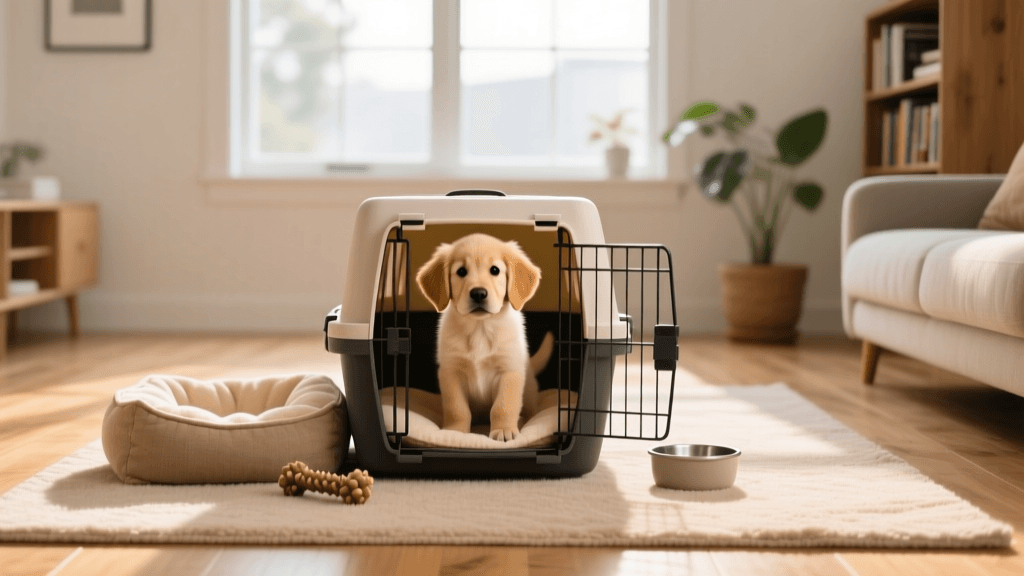
Crate training is arguably the most effective tool for housebreaking. Dogs possess a natural den instinct and will avoid soiling their sleeping area if the crate is sized correctly. If the crate is too large, the puppy may designate one corner as a bedroom and the opposite corner as a bathroom. Always use a wire crate with an adjustable divider panel. The space should be just large enough for the puppy to stand up, turn around, and lie down comfortably.
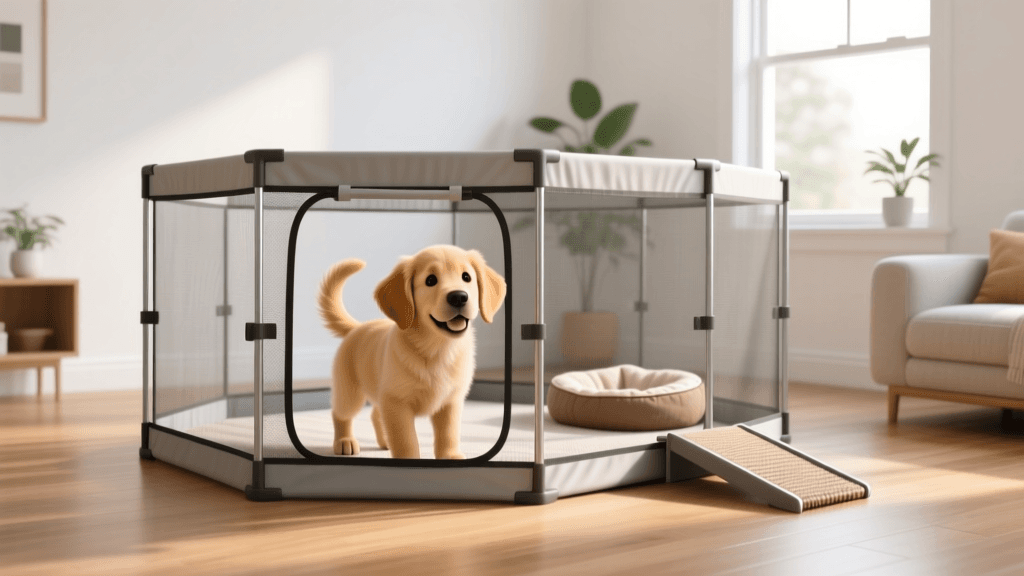
When you cannot actively supervise your puppy—meaning your eyes are not physically on them—they must be in their crate or a secure exercise pen. Unsupervised freedom is the leading cause of potty training regression. If you are cooking, showering, or working, place the puppy in the crate to prevent hidden accidents behind furniture.
How to Handle Accidents Properly
Accidents are an inevitable part of the process. How you react to them will dictate how quickly your puppy learns. If you catch your puppy in the act of eliminating indoors, clap your hands loudly once to interrupt the behavior, scoop them up, and immediately carry them outside to their designated spot to finish. Praise them if they finish outside.
If you find an accident after the fact, do absolutely nothing to the puppy.
'Dogs do not possess the cognitive ability to connect a past action with a present punishment. Rubbing a puppy's nose in their waste will only teach them that eliminating in front of you is dangerous.'
This leads to sneaky behavior, where the dog will hide behind sofas or under beds to do their business. Instead, focus entirely on the cleanup. Standard household cleaners and ammonia-based products will not eliminate the uric acid crystals left behind in carpet fibers. You must use a high-quality enzymatic cleaner, saturating the area and allowing it to dry naturally. As noted by the Humane Society of the United States, thorough enzymatic cleaning is critical because any lingering scent will act as a beacon, inviting the puppy to soil the exact same spot again.
Troubleshooting Common Potty Training Issues
Submissive or Excitement Urination
If your puppy leaks small amounts of urine when greeting you or when being scolded, this is likely submissive or excitement urination, not a potty training failure. This is an involuntary physiological response common in young dogs. To manage this, keep greetings incredibly calm and low-key. Ignore the puppy for the first few minutes upon entering the house, and take them outside immediately before engaging in affectionate play.
Refusal to Eliminate Outside
Some puppies become so overstimulated by the sights, sounds, and smells of the outdoors that they forget to go potty, only to have an accident five minutes after returning inside. If this happens, take the puppy outside on a leash. If they do not go within five minutes, bring them back inside and immediately place them in their crate for ten minutes. After the ten minutes are up, take them right back outside. Repeat this cycle until they eliminate, at which point they earn the reward and supervised playtime.
Final Thoughts on Housebreaking
Potty training a puppy is a marathon, not a sprint. It requires immense patience, a rigorous schedule, and a commitment to positive reinforcement. By utilizing a properly sized crate, adhering to an age-appropriate potty schedule, and utilizing enzymatic cleaners for accidents, you will establish clear boundaries and expectations. Remember that every puppy learns at their own pace. Celebrate the small victories, maintain your consistency, and soon enough, your furry companion will be fully and reliably housebroken.
tom-renshaw
All our authors care for dogs every day — read more of their work on the authors page.