Best Puppy Breeds for First Time Owners: Care Guide
Discover the best puppy breeds for first-time owners. Compare early care needs, potty training ease, and socialization tips for a smooth first year.
Why Breed Selection Dictates Your First-Year Workload
Bringing a puppy home is a monumental milestone, but the first year of a dog's life is fraught with developmental challenges, sleepless nights, and rigorous training schedules. For first-time owners, the margin for error is slim. While many novices choose a breed based purely on aesthetics or pop-culture popularity, the true deciding factor should be the breed's early care requirements. Potty training speed, teething intensity, and early socialization needs vary drastically across different breeds. Selecting a forgiving, adaptable breed can mean the difference between a harmonious household and a stressful, overwhelming experience. This guide breaks down the best puppy breeds for first-time owners from a strict, practical care perspective, helping you prepare for the realities of the first twelve months.
Top 5 Forgiving Breeds for Novice Puppy Parents
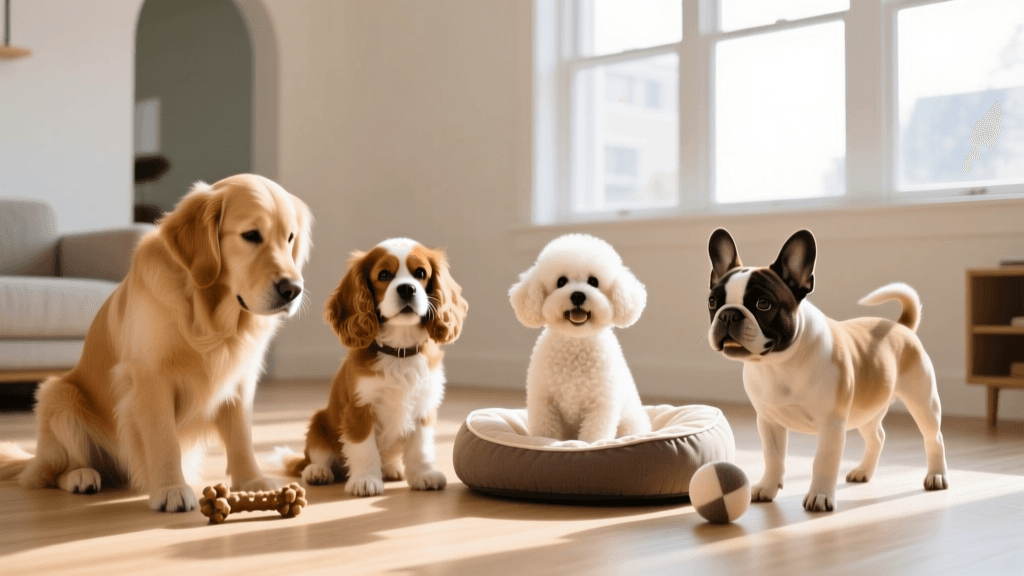
When evaluating breeds for novice owners, veterinary behaviorists and professional trainers look for high 'biddability' (eagerness to please), moderate energy levels, and a resilient temperament. Here are the top five breeds that offer a smoother first-year care experience:
- Golden Retriever: Eager to please and highly food-motivated, making potty training straightforward. However, they are notorious for being highly 'mouthy' during the teething phase, requiring constant redirection.
- Labrador Retriever: Similar to Goldens but with slightly higher energy. They excel in obedience training but require strict nap schedules and crate training to prevent overtired, destructive biting.
- Cavalier King Charles Spaniel: Gentle, lower-energy, and highly adaptable to apartment living. Their smaller bladder capacity requires more frequent potty breaks, but their sweet nature makes training a joy.
- Bichon Frise: A fantastic hypoallergenic option. While their coat requires professional grooming every 4-6 weeks, their cheerful disposition and moderate exercise needs make them excellent companions for busy novices.
- Standard Poodle: Exceptionally intelligent and easy to house-train. They require intense mental stimulation and puzzle toys to prevent destructive chewing during their first year, but their willingness to learn is unmatched.
First-Year Care Comparison Chart
Understanding the financial and temporal investments required for different breeds is crucial. The table below compares the top five breeds across essential first-year care metrics.
| Breed | Potty Training Speed | Teething Intensity | Socialization Needs | Est. First-Year Care Cost |
|---|---|---|---|---|
| Golden Retriever | Fast (4-6 months) | High (Very Mouthy) | High | $1,500 - $2,000 |
| Labrador Retriever | Fast (4-6 months) | High (Very Mouthy) | High | $1,500 - $2,000 |
| Cavalier King Charles | Moderate (6-8 months) | Low | Moderate | $1,200 - $1,800 |
| Bichon Frise | Slow (8-10 months) | Moderate | Moderate | $1,800 - $2,500 |
| Standard Poodle | Fast (4-6 months) | Moderate | High | $1,600 - $2,200 |
Potty Training: Breed Differences and Schedules
Housebreaking is often the most stressful aspect of early puppy care. According to the American Kennel Club, consistency and positive reinforcement are the bedrocks of successful potty training. However, breed physiology plays a massive role. Large breeds like Golden Retrievers and Standard Poodles develop bladder control faster than small breeds like the Cavalier King Charles Spaniel or Bichon Frise.
A general rule of thumb for bladder capacity is your puppy's age in months plus one. For example, a three-month-old Labrador can hold its bladder for roughly four hours. However, during active play, this window shrinks dramatically. First-time owners should invest heavily in high-quality enzymatic cleaners like Nature's Miracle (approximately $12-$15 per bottle) to completely eliminate uric acid crystals, preventing the puppy from returning to the same spot. For smaller breeds, consider indoor grass patches or pee-pad training as a bridge during the winter months or if you live in a high-rise apartment.
Teething Intensity and Bite Inhibition
Puppies have 28 deciduous (baby) teeth that begin erupting at three weeks, eventually making way for 42 adult teeth by six months of age. The AKC veterinary guidelines on teething note that this process causes significant gum discomfort, leading to an instinctual need to chew. Retriever breeds, originally bred to carry waterfowl, are genetically predisposed to 'mouthiness.' They will carry socks, hands, and furniture in their mouths well past the teething phase.
To manage this, novice owners must proactively stock up on appropriate chew outlets. The KONG Classic ($15-$20) stuffed with frozen peanut butter and kibble is essential for soothing inflamed gums. Nylabone Puppy Chews ($8-$10) offer a safe alternative to baseboards and shoes. Furthermore, teaching 'bite inhibition'—the ability to control the force of a mouthing bite—is critical before 16 weeks of age. When a puppy bites too hard, emit a high-pitched yelp and withdraw attention for 10 seconds to mimic littermate behavior.
Early Socialization: The Critical Window
Socialization is not merely about playing with other dogs; it is about exposing your puppy to novel sights, sounds, surfaces, and handling in a positive manner. The ASPCA emphasizes that the primary socialization window closes between 12 and 14 weeks of age. Missing this window can result in lifelong fear-based reactivity or anxiety.
First-time owners often make the mistake of isolating their puppies until all vaccinations are complete (usually around 16 weeks). While disease prevention is vital, behavioral euthanasia due to poor socialization is a leading cause of young dog mortality. Carry your puppy in a sling or backpack through busy shopping centers, expose them to the sound of vacuums, and let them walk on grates, grass, and gravel. Enroll in a reputable puppy kindergarten class (typically $150-$250 for a six-week course) where the training facility requires proof of at least the first DHPP vaccine and enforces strict sanitation protocols.
Your Actionable First-Year Care Timeline
To ensure you are prepared for every developmental milestone, follow this actionable timeline and budget accordingly:
- 8 Weeks (The Homecoming): Schedule a comprehensive veterinary wellness exam. Administer the first DHPP vaccine and start a broad-spectrum dewormer. Budget $100-$200 for this initial visit. Begin crate training immediately, keeping the crate in your bedroom to reduce nighttime separation anxiety.
- 12 Weeks (The Sponge Phase): Administer the second DHPP booster. This is the peak time for cognitive development. Start teaching basic cues like 'sit,' 'down,' and 'touch.' Introduce handling exercises, gently touching their paws, ears, and mouth to prepare them for future grooming and veterinary care.
- 16 Weeks (The Milestone): Administer the final DHPP booster and the Rabies vaccine. Consult with your veterinarian regarding spaying or neutering. For large breeds like Golden Retrievers, vets often recommend delaying the procedure until 12-18 months to allow for proper joint and growth plate development.
- 6 Months (The Adolescent Shift): Teething concludes, but adolescence brings a surge in hormones and a temporary 'forgetfulness' of previously learned commands. Revert to basic training, increase physical exercise, and transition small breeds to adult food, while keeping large breeds on a high-quality large-breed puppy formula until they are 12-18 months old.
By selecting a breed that aligns with your lifestyle and adhering to a structured, proactive care schedule, you will lay the foundation for a well-adjusted, healthy, and deeply bonded adult dog.
hannah-wickes
All our authors care for dogs every day — read more of their work on the authors page.