7 Puppy Potty Training Mistakes to Avoid for Quick Success
Avoid these common puppy potty training mistakes. Learn the right schedule, crate sizing, and cleaning tips to housebreak your pup fast.
Introduction to Housebreaking Hurdles
Bringing a new puppy home is an exhilarating experience, but the honeymoon phase often ends the moment you discover a puddle on your favorite rug. Potty training is arguably the most frustrating hurdle of the first year, yet it is entirely manageable when approached with patience and strategy. Unfortunately, many well-meaning owners inadvertently sabotage their progress by falling into common behavioral and environmental traps. According to the American Kennel Club (AKC), consistency and positive reinforcement are the bedrock of successful housebreaking. In this guide, we will explore the most frequent puppy potty training mistakes and provide actionable, measurable solutions to set your pup up for lifelong success.
Mistake 1: Granting Too Much Freedom Too Soon
One of the most critical errors new owners make is allowing a young puppy free roam of the house. Puppies do not inherently understand that the carpet in the living room is functionally the same as the grass outside. When given too much space, they will simply find a quiet corner to relieve themselves, often out of your sight.
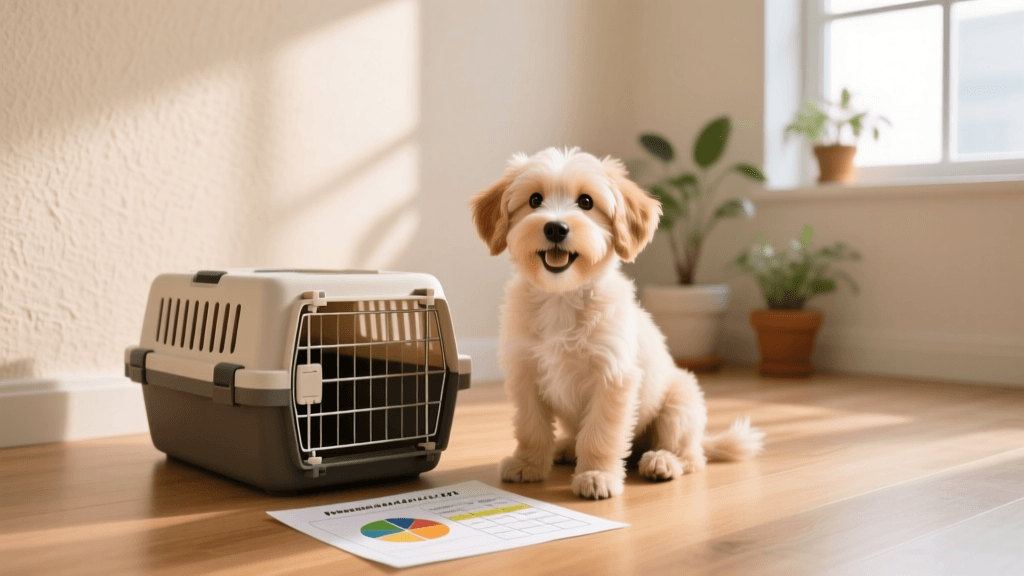
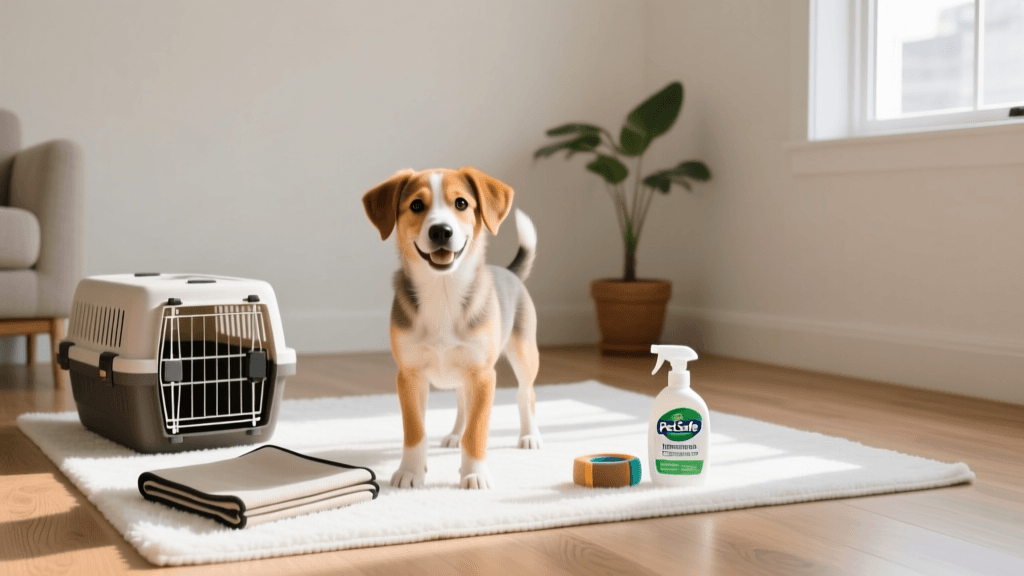
The Fix: Implement strict spatial management. When you cannot actively supervise your puppy with your eyes on them, they should be confined. Invest in a high-quality crate, such as the MidWest Homes for Pets iCrate ($50–$80), which features a divider panel. The crate should only be large enough for the puppy to stand up, turn around, and lie down comfortably. If it is too large, they will use one corner as a bathroom and sleep in the other. For times when you are home but distracted, use a wire exercise playpen ($40–$60) or practice 'tethering'—leashing the puppy to your belt loop so they cannot wander off to have an accident.
Mistake 2: Punishing Accidents After the Fact
Coming home to a mess and immediately scolding your puppy, rubbing their nose in it, or yelling is not only ineffective; it is deeply counterproductive. Canine cognition does not allow a puppy to connect a punishment with an action that occurred even two minutes ago. Instead, the puppy learns that you are unpredictable and that eliminating in front of you is dangerous, leading them to hide behind furniture to potty.
The Fix: You can only correct a puppy if you catch them in the act. If you see them squatting, clap your hands loudly or say a firm 'Oops!' to interrupt the flow, then immediately scoop them up and carry them outside to finish. If you find an accident after the fact, silently clean it up. The Humane Society of the United States emphasizes that positive reinforcement for outdoor elimination is vastly superior to punishment for indoor mistakes.
Mistake 3: Using the Wrong Cleaning Products
Standard household cleaners, especially those containing ammonia or bleach, are a massive potty training liability. Ammonia smells remarkably like urea (a component of dog urine) to a canine's highly sensitive olfactory system. If you clean an accident with an ammonia-based product, you are essentially leaving a biological signpost that tells your puppy, 'This is the designated bathroom spot.'
The Fix: You must use a dedicated enzymatic cleaner that breaks down the uric acid crystals at a molecular level. Top-tier options include Nature’s Miracle Advanced Stain & Odor Eliminator ($15) or Rocco & Roxie Professional Strength Stain & Odor Remover ($20). Application tip: Do not just spray the surface. Saturate the area so the enzyme reaches the carpet pad, let it sit for 10 to 15 minutes, blot it with a towel, and allow it to air dry completely.
Mistake 4: Relying on Puppy Pads as a Crutch
While indoor potty pads seem like a convenient solution for apartment dwellers or winter months, they often cause severe confusion. Pads teach a puppy that it is acceptable to eliminate on soft, absorbent surfaces indoors. This frequently translates to the puppy mistaking your bathroom rugs, doormats, or even pile carpets for potty pads. Furthermore, the ongoing cost of pads (roughly $25–$35 per month) adds up quickly compared to free outdoor training.
The Fix: Unless you have a specific medical or high-rise logistical necessity, skip the pads and train directly to the outdoors. If you must use them temporarily, place them in a confined playpen area and gradually move the pad closer to the door, and eventually outside, to transition the behavior to the grass.
Mistake 5: Ignoring the 'Post-Activity' Triggers
Puppies operate on highly predictable biological triggers, yet many owners wait for the puppy to 'tell' them they need to go out. Puppies lack the impulse control and communication skills to signal a full bladder until it is an absolute emergency.
The Fix: Anticipate the need based on activities. A puppy will almost always need to eliminate:
- 5 to 10 minutes after eating or drinking: Digestion stimulates the colon.
- Immediately after waking up: Bladder muscles relax during sleep and contract upon waking.
- 15 minutes after vigorous play: Physical activity accelerates metabolism and puts pressure on the bladder.
Mistake 6: Inconsistent Schedules and Command Words
Changing your potty phrase from 'Go potty' to 'Do your business' to 'Hurry up' confuses the puppy. Similarly, letting them out at 7:00 AM one day and 9:00 AM the next disrupts their developing circadian rhythm and digestive schedule.
The Fix: Pick one specific verbal cue and use it every single time they eliminate outdoors. Maintain a strict daily routine for feeding and potty breaks. Veterinary experts at VCA Animal Hospitals note that feeding puppies at the exact same times each day allows owners to accurately predict when bowel movements will occur.
The Ideal Puppy Potty Schedule by Age
Use the following data table to gauge your puppy's physical limitations. Never force a puppy to hold it longer than their maximum capacity, as this leads to inevitable accidents and potential urinary tract issues.
| Puppy Age | Maximum Bladder Hold Time | Recommended Potty Break Frequency |
|---|---|---|
| 2 Months (8 Weeks) | 2 to 3 Hours | Every 1 to 2 Hours |
| 3 Months (12 Weeks) | 3 to 4 Hours | Every 2 Hours |
| 4 Months (16 Weeks) | 4 to 5 Hours | Every 3 Hours |
| 6 Months (24 Weeks) | 6 to 7 Hours | Every 4 to 6 Hours |
Note: These hold times apply to daytime activities. Puppies can typically hold their bladder 1-2 hours longer while sleeping at night.
Mistake 7: Delaying the Reward
Many owners wait until the puppy finishes pottying, walks back inside, and sits on the couch before offering a treat. In the puppy's mind, the reward was for sitting on the couch, not for eliminating on the grass.
The Fix: Timing is everything. You must deliver a high-value treat within three seconds of the puppy finishing their business outdoors. Keep a treat pouch filled with soft, high-value rewards like Zuke's Mini Naturals ($8) by the door. Throw a 'potty party'—offer enthusiastic verbal praise, petting, and the treat immediately on the grass. This creates a powerful positive association with outdoor elimination.
Conclusion
Potty training is a marathon, not a sprint. By avoiding these seven common mistakes—restricting freedom, skipping punishments, using enzymatic cleaners, ditching the pads, anticipating triggers, maintaining a strict schedule, and rewarding instantly—you will drastically reduce the time it takes to housebreak your puppy. Remember that setbacks are normal, especially during teething or growth spurts. Stay consistent, manage the environment, and celebrate the small victories on the road to a fully trained companion.
tom-renshaw
All our authors care for dogs every day — read more of their work on the authors page.