Puppy Potty Training Regression: Diagnosing and Fixing Accidents
Is your potty-trained puppy having accidents again? Discover the root causes of potty training regression and actionable solutions to fix it fast.
The Frustration of Potty Training Regression
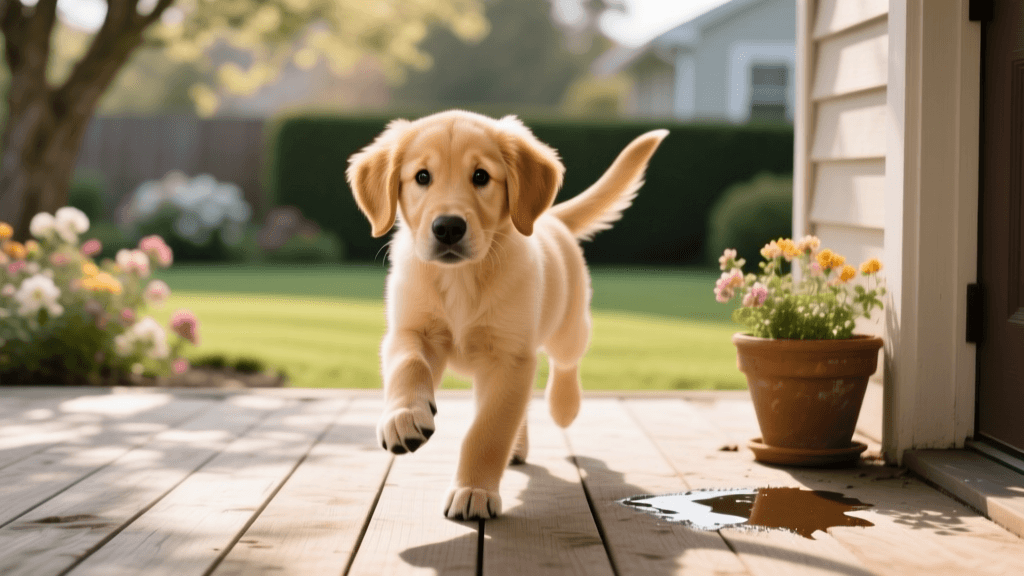
You have spent weeks diligently taking your puppy outside every two hours, rewarding them with high-value treats, and celebrating every successful outdoor potty break. Finally, your puppy seemed to understand the rules. But then, out of nowhere, you find a puddle on the living room rug. Potty training regression is one of the most common and frustrating challenges new dog owners face. It can feel like all your hard work has been undone overnight. However, regression is rarely a sign of stubbornness or a 'bad' dog. Instead, it is a symptom of an underlying issue that requires proper diagnosis and a structured solution.
According to the ASPCA, puppies can experience setbacks in their house training due to a variety of medical, environmental, and developmental factors. Understanding why your puppy is suddenly having accidents is the first step toward getting them back on track. In this comprehensive guide, we will diagnose the root causes of potty training regression and provide actionable, step-by-step solutions to resolve the issue quickly.
Diagnosing the Root Cause of Puppy Accidents
Before you can fix the problem, you must identify why the regression occurred. Puppies do not soil their living spaces out of spite. When a previously potty-trained puppy starts having accidents indoors, it typically falls into one of three categories: medical issues, environmental stress, or management failures.
1. Medical Issues and Physical Changes
The very first step in diagnosing potty regression is ruling out a medical condition. Urinary Tract Infections (UTIs), gastrointestinal parasites, and even the physical aftermath of spaying or neutering can cause a puppy to lose bladder or bowel control. If your puppy is squatting frequently but only producing small amounts of urine, licking their genital area excessively, or showing signs of discomfort while eliminating, a medical issue is highly likely. A visit to the veterinarian for a standard urinalysis (typically costing between $30 and $60) or a urine culture ($100 to $150) is essential to rule out bacterial infections.
2. Environmental Stress and Fear Periods
Puppies go through several developmental 'fear periods' during their first year, most notably around 8 to 11 weeks and again between 6 to 14 months. During these windows, a puppy that was previously confident about going outside may suddenly become terrified of the wind, the dark, or neighborhood noises. Furthermore, changes in the household—such as moving to a new home, the arrival of a new baby, or a change in the owner's work schedule—can cause anxiety. Stress increases the frequency of elimination and decreases a puppy's ability to 'hold it.'
3. Too Much Freedom Too Soon
One of the most common management errors owners make is granting a puppy full access to the house too early. Just because a puppy has had a week of accident-free days does not mean their bladder capacity or impulse control has fully matured. The American Kennel Club (AKC) emphasizes that puppies need consistent supervision and restricted access to the home until they are reliably house-trained for several consecutive months. Giving a 4-month-old puppy free roam of a two-story house is a recipe for regression.
Diagnostic Chart: Medical vs. Behavioral Regression
Use the following table to help determine whether your puppy's regression is rooted in a medical problem or a behavioral/management issue.
| Symptom Observed | Likely Cause | Immediate Action Required |
|---|---|---|
| Frequent squatting, small urine volume, licking | Medical (UTI or Infection) | Schedule a vet visit for a urinalysis immediately. |
| Accidents only when left alone or crated | Behavioral (Separation Anxiety) | Consult a trainer; implement desensitization protocols. |
| Accidents in hidden areas or new rooms | Management (Too much freedom) | Restrict space using a playpen or crate; tether to owner. |
| Refusal to go outside, trembling outdoors | Environmental (Fear period) | Use high-value treats; create a sheltered outdoor potty spot. |
| Soft stools or diarrhea indoors | Medical (Parasites or Diet) | Collect a stool sample and visit the veterinarian. |
Actionable Solutions to Fix Potty Regression
Once you have identified the potential cause, it is time to implement a strict reset protocol. Treating potty regression requires a return to the absolute basics of puppy management.
Step 1: Rule Out Medical Problems
Do not attempt to train away a medical issue. If your puppy's accidents are accompanied by changes in thirst, appetite, or energy levels, book a veterinary appointment. Treating a simple UTI with a course of antibiotics (usually $20 to $50) will resolve the regression almost instantly if biology was the culprit.
Step 2: Shrink Their Freedom (The Umbilical Method)
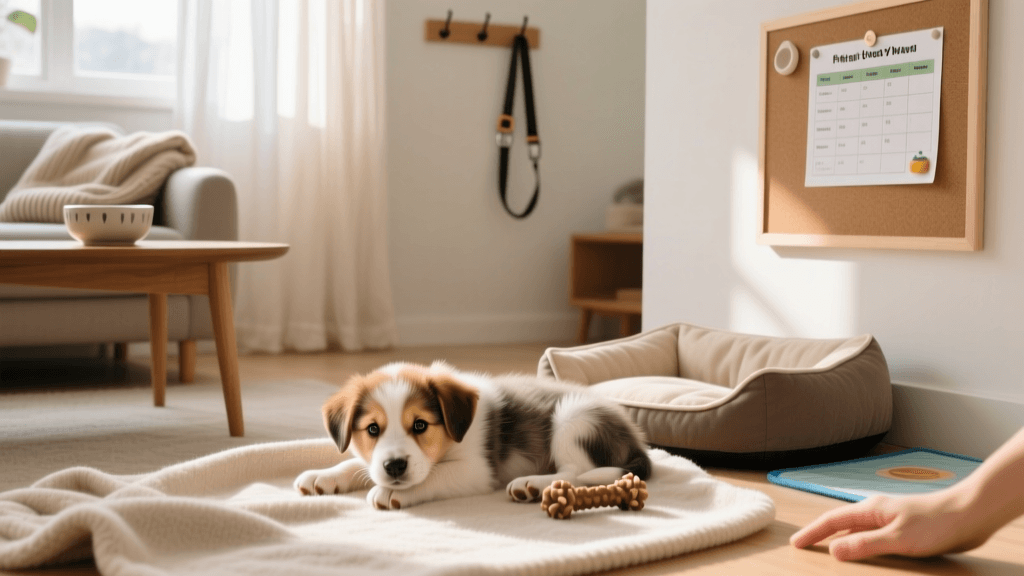
If the regression is behavioral, you must immediately revoke your puppy's unsupervised freedom. When you are home, use the 'umbilical cord method' by attaching your puppy's leash to your belt loop. This ensures they cannot wander off to a corner of the room to soil. When you cannot actively watch them, place them in a properly sized crate or a wire exercise playpen. According to VCA Animal Hospitals, dogs naturally avoid soiling their immediate sleeping area. Ensure the crate is sized correctly: it should only be large enough for the puppy to stand up, turn around, and lie down. If the crate is too large, they will use one end as a bathroom and sleep in the other. Use a wire crate divider to adjust the space as your puppy grows.
Step 3: Reset the Potty Schedule
During a regression, you must increase the frequency of outdoor potty breaks. Take your puppy outside immediately after they wake up, after every meal, after vigorous play sessions, and right before bed. For young puppies, set a timer for every 90 to 120 minutes during active waking hours. When they eliminate outside, throw a 'potty party'—offer verbal praise and a high-value treat like freeze-dried chicken or small pieces of string cheese within three seconds of them finishing.
Step 4: Destroy the Scent with Enzymatic Cleaners
Puppies have incredibly sensitive noses. If you clean an indoor accident with standard household bleach, ammonia, or soap, the uric acid crystals remain embedded in the carpet fibers. To your puppy, the area still smells like a bathroom. You must use a high-quality enzymatic cleaner that literally eats the organic bacteria causing the odor. Top-rated products include Nature's Miracle Advanced Stain and Odor Eliminator (approx. $12 for 32oz) and Rocco & Roxie Professional Strength Stain & Odor Eliminator (approx. $20 for 32oz). Saturate the soiled area completely, allowing the enzymes to sit for 10 to 15 minutes before blotting dry.
The 24-Hour Potty Reset Schedule
To combat regression, implement this strict schedule for at least 7 to 10 consecutive days. Consistency is the ultimate cure for confusion.
- 6:30 AM: Wake up and immediately carry or leash the puppy outside to the designated potty spot. Reward heavily.
- 7:00 AM: Breakfast. Puppies typically need to eliminate 15 to 30 minutes after eating.
- 7:30 AM: Second morning potty break. Followed by supervised play.
- 9:00 AM: Potty break, then crate time for a morning nap.
- 11:00 AM: Wake up, immediate potty break, followed by training or socialization.
- 1:00 PM: Potty break, then lunch.
- 1:30 PM: Post-lunch potty break, then crate nap.
- 4:00 PM: Wake up, immediate potty break, followed by exercise.
- 6:00 PM: Potty break, then dinner.
- 6:30 PM: Post-dinner potty break and evening wind-down.
- 8:00 PM: Remove water bowls to prevent overnight bladder overload.
- 10:00 PM: Final potty break of the night, then straight into the crate for sleep.
When to Seek Professional Help
If you have strictly followed a reset schedule for two weeks, ruled out medical issues with your veterinarian, and utilized enzymatic cleaners, yet the accidents persist, it may be time to consult a certified professional dog trainer (CPDT-KA) or a veterinary behaviorist. Severe regression can sometimes be linked to deeper anxiety disorders or submissive urination issues that require specialized behavioral modification techniques. Remember, patience and consistency are your greatest tools. Puppies are learning a completely foreign concept in a human world, and setbacks are a normal part of the journey to a fully house-trained adult dog.
aaron-whyte
All our authors care for dogs every day — read more of their work on the authors page.