Puppy Potty Training FAQ: Google's Most-Asked Questions Answered
Discover answers to Google's most-asked puppy potty training questions. Learn schedules, crate tips, and cleaning hacks for a housebroken pup.
Google’s Most-Asked Puppy Potty Training Questions
Bringing a new puppy home is a joyous milestone, but it inevitably leads to one of the most stressful phases of dog ownership: housebreaking. If you have found yourself endlessly scrolling through search engines at 2:00 AM while scrubbing the living room rug, you are not alone. At Paws-Tales, we analyze search trends to bring you the most practical, science-backed advice. Today, we are tackling the 'Puppy Care' category by answering Google’s most-asked questions about puppy potty training. Whether you are dealing with a stubborn eight-week-old Labrador or a tiny Chihuahua with a microscopic bladder, this comprehensive FAQ guide provides actionable schedules, product recommendations, and expert-backed strategies to get your pup housebroken efficiently.
How Long Does It Take to Potty Train a Puppy?
According to the American Kennel Club (AKC), most puppies can be reliably housebroken between four and six months of age. However, this timeline is highly dependent on breed size, consistency, and the individual dog's learning curve. Toy breeds, such as Pomeranians and Yorkshire Terriers, often take longer—sometimes up to a year—simply because their physical bladders are incredibly small and they have higher metabolisms. Conversely, larger breeds like Golden Retrievers may grasp the concept faster but require more frequent outdoor trips during their early weeks due to rapid growth and high water intake.
The golden rule of puppy bladder control is: a puppy can generally hold their bladder for one hour for every month of age, plus one. Therefore, a two-month-old puppy can hold it for roughly three hours, while a four-month-old can manage about five hours. Never push a puppy beyond this physical limit, as it will only result in inevitable accidents and anxiety.
What Is the Best Puppy Potty Training Schedule?
Consistency is the bedrock of successful housebreaking. Puppies thrive on routine, and establishing a strict schedule helps them anticipate when it is time to eliminate. Below is a structured daily potty schedule tailored for an eight-to-ten-week-old puppy.
| Time of Day | Action | Details & Tips |
|---|---|---|
| 6:30 AM | Wake Up & Potty | Carry outside immediately upon waking. No playtime until they eliminate. |
| 7:00 AM | Breakfast | Feed measured meals. Remove bowl after 15 minutes to regulate digestion. |
| 7:30 AM | Potty Break | Take out 15-20 minutes after eating to catch the post-meal trigger. |
| 10:00 AM | Potty Break | Scheduled trip after morning nap or crate time. |
| 12:30 PM | Lunch & Potty | Feed lunch, followed by a potty break 15 minutes later. |
| 3:00 PM | Potty Break | Afternoon nap wake-up trip outside. |
| 5:30 PM | Dinner & Potty | Final meal of the day, followed by an outdoor trip. |
| 8:00 PM | Water Cut-off | Pick up the water bowl to prevent overnight bladder filling. |
| 10:30 PM | Final Potty Break | Keep it quiet and boring. Straight to the crate afterward. |
To make this schedule work, take your puppy to the exact same spot outside every single time. The scent of their previous eliminations will act as a natural trigger. Always use a specific verbal cue, such as 'Go potty', while they are in the act. The moment they finish, immediately reward them with a high-value treat. We recommend Zuke’s Mini Naturals (under 3 calories per treat, costing around $6 for a 6-ounce bag) to avoid overfeeding while maintaining high motivation.
Should I Use Puppy Pads or Go Straight Outside?
This is one of the most hotly debated questions in Google's 'People Also Ask' section. The short answer: go straight outside if your lifestyle permits it. Teaching a puppy to eliminate indoors on pads and then later expecting them to understand that indoors is entirely off-limits creates cognitive dissonance. However, if you live in a high-rise apartment, work long hours, or reside in an area with extreme winter weather, puppy pads (like the Glad for Pets Black Charcoal Puppy Pads, roughly $25 for 100 count) or indoor artificial grass litter boxes (such as the Fresh Patch, costing around $30-$50 per month) can be lifesavers. If you must use pads, place them in a designated, confined area like a bathroom or a pen, and slowly move the pad closer to the door each week until you transition completely outdoors.
How Do I Stop My Puppy from Having Accidents at Night?
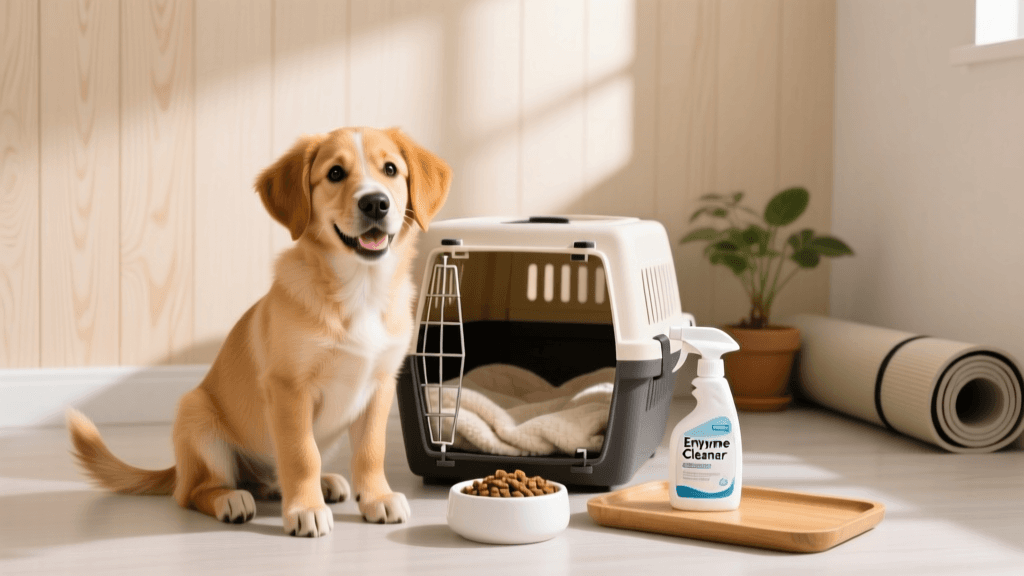
Nighttime accidents are the bane of every new puppy owner's existence. The most effective solution is crate training. According to the ASPCA, dogs naturally avoid soiling their sleeping quarters, making a properly sized crate an invaluable housebreaking tool. The crate must be just large enough for your puppy to stand up, turn around, and lie down comfortably. If it is too large, they will designate one corner as a bathroom and the other as a bedroom.
Invest in a wire crate with an adjustable divider panel, such as the MidWest Homes for Pets iCrate (ranging from $45 to $75 depending on size) or the Frisco Heavy Duty Fold & Carry Crate ($40 to $60). As your puppy grows, simply slide the divider back to give them more room.
To minimize nighttime wake-ups:
- Remove your puppy's water bowl exactly two hours before bedtime.
- Take them out for a final, boring potty break right before you go to sleep. Keep the lights low and do not engage in play.
- Place the crate in your bedroom for the first few weeks. Hearing your breathing can reduce separation anxiety, which often triggers stress-induced elimination.
- Set an alarm for one nighttime bathroom break (around 3:00 AM) for puppies under 12 weeks old.
Consistency and patience are your greatest tools. A puppy does not have accidents out of spite; they simply have not yet built the physical control or the associative memory required to hold it.
What Is the Best Enzymatic Cleaner for Puppy Urine?
When accidents happen—and they will—how you clean them dictates whether your puppy will repeat the offense. Standard household cleaners, especially those containing ammonia, smell like urine to a dog's sensitive nose and will actually encourage them to remark the spot. You must use an enzymatic cleaner, which contains natural bacteria that literally digest the uric acid crystals and organic matter.
Top product recommendations include:
- Nature’s Miracle Advanced Stain and Odor Eliminator ($12-$15): A widely available, budget-friendly staple that works well on fresh accidents.
- Rocco & Roxie Supply Co. Professional Strength Stain & Odor Eliminator ($20): A heavier-duty option that is exceptionally effective on older, set-in stains and carpets.
- Angry Orange Enzyme Stain Cleaner ($18): Great for households that prefer a strong, natural citrus scent over the chemical smell of traditional cleaners.
Always blot the area first with paper towels, saturate the spot with the enzymatic cleaner, and let it air dry completely. Do not rush the drying process; the enzymes need time to break down the proteins.
Why Is My Potty-Trained Puppy Suddenly Having Accidents?
Potty training regression is incredibly common and usually peaks around the four-to-six-month mark. This regression is rarely behavioral defiance; it is typically tied to developmental milestones. Teething, which causes immense physical stress and distraction, can make a puppy forget their training. Additionally, hormonal shifts, changes in the household environment, or underlying medical issues like Urinary Tract Infections (UTIs) can cause sudden setbacks. If your puppy is suddenly urinating small amounts frequently, licking their genitals, or crying when they eliminate, bypass the training manuals and schedule a veterinary visit immediately.
Final Thoughts on Housebreaking
Housebreaking a puppy requires immense patience, a watchful eye, and a commitment to routine. By following a strict schedule, utilizing the right crate and cleaning supplies, and understanding your puppy's physical limitations, you will navigate this messy phase successfully. Remember, every accident is a learning opportunity, not a failure. Stick to the plan, celebrate the outdoor victories, and soon enough, you will have a fully housebroken companion ready to explore the world with you.
jonas-cole
All our authors care for dogs every day — read more of their work on the authors page.