Puppy Nutrition: First Ninety Days Gut Health Guide
Discover the ultimate puppy nutrition and gut health plan for the first ninety days. Learn feeding schedules, transition tips, and essential supplements.
The Critical Window: Why the First Ninety Days Matter
Bringing a new puppy home is an exhilarating milestone, but the first ninety days represent a highly vulnerable physiological window. During this period, a puppy undergoes rapid skeletal growth, neurological development, and immune system maturation. However, the foundation of all these developmental milestones rests squarely on the gastrointestinal tract. The canine microbiome—a complex ecosystem of trillions of bacteria—plays a pivotal role in nutrient absorption, pathogen defense, and even behavioral regulation via the gut-brain axis.
According to the World Small Animal Veterinary Association (WSAVA), improper nutrition during the early growth phases can lead to irreversible developmental orthopedic diseases, compromised immunity, and chronic gastrointestinal sensitivities. As a new owner, your primary objective is not simply to feed your puppy, but to strategically cultivate their gut health while managing the immense stress of environmental transition. This deep dive provides a meticulous, science-backed blueprint for managing your puppy's nutrition, hydration, and digestive health from the moment they cross your threshold through the end of their third month at home.
Pre-Arrival: Securing the Baseline Diet
The most common mistake new owners make is abruptly switching a puppy to a premium or boutique diet on day one. A puppy's digestive enzymes are specifically calibrated to their current diet. Abrupt changes trigger osmotic diarrhea, which can quickly lead to dangerous dehydration in small breeds. Before picking up your puppy, contact the breeder or shelter and request the following:
- Exact Brand and Formula: Note the specific protein source, life stage formulation, and kibble size.
- Current Portion Size: Ask for the exact gram measurement or cup fraction they are currently feeding per meal.
- A Transitional Supply: Request at least a seven-day supply of their current food. If they cannot provide this, purchase a small bag of the exact same formula beforehand.
The Tufts University Cummings School of Veterinary Medicine strongly advises against feeding raw or unbalanced home-prepared diets to growing puppies due to the severe risk of calcium-phosphorus imbalances, which can cause devastating bone deformities. Stick to diets that meet the Association of American Feed Control Officials (AAFCO) guidelines for 'growth' or 'all life stages'.
The 14-Day Gastrointestinal Transition Protocol
Once you have your puppy's baseline food and your chosen new food (ideally a high-quality, WSAVA-compliant puppy formula like Royal Canin Puppy or Purina Pro Plan Puppy), you must execute a slow transition. While many bags suggest a 7-day transition, a 14-day protocol is vastly superior for minimizing gastrointestinal upset in stressed, newly relocated puppies.
| Phase | Days | Old Food Ratio | New Food Ratio | Observation Focus |
|---|---|---|---|---|
| Acclimation | 1 to 4 | 100% | 0% | Baseline stool quality and appetite |
| Introduction | 5 to 8 | 75% | 25% | Signs of gas, bloating, or soft stool |
| Integration | 9 to 11 | 50% | 50% | Energy levels and stool consistency |
| Acceleration | 12 to 13 | 25% | 75% | Acceptance of new kibble texture/taste |
| Completion | 14+ | 0% | 100% | Final coat shine and digestive stability |
Pro Tip: If at any point during the transition your puppy develops loose stools, halt the progression. Maintain the current ratio for an additional 48 hours until the stool firms up before advancing to the next phase.
Age-Based Feeding Schedules and Caloric Density
Puppies possess remarkably small stomachs but exceptionally high metabolic rates. Free-feeding (leaving a bowl of kibble out all day) is highly discouraged as it prevents you from monitoring appetite—a critical early indicator of illness—and complicates housebreaking schedules. The American Veterinary Medical Association (AVMA) recommends structured, timed meals to establish routine and track caloric intake accurately.
| Puppy Age | Meals Per Day | Time Between Meals | Nighttime Fasting Window |
|---|---|---|---|
| 8 to 12 Weeks | 3 to 4 | 4 to 5 hours | Max 8 hours (to prevent hypoglycemia) |
| 3 to 6 Months | 3 | 5 to 6 hours | Max 10 hours |
| 6 to 12 Months | 2 | 8 to 10 hours | 12 hours |
Always measure food using a digital kitchen scale in grams rather than a standard measuring cup. The caloric density of kibble varies wildly; a cup of one brand may contain 350 kcal, while another contains 450 kcal. Feeding by weight ensures precision and prevents accelerated growth rates, which are directly linked to hip dysplasia and osteochondritis dissecans (OCD) in large breed puppies.
Evidence-Based Gut Health Supplements
The stress of leaving the litter, traveling, and entering a novel environment causes a spike in cortisol, which can temporarily decimate beneficial gut flora. Incorporating targeted supplements during the first ninety days can bridge this gap.
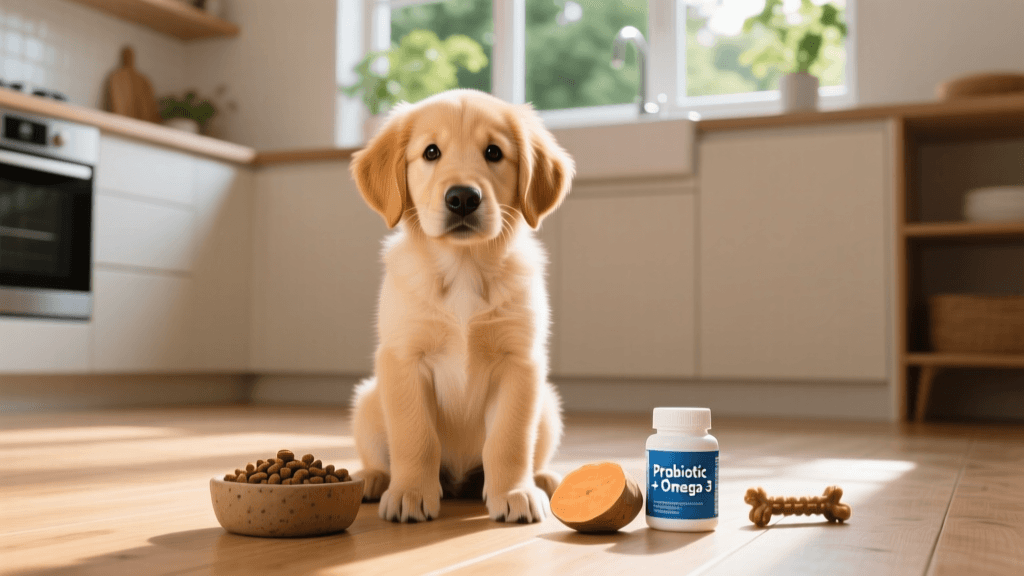
- Probiotics (Enterococcus faecium SF68): Products like Purina FortiFlora are clinically proven to promote intestinal microflora balance. Administer one 1-gram packet over the morning meal daily for the first 30 days. This specific strain survives gastric acid and actively colonizes the lower intestine.
- Canned 100% Pure Pumpkin: Not to be confused with pumpkin pie filling, pure pumpkin is a phenomenal source of soluble fiber. It absorbs excess water in the digestive tract, firming up loose stools. Dose: 1 teaspoon per 10 lbs of body weight, mixed into the evening meal.
- Digestive Enzymes: If your puppy struggles with excessive flatulence or undigested food in their stool, a canine-specific enzyme blend containing amylase, protease, and lipase can aid in breaking down complex macronutrients while their pancreatic output matures.
- Bone Broth (Unseasoned): Rich in collagen, glucosamine, and amino acids like glycine, bone broth soothes the intestinal lining. Ensure it is strictly formulated for dogs, as human broths contain toxic alliums (onions/garlic) and lethal sodium levels.
Hydration Metrics and Water Quality
A puppy's body is composed of approximately 80% water, compared to 60% in adult dogs. Dehydration can occur rapidly, especially if the puppy experiences stress-induced diarrhea or excessive panting. The general veterinary rule of thumb is that a puppy requires 1 ounce of water per pound of body weight per day. For a 15-pound puppy, this equates to roughly 15 ounces (about 450 ml) daily.
Invest in a stainless steel or ceramic water bowl, as plastic bowls harbor microscopic scratches that breed acne-causing bacteria and biofilms. Wash the bowl with hot, soapy water daily. Furthermore, if your local tap water is heavily chlorinated or contains high mineral deposits, consider using a charcoal pitcher filter. Chlorine can irritate a puppy's sensitive gastric mucosa and deter them from drinking adequate volumes.
Monitoring Stool Quality: The Four C's
Your puppy's stool is the most direct, real-time window into their gastrointestinal health. Evaluate their waste daily using the 'Four C's' framework:
- Color: Should be a consistent chocolate brown, dictated by bile. Black, tarry stools indicate upper GI bleeding; red streaks indicate lower GI inflammation; yellow or orange hues suggest rapid transit or liver/biliary issues.
- Consistency: Ideal stool resembles firm play-doh. It should hold its shape when picked up but leave minimal residue on the grass. A score of 2 or 3 on the standard Purina Fecal Scoring System is optimal.
- Content: Scan for foreign materials. Puppies are notorious for ingesting mulch, fabric, or hair. The presence of white, rice-like segments indicates a tapeworm infestation, requiring immediate veterinary intervention.
- Coating: The stool should not be encased in mucus or a slimy sheath. A mucoid coating is a primary indicator of large bowel inflammation (colitis), often triggered by dietary indiscretion, parasites like Giardia, or severe stress.
Budgeting for Puppy Nutrition and Preventative Care
Proper nutrition and gut health maintenance require a financial commitment that extends beyond the initial adoption fee. For the first ninety days, new owners should budget for the following estimated costs (based on a medium-sized breed puppy):
- Premium Puppy Food (AAFCO compliant): $60 to $120 per month.
- Targeted Probiotics & Supplements: $30 to $50 for a 30-day supply.
- Initial Fecal Floatation & Parasite Panel: $45 to $80 (Crucial during the first week home, as shelter/breeder environments often harbor microscopic parasites like Coccidia).
- Digital Kitchen Scale & Slow Feeder Bowls: $25 to $40 (one-time purchase to ensure accurate portioning and prevent aerophagia/bloat).
Conclusion: Patience and Observation
Navigating the first ninety days of puppy nutrition is an exercise in patience, precision, and keen observation. By respecting the biological realities of the developing canine microbiome, executing a deliberate food transition, and utilizing evidence-based supplements, you are doing far more than simply filling a bowl. You are actively engineering a robust immune system and a resilient digestive tract that will serve your companion for the rest of their life. Keep a daily journal of their meals, water intake, and stool quality during this critical window; the data you collect will be invaluable to your veterinarian as you transition out of the puppyhood phase and into long-term adult wellness.
priya-sutaria
All our authors care for dogs every day — read more of their work on the authors page.