First-Time Owner Guide to Successful Puppy Crate Training
Discover step-by-step puppy crate training tips for first-time owners. Learn crate sizing, scheduling, and troubleshooting for a stress-free experience.
Welcome to Dog Ownership: The Crate Training Foundation
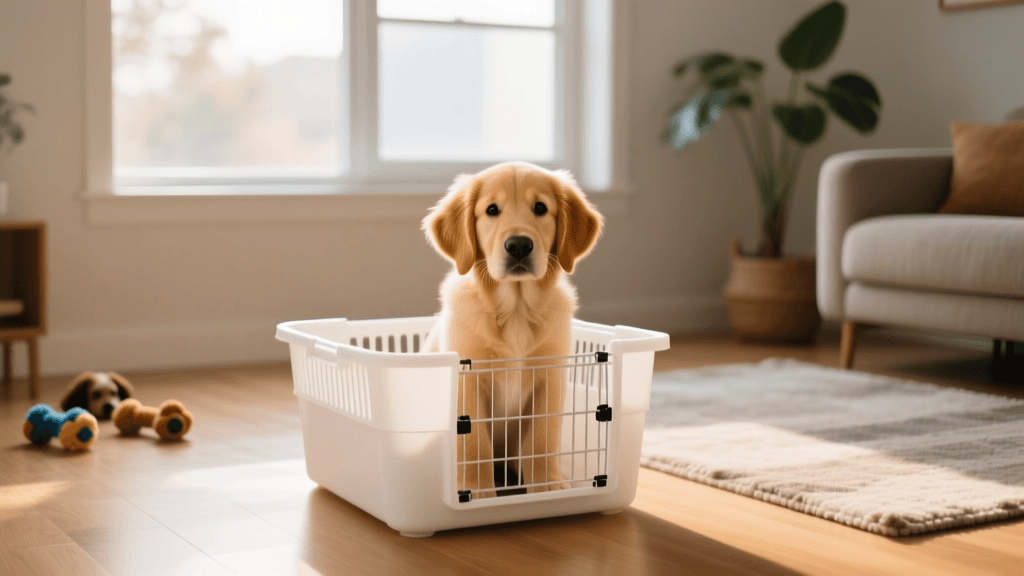
Bringing home a new puppy is one of the most exciting milestones in life, but it also comes with a steep learning curve. As a first-time dog owner, you might view a dog crate as a cage or a punishment tool. However, professional trainers and veterinarians universally agree that a crate is actually a sanctuary. When introduced correctly, a crate taps into a dog's natural den instinct, providing them with a secure, personal space while simultaneously accelerating housebreaking and preventing destructive behavior.
According to the ASPCA, crate training is one of the most effective methods for housebreaking a puppy because dogs naturally avoid soiling their sleeping quarters. This guide will walk you through the exact measurements, product recommendations, scheduling, and troubleshooting techniques you need to crate train your puppy successfully.
Choosing the Right Crate: Types and Costs
Walking into a pet store or browsing online can be overwhelming. There are several types of crates available, each with distinct advantages and price points. Below is a comparison chart to help you select the best option for your new puppy.
| Crate Type | Pros | Cons | Estimated Cost | Best For |
|---|---|---|---|---|
| Wire Crate | Excellent ventilation, foldable for travel, includes divider panels. | Heavier, less cozy, can be noisy if the dog paws at it. | $45 - $80 | Home training, large breeds, hot climates. |
| Plastic Crate | Cozy den-like feel, blocks visual stimuli, airline-approved. | Poor airflow, harder to clean, not foldable. | $50 - $100 | Anxious dogs, travel, smaller breeds. |
| Soft-Sided | Lightweight, portable, comfortable. | Easily destroyed by chewing, impossible to clean accidents from. | $30 - $60 | Fully trained adult dogs, car rides. |
| Heavy-Duty | Virtually indestructible, secure latches. | Extremely heavy, very expensive, industrial look. | $200 - $500+ | Severe separation anxiety, escape artists. |
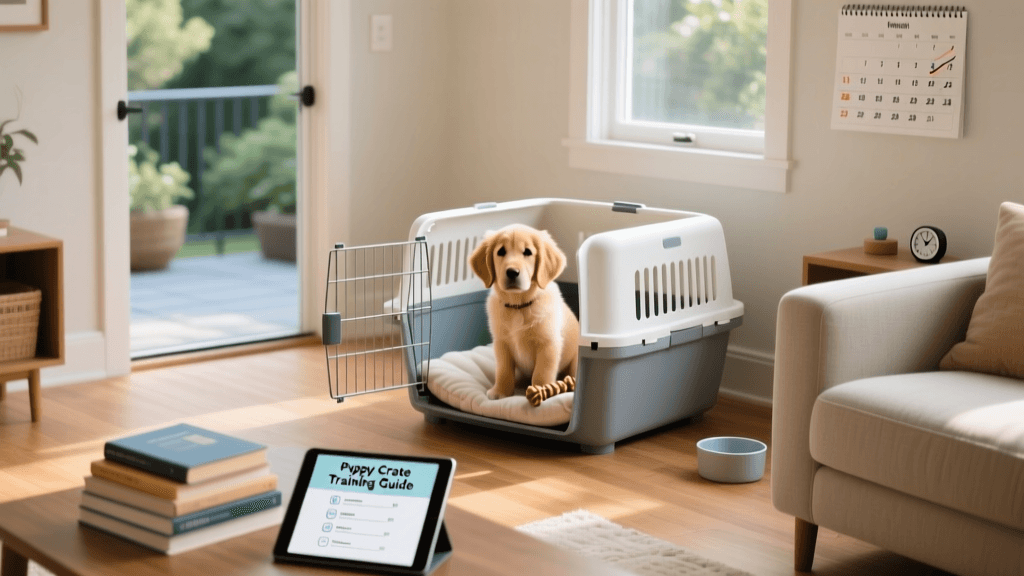
First-Time Owner Recommendation: Purchase a Wire Crate with a Divider Panel (such as the MidWest Homes for Pets iCrate). The divider allows you to buy a crate sized for your dog's adult dimensions while restricting the space to a puppy-sized area, preventing them from potty in one corner and sleeping in the other.
How to Measure Your Dog for a Crate
A crate that is too large will ruin your housebreaking efforts, while a crate that is too small will cause physical discomfort and joint issues. To find the perfect fit, grab a soft measuring tape and follow these steps:
- Length: Measure from the tip of your puppy's nose to the base of their tail (do not include the tail). Add 2 to 4 inches to this number.
- Height: Measure from the floor to the top of their head (or the tip of their ears if they are erect). Add 2 to 4 inches.
- Width: Ensure the crate is wide enough for the dog to turn around in a full circle without their shoulders hitting the sides.
Essential Supplies and Setup Costs
To set your puppy up for success, you will need more than just the metal or plastic box. Budget for the following essential crate training supplies:
- High-Value Treats: Small, smelly treats like Zuke's Mini Naturals ($6) for positive reinforcement.
- Interactive Toy: A KONG Classic ($15-$25) stuffed with frozen peanut butter and kibble to keep them occupied and build positive associations with the crate.
- Comfort Item: The SmartPetLove Snuggle Puppy ($35) features a simulated heartbeat and heat pack, which drastically reduces nighttime whining for newly separated puppies.
- Enzymatic Cleaner: Nature's Miracle Advanced Stain and Odor Eliminator ($12). Standard household cleaners do not break down uric acid; if a puppy smells old urine, they will return to the spot.
Step-by-Step Crate Conditioning Schedule
Never force your puppy into the crate and lock the door on day one. This will induce panic and create lifelong crate aversion. Instead, follow this gradual conditioning schedule.
Days 1-2: The Open Door Policy
Place the crate in a high-traffic family area, like the living room. Leave the door securely tied open. Toss high-value treats inside, place their favorite chew toys in the back, and feed them their regular meals just inside the threshold. Let them enter and exit freely.
Days 3-5: Closing the Door
Once the puppy happily runs into the crate for meals, begin closing the door while they eat. Do not latch it at first. By day 5, latch the door, sit right next to the crate, and open it the moment they finish their meal. Gradually increase the time the door remains closed after eating by 1-minute increments.
Days 6-7: Stepping Away
Give your puppy a stuffed KONG, close and latch the door, and take three steps back. Sit quietly. If they remain calm, praise them softly. Gradually increase your distance, eventually stepping out of the room for 30 seconds, then 1 minute, then 5 minutes.
"The crate should always be associated with positive experiences. Never use the crate as a place of punishment or time-outs, as this will destroy the dog's perception of the crate as a safe haven." — American Kennel Club (AKC)
Puppy Bladder Math and Scheduling
First-time owners often expect puppies to sleep through the night immediately. Biologically, this is impossible. A general veterinary rule of thumb for puppy bladder control is their age in months plus one. This equals the maximum number of hours they can hold their bladder.
- 2-Month-Old Puppy: 3 hours maximum.
- 3-Month-Old Puppy: 4 hours maximum.
- 4-Month-Old Puppy: 5 hours maximum.
Note: This rule applies to resting/sleeping puppies. Active puppies need to go out much more frequently (every 30-45 minutes during play).
Sample Nighttime Schedule for a 10-Week-Old Puppy
- 8:00 PM: Last meal of the day.
- 9:30 PM: Water bowl picked up (to reduce overnight urine production).
- 10:30 PM: Final potty break outside, then straight into the crate.
- 1:30 AM: Alarm goes off. Carry puppy outside (no playing), potty, straight back to crate.
- 4:30 AM: Second overnight potty break.
- 7:00 AM: Wake up, immediate potty break, breakfast.
Troubleshooting Common Crate Training Issues
Issue: The Puppy Whines or Cries at Night
This is the most common hurdle for novice owners. Before assuming the puppy is just throwing a tantrum, ask yourself: Do they need to eliminate? If it has been 3 hours since their last potty break, take them out on a leash, keep it boring, and return them to the crate. If you know they do not need to potty, you must practice extinction. Do not yell, do not tap the crate, and do not let them out. Any attention (even negative attention) rewards the whining. Consider using a white noise machine or a Snuggle Puppy to soothe them.
Issue: The Puppy Soils the Crate
If your puppy is having accidents inside the crate, evaluate two things immediately. First, is the crate too big? If they have enough room to sleep at one end and use the bathroom at the other, adjust your divider panel. Second, are you cleaning it properly? Use an enzymatic cleaner to completely eradicate the scent. Finally, review your feeding and watering schedule; do not leave a full water bowl inside the crate overnight.
Issue: Biting the Crate Bars
Puppies explore the world with their mouths, but chewing metal can break teeth or cause zinc toxicity if the paint chips. If your puppy attacks the bars, cover the sides of the crate with a breathable crate cover or a light sheet to remove the visual stimuli that is triggering their frustration. Provide a durable chew toy, like a Nylabone, to redirect their oral fixation.
Final Thoughts for First-Time Owners
Crate training requires immense patience, consistency, and a strict schedule. There will be sleepless nights and moments of frustration, but sticking to this protocol will yield a confident, well-adjusted dog who views their crate as a personal bedroom rather than a prison. Remember to keep training sessions short, positive, and heavily rewarded. By investing the time now, you are building a foundation of trust and obedience that will last your dog's entire lifetime.
beth-carrasco
All our authors care for dogs every day — read more of their work on the authors page.