First-Time Owner Guide to Successful Puppy Crate Training
Master puppy crate training with our first-time owner guide. Learn crate sizing, scheduling, and positive reinforcement tips for a stress-free experience.
Welcome to Dog Ownership: The Crate Training Reality
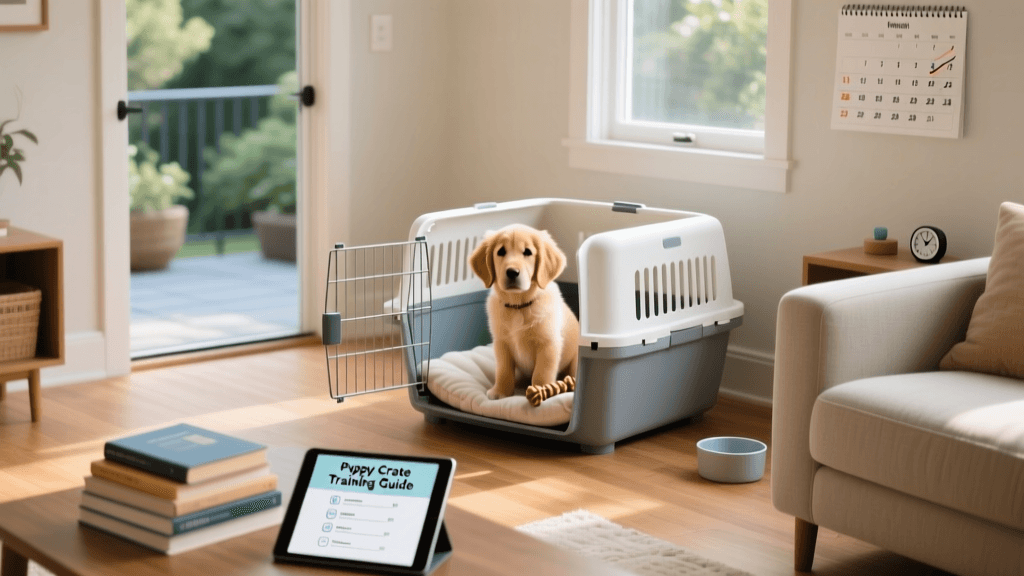
Bringing home a new puppy is an exhilarating milestone, but the first few weeks can quickly become overwhelming for first-time dog owners. Between the potty accidents, chewed baseboards, and sleepless nights, many new pet parents wonder if they made a mistake. The secret to surviving and thriving during this chaotic period is crate training. When introduced correctly, a crate becomes your puppy's personal sanctuary, a vital tool for housebreaking, and a safe space that prevents destructive behavior when you cannot supervise them.
According to the American Kennel Club (AKC), dogs are naturally den animals. They instinctively seek out small, enclosed spaces where they feel secure and protected. Crate training taps into this natural instinct, providing your puppy with a sense of security while giving you peace of mind. However, the process requires patience, consistency, and the right equipment. This comprehensive guide will walk you through everything you need to know to successfully crate train your new puppy.
Choosing the Right Crate: Types and Sizing
Not all crates are created equal, and selecting the right one is crucial for your puppy's comfort and safety. The three most common types of crates are wire, plastic (airline), and soft-sided. For first-time owners and teething puppies, wire or plastic crates are highly recommended.
| Crate Type | Best For | Pros | Cons | Average Cost |
|---|---|---|---|---|
| Wire Crate | Puppies, large breeds, home use | Excellent ventilation, foldable, includes divider panels | Heavy, can be noisy if puppy rattles it | $40 - $80 |
| Plastic/Airline | Travel, anxious dogs, den-lovers | Cozy den-like feel, airline approved, easy to clean | Poor ventilation in hot weather, takes up space | $30 - $70 |
| Soft-Sided | Fully trained adult dogs, car rides | Lightweight, portable, comfortable | Easily destroyed by teething puppies, hard to clean | $25 - $60 |
The Golden Rule of Crate Sizing
The most common mistake first-time owners make is buying a crate that is too large. If a crate is too big, your puppy will designate one corner for sleeping and the opposite corner for eliminating, which completely defeats the purpose of using the crate for housebreaking. The ASPCA recommends that the crate should be just large enough for your dog to stand up, turn around, and lie down comfortably.
How to Measure:
- Length: Measure from the tip of your puppy's nose to the base of their tail (do not include the tail), then add 2 to 4 inches.
- Height: Measure from the floor to the top of their head (or ears, if they are erect), then add 2 to 4 inches.
Pro Tip: Purchase a wire crate that comes with an adjustable divider panel, such as the MidWest Homes for Pets iCrate. This allows you to buy a crate sized for your dog's estimated adult weight, but block off the excess space while they are a puppy. As they grow, simply move the divider back.
Essential Gear for Crate Training Success
To make the crate an inviting space, you need more than just a metal box and a blanket. Here is a curated list of practical, cost-effective gear that will accelerate your training:
- Classic Kong Toy ($15 - $20): This durable rubber toy is a lifesaver. Stuff it with a mixture of your puppy's kibble, a spoonful of plain pumpkin puree, and a smear of dog-safe peanut butter (xylitol-free), then freeze it overnight. This provides a long-lasting distraction that keeps your puppy happily occupied in the crate.
- SmartPet Love Snuggle Puppy ($40): This plush toy features a simulated heartbeat and a heat pack. It mimics the feeling of sleeping next to littermates, drastically reducing nighttime whining and separation anxiety for newly adopted puppies.
- Washable Crate Pad ($20 - $30): Avoid thick, plush beds for teething puppies, as they will be shredded and pose a choking hazard. Opt for a thin, durable, machine-washable pad like the K9 Ballistics Tough Crate Pad.
- Enzymatic Cleaner ($15): Accidents will happen. An enzymatic cleaner like Nature's Miracle breaks down the uric acid in dog urine, completely eliminating the scent so your puppy isn't tempted to soil the same spot again.
The 14-Day Step-by-Step Crate Training Schedule
Crate training should never be rushed. Forcing a terrified puppy into a crate and locking the door will create lifelong anxiety. Instead, follow this progressive timeline to build a positive association.
Days 1 to 3: Exploration and Positive Association
Leave the crate door open and place it in a high-traffic area of your home, like the living room. Toss high-value treats (like small pieces of boiled chicken or Zuke's Mini Naturals) inside the crate. Let the puppy go in, eat the treat, and come right back out. Feed them their regular meals near the crate, gradually moving the food bowl further inside with each meal.
Days 4 to 7: Closing the Door
Once your puppy is happily entering the crate for treats and meals, begin closing the door while they eat. Do not latch it at first. By day 6, latch the door while they eat, then immediately open it when they finish. Gradually increase the time the door remains closed after meals, starting with 1 minute and working up to 10 minutes. Sit nearby so they know you are present.
Days 8 to 10: Leaving the Room
Give your puppy a frozen Kong, close the crate door, and quietly leave the room. Start with 5-minute absences. Return before they finish the Kong and let them out. Slowly extend your absences to 15, then 30 minutes. Do not make a big deal out of leaving or returning; keep your energy calm and neutral.
Days 11 to 14: Overnight and Longer Departures
Move the crate into your bedroom for the night so your puppy can hear and smell you. When they whine, wait a moment to see if they settle. If the whining persists, take them outside for a boring, strictly business potty break, then return them to the crate. Begin practicing short departures from the house during the day.
Navigating Nighttime Whining and Potty Breaks
The 3 AM wake-up call is a rite of passage for first-time puppy owners. Understanding your puppy's biological limitations is key to handling nighttime whining. A general rule of thumb for bladder control is that a puppy can hold their bladder for one hour per month of age, plus one. Therefore, an 8-week-old (2-month-old) puppy can only hold it for about 3 hours.
If your puppy wakes up whining in the middle of the night, you must assume they need to eliminate. Carry them outside immediately to prevent accidents, place them on their designated potty spot, and wait. Once they eliminate, offer quiet praise and return them straight to the crate. If you know they just went to the bathroom an hour ago and are simply protesting being confined, you may need to employ the 'cry it out' method. Giving in to attention-seeking whining teaches the puppy that crying equals freedom, reinforcing a very difficult behavioral loop.
Expert Insight: The Humane Society of the United States emphasizes that a crate should never be used as a punishment. If your puppy associates the crate with time-outs for bad behavior, they will resist entering it, and the den instinct will be overridden by fear.
Common First-Time Mistakes to Avoid
Even with the best intentions, new owners frequently stumble during the crate training process. Avoid these common pitfalls to ensure a smooth transition:
- Leaving the puppy crated too long: Puppies under 6 months old should not be crated for more than 3 to 4 hours at a time during the day. They need frequent socialization, play, and potty breaks. If you work full-time, you must hire a dog walker or use a puppy daycare service.
- Making a fuss during departures and arrivals: If you say tearful goodbyes or greet your puppy with high-pitched excitement when you open the crate, you spike their anxiety and arousal levels. Keep comings and goings incredibly boring.
- Skipping the exercise phase: Never put a high-energy puppy into a crate without first burning off their physical and mental energy. A tired puppy is a sleepy puppy. Engage in 15 minutes of active play or a training session before crating them for a nap.
Transitioning to Free Roam
Crate training is not a permanent life sentence. Once your puppy is fully house-trained, has passed the destructive teething phase (usually around 6 to 9 months), and has proven they can be trusted alone for short periods, you can begin transitioning them to free roam. Start by leaving the crate door open while you are home, allowing them to choose where they sleep. Eventually, you can use baby gates to give them access to one puppy-proofed room at a time. However, many adult dogs will continue to seek out their crate as a comfortable bedroom long into their senior years, simply because they love their den.
marcus-aldridge
All our authors care for dogs every day — read more of their work on the authors page.