8 to 12 Week Puppy Care Guide: Potty, Sleep, and Play
Master the 8 to 12 week puppy stage with our expert guide on potty training schedules, sleep routines, and safe socialization milestones.
Welcome to the 8 to 12 Week Life Stage
The 8 to 12 week period is arguably the most critical developmental window in your puppy's entire life. Often referred to as the 'toddler' phase, this is when your puppy transitions from the comfort of their littermates to a brand-new human environment. During this stage, their brains are like sponges, rapidly absorbing information about their new world, establishing lifelong habits, and forming deep attachments. However, it is also a time of extreme vulnerability, requiring strict routines for potty training, enforced sleep, and carefully managed socialization.
In this Life Stage Care Guide, we break down the exact protocols, product recommendations, and daily schedules you need to survive and thrive during these foundational weeks. Whether you are dealing with midnight potty breaks or puppy 'land shark' biting, this guide provides actionable, expert-backed strategies to set your puppy up for lifelong success.
Potty Training: The Foundation of Housebreaking
At 8 weeks old, a puppy has virtually no bladder control. The general veterinary rule of thumb is that a puppy can hold their bladder for one hour per month of age. This means your 8-week-old puppy physically cannot hold it for more than two hours at absolute maximum, and often less when active. According to the ASPCA, consistency and positive reinforcement are the cornerstones of successful housebreaking during this fragile stage.
Crate Training Basics and Setup
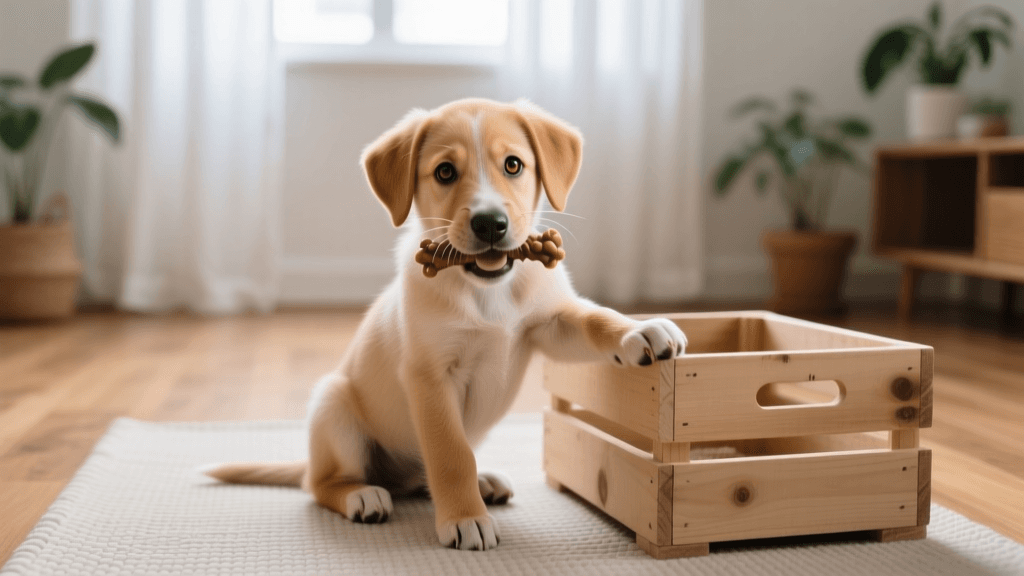
A crate is your most valuable tool for potty training. Dogs are naturally den animals and will avoid soiling their sleeping area if the space is appropriately sized. Invest in an adjustable wire crate, such as the MidWest iCrate (typically $45 to $70). Use the included divider panel to restrict the space so the puppy can only stand up, turn around, and lie down. If the crate is too large, they will use one corner as a bathroom and sleep in the other.
Always clean accidents with an enzymatic cleaner like Nature's Miracle Advanced (approx. $15). Standard household cleaners leave behind uric acid crystals that dogs can smell, which will encourage them to re-soil the same spot.
Daily Potty Schedule for an 8-Week-Old Puppy
Proactive management is key. Do not wait for your puppy to signal that they need to go out; take them out on a strict schedule. Below is a sample daytime schedule:
| Time | Activity | Potty Protocol |
|---|---|---|
| 7:00 AM | Wake up & immediate outdoor trip | Carry outside, reward immediately with high-value treat |
| 7:30 AM | Breakfast | N/A |
| 7:45 AM | Post-meal digestion | Take outside on leash, wait up to 10 minutes |
| 8:00 AM | Supervised play / training | Take outside every 30-45 minutes during play |
| 9:00 AM | Enforced morning nap | Potty right before crating; sleep for 2 hours |
| 11:00 AM | Wake up | Immediate carry outside to potty spot |
| 12:00 PM | Lunch | Take outside 15 minutes after eating |
Sleep and Crate Routines
It surprises many new owners that puppies aged 8 to 12 weeks need between 18 to 20 hours of sleep per day. A sleep-deprived puppy is an overtired puppy, which manifests as hyperactivity, excessive biting, and an inability to learn basic commands.
The Art of Enforced Naps
Just like human toddlers, puppies often do not know when they are tired and will fight sleep. You must enforce naps. A healthy rhythm for an 8-week-old is one hour awake, followed by two hours asleep in their crate or a quiet playpen. If your puppy is acting like a 'land shark' and biting relentlessly, they are likely overtired. Place them in their crate with a safe chew toy, and they will usually fall asleep within minutes.
Pro-Tip for Nighttime Sleep: To ease the transition from their littermates, use a product like the SmartPetLove Snuggle Puppy ($25 to $30). This plush toy includes a battery-operated heartbeat simulator and a heat pack, which mimics the warmth and pulse of a mother dog, significantly reducing nighttime whining and separation anxiety.
Early Socialization and the Parvo Paradox
The 8 to 12 week window falls squarely within the 'critical socialization period,' which peaks around 12 weeks and begins to close by 16 weeks. During this time, puppies are naturally curious and less fearful of novel stimuli. According to the American Kennel Club, proper socialization during this window is vital to prevent fear-based aggression and anxiety later in life.
However, this stage presents a major medical paradox: your puppy is not fully vaccinated against life-threatening diseases like Parvovirus until they are 16 weeks old. How do you socialize a puppy that cannot touch the ground in public spaces?
Safe Socialization Strategies
The American Veterinary Medical Association (AVMA) strongly advises against isolating puppies during this critical window. Instead, practice safe socialization:
- The 'Puppy in a Cart' Method: Place your puppy in a sanitized shopping cart or a pet stroller and walk through hardware stores, garden centers, and outdoor plazas. Let strangers offer treats without the puppy's paws touching public soil.
- Private Playdates: Arrange meetings with adult, fully vaccinated, and temperament-tested dogs in a private, fenced backyard.
- Surface Exposure: Bring home different textures (tarps, grates, bubble wrap, wood planks) and feed your puppy their meals on top of these surfaces to build physical confidence.
- Sound Desensitization: Play recordings of thunderstorms, fireworks, and city traffic at a low volume while feeding high-value treats, gradually increasing the volume over the weeks.
'The risk of under-socializing a puppy far outweighs the risk of disease exposure if owners take common-sense precautions. A well-socialized dog is a safe, happy companion for life.' — Adapted from AVMA behavioral guidelines on early puppy development.
Managing Puppy Biting and Bite Inhibition
Between 8 and 12 weeks, puppies explore the world with their mouths. Furthermore, they are learning 'bite inhibition'—how to control the force of their jaw. When a puppy bites your hand too hard during play, let out a high-pitched 'Ouch!' and immediately withdraw your attention by standing up and stepping away for 10 seconds. This mimics how littermates react to rough play.
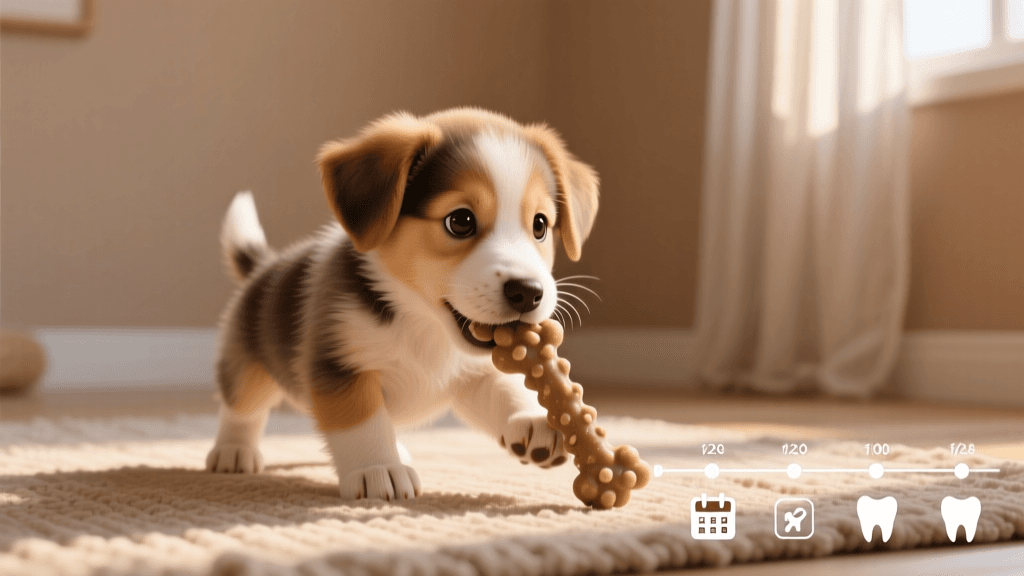
Always have appropriate redirection tools ready. The Kong Classic Puppy (approx. $15), stuffed with frozen plain pumpkin puree or puppy-safe peanut butter, provides excellent relief for gums that are beginning to prepare for the teething phase, which will fully hit around 14 weeks.
Feeding, Nutrition, and Veterinary Milestones
At this life stage, a puppy's metabolism is running at full speed. They require three to four measured meals a day to maintain stable blood sugar levels, especially in small and toy breeds prone to hypoglycemia.
Nutrition Guidelines
Choose a food formulated specifically for your dog's projected adult size. For example, Purina Pro Plan Large Breed Puppy (approx. $65 for a 34lb bag) contains optimized calcium-to-phosphorus ratios to prevent rapid, damaging bone growth in giant breeds. Feed according to the package guidelines based on your puppy's current weight, usually splitting the daily allotment into three meals (e.g., 7:30 AM, 12:00 PM, and 5:00 PM). Remove the bowl after 15 minutes to establish a strict mealtime routine, which in turn makes potty training highly predictable.
The 8-to-12 Week Vet Schedule
Expect to visit your veterinarian every two to three weeks during this stage. The standard DHPP (Distemper, Hepatitis, Parainfluenza, Parvovirus) vaccine is given as a series of boosters, typically at 8, 10, and 12 weeks of age. You will also administer monthly heartworm and flea/tick preventatives, and likely complete a fecal test and deworming protocol. Budget approximately $100 to $150 per veterinary visit during this intensive vaccination window.
Summary of the 8 to 12 Week Stage
Surviving the 8 to 12 week life stage requires immense patience, a strict adherence to schedules, and a proactive approach to your puppy's environment. By enforcing nap times, utilizing a properly sized crate, practicing safe socialization, and staying on top of your veterinary booster schedule, you are laying the unbreakable foundation for a well-adjusted, confident, and healthy adult dog. Remember, the time and energy you invest during these fleeting four weeks will pay dividends for the next decade or more of your life together.
marcus-aldridge
All our authors care for dogs every day — read more of their work on the authors page.