The 8-12 Week Puppy Care Guide: Surviving The First Month
Discover essential 8-12 week puppy care tips for the first month home. Learn feeding schedules, potty training, and socialization milestones.

Welcome to the Toddler Phase: 8 to 12 Weeks
Bringing home a puppy between 8 and 12 weeks of age is one of the most exciting milestones in dog ownership. However, this specific life stage is also the most demanding. At this age, your puppy is essentially a toddler. Their brain is a sponge, their bladder is incredibly small, and they are entirely dependent on you for structure, nutrition, and safety. This critical developmental window lays the foundation for your dog's adult behavior, health, and temperament.
In this comprehensive life stage care guide, we will break down exactly how to navigate the first 30 days with your 8-to-12-week-old puppy. From precise feeding schedules and potty training boot camps to navigating the first fear period, here is everything you need to know to survive and thrive during the first month home.
Setting Up the Safe Space: Crate and Playpen
Before your puppy even crosses the threshold, you must establish a safe haven. Puppies at this age require strict confinement when unsupervised to prevent destructive chewing and household accidents. The most effective setup is a combination of a properly sized crate and an attached exercise pen.
Choosing the Right Crate
For an 8-week-old puppy, a crate that is too large will allow them to eliminate in one corner and sleep in the other, which ruins potty training. We recommend the MidWest Homes for Pets iCrate (approx. $45 to $70). If you have a medium or large breed, purchase a 36-inch or 42-inch crate that includes an adjustable divider panel. This allows you to expand the space as your puppy grows without buying multiple crates. The space should only be large enough for the puppy to stand up, turn around, and lie down comfortably.
The Playpen Setup
Attach a wire or plastic playpen, such as the Iris USA 4-Panel Exercise Playpen (approx. $50), to the front of the crate. Line the playpen floor with washable potty pads or a litter box designed for dogs (like the Purina Dog Litter System). This creates a 'bedroom and bathroom' suite, teaching the puppy to keep their sleeping area clean while providing a safe space to relieve themselves when you are at work or asleep.
The 8-12 Week Feeding Schedule
Puppies in this age bracket have high metabolic rates but tiny stomachs. Free-feeding (leaving food out all day) is highly discouraged, as it makes potty training unpredictable and can lead to rapid, unhealthy growth in large breeds. Instead, implement a strict scheduled feeding routine using a high-quality puppy formula, such as Purina Pro Plan Puppy or Hill's Science Diet Puppy. Expect to spend between $60 and $110 per month on food, depending on your dog's projected adult size.
| Puppy Age | Meals Per Day | Water Access | Est. Monthly Food Cost |
|---|---|---|---|
| 8 Weeks | 4 Meals | Supervised, offer every 2 hours | $60 - $80 |
| 10 Weeks | 3 to 4 Meals | Supervised, offer every 2 hours | $70 - $90 |
| 12 Weeks | 3 Meals | Free choice during the day, remove at 7 PM | $80 - $110 |
Pro Tip: To aid in potty training, pick up your puppy's water bowl two hours before bedtime. For example, if lights out is at 10:00 PM, remove the water at 8:00 PM to reduce the likelihood of middle-of-the-night bathroom breaks.
Potty Training Boot Camp: The First 30 Days
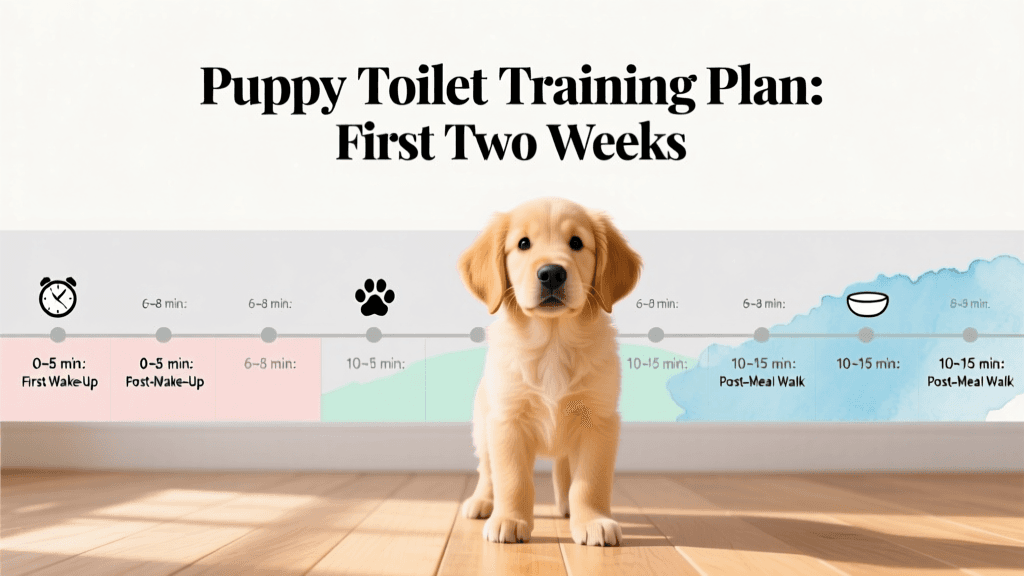
The golden rule of puppy potty training is based on bladder capacity: a puppy can hold their bladder for roughly one hour per month of age. Therefore, an 8-week-old (2-month-old) puppy can physically hold it for a maximum of two to three hours, but practically, they need to go out every 30 to 45 minutes when active.
The Action Plan
- Timing: Take the puppy outside immediately upon waking up, within 15 minutes after eating or drinking, and immediately after vigorous play sessions.
- The Command: Use a consistent verbal cue like 'Go Potty' while they are in the act, followed by a high-value treat reward (like Zuke's Mini Naturals, cut into pea-sized pieces).
- Accident Cleanup: Never use ammonia-based cleaners, as they mimic the scent of urine. You must use an enzymatic cleaner like Nature's Miracle Advanced Stain and Odor Eliminator (approx. $15) to completely break down the uric acid crystals and prevent repeat offenses.
Navigating the First Fear Period and Socialization
Between 8 and 11 weeks of age, puppies go through their first 'fear period.' During this time, negative or overly stimulating experiences can leave a lasting psychological imprint. According to the American Kennel Club (AKC), this is also the prime socialization window, meaning you must carefully balance exposing your puppy to the world while ensuring they feel safe.
The critical socialization window closes around 12 to 16 weeks of age. What your puppy experiences now will shape their behavioral baseline for the rest of their life.
The 8-12 Week Socialization Checklist
Carry your puppy or use a stroller to expose them to the world before their vaccinations are complete. Do not let them walk on public ground where unknown dogs have been. Focus on:
- Surfaces: Let them walk on grass, gravel, grates, and slippery floors.
- Sounds: Play recordings of thunderstorms, fireworks, and city traffic at a low volume while feeding them treats to build positive associations.
- People: Invite friends over wearing hats, sunglasses, and bulky coats. Ask them to offer treats gently without looming over the puppy.
Veterinary Care and Vaccination Timeline
Your puppy's immune system is still developing, making them highly susceptible to deadly diseases like Parvovirus and Distemper. The ASPCA Puppy Care Guidelines and the American Veterinary Medical Association (AVMA) strongly emphasize adhering to a strict vaccination protocol during these early weeks.
Core Vaccines and Preventatives
At 8 weeks, your puppy should receive their second round of the DHPP vaccine (Distemper, Hepatitis, Parainfluenza, and Parvovirus). They will also need a Bordetella (kennel cough) vaccine if they will be attending group training classes or boarding. Additionally, your vet will prescribe a monthly heartworm and flea/tick preventative, such as NexGard or Revolution Plus (approx. $25 to $40 per month). Ensure you have a follow-up appointment scheduled for 11 to 12 weeks of age for their third DHPP booster.
Teething and Bite Inhibition
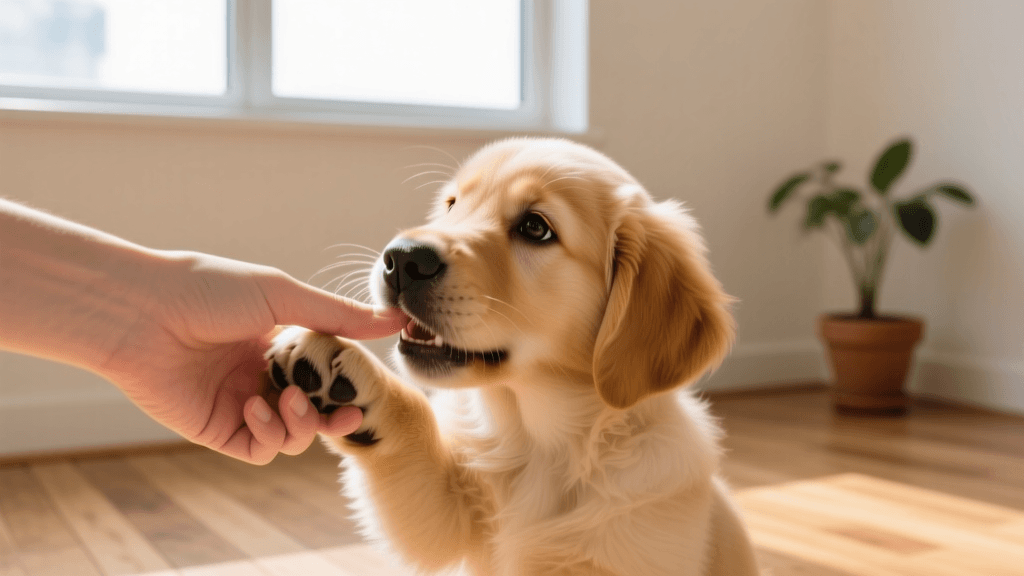
At 8 weeks, your puppy has 28 razor-sharp deciduous teeth (baby teeth). While they won't start losing these teeth until around 14 weeks, they are already experiencing gum discomfort and an intense need to chew. Furthermore, puppies use their mouths to explore the world, which leads to nipping and biting.
Managing Puppy Bites
When your puppy bites your skin, let out a high-pitched 'Ouch!' and immediately redirect their mouth to an appropriate chew toy. The KONG Classic Puppy (the pink or blue rubber version, approx. $15) is an excellent tool. Stuff it with a mixture of plain greek yogurt and mashed bananas, then freeze it. The cold rubber will soothe their aching gums, and the mental stimulation of licking out the filling will burn off excess energy. Another great option is the Nylabone Puppy Chew (approx. $8), which is specifically designed with softer rubber for developing jaws.
Final Thoughts on the First Month
Surviving the 8 to 12-week stage requires immense patience, sleep deprivation, and unwavering consistency. By setting up a structured environment, adhering to a strict feeding and potty schedule, and prioritizing positive socialization, you are actively shaping a confident, well-adjusted adult dog. Remember that every accident or chewed shoe is simply a learning opportunity. Take a deep breath, stick to your routine, and enjoy the fleeting magic of puppyhood.
priya-sutaria
All our authors care for dogs every day — read more of their work on the authors page.