Puppy Biting and Mouthing: An Expert Behavior Analysis
Discover expert behavioral strategies to stop puppy biting and mouthing. Learn bite inhibition techniques, timing, and recommended chew toys.
The Ethology of Puppy Mouthing: Tactile Exploration vs. Aggression
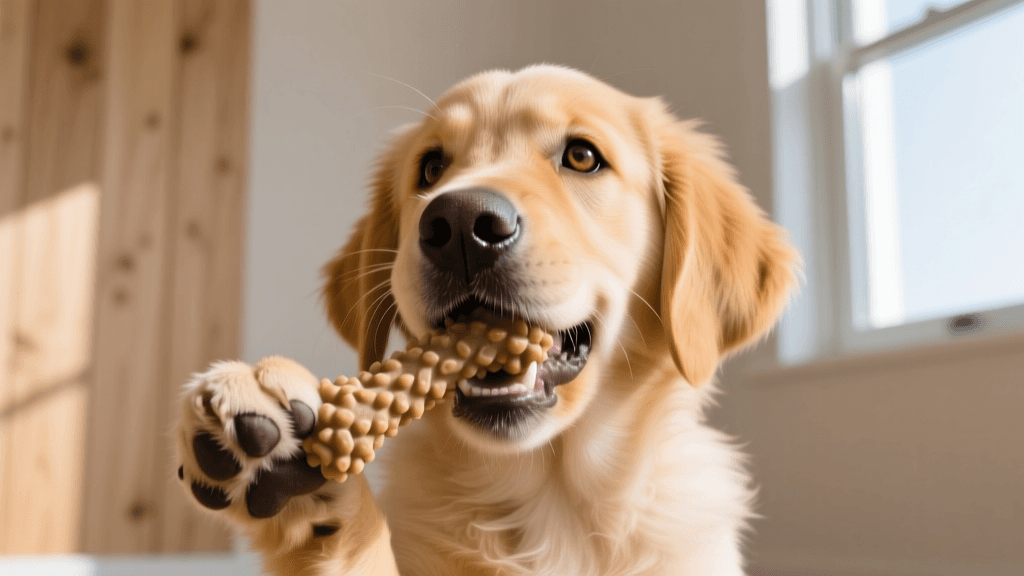
From a behavioral analysis perspective, puppy mouthing is frequently mischaracterized by novice owners as early-onset aggression. In reality, ethologists and certified applied animal behaviorists recognize mouthing as a primary mechanism for tactile exploration, play solicitation, and environmental mapping. Puppies lack the manual dexterity of primates; therefore, their oral cavity serves as their primary tool for investigating the physical properties of their surroundings. Furthermore, during the critical socialization period (approximately 3 to 12 weeks of age), play-biting with littermates is the foundational mechanism for developing bite inhibition—the learned ability to control the force of a jaw strike.
When a puppy transitions to a human household, they must undergo a process of cross-species generalization. They must learn that human skin is entirely off-limits, a concept that requires precise operant conditioning and environmental management. According to the Humane Society of the United States (HSUS), consistent, non-aversive feedback is the most scientifically validated method for shaping appropriate oral behavior without inducing fear or defensive aggression.
The Neurodevelopmental Window for Bite Inhibition
Bite inhibition is not an innate trait; it is an acquired skill with a highly sensitive developmental window. Behavioral research indicates that the most effective period for teaching bite inhibition is between 4 and 16 weeks of age. During this time, the puppy's central nervous system is highly plastic, and they are acutely attuned to social feedback.
The Teething Timeline and Oral Discomfort
It is crucial to differentiate between exploratory mouthing and teething-induced chewing. The eruption of adult teeth creates significant gingival inflammation and discomfort, driving a biological imperative to chew on firm objects to facilitate the shedding of deciduous (baby) teeth.
- 3 to 5 Weeks: Deciduous incisors and canines erupt; initial littermate play-biting begins.
- 12 to 16 Weeks: Adult incisors begin to erupt; noticeable increase in destructive chewing and mouthing intensity.
- 16 to 24 Weeks: Adult canines and premolars erupt; peak teething discomfort.
- 6 to 8 Months: Full adult dentition is established; chewing transitions from a biological necessity to a behavioral enrichment activity.
Expert Behavioral Protocols for Managing Mouthing
To effectively modify mouthing behavior, we must apply the principles of applied behavior analysis (ABA), specifically utilizing Differential Reinforcement of Incompatible Behavior (DRI) and Negative Punishment (P-).
Protocol 1: Differential Reinforcement of Incompatible Behavior (DRI)
DRI involves reinforcing a behavior that is physically incompatible with the unwanted behavior. A puppy cannot bite your skin if they are actively chewing on an appropriate toy. When the puppy approaches with an open mouth or exhibits the precursor behaviors of a play-bow and lunging, immediately present a high-value chew toy.
Actionable Step: Keep a rotation of three distinct textured toys in your primary living area. When the puppy's teeth make contact with your clothing or skin, emit a neutral marker word (such as Oops or Too bad), withdraw your attention for exactly two seconds, and then present the toy. When the puppy bites the toy, immediately reinforce with verbal praise and continued play.
Protocol 2: Negative Punishment (The Reverse Time-Out)
If DRI fails and the puppy persists in biting with high arousal, we employ negative punishment—the removal of a desired stimulus (your attention) to decrease the frequency of the unwanted behavior. The American Kennel Club (AKC) emphasizes that physical corrections, such as holding the muzzle shut, are contraindicated as they often exacerbate fear and trigger defensive biting.
The 30-Second Reverse Time-Out:
- The puppy bites your skin with moderate to high pressure.
- You immediately say a consistent cue, such as Time-out, in a calm, flat tone.
- You stand up, cross your arms, and break all eye contact for exactly 30 seconds. (Do not leave the room, as this can trigger separation anxiety or an extinction burst).
- After 30 seconds, re-engage the puppy by asking for a simple, incompatible behavior like Sit or Touch (hand target).
- Resume play, reinforcing gentle interaction.
Strategic Enrichment: Recommended Chew Toys and Tools
Managing a puppy's oral fixation requires providing appropriate outlets that satisfy their biological need to chew while providing mental stimulation. Below is an expert-curated list of enrichment tools, including specific measurements and estimated costs.
- KONG Classic Rubber Toy (Red or Black): The gold standard for food-dispensing enrichment. Cost: $12 - $18. Preparation: Plug the small hole with a dab of xylitol-free peanut butter. Fill the core with a mixture of 2 tablespoons of plain, unsweetened yogurt and 1 tablespoon of soaked kibble. Freeze for 4 to 6 hours. The cold temperature provides analgesic relief for inflamed gums.
- West Paw Toppl (Small and Large Interlocking): An excellent alternative for puppies who extract KONG fillings too quickly. Cost: $21.95. The interlocking design increases the difficulty level, extending the chewing session by 15 to 20 minutes, which helps lower the puppy's overall arousal state.
- Nylabone Puppy Chew (Soft Polymer): Designed specifically for deciduous teeth. Cost: $5 - $8. These feature raised nubs that massage the gums. Safety Note: Discard when the nubs are worn down to prevent gastrointestinal blockage.
- Wool Snuffle Mat: Cost: $25 - $35. While not a chew toy, engaging a puppy in 10 minutes of scent-work on a snuffle mat burns the equivalent mental energy of a 45-minute walk, significantly reducing hyperactive mouthing born from under-stimulation.
Data Table: Troubleshooting Common Mouthing Scenarios
Behavioral modification requires precise identification of the antecedent (trigger) and the function of the behavior. Use the following matrix to diagnose and address specific mouthing scenarios.
| Scenario / Antecedent | Behavioral Function | Expert Intervention Strategy | Expected Outcome Timeline |
|---|---|---|---|
| Biting ankles/pant legs during walking | Predatory drift / Herding instinct / Play solicitation | Stop moving immediately (become a tree). Toss a high-value treat away from you to redirect the predatory sequence. | 2 to 3 weeks of consistent application |
| Biting hands during petting | Over-arousal / Tactile sensitivity | Implement the Three-Second Rule. Pet for 3 seconds, then remove hands and observe. If the puppy nudges, resume. If they bite, initiate a 30-second time-out. | 1 to 2 weeks |
| Destructive chewing on furniture | Teething discomfort / Boredom / Lack of environmental management | Apply a bitter apple deterrent (e.g., Grannick's Bitter Apple Spray, $10) to furniture edges. Provide frozen KONG alternatives. | Immediate management; habituation in 4 weeks |
| Biting when tired/cranky (evening) | Overtiredness / Inability to self-soothe | Enforce a structured nap schedule. Place the puppy in a crate or pen with a calming chew (e.g., bully stick) for a 90-minute enforced rest. | Immediate reduction in evening zoomies and biting |
Identifying Red Flags: When Mouthing Crosses into Aggression
While 95% of puppy biting is normal developmental behavior, a certified behaviorist must be consulted if the mouthing is accompanied by specific warning signs that indicate true aggression or severe resource guarding. These red flags include:
- Stiffening of the body, hard staring, and low-pitched growling prior to a bite.
- Biting that is triggered by approaching the puppy while they are eating or resting (resource guarding).
- Bites that break the skin consistently, accompanied by a lack of appeasement behaviors (such as licking or play-bowing) afterward.
- Fear-based biting characterized by a tucked tail, pinned ears, and attempts to flee before striking.
If any of these behaviors are present, cease all DIY training protocols and seek an evaluation from a veterinarian to rule out underlying medical causes (such as localized pain or neurological issues), followed by a consultation with a Certified Applied Animal Behaviorist (CAAB) or a veterinary behaviorist (DACVB).
Conclusion
Navigating the puppy mouthing phase requires patience, consistency, and a solid understanding of canine ethology. By viewing biting not as an act of defiance but as a natural developmental milestone, owners can utilize strategic enrichment, precise operant conditioning, and structured time-outs to shape a gentle, well-adjusted adult dog. Remember that bite inhibition is a lifelong skill, and the foundation you build during the first 16 weeks will dictate your dog's oral interactions for the rest of their life.
beth-carrasco
All our authors care for dogs every day — read more of their work on the authors page.