The Best Puppy Teething Toys: Complete Buyer's Guide
Discover the best puppy teething toys to soothe sore gums. Our buyer's guide reviews top durable, safe chews to help your pup through teething.
The Puppy Teething Timeline: What to Expect
Welcoming a new puppy into your home is an exhilarating experience, but it often comes with a painful reality: the teething phase. Puppies explore the world with their mouths, and when those sharp little teeth start shifting, your furniture, shoes, and fingers become prime targets for relief. Understanding the timeline is the first step in managing this developmental milestone.
According to veterinary experts at VCA Animal Hospitals, puppies are born without teeth. Their deciduous (baby) teeth begin to erupt at around 3 to 6 weeks of age. By the time a puppy is 12 to 16 weeks old, these baby teeth start falling out to make way for their 42 permanent adult teeth. This transitional period, which peaks between 4 and 6 months of age, is when puppies experience the most intense gum soreness, inflammation, and the overwhelming urge to chew.
Providing the right teething toys is not just about saving your baseboards; it is a critical component of early puppy care, behavioral training, and proper oral development. In this comprehensive buyer's guide, we will review the best puppy teething toys on the market, outline what to look for, and share actionable tips to soothe your puppy's aching gums safely.
Crucial Factors When Buying Teething Toys
Not all dog toys are created equal, and a toy meant for an adult dog can be dangerous for a teething puppy. When shopping for teething relief, keep the following criteria in mind:
1. Material Safety and Durability
Puppies have sharp teeth but relatively weak jaws compared to adult dogs. You want a material that is soft enough not to fracture their developing teeth but durable enough to withstand hours of gnawing. Natural rubber, puppy-specific nylon, and tightly woven cotton are excellent choices. Avoid cheap plastics that can splinter into sharp shards, which pose severe choking and intestinal blockage hazards.
2. Size and Choking Hazards
Always size up when in doubt. A toy that is too small can easily become lodged in a puppy's throat. As a general rule, the toy should be large enough that your puppy cannot fit the entire thing inside their mouth. If you are buying a plush or rope toy, ensure there are no small, detachable parts like plastic eyes or bells.
3. Texture and Soothing Capabilities
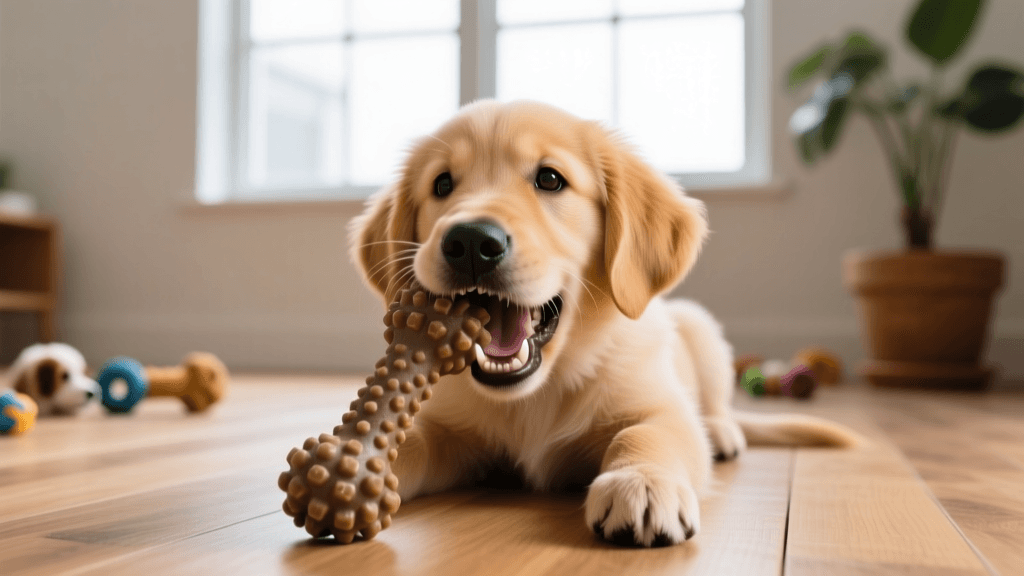
Textured surfaces help massage inflamed gums and clean emerging teeth. Look for toys with nubs, ridges, or bristles. Additionally, toys that can be safely frozen provide a numbing effect that drastically reduces gum swelling and pain.
Top 5 Puppy Teething Toys: Product Reviews
1. KONG Puppy Toy (Natural Teething Rubber)
Price Range: $10 - $15
Material: Exclusive Puppy Natural Rubber Formula
Best For: Food-motivated puppies and unsupervised crate time
The KONG Puppy is a staple in the dog care community for good reason. Unlike the classic red KONG designed for adult dogs, the puppy version (available in pink or blue) is made from a softer, more forgiving rubber that protects developing teeth while still offering satisfying resistance. The hollow center is its best feature; you can stuff it with puppy-safe peanut butter (strictly xylitol-free), plain yogurt, or kibble soaked in low-sodium chicken broth. Actionable Tip: Freeze the stuffed KONG for 4 to 6 hours before giving it to your puppy. The frozen treat will soothe their gums and keep them occupied for up to 45 minutes.
2. Nylabone Puppy Chew Freezer Dog Toy
Price Range: $8 - $12
Material: Soft Polymer and Nylon
Best For: Aggressive puppy chewers needing cold therapy
Nylabone's Puppy Chew Freezer toy features a soft, flexible outer ring that can be soaked in water and frozen, surrounding a tougher nylon center infused with chicken flavor. The contrasting textures provide excellent gum massage, while the frozen outer ring delivers immediate, numbing relief to hot, inflamed gums. It is ergonomically shaped, making it easy for clumsy puppy paws to hold down while they chew. However, always supervise your puppy with nylon toys and discard them once the knuckles wear down to a small nub.
3. Benebone Puppy Wishbone Chew Toy
Price Range: $12 - $14
Material: Puppy-specific Nylon with Real Bacon Infusion
Best For: Puppies who prefer hard, non-edible chews
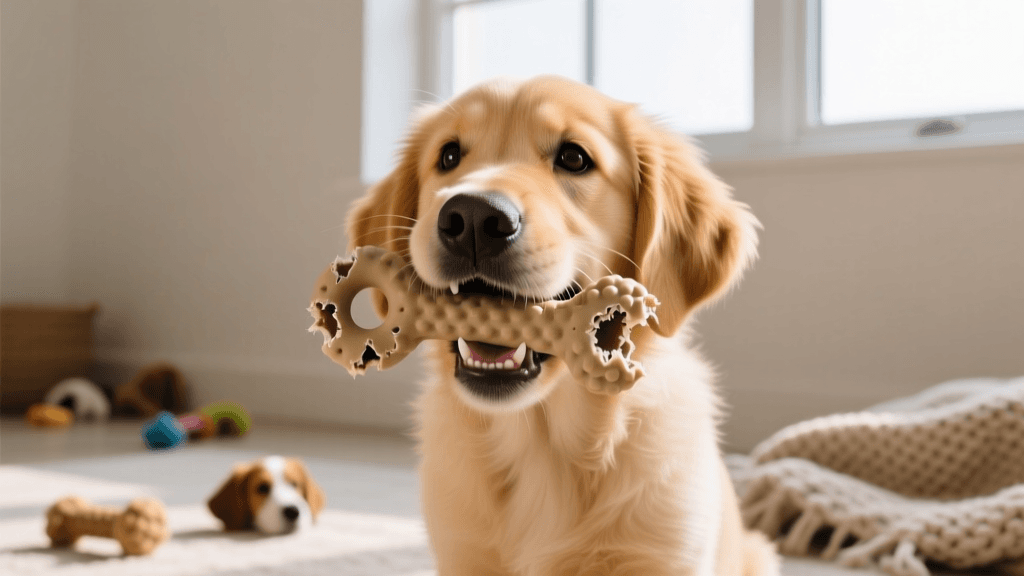
Benebone designed this wishbone-shaped chew specifically for puppies under 60 lbs. The nylon is slightly softer than their adult versions to prevent tooth fractures, and it is infused with 100% real bacon to keep your puppy interested. The wishbone shape is a game-changer for ergonomics; it allows the puppy to grip the toy with their front paws while they gnaw on the angled prongs. It is highly durable, but it is not edible, so monitor your puppy to ensure they are not biting off and swallowing large chunks.
4. Petstages Cool Teething Stick
Price Range: $6 - $9
Material: Freezable Cotton-Poly Blend Netting
Best For: Gentle chewers and gum cleaning
The Petstages Cool Teething Stick is a budget-friendly, highly effective option for soothing sore gums. The toy is made from a durable, crinkly netting that you soak in water and freeze. As the puppy chews, the frozen netting creates a gentle, scrubbing action that helps clean the teeth and massage the gums. The internal crinkle layer adds auditory stimulation, keeping the puppy engaged. Because it is fabric-based, it is best used under supervision to prevent the puppy from tearing and ingesting the material.
5. West Paw Zogoflex Hurley
Price Range: $15 - $18
Material: Zogoflex (Non-toxic, BPA-free Thermoplastic)
Best For: Water-loving puppies and fetch-training
If your puppy is a relentless chewer who destroys standard rubber toys, the West Paw Hurley is a premium upgrade. Made in the USA from Zogoflex, this toy is incredibly tough yet buoyant and flexible. It floats, making it perfect for introducing your puppy to water retrieval games, which is an excellent socialization and exercise milestone. While it is not specifically designed to be frozen, its solid, bendable texture provides excellent resistance for teething puppies without the risk of splintering.
Comparison Chart: Best Teething Toys for Puppies
| Product Name | Material | Freezable? | Price Range | Best Use Case |
|---|---|---|---|---|
| KONG Puppy Toy | Soft Natural Rubber | Yes | $10 - $15 | Crate training & mental stimulation |
| Nylabone Puppy Freezer | Polymer & Nylon | Yes | $8 - $12 | Heavy chewers needing cold relief |
| Benebone Puppy Wishbone | Softer Nylon | No | $12 - $14 | Ergonomic gripping & long-lasting chew |
| Petstages Teething Stick | Cotton-Poly Netting | Yes | $6 - $9 | Gum scrubbing & gentle relief |
| West Paw Zogoflex Hurley | Zogoflex Thermoplastic | No | $15 - $18 | Destructive chewers & fetch games |
DIY Soothing Remedies for Sore Gums
If you need immediate relief for your puppy and do not have a specialized toy on hand, your kitchen holds several safe, effective alternatives:
- Frozen Carrots: Large, whole carrots (never baby carrots, which are a choking hazard) can be peeled and frozen. They provide a satisfying crunch, massage the gums, and are packed with beta-carotene and fiber. Always supervise your puppy and discard the carrot once it becomes small enough to swallow whole.
- The Broth Towel: Take a clean, small washcloth, soak it in low-sodium chicken or beef broth, twist it into a tight rope, and freeze it for 3 hours. The cold fabric soothes the gums, and the broth flavor keeps them chewing. Discard if the towel begins to rip.
- Ice Cubes: While plain ice cubes can be too hard and risk fracturing a puppy's delicate teeth, freezing low-sodium broth or pureed pumpkin in an ice cube tray creates a softer, safer, and more flavorful alternative.
What to Avoid: Dangerous Chews and Toys
When your puppy is whining and chewing on the coffee leg, it can be tempting to hand them anything that might distract them. However, certain items are incredibly dangerous for teething puppies.
Warning: Never give your puppy cooked bones of any kind. Cooking makes bones brittle, causing them to splinter into sharp shards that can puncture the esophagus, stomach, or intestines.
The U.S. Food and Drug Administration (FDA) explicitly warns against feeding dogs bones, noting that they can cause broken teeth, mouth wounds, and life-threatening gastrointestinal blockages. Additionally, avoid rawhide chews; they are often treated with harsh chemicals, pose a massive choking hazard, and are notoriously difficult for puppies to digest. Finally, steer clear of tennis balls, as the fuzzy exterior acts like sandpaper on developing tooth enamel and can easily be chewed apart and swallowed.
Integrating Toys into Early Socialization and Training
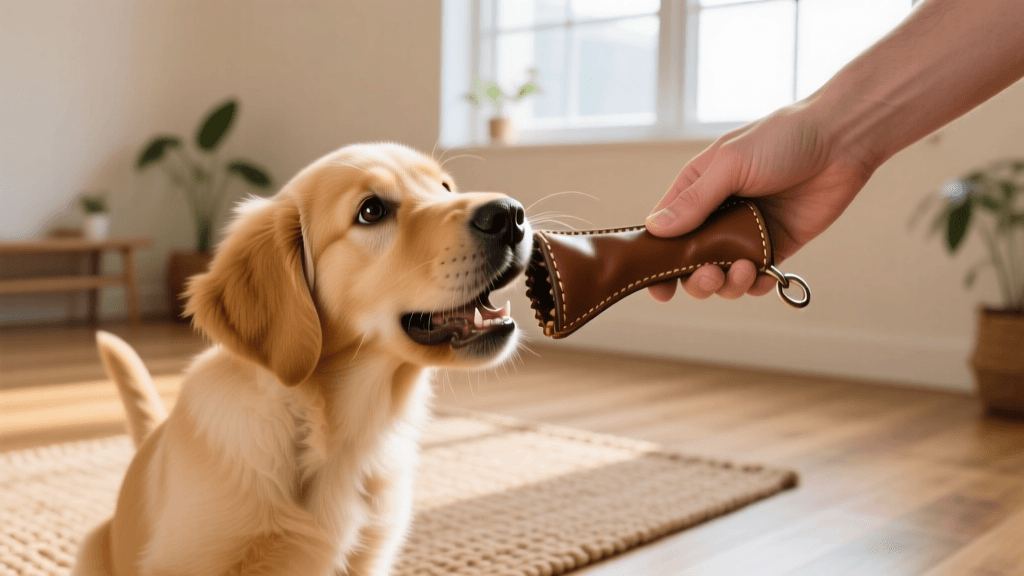
Teething toys are not just medical aids; they are powerful training tools. The American Kennel Club (AKC) emphasizes that redirecting inappropriate chewing to approved toys is a cornerstone of early puppy socialization and boundary setting. When your puppy bites your hand or nips at your ankles, immediately withdraw your attention and offer a frozen KONG or a Nylabone instead. Praise them enthusiastically when they chew the toy. This teaches bite inhibition and helps them understand what is acceptable to chew on.
Furthermore, using high-value stuffed toys during crate training can transform the crate from a scary isolation chamber into a safe, rewarding den. By associating the crate with the ultimate teething relief of a frozen, peanut-butter-stuffed toy, you are setting the foundation for a well-adjusted, confident adult dog.
Conclusion
The teething phase is a temporary, albeit frustrating, developmental milestone that every puppy must navigate. By investing in high-quality, safe, and soothing teething toys like the KONG Puppy, Nylabone Freezer Chew, or Benebone Wishbone, you can save your belongings, protect your puppy's developing teeth, and provide them with the comfort they desperately need. Remember to always supervise playtime, size your toys appropriately, and consult your veterinarian if your puppy shows signs of excessive bleeding, lethargy, or refusal to eat during the teething process.
aaron-whyte
All our authors care for dogs every day — read more of their work on the authors page.