The Ultimate Guide to Puppy Teething Stages and Relief
Discover the timeline of puppy teething, learn how to soothe sore gums, and stop destructive chewing with our expert life stage care guide.
Understanding the Puppy Teething Timeline
Welcoming a new puppy into your home is an exciting milestone, but between the ages of three and six months, you will inevitably encounter one of the most challenging life stages of early dog ownership: teething. During this developmental window, your puppy's 28 sharp baby teeth (deciduous teeth) will fall out, making way for a full set of 42 adult teeth. This process causes significant gum discomfort, leading to an insatiable urge to chew on anything they can find, including your favorite shoes, furniture, and even your hands.
Understanding the biological timeline of canine dental development is the first step in managing this life stage effectively. By anticipating when your puppy's teeth will shift, you can proactively provide the right soothing remedies and implement bite inhibition training before destructive habits take root.
The Anatomy of Puppy Teething: A Month-by-Month Chart
Canine dental eruption follows a highly predictable schedule. Below is a structured timeline to help you track your puppy's dental milestones and anticipate changes in their chewing behavior.
| Age Range | Dental Milestone | Teeth Count | Common Symptoms |
|---|---|---|---|
| 2 to 4 Weeks | Deciduous incisors and canines emerge | 28 Baby Teeth | Nursing discomfort for the mother |
| 4 to 6 Weeks | Deciduous premolars fully erupt | 28 Baby Teeth | Exploratory nipping and biting |
| 12 to 16 Weeks | Baby teeth fall out; adult incisors/canines emerge | Mixed (Transitional) | Heavy drooling, mild gum bleeding, whining |
| 4 to 6 Months | Adult premolars and molars fully erupt | 42 Adult Teeth | Intense chewing, swallowed baby teeth |
According to the American Kennel Club (AKC), it is entirely normal for you to never actually find your puppy's fallen baby teeth. Most puppies swallow them while eating or playing, which is harmless and part of the natural process.
Recognizing the Signs of a Teething Puppy
While increased chewing is the most obvious indicator, teething manifests in several other physical and behavioral ways. Watch for the following symptoms during the 3-to-6-month life stage:
- Excessive Drooling: You may notice damp spots on their bedding or chest fur.
- Spotting of Blood: Small amounts of blood on chew toys or in their water bowl are normal as baby teeth loosen.
- Changes in Eating Habits: Your puppy may eat slower, drop kibble, or show hesitation when biting into hard food.
- Ear Rubbing and Whining: The pain from erupting teeth can radiate to their ears and jaw, causing general irritability.
- Swollen or Red Gums: Gentle lifting of the lip may reveal inflamed gum tissue around erupting adult teeth.
Actionable Relief: Best Toys and Home Remedies
To save your belongings and soothe your puppy's aching mouth, you must provide appropriate, cold outlets for their chewing instinct. Cold temperatures help constrict blood vessels in the gums, reducing inflammation and numbing the pain.
1. The Frozen KONG Puppy Method
The VCA Animal Hospitals recommend rubber toys that can be stuffed and frozen. Purchase a KONG Puppy toy (specifically the pink or blue rubber, which is softer for developing jaws; cost: ~$12-$15). Plug the small hole with a dab of dog-safe peanut butter (ensure it is xylitol-free), fill the core with plain, unsweetened Greek yogurt mixed with mashed blueberries, and freeze it for at least three hours. This provides a soothing, long-lasting treat that can keep a puppy occupied for 30 to 45 minutes.
2. Broth Ice Cubes
Standard ice cubes can be too hard and risk fracturing a developing tooth. Instead, freeze low-sodium, onion-and-garlic-free chicken bone broth in a standard ice cube tray. Offer these in a shallow dish or a snuffle mat to prevent choking and provide a hydrating, soothing gum massage.
3. Whole Raw Carrots
For medium to large breed puppies, a whole, peeled, raw carrot acts as an excellent, low-calorie edible chew toy. The hardness massages the gums, and the cold temperature (if kept in the fridge) provides mild relief. Always supervise your puppy to ensure they do not break off and choke on large chunks.
Bite Inhibition and Stopping Destructive Chewing
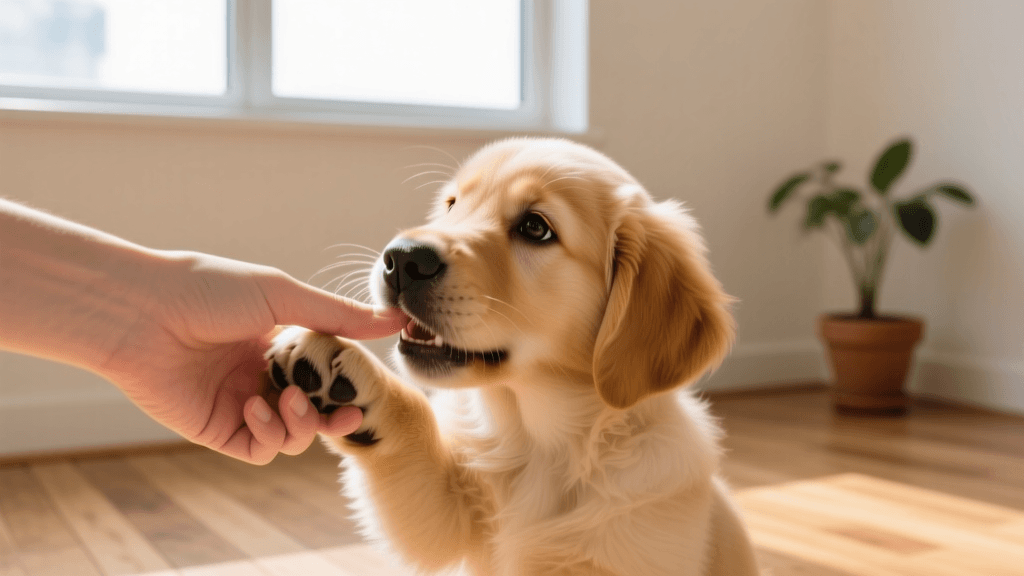
The teething life stage is the critical window for teaching 'bite inhibition'—the ability for a dog to control the force of their mouthing. Puppies naturally explore the world with their mouths, but they must learn that human skin is entirely off-limits.
Expert Tip: Consistency is paramount. Every member of the household must enforce the exact same rules regarding mouthing and chewing to prevent confusing the puppy.
- The 'Ouch' Technique: When your puppy's teeth make contact with your skin, immediately let out a high-pitched 'Ouch!' or yelp, and go completely limp. This mimics the reaction of a littermate and signals that the bite was too hard.
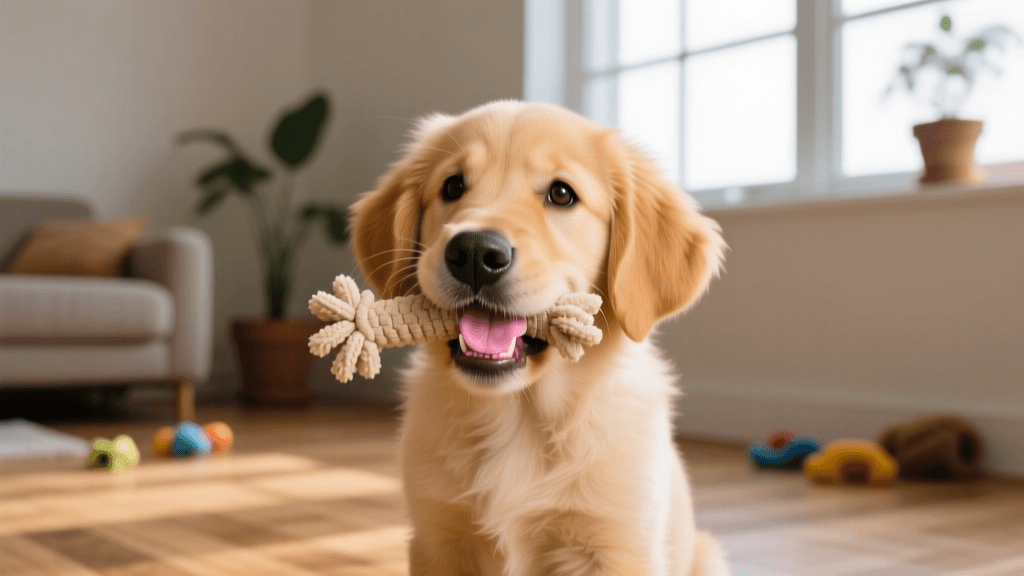
- Immediate Redirection: Once the puppy backs off or stops, immediately present an appropriate chew toy, such as a Nylabone Puppy Chew or a rope toy. Praise them enthusiastically when they bite the toy instead of your hand.
- The Time-Out Rule: If the puppy becomes overstimulated and continues to bite your skin or clothing after redirection, calmly place them in a playpen or puppy-proofed area for a 1-to-2-minute 'time-out.' This teaches them that biting humans results in the end of playtime.
For comprehensive behavioral strategies, the ASPCA's guide on managing chewing behaviors emphasizes the importance of managing the environment just as much as training the dog.
Puppy-Proofing Your Home for the Teething Stage
During the peak teething months, your puppy will seek out varied textures to relieve gum pressure. Proactive puppy-proofing is essential to prevent emergency vet visits and costly property damage.
- Electrical Cords: Use split loom tubing or cord concealers (cost: ~$20 for a multi-pack) to cover accessible wires. Chewing a live wire can result in fatal electrical burns or pulmonary edema.
- Deterrent Sprays: Apply Grannick's Bitter Apple Spray (cost: ~$12) to baseboards, table legs, and furniture corners. Reapply daily, as the taste fades over time. Always pair the use of deterrents with the provision of approved chew toys.
- Footwear and Textiles: Keep all shoes in closed closets. Puppies are drawn to shoes because they carry your scent and offer a satisfying, dense leather texture.
When to Call the Vet: Retained Deciduous Teeth
While most baby teeth fall out on their own, some puppies experience 'retained deciduous teeth.' This occurs when the adult tooth erupts alongside the baby tooth because the baby tooth's root did not reabsorb properly. This is particularly common in small and toy breeds, such as Chihuahuas, Yorkshire Terriers, and Pomeranians.
If you notice a 'double row' of teeth persisting for more than a few weeks, schedule a veterinary exam. Retained baby teeth can cause the adult teeth to erupt at abnormal angles, leading to severe malocclusion (misalignment), difficulty eating, and accelerated plaque buildup. Your veterinarian will likely recommend extracting the retained baby teeth, typically performed under general anesthesia. Depending on your region and the complexity of the extraction, this procedure can cost between $150 and $400 per tooth.
Establishing a Lifelong Dental Care Routine
The teething phase is the perfect time to acclimate your puppy to mouth handling. Once the adult teeth have fully settled (around 6 to 7 months), begin a daily brushing routine. Start by letting them lick enzymatic poultry-flavored toothpaste, such as Virbac C.E.T., off your finger. Progress to a silicone finger brush, gently rubbing the outer surfaces of the teeth for just 10 to 15 seconds a day. By normalizing dental care during the transition out of the teething life stage, you set the foundation for a lifetime of optimal oral health, preventing periodontal disease down the road.
jonas-cole
All our authors care for dogs every day — read more of their work on the authors page.