How to Stop Puppy Biting: Top Google Questions Answered
Discover answers to Google's most-asked questions about puppy biting. Learn bite inhibition, teething timelines, and actionable training tips.
Introduction to Puppy Bite Inhibition
Bringing a new puppy home is an exhilarating experience, but it often comes with a sharp, painful reality: puppy teeth. If you have found yourself typing 'how to stop puppy biting' or 'why does my puppy bite me so hard' into a search engine, you are far from alone. According to search trend data, puppy biting and teething are among the most frequently searched dog training topics globally. At Paws-Tales, we believe that understanding the root cause of this behavior is the first step toward resolving it. Puppies do not bite out of malice or dominance; they bite to explore their environment, soothe teething pain, and engage in social play. The goal of early training is not to eliminate biting entirely overnight, but to teach 'bite inhibition'—the ability to control the force of their mouthing.
Google's Most-Asked: Why Does My Puppy Bite So Much?
To address the most common Google search regarding puppy behavior, we must look at canine development. Puppies are born blind and deaf, relying heavily on their sense of touch and taste to investigate the world. Their mouths are their primary tools for exploration. Furthermore, puppies spend the first eight weeks of life wrestling with their littermates. When a puppy bites a sibling too hard, the sibling yelps and stops playing, teaching the biter to soften their jaw pressure. When a puppy enters your home, they attempt to use this same play style on human hands and ankles. Because human skin is vastly more sensitive than a dog's hide, what feels like gentle play to a puppy feels like a severe bite to you. The ASPCA emphasizes that mouthing is a normal, developmentally appropriate behavior that requires patient redirection rather than punishment.
At What Age Do Puppies Stop Biting? (Teething Timeline)
Another top-ranking 'People Also Ask' question is, 'At what age do puppies stop biting?' The answer is directly tied to their dental development. Understanding this timeline helps you anticipate chewing surges and manage your expectations.
| Puppy Age | Dental Milestone | Behavioral Impact & Training Focus |
|---|---|---|
| 2 to 4 Weeks | Deciduous (baby) incisors and canines emerge. | Puppies begin nursing and exploring littermates. No human intervention needed. |
| 5 to 8 Weeks | All 28 baby teeth are fully erupted. | Biting peaks during litter play. Puppies learn initial bite inhibition from siblings and mother. |
| 12 to 16 Weeks | Baby teeth begin falling out; adult incisors emerge. | Intense gum soreness. Puppies will chew aggressively on furniture, shoes, and hands to relieve pain. |
| 4 to 6 Months | Adult canines and premolars erupt. | The 'land shark' phase. High need for appropriate chew toys and consistent redirection. |
| 6 to 8 Months | All 42 adult teeth are fully in place. | Teething pain subsides. Biting should transition into appropriate recreational chewing. |
As noted by the American Kennel Club (AKC), most puppies will significantly reduce their mouthing behavior by the time they are six to eight months old, provided they have been consistently taught what is acceptable to chew.
Should I Yelp When My Puppy Bites? (Debunking the Myth)
A pervasive piece of advice found in older forums and outdated training books is to mimic a littermate by letting out a high-pitched yelp when your puppy bites you. While this technique works for some soft-tempered, low-arousal puppies, it frequently backfires. For many puppies—especially terriers, herding breeds, or high-prey-drive dogs—a high-pitched yelp acts as a squeaker toy, triggering their predatory drift and causing them to bite harder and become more overstimulated. Instead of yelping, modern force-free trainers recommend the 'Reverse Time-Out' method, which removes the reward (your attention) without adding vocal stimulation that might excite the dog further.
Actionable Steps to Teach Bite Inhibition
To effectively train your puppy, you need a structured, consistent protocol. Here is a step-by-step guide to implementing the Reverse Time-Out and redirection techniques.
1. The 15-Second Reverse Time-Out
When your puppy's teeth make contact with your skin or clothing, immediately say a neutral marker word like 'Oops' or 'Too bad,' stand up, and cross your arms. Turn your back or step over a baby gate for exactly 15 to 20 seconds. This teaches the puppy that teeth on skin results in the immediate end of play and attention. After 15 seconds, return and calmly offer an appropriate chew toy. If they bite the toy, praise them enthusiastically.
2. Strategic Toy Redirection
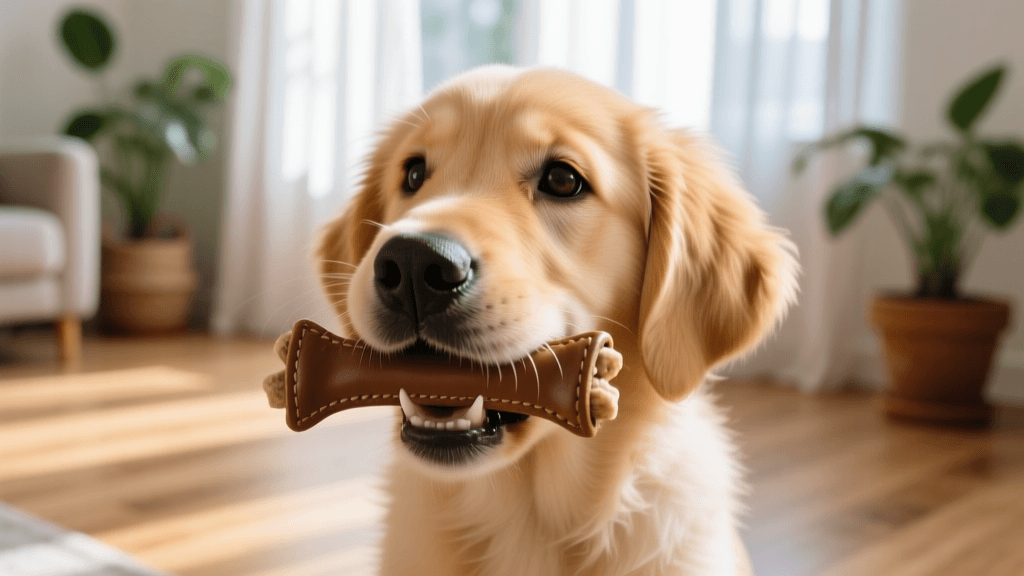
Never offer your bare hands as toys. Always keep a suitable chew toy within arm's reach during play sessions. When the puppy approaches with an open mouth, preemptively offer the toy. If they are already chewing on your pant leg, freeze (moving triggers the prey drive), wait for them to release, and immediately present the toy. The Humane Society of the United States strongly advocates for redirecting unwanted mouthing onto acceptable items rather than using physical corrections.
3. Enforced Naps for Overtired Puppies
A massive percentage of 'land shark' behavior is simply the result of an overtired puppy. Puppies require 18 to 20 hours of sleep per day. If your puppy has been awake for more than 90 minutes and suddenly becomes uncontrollably bitey, they do not need more training; they need a nap. Gently guide them to their crate or a quiet puppy-proofed pen with a long-lasting chew to help them decompress and fall asleep.
Best Chew Toys for Teething Puppies (Product Guide)
Providing the right tools is critical for saving your furniture and your hands. Here is a comparison of top-rated, veterinarian-recommended teething toys, including estimated costs and specific use cases.
- KONG Puppy (Classic Red or Blue Rubber): Cost: $12 - $15. This is the gold standard for teething. The soft rubber formula is gentle on developing gums. Pro-Tip: Stuff the cavity with 1 tablespoon of plain Greek yogurt, 2 tablespoons of soaked kibble, and a smear of dog-safe peanut butter. Freeze for 4 hours to create a soothing, long-lasting ice treat.
- Nylabone Puppy Chew (Chicken Flavor): Cost: $8 - $12. Made from a softer polymer designed specifically for puppies without adult teeth. The raised nubs help clean teeth and massage sore gums. Replace this toy once the puppy's adult canines fully erupt, as they can break off chunks of the softer material.
- West Paw Toppl: Cost: $16 - $22. An interactive, puzzle-style chew toy made from non-toxic, durable Zogoflex material. Its hollow center and inner prongs hold treats securely, forcing the puppy to work for their reward, which burns mental energy and reduces frustrated biting.
- Chilled Carrots or Washcloths: Cost: Under $5. For immediate, budget-friendly relief, soak a clean washcloth in low-sodium chicken broth, twist it into a rope, and freeze it solid. The texture and cold temperature provide immense relief to inflamed gums.
When to Seek Professional Help
While mouthing is normal, true aggression is not. If your puppy displays stiff body language, growls deeply before biting, snaps when guarding food or toys, or breaks the skin with intentional, aggressive force rather than playful mouthing, it is time to consult a professional. Seek out a Certified Professional Dog Trainer (CPDT-KA) or a Veterinary Behaviorist who utilizes positive reinforcement methodologies. Early intervention is the key to preventing minor behavioral quirks from developing into lifelong liabilities.
Training a puppy requires patience, consistency, and a deep understanding of canine development. By answering the internet's most pressing questions with science-backed, force-free methods, you can navigate the teething phase and build a foundation of trust and gentle play with your new companion.
marcus-aldridge
All our authors care for dogs every day — read more of their work on the authors page.