Puppy Sports Prep 2026: Safe Agility Foundation Guide
Discover safe 2026 puppy agility foundation training. Learn growth plate protection, essential body awareness gear, and milestone timelines for sports dogs.
Raising a Future Champion: The 2026 Approach to Puppy Sports Prep
Raising a puppy destined for the agility ring, flyball course, or competitive obedience trial is an incredibly rewarding journey. However, the excitement of envisioning your puppy on the podium must be tempered with a deep understanding of canine physiology. The 2026 consensus among veterinary sports medicine experts and top-tier agility handlers is clear: physical readiness and joint preservation must dictate your training timelines. According to the American Veterinary Medical Association, a puppy's skeletal system is highly vulnerable during the first year of life, making proper foundational care the most critical step in their sports career.
This comprehensive guide covers the essential first-year milestones for future sports dogs, focusing on safe body awareness training, growth plate protection, and the best foundation gear available in 2026.
The Science of Puppy Growth Plates and Joint Health
Before introducing any sports-specific movements, you must understand growth plates (physes). These are soft cartilage areas at the ends of long bones that allow for skeletal growth. In most breeds, these plates do not fully close and ossify into solid bone until the puppy is between 12 and 18 months of age. Small breeds may close earlier, while giant breeds can take up to 24 months.
Subjecting open growth plates to high-impact activities—such as jumping over hurdles, repetitive weaving, or sharp, high-speed turns—can cause micro-fractures, cartilage damage, and long-term orthopedic issues like osteochondritis dissecans (OCD) or exacerbated hip dysplasia. The American Kennel Club strongly emphasizes that early agility training should focus entirely on 'flatwork' and ground-level confidence building to protect developing joints.
2026 Essential Gear for Safe Puppy Foundation
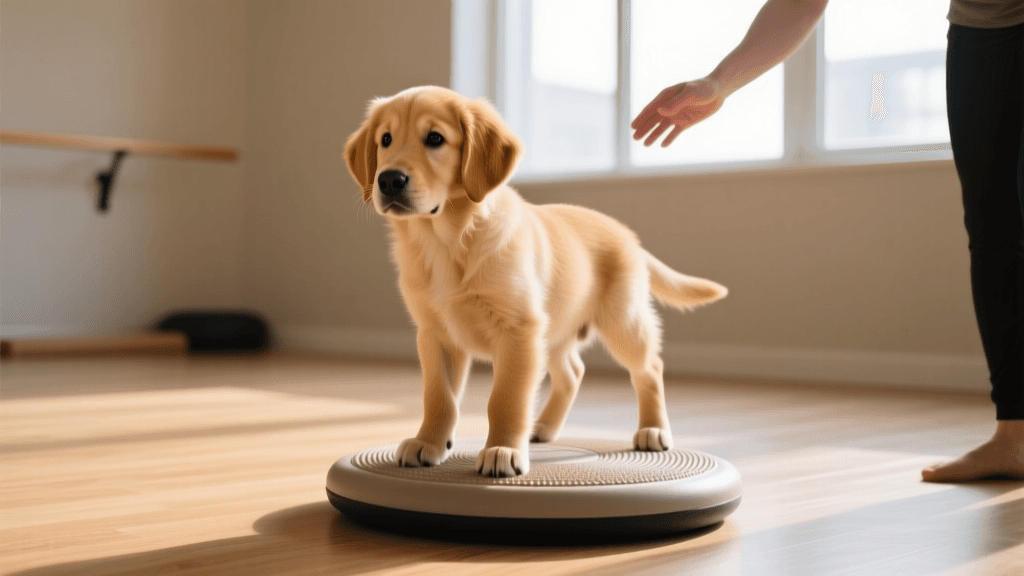
Modern canine sports science has shifted heavily toward 'proprioception'—the dog's awareness of its body in space. Building a puppy's core strength and rear-end awareness on the ground translates directly to better balance, tighter turns, and injury prevention on the course later in life. Here is the essential 2026 gear list for safe puppy foundation work:
| Gear Item | Primary Purpose | Estimated 2026 Cost | Impact Level |
|---|---|---|---|
| FitPAWS Balance Discs | Core activation and paw targeting | $35 - $50 (Set of 4) | Zero / Static |
| Paw Target Magnet Mat | Teaching contact criteria and rear-end pivots | $25 - $40 | Zero / Static |
| Adjustable Cavaletti Rails | Stride regulation and spinal flexion | $60 - $90 | Low / Walking |
| Klimb or Stable Paw Pod | Height confidence and independent limb movement | $45 - $75 | Low / Static |
Month-by-Month Puppy Sports Foundation Timeline
A structured approach ensures you build confidence without rushing physical development. Follow this timeline for your puppy's first year.
8 to 12 Weeks: Environmental Confidence and Surface Exposure
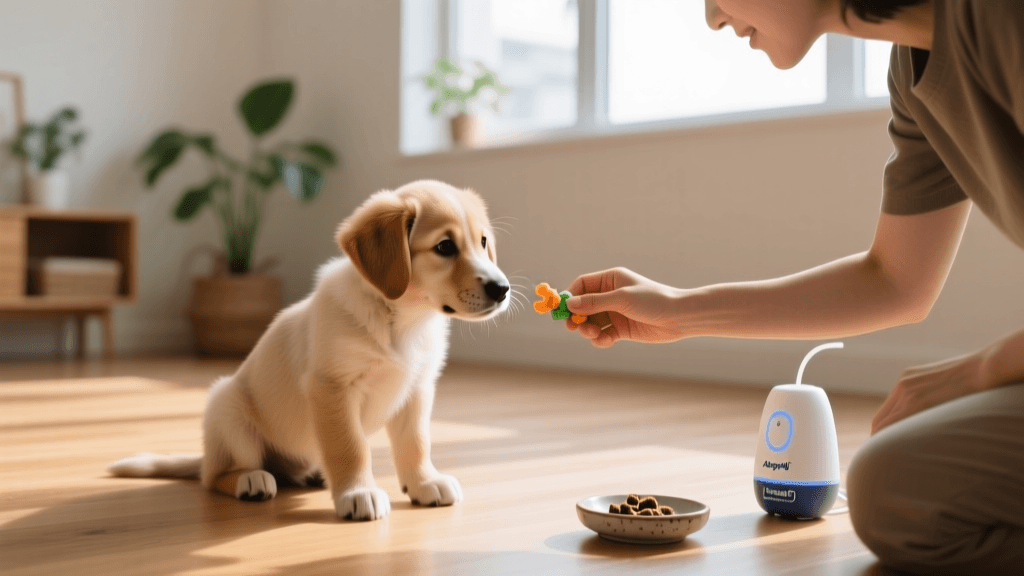
During the critical socialization window, your goal is to build a brave, adaptable mind. Introduce your puppy to a variety of surfaces: grass, gravel, metal grates, wobble boards, and inflatable balance discs. Use high-value treats to reward voluntary interaction with these surfaces. Do not force the puppy onto scary objects; let them explore at their own pace. This early exposure prevents the 'spookiness' that often plagues novice agility dogs when they encounter strange equipment or noisy environments.
3 to 6 Months: Targeting and Rear-End Awareness
As your puppy's coordination improves, introduce target mats and perch work.
- The Perch Pivot: Teach the puppy to place their front paws on a raised, stable disc (like a Paw Pod) and use their hind legs to pivot in a circle. This is the foundational skill for teaching tight jumps and rear-end awareness.
- Nose and Paw Targets: Use a magnet mat to teach the puppy to drive toward a target and hold a stationary position. This will eventually translate to flawless dog-walk and A-frame contact criteria.
6 to 9 Months: Impulse Control and Flatwork
Now is the time to build the mental discipline required for competitive sports. A fast dog without impulse control is a disqualified dog.
- Start-Line Stays: Practice placing your puppy in a sit or down, walking away, and releasing them to a toy or treat bowl. This mimics the start-line routine in agility and obedience.
- Wrapping Poles (Flat): Lay a single jump pole on the ground. Use a treat in your hand to guide the puppy in a tight circle around the pole. This teaches the biomechanics of wrapping a jump stanchion without the impact of landing.
- Tug and Release Games: Teach a reliable 'out' or 'drop' command during high-arousal tug play. This is vital for maintaining control in the ring.
9 to 12 Months: Low-Impact Cavalettis and Advanced Body Awareness
With growth plates nearing closure in medium and small breeds (and progressing in large breeds), you can introduce low-impact stride work. Set up adjustable cavaletti rails at a height no higher than the puppy's wrist (carpus). Space the poles according to your puppy's natural trotting stride. Walking and trotting over these poles encourages spinal flexion, hind-leg reach, and deliberate foot placement. Keep sessions incredibly short—no more than 3 to 5 minutes—to prevent mental and physical fatigue.
Red Flags: What to Strictly Avoid Before 12 Months
To ensure your puppy reaches their athletic prime, you must avoid activities that place asymmetric or high-impact stress on developing joints. Until your veterinarian confirms via X-ray that all growth plates are fully closed, strictly avoid the following:
- Jumping: Never allow your puppy to jump over hurdles, jump into the trunk of an SUV, or leap off high furniture. Use ramps or lift them.
- Weave Poles: The lateral spinal flexion required for weave poles is highly unnatural and dangerous for an immature spine. Do not introduce weaves until the dog is fully mature.
- Repetitive Fetch on Hard Surfaces: High-speed, skidding turns to retrieve a ball on concrete or hard-packed dirt can cause severe micro-trauma to the carpal and tarsal joints. Stick to controlled, straight-line recalls on soft grass.
- Forced Running: Do not take your puppy on long-distance jogs or bike rides. Puppies should exercise through free play and structured, short training sessions.
Mental Conditioning: The Secret Weapon of 2026 Champions
Physical foundation is only half the equation. The top competition dogs of 2026 are distinguished by their mental resilience. Crate games are essential for teaching a puppy to settle in chaotic environments. Practice covering the crate, dropping treats inside, and teaching the puppy that calm behavior yields rewards. Additionally, engage in 'arousal regulation' exercises: practice transitioning your puppy from a high-energy game of tug directly into a calm, focused heel or down-stay. This emotional elasticity is what prevents dogs from 'blowing up' or making errors when the pressure of competition is on.
Conclusion: Playing the Long Game
Preparing a puppy for dog sports is a marathon, not a sprint. By prioritizing joint health, utilizing safe 2026 foundation gear like balance discs and target mats, and focusing on mental conditioning, you are building an athlete capable of a long, healthy, and victorious career. Respect the biology of your growing puppy, celebrate the small flatwork victories, and trust that the foundation you lay in the first 12 months will support every jump, weave, and title you achieve together in the years to come.
hannah-wickes
All our authors care for dogs every day — read more of their work on the authors page.