2026 Puppy Separation Anxiety: Graduated Departure Guide
Discover the 2026 graduated departure training protocol for puppy separation anxiety using smart cameras, snuffle mats, and safe space setups.
The Reality of Puppy Separation Anxiety in 2026
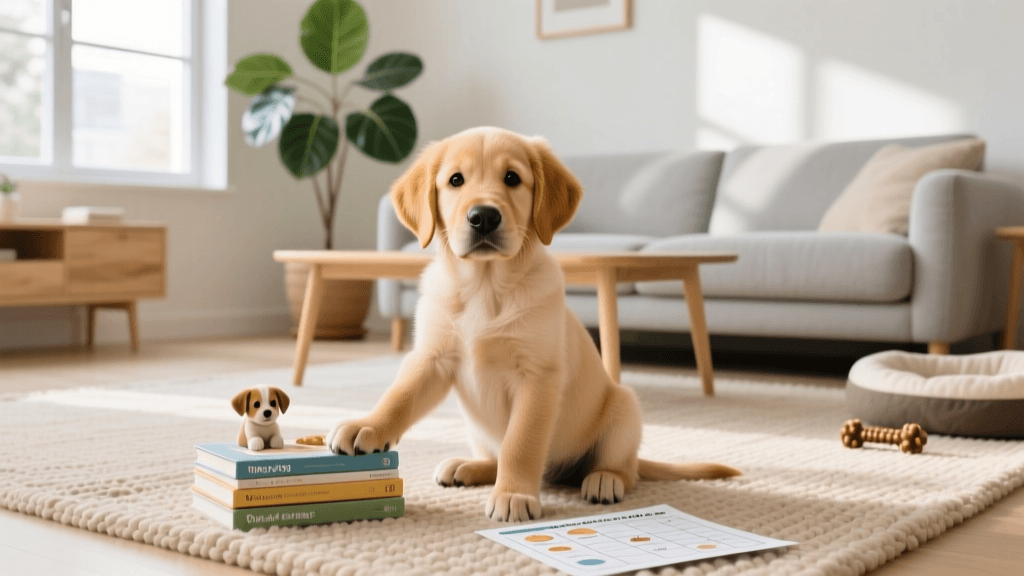
As hybrid work models and flexible schedules continue to evolve in 2026, many new puppy owners are finding themselves navigating the tricky transition of leaving their young dogs home alone. Puppies are highly social animals, and the first year of their life is a critical window for developing independence. When a puppy is left alone without proper preparation, it can lead to severe distress, destructive behavior, and chronic separation anxiety. According to the ASPCA's guidelines on separation anxiety, true separation anxiety goes beyond normal puppy whining; it involves panic responses, inappropriate elimination, and frantic escape attempts. Tackling this issue early is paramount for your puppy's mental health and your home's integrity.
This comprehensive guide explores the graduated departure training protocol, a highly effective, science-backed method for teaching your puppy that being alone is safe and rewarding. We will also cover the best 2026 smart pet cameras, foraging tools like snuffle mats, and how to design the ultimate puppy safe space.
Understanding Normal Distress vs. Clinical Anxiety
Before diving into training, it is essential to differentiate between normal puppy protest and clinical separation anxiety. A puppy that cries for a few minutes when you leave the room but eventually settles down to chew on a toy is exhibiting normal developmental distress. They are learning to self-soothe. Conversely, a puppy experiencing true separation anxiety will exhibit continuous panic, panting, drooling, and may injure themselves trying to escape a crate or room. The Humane Society's separation anxiety resources emphasize that punishing a dog for anxiety-related behaviors only worsens the underlying panic. Instead, we must use desensitization and counterconditioning to change the puppy's emotional response to being left alone.
The Graduated Departure Training Protocol
Graduated departure training involves breaking down the act of leaving the house into micro-steps. The goal is to keep the puppy under their anxiety threshold at all times. If your puppy shows signs of stress, you have moved too fast and need to take a step back.
Phase 1: Desensitizing Pre-Departure Cues
Puppies are incredibly observant and quickly learn the environmental cues that signal your departure. Picking up your keys, putting on your shoes, or grabbing your coat can instantly trigger a panic response. To desensitize your puppy to these triggers, you must perform them randomly throughout the day without actually leaving.
- Put on your shoes, then sit down on the couch and read a book.
- Pick up your car keys, walk to the kitchen, and put them back down.
- Put on your winter coat, open the fridge, get a snack, and take the coat off.
By repeating these actions 10 to 15 times a day, the cues lose their predictive value, and your puppy will stop reacting with anticipatory anxiety.
Phase 2: The Flitting Method
Once pre-departure cues are neutralized, begin the flitting method. This involves leaving the room for microscopic increments of time. Walk out of the room, close the door behind you, and immediately open it and walk back in. Do not say hello or goodbye to your puppy. The goal is to teach them that the door closing is not a predictor of a long absence. Gradually increase the time spent on the other side of the door from one second, to three seconds, to ten seconds. If your puppy whines, wait for a brief moment of silence before re-entering so you do not inadvertently reward the vocalization.
Phase 3: Door Thresholds and Short Absences
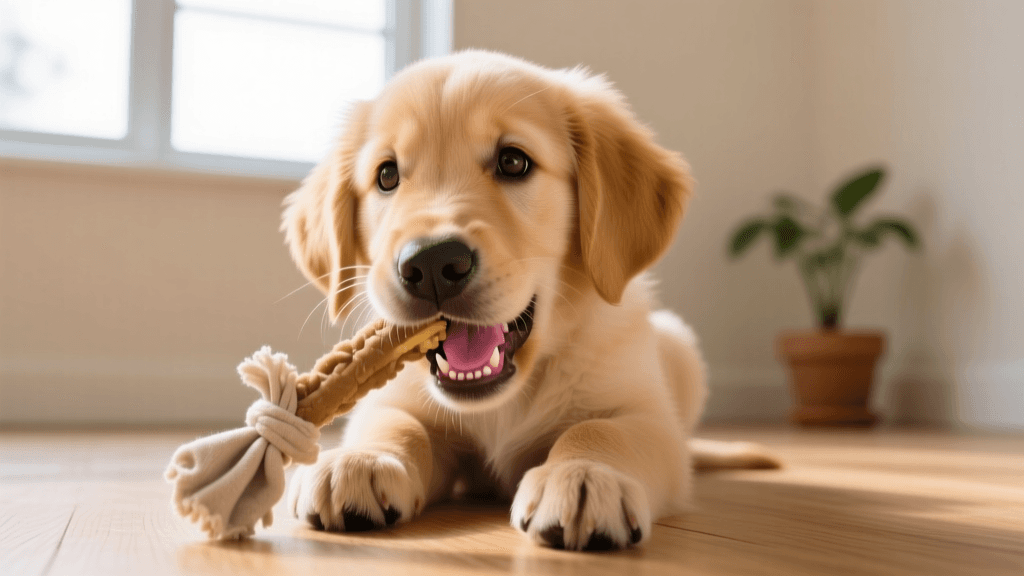
After your puppy is comfortable with you being behind interior doors, move to the exterior door. Step outside, close the door, and immediately return. Gradually build up to stepping outside, walking down the driveway, and returning. During these early absences, provide a high-value, long-lasting distraction. A frozen Kong stuffed with puppy-safe peanut butter and yogurt, or a lick mat smeared with wet food, will create a positive association with your departure. The act of licking releases endorphins in the canine brain, naturally soothing the nervous system.
Essential Gear: Smart Cameras and Foraging Toys
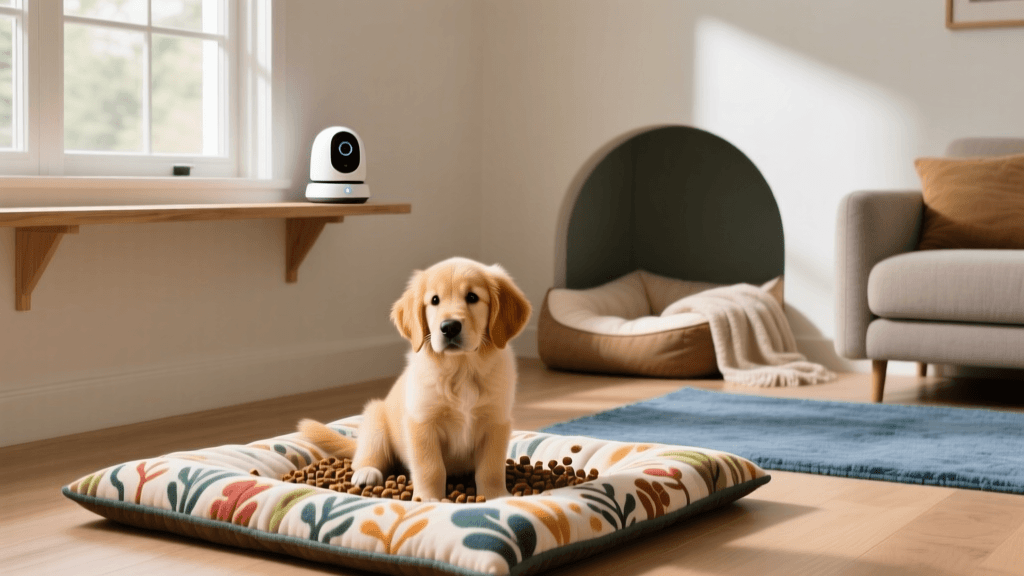
In 2026, technology plays a massive role in monitoring and managing puppy alone time. Smart pet cameras allow you to observe your puppy's body language, identify stress signals, and even interact with them remotely. However, cameras should be used as a training aid, not a crutch. Pairing a camera with interactive foraging toys keeps the puppy engaged and mentally stimulated.
2026 Smart Pet Camera Comparison for Puppy Training
| Camera Model | Key Features for Puppies | 2026 Retail Price | Best Use Case |
|---|---|---|---|
| Furbo 360 Dog Camera | Auto-cruise, treat tossing, bark alerts, 1080p video | $199.00 | Active puppies that pace or need remote treat rewards |
| Petcube Bites 2 Lite | Treat tossing, Alexa built-in, 1080p, wide-angle | $129.00 | Budget-conscious owners wanting treat interaction |
| Wyze Pet Cam | Sound and motion detection, 1080p, no treat toss | $39.00 | Basic monitoring of safe space and sleep patterns |
When using a treat-tossing camera, be cautious. For some puppies, the mechanical whirring of the camera followed by a treat can cause hyper-vigilance, where the puppy stares at the camera for hours instead of relaxing. If you notice this behavior, switch to a basic monitoring camera like the Wyze Pet Cam and rely on physical food puzzles left in the safe space instead.
Designing the Ultimate Puppy Safe Space
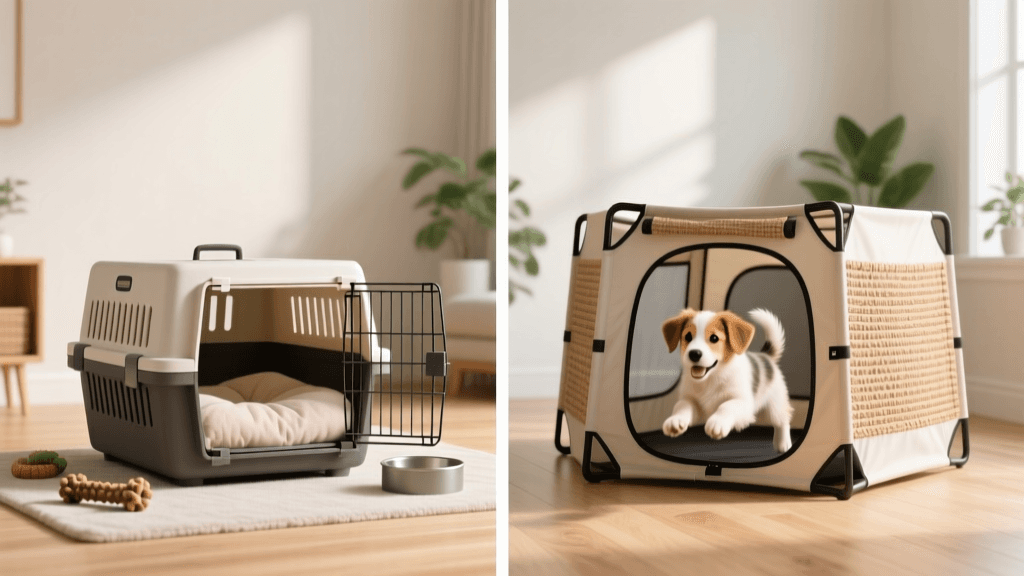
A safe space is not just a crate; it is a designated area where your puppy feels entirely secure. For young puppies who are not fully house-trained or who might chew on hazardous items, a playpen setup attached to a crate is the gold standard for 2026 puppy rearing.
Crate vs. Playpen Dimensions
The crate should be sized appropriately for your puppy's current body, not their adult size. The length should be from the tip of their nose to the base of their tail, plus two inches. This allows them to stand up, turn around, and lie down comfortably, but prevents them from using one end as a bathroom. Outside the crate, attach a wire exercise pen. For small breeds, a 16-square-foot pen is sufficient. For medium to large breeds, aim for at least 24 square feet. This gives them room to stretch, play, and access a water bowl and potty pads if necessary.
Integrating Snuffle Mats and Lick Mats
To encourage relaxation in the safe space, incorporate foraging tools. Snuffle mats are fabric mats with deep felt strips that mimic grass. By hiding your puppy's daily kibble ration inside the mat, you engage their primary sense: smell. Sniffing lowers a dog's heart rate and promotes a calm, focused state. Scatter a handful of kibble into the snuffle mat right before you begin your graduated departure training. This ensures the puppy is happily occupied and associating your departure with a rewarding, calming activity.
Patience is the cornerstone of separation anxiety training. If your puppy panics, you are moving too fast. Return to the last successful step and build up more slowly.
Monitoring Progress and Avoiding Setbacks
Tracking your puppy's progress is vital. Keep a simple log on your phone noting the duration of your absence, the puppy's behavior upon your return, and any stress signals observed on your smart camera. Common stress signals include lip licking, yawning, whale eye (showing the whites of the eyes), and pacing. If your puppy is sleeping or calmly chewing a toy, you are succeeding.
Avoid making a big fuss when you leave or return. Arrivals and departures should be incredibly boring events. When you come home, ignore your puppy until they have all four paws on the floor and are calm. This reinforces that calm behavior is what earns your attention.
When to Call a Professional
While many puppies outgrow mild distress as they mature and gain confidence, clinical separation anxiety rarely resolves without targeted behavioral intervention. If your puppy is injuring themselves, refusing to eat high-value treats when alone, or if you are unable to leave the house without causing a neighborhood noise disturbance, it is time to consult a certified veterinary behaviorist. They can provide a tailored behavior modification plan and, if necessary, discuss short-term anti-anxiety medications to help keep your puppy under their fear threshold while training takes effect.
By utilizing the graduated departure protocol, leveraging modern smart cameras, and providing enriching foraging tools like snuffle mats, you can help your puppy build the confidence they need to thrive independently. Consistency, empathy, and a well-designed safe space will set the foundation for a well-adjusted adult dog in the years to come.
marcus-aldridge
All our authors care for dogs every day — read more of their work on the authors page.