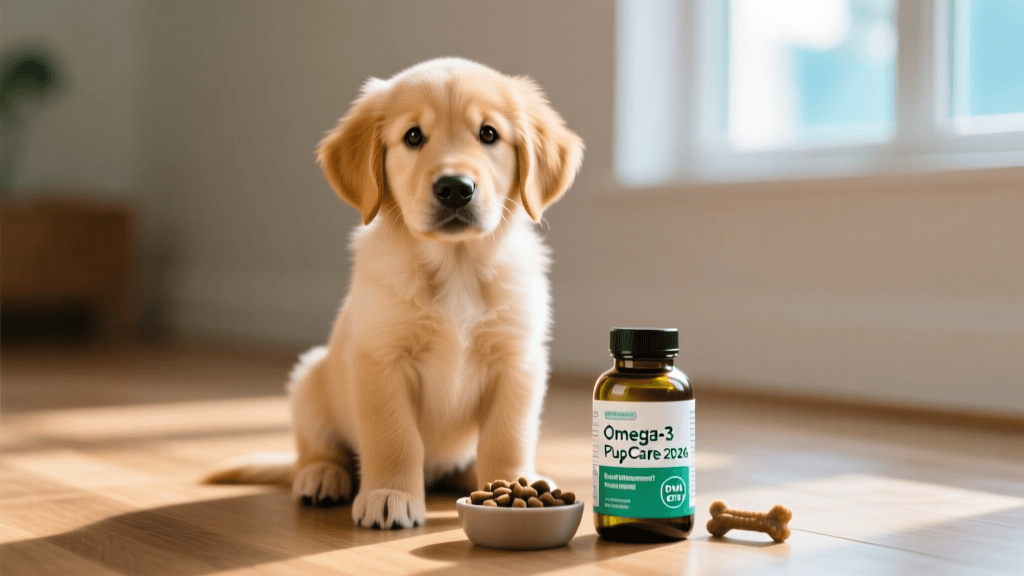
Top Omega-3 Puppy Supplements for 2026: Brain & Joint Guide
Discover the best Omega-3 supplements for puppies in 2026. Learn DHA and EPA dosing, brain development benefits, and top fish oil picks for growing pups.
The Critical Role of Omega-3 in Your Puppy's First Year
The first twelve months of your puppy's life are a whirlwind of growth, learning, and development. As a pet parent navigating the complexities of early socialization, potty training, and teething, you are likely hyper-focused on providing the best nutrition possible. In 2026, veterinary nutritionists are placing an even stronger emphasis on the role of Omega-3 fatty acids—specifically DHA and EPA—in supporting a puppy's cognitive function, joint health, and immune system. While many commercial puppy foods claim to include Omega-3s, the delicate nature of these fatty acids means that targeted supplementation is often necessary to ensure your growing dog receives therapeutic, effective levels.
Why DHA and EPA Matter for Puppy Development
Omega-3 fatty acids are essential polyunsaturated fats that a dog's body cannot synthesize on its own. They must be obtained through diet. For puppies, the two most critical Omega-3s are Docosahexaenoic Acid (DHA) and Eicosapentaenoic Acid (EPA).
DHA: The Brain and Eye Builder
DHA is a primary structural component of the brain and retina. During the first few months of life, a puppy's brain grows exponentially. Adequate DHA levels are directly linked to improved cognitive function, better memory retention, and enhanced visual acuity. This is particularly relevant when you begin early obedience training and potty training. Puppies with sufficient DHA in their system often demonstrate longer attention spans and a faster ability to associate commands with actions, making those crucial early socialization weeks much smoother and more successful.
EPA: The Joint and Inflammation Manager
While DHA focuses on the nervous system, EPA is the powerhouse for managing cellular inflammation. For large and giant breed puppies—such as Golden Retrievers, German Shepherds, and Great Danes—rapid growth can put immense stress on developing joints. EPA helps modulate the inflammatory response, supporting joint cartilage and reducing the risk of developmental orthopedic diseases. Furthermore, EPA supports a healthy skin barrier, which is vital for puppies prone to environmental allergies or hot spots during their first year.
2026 Veterinary Dosing Guidelines for Puppies
Determining the correct dosage of Omega-3s can be confusing, as many commercial fish oil bottles only provide dosing for adult dogs. According to the Tufts Cummings Veterinary Medical Center, the therapeutic dose of EPA and DHA combined for a growing puppy typically ranges from 50 to 75 mg per kilogram of body weight, depending on the specific health goals and breed size.
Below is a general dosing chart for combined EPA/DHA tailored for puppies in 2026. Always consult your veterinarian before starting any new supplement regimen.
| Puppy Weight (lbs) | Puppy Weight (kg) | Maintenance Dose (Combined EPA/DHA) | Therapeutic Dose (Large Breed/Joint Focus) |
|---|---|---|---|
| 10 lbs | 4.5 kg | 225 - 337 mg | 450 mg |
| 20 lbs | 9.0 kg | 450 - 675 mg | 900 mg |
| 40 lbs | 18.1 kg | 905 - 1357 mg | 1810 mg |
| 60 lbs | 27.2 kg | 1360 - 2040 mg | 2720 mg |
| 80 lbs | 36.3 kg | 1815 - 2722 mg | 3630 mg |
Choosing the Right Omega-3 Source in 2026
Not all Omega-3 supplements are created equal. The source, extraction method, and packaging play massive roles in the efficacy of the oil.
- Wild-Caught Fish Oil: Oils derived from small, cold-water fish like sardines, anchovies, and mackerel are the gold standard. Because these fish are lower on the food chain, they accumulate fewer heavy metals and environmental toxins. In 2026, look for brands that utilize molecular distillation to guarantee purity.
- Krill Oil: Krill oil contains Omega-3s bound to phospholipids, which some studies suggest may offer higher bioavailability than the triglyceride form found in fish oil. It also contains astaxanthin, a potent antioxidant that naturally preserves the oil and provides additional cellular support.
- Algal Oil: For vegan households or puppies with severe fish protein allergies, algal oil is an excellent plant-based source of DHA. Algae is actually where fish get their Omega-3s in the first place, making this a highly sustainable and effective alternative.
The Connection Between Omega-3 and Early Puppy Training
The first year of a puppy's life is defined by critical developmental windows. Between 8 and 16 weeks, puppies undergo primary socialization, a period where they learn how to interact with humans, other dogs, and their environment. Cognitive development is at its peak.
Research highlighted by the American Kennel Club indicates that puppies fed diets rich in DHA show significantly improved trainability and problem-solving skills compared to those on DHA-deficient diets. When you are trying to teach your puppy to signal to go outside for potty training, or asking them to sit and focus during a distracting puppy kindergarten class, their neurological hardware needs the right building blocks. Omega-3 fatty acids facilitate the rapid transmission of signals between neurons, effectively greasing the gears of your puppy's learning process.
Reading the Label: Triglyceride vs. Ethyl Ester Form
When shopping for puppy Omega-3 supplements in 2026, it is crucial to understand the chemical form of the oil. Naturally occurring Omega-3s in fish are in the triglyceride (TG) form. However, during the purification and concentration process, some manufacturers convert the oil into an ethyl ester (EE) form to make it easier to manipulate the DHA and EPA ratios.
While EE forms are cheaper to produce, veterinary nutritionists generally recommend the re-esterified triglyceride (rTG) form for puppies. The rTG form is much closer to the natural state, offering significantly higher bioavailability and absorption rates in a puppy's developing digestive tract. Always check the product label or the manufacturer's website to ensure the oil is in the triglyceride form. If the label does not specify, it is likely the less absorbable EE form.
How to Safely Introduce Fish Oil to Your Puppy
Puppies have sensitive gastrointestinal tracts. Introducing a rich fat source like fish oil too quickly can lead to diarrhea, vomiting, or pancreatitis in extreme cases.
- Start Small: Begin with 25% of the recommended dose for the first three to four days. If your puppy's stool remains firm, increase to 50%, then 75%, and finally the full dose over a two-week period.
- Mix with Food: Always mix the oil thoroughly into wet food or kibble. Never administer it straight from the pump or syringe, as the oil can coat the puppy's throat or be accidentally inhaled, leading to aspiration pneumonia.
- Monitor Caloric Intake: Fish oil is calorie-dense. If you are adding a significant amount of oil to your puppy's diet, you may need to slightly reduce their base kibble portion to prevent accelerated weight gain, which is detrimental to developing joints.
Storage and Freshness: The Hidden Danger of Oxidation
Omega-3 fatty acids are highly unstable and prone to oxidation when exposed to light, heat, and oxygen. Rancid fish oil is not only ineffective, but it can actually cause oxidative stress and inflammation in your puppy's body—the exact opposite of what you want.
In 2026, top-tier puppy supplement brands use nitrogen-flushed, UV-protected glass bottles to maintain freshness. Once you open a bottle of liquid fish oil, it must be stored in the refrigerator and used within 60 to 90 days. If the oil smells overly pungent, sour, or like rotting fish, it has oxidized and must be discarded immediately. High-quality oils should have a mild, pleasant marine scent. For added convenience and guaranteed freshness per dose, many pet parents are turning to individually sealed Omega-3 chews or pump bottles that utilize airtight, one-way valves to prevent oxygen from entering the reservoir.
Signs Your Puppy is Benefiting from Omega-3 Supplementation
How do you know if the supplement is working? Within 8 to 12 weeks of consistent, properly dosed Omega-3 supplementation, you should notice several positive changes in your growing puppy:
- A Lustrous Coat: The hair will become noticeably softer, shinier, and shedding may become more manageable as the skin barrier strengthens.
- Reduced Scratching: Puppies dealing with mild environmental allergies or dry skin will often show a decrease in paw-licking and scratching.
- Enhanced Focus: During training sessions, your puppy may exhibit a better ability to maintain eye contact and retain new commands.
- Fluid Movement: Large breed puppies may show smoother, more fluid movement after resting, indicating healthy joint lubrication and reduced inflammation.
Final Thoughts on Puppy Nutrition
Investing in a high-quality Omega-3 supplement during your puppy's first year is one of the most impactful decisions you can make for their long-term health. By supporting their neurological development, protecting their growing joints, and fortifying their immune system, you are setting the stage for a vibrant, healthy adult dog. Always prioritize third-party tested products, adhere to weight-based dosing guidelines, and work closely with your veterinarian to tailor the supplementation to your puppy's unique breed and lifestyle needs.
aaron-whyte
All our authors care for dogs every day — read more of their work on the authors page.