Understanding Psychiatric Service Dog Body Language in 2026
Learn to decode psychiatric service dog body language in 2026. Discover stress signals, task fatigue, and how biometric harnesses prevent working dog burnout.
The Hidden Cognitive Load of Psychiatric Service Dogs
When we think of working dogs, we often picture the physical athleticism of search and rescue canines or the guiding precision of seeing-eye dogs. However, Psychiatric Service Dogs (PSDs) carry a vastly different, often invisible burden: immense cognitive and emotional load. As of 2026, the field of canine behavioral psychology has made massive strides in understanding how these dogs process human emotional states. PSDs are trained to perform specific tasks such as Deep Pressure Therapy (DPT), room searches for hyper-vigilant handlers, and tactile interruption during panic attacks or PTSD flashbacks. According to the guidelines set forth by Assistance Dogs International, the welfare and psychological monitoring of these working dogs is now a top priority for accredited programs.
Unlike mobility tasks, which have a clear beginning and end, psychiatric tasks require the dog to remain in a state of continuous, low-level hyper-vigilance. They must constantly monitor their handler's micro-expressions, changes in breathing, and even subtle shifts in scent related to cortisol and adrenaline spikes. Understanding the body language of a PSD is not just about knowing when they are ready to work; it is about recognizing the subtle micro-expressions that indicate mental fatigue, compassion empathy, and eventual burnout. In 2026, merging traditional behavioral observation with modern biometric technology has become the gold standard for handlers and trainers alike.
Decoding the 'Working' Posture vs. 'Stress' Micro-Expressions
To the untrained eye, a PSD resting its head on a handler's knee during an anxiety attack looks like simple affection. To a trained handler, it is a executed medical task. However, distinguishing between a dog confidently executing a task and a dog experiencing task-related anxiety is critical. The American Kennel Club emphasizes that service dogs must be willing and happy workers, free from coercion or chronic stress.
The Focused, 'On-Duty' Posture
A psychologically sound, focused PSD exhibits specific body language markers when engaged in a task or actively scanning for their handler's needs:
- Soft, Alert Eyes: The dog maintains eye contact or scans the environment without furrowing the brow or showing the sclera (whites of the eyes).
- Relaxed Jaw and Mouth: Even when performing tactile interruption (like nudging or licking), the facial muscles remain relatively loose.
- Rhythmic Breathing: Unless physically exerting, the dog's respiration matches the resting state or slows down deliberately during Deep Pressure Therapy.
- Weight Distribution: The dog leans into the handler confidently, offering their body weight as a grounding mechanism without trembling.
The 'Burnout' and Stress Micro-Expressions
Canine stress in working environments rarely manifests as overt disobedience. Instead, it appears as 'calming signals' or displacement behaviors that indicate the dog's nervous system is becoming overwhelmed by the handler's emotional feedback loop. Watch for these critical signs in 2026:
- Contextual Yawning and Lip Licking: If the dog yawns or rapidly licks its lips when not tired or eating, it is a primary indicator of psychological stress and an attempt to self-soothe.
- Whale Eye: Showing the whites of the eyes while keeping the head turned away, often seen when a dog feels trapped in a high-stress public environment.
- Muscle Tremors: Subtle shaking in the hindquarters or shoulders while performing DPT, indicating physical tension masking as task execution.
- Task Avoidance via Sniffing: Suddenly becoming intensely interested in the floor or environment when the handler's anxiety spikes, which is a displacement behavior signaling the dog is avoiding the emotional weight of the task.
The 2026 Biometric Revolution in Working Dog Psychology
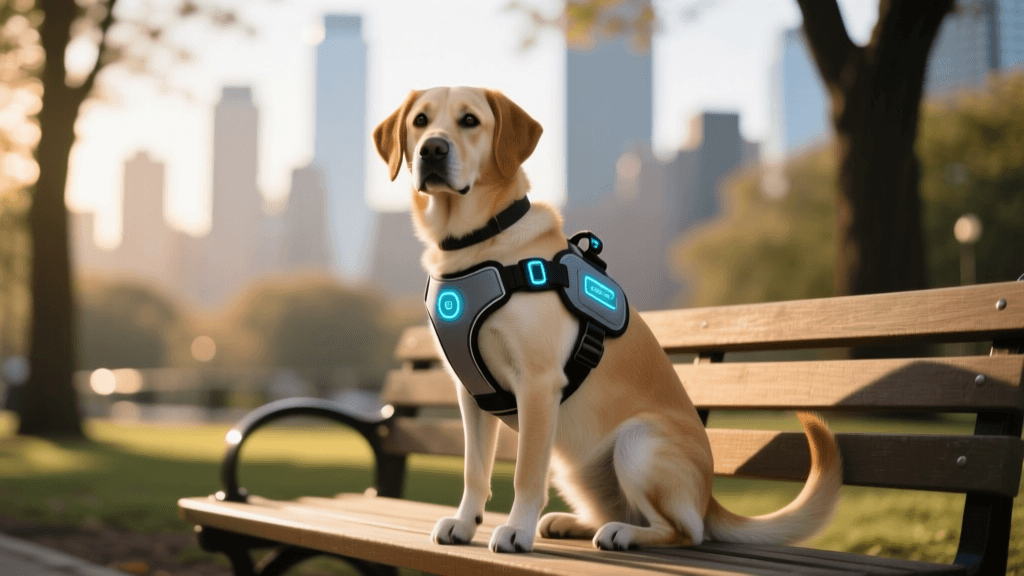
Because dogs are masters at masking pain and stress—a survival instinct inherited from their wild ancestors—visual body language analysis is sometimes not enough. This is where the 2026 generation of biometric wearables has revolutionized working dog management. Products like the PetPace Sense 2.0 smart collar and specialized biometric patches designed for the Julius-K9 IDC Powerharness now allow handlers to track Heart Rate Variability (HRV), respiratory rate, and activity levels in real-time.
HRV is a crucial metric in canine psychology. A high HRV indicates a resilient, adaptable nervous system capable of handling the stress of public access work. A dropping HRV, even when the dog appears physically calm, is an early warning sign of cognitive overload and impending burnout. By pairing visual body language with biometric data, handlers can intervene before the dog ever displays overt stress signals.
| Observable Behavior | Psychological State | 2026 Biometric Indicator |
|---|---|---|
| Leaning heavily, slow blinking | Focused Task Execution (DPT) | Stable HRV, lowered heart rate |
| Rapid lip licking, pinned ears | Acute Environmental Stress | Spike in heart rate, shallow respiration |
| Ground sniffing, avoiding eye contact | Cognitive Overload / Avoidance | Dropping HRV, elevated core temperature |
| Restlessness, panting in cool rooms | Compassion Fatigue / Burnout | Prolonged low HRV, irregular sleep cycles |
Implementing the 2026 Decompression Protocol
Understanding your dog's psychology means recognizing that a PSD cannot be 'on' 24/7. The concept of 'compassion fatigue' is now widely recognized in the veterinary behavioral community. Dogs absorb the emotional state of their handlers, and chronic exposure to human panic, grief, or severe anxiety takes a neurological toll on the canine brain. The American Veterinary Medical Association highlights the necessity of structured recovery periods for all working canines to maintain their long-term welfare.
To prevent burnout, modern handlers are adopting strict decompression protocols:
- The 'Vest-Off' Ritual: The moment the working harness or vest is removed, the dog must be given a clear psychological cue that work is over. This is often paired with a specific release word and a change in environment.
- Scent-Based Decompression: Because PSDs rely heavily on their visual and auditory senses to monitor their handlers, allowing them to engage in 'sniffaris' (unstructured walks where the dog leads and sniffs extensively) shifts their brain activity from the sympathetic (alert) nervous system to the parasympathetic (rest and digest) nervous system.
- Canine Massage and Tactile Therapy: Just as the dog provides DPT to the handler, handlers are now trained in basic canine myofascial release to help their dogs process the physical tension accumulated during public access work.
- Biometric Baseline Checks: Using 2026 smart-collar data, handlers review their dog's nightly sleep quality. If the dog's REM sleep is disrupted or their resting heart rate is elevated over a 48-hour period, the dog is given a mandatory 'mental health day' off from all public access tasks.
Conclusion: A Partnership of Mutual Understanding
The bond between a Psychiatric Service Dog and their handler is one of the most profound relationships in the animal kingdom. However, love and loyalty are not enough to sustain a working dog's mental health. As we navigate 2026, the most successful handlers are those who view their dogs not just as medical equipment, but as empathetic partners with their own psychological limits. By mastering the subtle body language of stress, leveraging biometric technology, and enforcing rigorous decompression routines, you ensure that your service dog remains a happy, confident, and willing partner for years to come.
anouk-beaumont
All our authors care for dogs every day — read more of their work on the authors page.