Puppy Teething Behavior & Best Soothing Toys for 2026
Discover the psychology behind puppy teething and explore the best soothing toys of 2026 to satisfy your dog's natural chewing instincts safely.
The Neurology of the Chew: Why Puppies Need to Bite
To truly understand your puppy’s relentless need to chew, we must look beyond the simple mechanics of growing teeth and examine the neurological and behavioral drivers at play. Teething is not merely a physical milestone; it is a profound sensory and psychological experience. When a puppy chews, the pressure applied to the gums stimulates the periodontal mechanoreceptors. These receptors send signals directly to the brain via the trigeminal nerve, triggering the release of endorphins and dopamine. This neurological feedback loop makes chewing inherently self-soothing and deeply rewarding.
Furthermore, puppies explore their environment primarily through their mouths, much like human infants use their hands. The act of biting and gnawing provides crucial tactile data about the world around them. In 2026, veterinary behaviorists emphasize that denying a puppy appropriate outlets for this instinct doesn't just cause physical discomfort—it leads to sensory deprivation and subsequent behavioral issues, such as destructive chewing or hyperactivity. Understanding this biological imperative is the first step in selecting the right tools to guide your puppy through this developmental phase.
The 2026 Teething Timeline and Behavioral Shifts
A puppy’s mouth undergoes rapid changes during their first year, and their behavioral needs shift alongside their dental development. According to the VCA Animal Hospitals' guide to puppy teething, the timeline generally follows these distinct phases:
- 3 to 6 Weeks (Deciduous Teeth): The baby teeth erupt. Puppies begin to learn bite inhibition through play with littermates.
- 12 to 16 Weeks (Incisor Loss): The baby incisors fall out, and adult incisors emerge. Puppies will seek out soft, yielding textures to soothe the mild inflammation.
- 4 to 6 Months (Canines and Premolars): The larger, more painful teeth push through the gums. This is when the instinct to jaw-strengthen and aggressively gnaw peaks.
- 6 to 8 Months (Molars and Final Set): The adult dentition is fully established. Chewing transitions from a pain-relief mechanism to a behavioral habit for jaw maintenance and mental stimulation.
Matching the texture and density of a teething toy to these specific developmental windows is critical for both dental safety and psychological satisfaction.
The Olfactory Connection: Scent, Taste, and Foraging Instincts
When evaluating the best teething toys of 2026, we must also consider a dog's primary sense: smell. A puppy’s olfactory bulb is proportionally much larger than a human's, meaning they process the world through scent. Toys that incorporate natural, food-grade flavor infusions do more than just taste good; they trigger the dog's ancestral foraging and scavenging instincts. When a puppy chews on a scent-infused toy, the continuous release of aroma keeps their brain engaged, transforming a simple physical act into a complex cognitive exercise. This mental fatigue is just as important as physical exhaustion in preventing destructive behaviors around the home.
Best Teething Toys of 2026 for Behavioral & Physical Relief
Based on current veterinary recommendations and the latest advancements in canine behavioral enrichment, here are the top teething toys that address both the physical pain of erupting teeth and the psychological need to chew.
1. KONG Puppy Tire (2026 Natural Rubber Formula)
Best for: Endorphin release and unpredictable prey-drive satisfaction.
The classic KONG shape has long been a staple, but the KONG Puppy Tire offers a unique psychological advantage. The inner ridges of the tire can be packed with soft puppy-safe pastes or frozen bone broth. The circular shape allows the puppy to use their front paws to hold and manipulate the toy, satisfying the instinct to pin down "prey." Furthermore, the exclusive 2026 KONG puppy rubber compound is engineered to be slightly more porous, allowing it to hold scent molecules longer while remaining gentle on erupting canines. The unpredictable bounce when tossed also engages their visual tracking and chase instincts, tiring them out mentally before they even begin to chew.
2. Benebone Puppy Wishbone (Bacon-Infused Nylon)
Best for: Ergonomic instinct satisfaction and aggressive jaw strengthening.
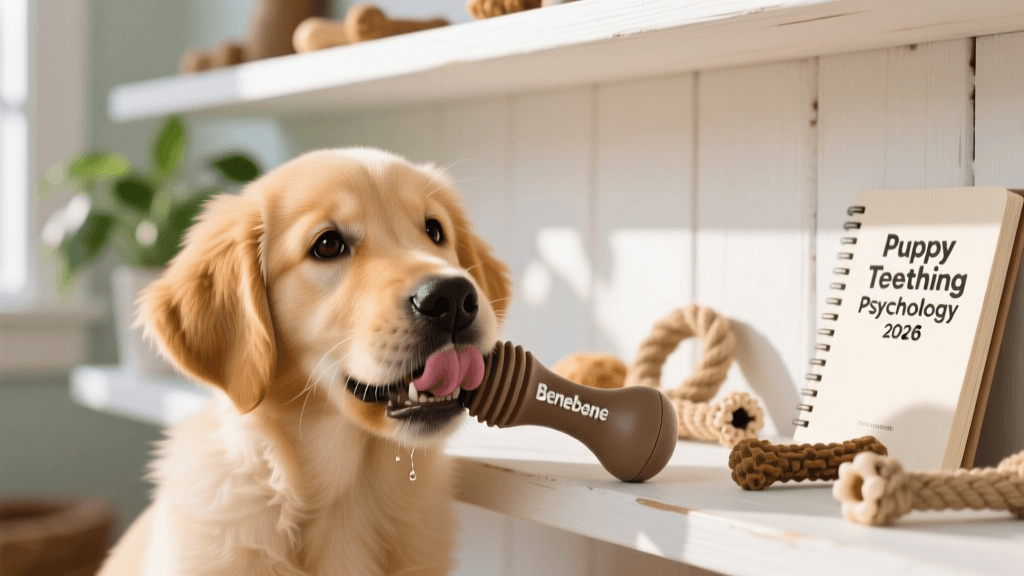
During the 4-to-6-month stage, puppies develop a powerful urge to test their new jaw strength. The Benebone Wishbone features a patented ergonomic curve that perfectly accommodates a puppy’s natural chewing angle. Unlike straight bones that require the puppy to awkwardly tilt their head, the Wishbone allows them to anchor the toy with their paws and chew laterally. Infused with 100% real bacon rather than artificial coatings, it provides a continuous olfactory reward. The nylon is firm enough to satisfy the deep-tissue jaw pressure required during molar eruption, but the puppy-specific formula includes microscopic flex zones to prevent tooth fractures.
3. Nylabone Power Chew DuraBone (Textured Ring)
Best for: Dental hygiene and scraping instincts.
As adult teeth settle into the gums, puppies often develop an instinct to "scrape" or "strip" bark, an evolutionary holdover from wild canines. The Nylabone Textured Ring features raised dental bristles that mimic this natural scraping behavior. As the puppy gnaws, the bristles mechanically disrupt plaque buildup, satisfying the tactile need for friction against the gums while promoting oral health. The multi-textured surface provides varying levels of resistance, keeping the puppy's brain engaged as they search for the most satisfying angle to chew.
Comparative Analysis: Matching Toy Texture to Teething Stage
Selecting the wrong toy density can lead to tooth fractures or a lack of interest. Use the chart below to match the toy to your puppy's current behavioral and physical needs.
| Toy Name | Best Behavioral Instinct Satisfied | Texture / Hardness | Ideal Age Stage |
|---|---|---|---|
| KONG Puppy Tire | Prey-pinning, licking, and soothing | Soft, yielding elastomer | 12 - 16 Weeks (Incisors) |
| Benebone Puppy Wishbone | Lateral jaw strengthening, foraging | Firm, infused nylon with flex | 4 - 6 Months (Canines) |
| Nylabone Textured Ring | Scraping, stripping, and dental friction | Hard, multi-textured polymer | 6 - 8 Months (Molars) |
Differentiating Teething from Anxiety-Driven Chewing
A critical aspect of understanding your dog is distinguishing between normal teething behavior and stress-induced destruction. Teething chewing is generally exploratory, opportunistic, and steady. A teething puppy will chew on a shoe left in the hallway simply because it is there and offers a satisfying texture.
Conversely, anxiety-driven chewing—often linked to separation anxiety or confinement distress—is frantic and highly targeted. As noted in the ASPCA's guide on destructive chewing, anxious dogs typically target exit points (door frames, window sills) or items heavily saturated with the owner's scent (pillows, worn clothing) in an attempt to self-soothe or escape. If your puppy is only destroying items when left alone, or if the chewing is accompanied by pacing, drooling, and vocalization, the issue is psychological distress, not teething, and requires a completely different behavioral modification approach.
Actionable Training: Redirecting the Chew Drive
You cannot train a puppy to stop chewing; you can only train them on what to chew. The most effective behavioral technique for managing the teething phase is the "Trade-Up" game. When you catch your puppy chewing on an inappropriate item (like a baseboard or furniture leg), do not scold them or forcefully pry the item from their mouth, as this can trigger resource guarding or increase anxiety.
Instead, approach calmly and offer a high-value, scent-rich teething toy, such as a frozen KONG filled with puppy peanut butter. The moment they drop the forbidden item to investigate the toy, praise them calmly and remove the inappropriate item. According to the American Kennel Club's puppy teething timeline and training guidelines, consistently pairing the redirection with a high-value reward rewires the puppy's brain to associate their approved toys with positive outcomes, effectively making the approved toys more psychologically valuable than your furniture.
Conclusion
Surviving the puppy teething phase in 2026 requires more than just buying a basket full of random rubber shapes. By understanding the neurology of the chew, the developmental timeline of your puppy's jaw, and the deep-seated instincts that drive their behavior, you can select tools that provide genuine relief and mental enrichment. Whether it is the soothing, prey-pinning design of the KONG Puppy Tire or the jaw-strengthening ergonomics of the Benebone Wishbone, the right toy acts as a bridge between your puppy's wild instincts and your peaceful home. Embrace the chew, guide the behavior, and watch your puppy grow into a confident, well-adjusted adult dog.
tom-renshaw
All our authors care for dogs every day — read more of their work on the authors page.