Preventing Puppy Separation Anxiety in 2026: Tech & Tips
Learn how to prevent puppy separation anxiety in 2026 using departure cue desensitization and the latest smart treat cameras for stress-free alone time.
The 2026 Reality of Puppy Separation Anxiety
As we navigate the widespread hybrid and return-to-office work models of 2026, new dog owners are facing a unique behavioral challenge. Puppies adopted into households where owners are present for the first few weeks often develop severe distress when suddenly left alone for eight-hour workdays. According to the ASPCA, separation anxiety is one of the most common behavioral issues reported by veterinary behaviorists, manifesting as destructive chewing, excessive vocalization, and inappropriate elimination. However, this condition is largely preventable if addressed during the critical first 30 days of bringing your puppy home. The key to success in 2026 lies in combining traditional behavioral desensitization protocols with the latest advancements in smart pet monitoring technology.
Understanding Departure Cues and Trigger Stacking
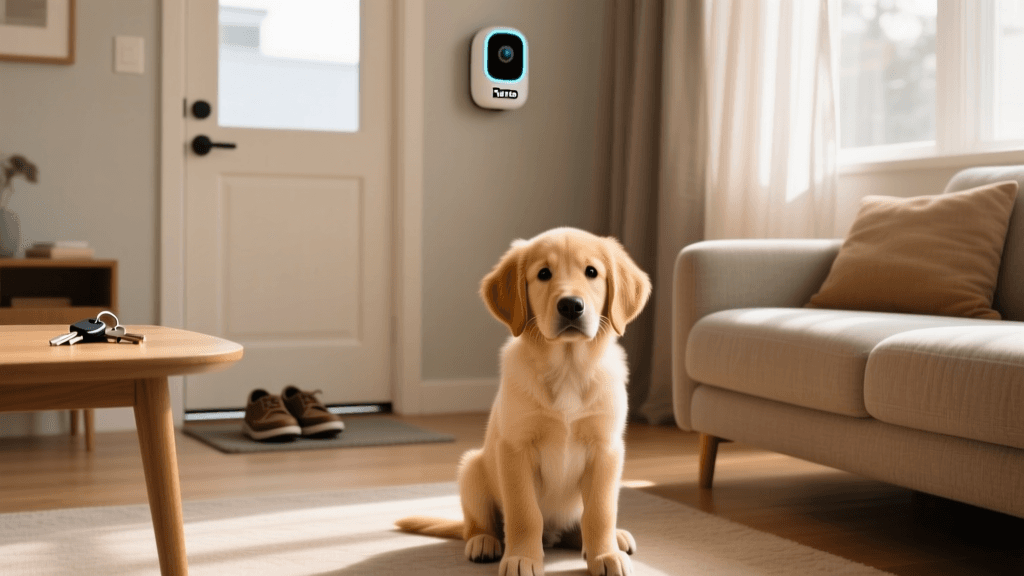
Dogs are masters of pattern recognition. Long before you actually walk out the front door, your puppy is reading a sequence of environmental signals—known as departure cues—that predict your absence. These cues trigger a physiological stress response, elevating cortisol levels and initiating panic before you have even left the house. Common departure cues include picking up your car keys, putting on your work shoes, grabbing your laptop bag, or even the specific sound of your morning alarm. When these cues occur in rapid succession, a phenomenon known as 'trigger stacking' occurs, pushing the dog over their anxiety threshold. To prevent separation anxiety, we must systematically dismantle the predictive power of these cues through a process called desensitization.
The 14-Day Departure Desensitization Protocol
This protocol requires patience and consistency. You will perform these actions when you have no intention of actually leaving, thereby breaking the association between the cue and your departure.
- Days 1-3: Neutralizing the Keys and Shoes. Pick up your car keys and jingle them, then sit back down on the couch and watch television. Put on your work shoes, walk to the kitchen, make a cup of coffee, and take the shoes off. Repeat this 10 to 15 times a day. The goal is to make these items entirely boring to your puppy. If your puppy shows signs of stress (panting, pacing, whining), you are moving too fast; reduce the intensity of the cue.
- Days 4-7: The Doorknob Touch. Walk to the front door and touch the doorknob. Do not turn it. Immediately turn around, walk back to your living room, and toss a high-value treat to your puppy. Gradually progress to turning the knob, then to opening the door an inch, then a foot, always returning immediately before the puppy can vocalize.
- Days 8-10: The Micro-Departure. Open the door, step outside, and close it behind you. Wait exactly two seconds, then re-enter calmly. Do not greet your puppy enthusiastically upon return; ignore them until they are calm. Gradually increase the time outside to 5 seconds, 10 seconds, 30 seconds, and eventually 1 minute. This teaches the puppy that the door closing is temporary and that you always return.
- Days 11-14: Extending Duration and Adding Tech. Begin leaving for 5 to 15 minutes. This is where you introduce your smart pet camera to monitor their stress levels remotely. If you notice pacing or barking via the camera, you must return before the behavior escalates, and then adjust your training steps to shorter durations the next day.
Leveraging 2026 Smart Tech for Alone Time Training
In 2026, smart pet cameras have evolved far beyond simple video feeds. Modern devices utilize edge-computing AI to detect specific vocalizations (like distress barking versus playful boofs) and can automatically dispense treats to interrupt anxious behaviors. The RSPCA notes that while technology cannot replace proper behavioral training, interactive cameras can serve as excellent tools for positive reinforcement when owners are physically absent. Treat-tossing cameras allow you to reward your puppy for moments of calm behavior, effectively bridging the gap between your micro-departures and full workday absences.
Comparison of Top 2026 Smart Treat Cameras
| Camera Model (2026) | Estimated Price | Treat Tossing Mechanism | AI Bark & Anxiety Detection | Best For |
|---|---|---|---|---|
| Furbo 360 (3rd Gen) | $219 | 360-degree rotating toss | Advanced (Sends smart alerts) | Hyperactive puppies needing distraction |
| Petcube Bites 3 Pro | $249 | Vertical gravity drop | Standard (Sound activated) | Multi-pet households (wide angle) |
| Wyze Pet Cam V4 | $89 | None (Audio only) | Basic (Motion alerts) | Budget-conscious monitoring |
Setting Up Your Camera for Anxiety Prevention
Proper camera placement is critical. Mount your Furbo or Petcube at your puppy's eye level when they are sitting in their designated 'safe zone'. If the camera is placed too high, the treat toss will be too aggressive and may startle a nervous dog. Furthermore, ensure the camera is secured to a wall or heavy furniture; puppies in a state of panic will jump and knock over unsecured devices, potentially causing injury or destroying the hardware. Use the camera's two-way audio sparingly. Hearing your voice without seeing you can sometimes increase frustration and anxiety in dogs prone to separation distress. Rely primarily on the treat-tossing feature to reward quiet resting.
Building a Safe 'Alone Zone'
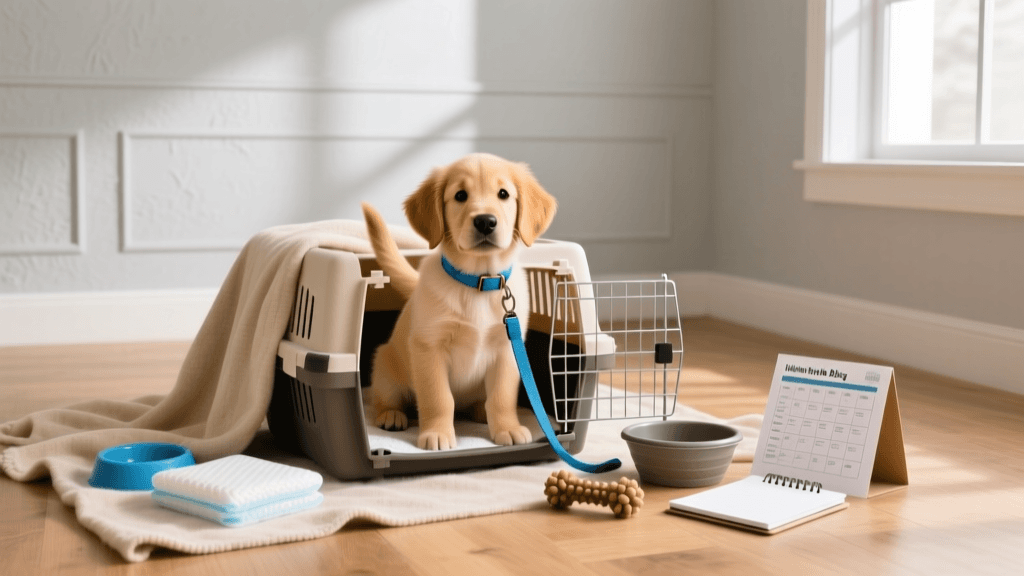
Puppies should not be given free roam of the house when left alone. An unconfined puppy is more likely to engage in destructive behaviors and ingest dangerous items. Instead, create a designated 'Alone Zone' using an exercise pen or a properly sized crate. According to veterinary guidelines, a crate should be large enough for the puppy to stand up, turn around, and lie down comfortably, but no larger. For a medium-breed puppy, this typically means a 30-inch crate with a divider panel. If using an exercise pen, ensure it is at least 36 inches tall to prevent jumping escapes. Place the enclosure in a quiet, low-traffic area of the home, away from direct sunlight and drafty windows. Covering the top and sides of a wire crate with a breathable blanket can create a den-like atmosphere that naturally lowers a dog's heart rate.
Enrichment and Frozen Treat Recipes
Leaving a puppy alone with nothing to do is a recipe for boredom-induced destruction. Food puzzles are essential for solo enrichment. The West Paw Toppl and the classic Kong are industry standards. To keep a puppy occupied for 45 to 60 minutes, you must prepare these toys in advance. A highly effective 2026 recipe involves soaking the puppy's daily kibble allocation in low-sodium bone broth, stuffing it into the toy, and adding a dollop of plain, xylitol-free Greek yogurt at the opening. Freeze the toy for at least 6 hours. The frozen treat forces the puppy to lick and chew, which releases endorphins and promotes a natural calming effect. Always introduce frozen puzzles while you are home to ensure the puppy understands how to extract the food and does not become frustrated.
When to Call a Certified Behaviorist
Despite your best efforts with desensitization and enrichment, some puppies possess a genetic predisposition to severe separation anxiety. If your puppy exhibits self-injurious behavior (such as breaking teeth on crate bars or bloodying their paws), refuses to eat high-value treats when alone, or experiences panic attacks within seconds of your departure, it is time to seek professional help. Do not rely on outdated 'cry it out' methods, as these will only exacerbate the panic and damage your bond. Reach out to a professional certified through the International Association of Animal Behavior Consultants (IAABC) or consult with a board-certified veterinary behaviorist who can discuss whether short-term anti-anxiety medication is appropriate to support your training protocol.
Conclusion
Preventing separation anxiety in 2026 requires a proactive, multi-faceted approach. By systematically desensitizing your puppy to departure cues, utilizing advanced smart cameras to reward calm behavior, and providing appropriate environmental enrichment, you can build a confident, independent dog. Remember that alone time is a learned skill, not an innate instinct. Invest the time during your puppy's first month home, and you will reap the rewards of a well-adjusted companion for years to come.
priya-sutaria
All our authors care for dogs every day — read more of their work on the authors page.