Preventing Puppy Separation Anxiety: 2026 Alone Time Guide
Learn how to prevent separation anxiety in your new dog with our 2026 alone-time training guide, featuring safe-space setups and smart monitoring tech.
Understanding Separation Anxiety in Newly Adopted Dogs
Bringing a new dog or puppy home is one of life’s greatest joys, but as hybrid work schedules and return-to-office mandates continue to evolve in 2026, managing your new pet's alone time has become a top priority for modern households. Many new owners mistakenly believe that a dog crying when left alone is simply 'adjusting,' but failure to address early signs of distress can lead to chronic separation anxiety. According to the ASPCA, separation anxiety is a complex behavioral condition where a dog exhibits extreme stress and panic when separated from their primary attachment figure. It is crucial to distinguish between mild isolation distress—which can be resolved with basic training and enrichment—and true clinical separation anxiety, which often requires professional behavioral intervention.
When you first bring your dog home, they are experiencing a massive environmental shift. The key to preventing anxiety is to proactively teach your dog that being alone is safe, predictable, and even rewarding. This requires a structured approach to alone-time training, environmental management, and the strategic use of modern pet technology. In this comprehensive 2026 guide, we will walk you through the exact steps to set up your home, establish a progressive training schedule, and utilize the best smart devices to monitor your dog's well-being while you are away.
The 'Alone Zone': Setting Up a Safe Space Before Day One
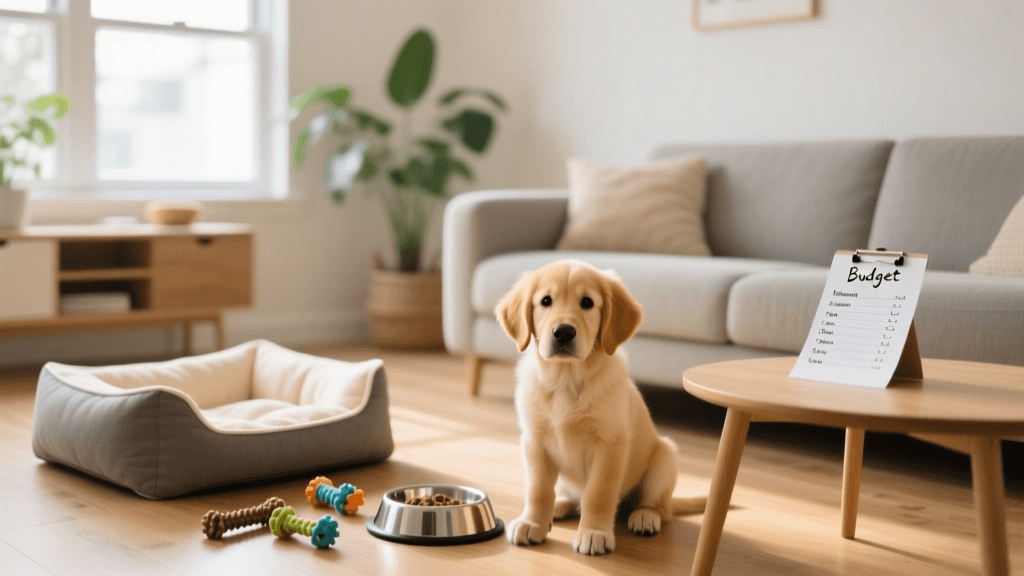
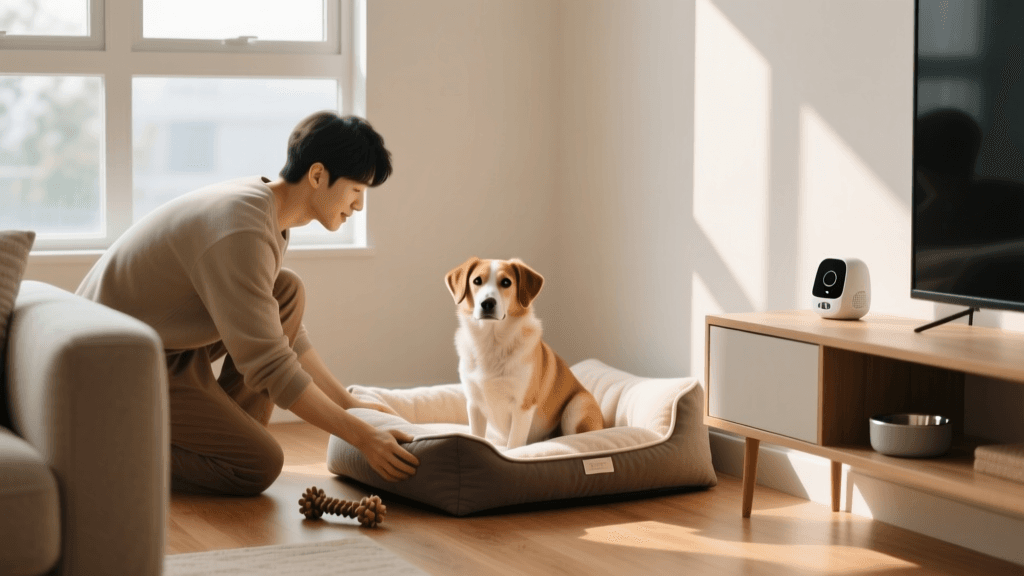
Before your new dog even crosses the threshold, you must establish a designated 'Alone Zone.' This is a confined, safe area where your dog will stay when you cannot directly supervise them or when you leave the house. For puppies and newly adopted adult dogs, giving them free roam of the entire house is a recipe for destructive behavior and heightened anxiety.
- Crate Training: A properly sized crate mimics a den and provides a secure retreat. Ensure the crate is large enough for the dog to stand, turn around, and lie down comfortably, but not so large that they can eliminate in one corner and sleep in the other. For growing puppies, use a crate with a divider panel.
- Exercise Pens (Playpens): If your dog has a history of crate aversion or you are adopting a larger senior dog, a heavy-duty metal or reinforced plastic playpen is an excellent alternative. It provides more space for movement while still maintaining boundaries.
- Location Matters: Place the Alone Zone in a low-traffic but socially relevant area of your home, such as a quiet corner of the living room or a home office. Avoid isolating the dog in a basement or garage, as this can exacerbate feelings of abandonment and trigger vocalization.
Make the space highly inviting by including a comfortable, chew-proof bed (like the Kuranda elevated cot), a piece of clothing that smells like you, and a white noise machine to mask outside triggers like delivery trucks or neighborhood dogs.
2026 Smart Tech for Monitoring Your Dog's Alone Time
One of the most significant advantages of getting a dog in 2026 is the availability of advanced, AI-driven pet monitoring technology. You no longer have to guess whether your dog is sleeping peacefully or pacing anxiously by the front door. Integrating smart tech into your alone-time routine provides invaluable data and peace of mind.
- Furbo 360 Treat Tossing Camera ($210): This remains a top-tier choice for new owners. The 360-degree rotating camera allows you to follow your dog's movements around the room. Its AI bark alerts notify your smartphone if your dog starts vocalizing, and you can remotely toss treats to redirect their attention and reward quiet behavior.
- Petcube Bites 2 Lite ($150): A slightly more budget-friendly option that still offers 1080p HD video, two-way audio, and a treat dispenser. The laser pointer feature is particularly useful for burning off mental energy in high-drive breeds before you settle them down for a nap.
- Fi Series 3 GPS Smart Collar (Starting at $129 + subscription): While primarily a GPS tracker, the Fi collar's activity and sleep monitoring features are incredible for separation anxiety tracking. If your dog's step count spikes while you are at the office, or if their sleep data shows restless wakefulness, you know your alone-time training protocol needs adjustment.
Use these tools not just to watch your dog, but to gather data. If you notice your dog consistently wakes up and paces exactly 45 minutes after you leave, you know you need to provide a long-lasting enrichment item right at the 40-minute mark to bridge the gap.
The Progressive Alone-Time Training Schedule
Rushing the alone-time process is the most common mistake new owners make. Leaving a new puppy alone for four hours on their third day home will almost certainly trigger a panic response. Instead, follow this progressive schedule to build your dog's confidence incrementally. The Humane Society of the United States emphasizes that gradual desensitization is the cornerstone of preventing separation-related behavioral issues.
| Timeframe | Duration Alone | Activity & Goal |
|---|---|---|
| Days 1-3 | 5 to 15 minutes | Step out to check the mail or take out the trash. Goal: Dog remains relaxed in the safe zone. |
| Days 4-7 | 20 to 45 minutes | Run a quick errand. Provide a frozen Kong. Goal: Dog engages with the toy and settles down. |
| Week 2 | 1 to 2 hours | Work from a coffee shop or go to the gym. Use camera to monitor. Goal: Dog sleeps or rests quietly. |
| Week 3 | 2 to 3 hours | Longer errands or social outings. Goal: Dog shows no signs of pacing, whining, or door-scratching. |
| Week 4+ | 4+ hours | Standard workday (with a midday dog walker break). Goal: Dog is comfortable and confident alone. |
Note: Never leave a puppy under 6 months old alone for more than 3-4 hours without a bathroom break, as their bladder control is still developing.
Desensitizing Departure Cues and Enrichment Strategies
Dogs are masters of pattern recognition. They know you are leaving long before you walk out the door. The sound of keys jingling, shoes being tied, and a coat being picked up are all 'departure cues' that can trigger an immediate spike in cortisol (the stress hormone). To prevent this, you must desensitize your dog to these triggers.
Practice your departure routine without actually leaving. Put on your shoes, grab your keys, and then sit back down on the couch and read a book. Pick up your coat, walk to the door, and then go to the kitchen to make a sandwich. By breaking the association between these cues and your actual departure, you strip them of their anxiety-inducing power.
When you do leave, provide high-value, long-lasting enrichment to create a positive association with your absence. The goal is to keep your dog's brain occupied with licking and chewing, which are naturally soothing activities that release endorphins.
- Frozen LickiMat Soother: Spread plain Greek yogurt, pumpkin puree, or low-sodium bone broth on a silicone LickiMat and freeze it overnight. This can keep a dog engaged for 30-45 minutes.
- West Paw Toppl: Interlock two Toppls of different sizes and stuff them with your dog's daily kibble mixed with wet food. The irregular shape makes it wobble, turning mealtime into a frustratingly fun puzzle.
- Snuffle Mats: For dogs that are more scent-driven than food-driven, hide high-value treats in a dense snuffle mat right before you walk out the door.
The Arrival and Departure Protocol
How you leave and how you return is just as important as what happens while you are gone. In 2026, modern behavioral science strongly advises against the outdated notion of 'making a big fuss' when leaving or returning home. Emotional goodbyes and excited hellos only serve to heighten the contrast between your presence and absence, making the separation feel more jarring to the dog.
Implement the 'Five-Minute Rule.' Ignore your dog for five minutes before you leave the house. No petting, no talking, no eye contact. Simply prepare to leave in silence. When you return home, do not greet your dog immediately. Put your bags down, take off your coat, and go about your business for five minutes. Only when your dog is completely calm and has all four paws on the floor should you offer a quiet, low-energy greeting. This protocol teaches your dog that departures and arrivals are completely mundane, non-events.
Recognizing True Clinical Separation Anxiety
While mild whining or pacing is normal for a newly adopted dog adjusting to a new environment, true clinical separation anxiety is a severe panic disorder. If your dog exhibits the following signs despite following a gradual training protocol, you must consult a veterinarian or a certified applied animal behaviorist:
- Self-injury (broken teeth, torn nails, or bleeding paws from attempting to escape a crate or room).
- Inappropriate elimination (urination or defecation) that occurs exclusively when left alone, despite being fully house-trained.
- Non-stop vocalization (howling or barking) that begins the second you leave and continues without pause until you return.
- Extreme destruction focused entirely on exit points, such as doors and window frames.
If these behaviors are present, your dog is not acting out of spite or boredom; they are experiencing a genuine panic attack. In these cases, a veterinary behaviorist may recommend a combination of specialized behavior modification plans and anti-anxiety medications, such as fluoxetine or clomipramine, to help lower the dog's baseline stress levels so that learning can occur. Remember, patience and proactive management are your best tools in ensuring your new dog feels secure, confident, and happy in their forever home.
jonas-cole
All our authors care for dogs every day — read more of their work on the authors page.