Preparing Your Puppy for a New Baby: 2026 Transition Guide
Learn how to smoothly transition your puppy for a new baby arrival in 2026 with our step-by-step timeline, gear recommendations, and expert tips.
Navigating Major Life Transitions: Welcoming a Baby with a Puppy
Bringing a newborn home is one of the most profound life transitions a family can experience. When you add a young, energetic puppy to the mix, the dynamic shifts exponentially. Puppies are in a critical developmental window characterized by high neuroplasticity, meaning they are highly impressionable but also easily overwhelmed by sudden environmental changes. As we navigate pet parenting in 2026, veterinary behaviorists emphasize that a successful puppy-baby transition is not about a single introduction day; it is a months-long campaign of desensitization, boundary setting, and routine restructuring.
According to the American Kennel Club, dogs thrive on predictability. A newborn baby introduces erratic noises, unfamiliar scents, and a sudden reduction in the owner's available attention. If a puppy is not prepared for these shifts, the resulting stress can manifest as regression in potty training, destructive chewing, or anxiety-based vocalization. This comprehensive 2026 guide will walk you through a strategic, trimester-by-trimester timeline to ensure your puppy views the new baby as a positive addition to the pack rather than a disruptive threat.
The Psychology of Canine Life Transitions
Understanding how your puppy perceives change is the first step in managing this life transition. Dogs process the world primarily through olfactory and auditory inputs. Long before the baby arrives, your home will begin to change. Nursery furniture alters the spatial layout, new lotions and powders introduce complex chemical scents, and your own hormonal shifts can be detected by your puppy's highly sensitive vomeronasal organ. By proactively introducing these sensory changes in a controlled, positive manner, you prevent the puppy from experiencing sensory overload on the day the baby actually arrives.
The 9-Month Puppy-Baby Transition Timeline
To achieve a seamless transition, align your puppy's training milestones with your pregnancy trimesters. Below is a structured timeline designed for 2026 households, balancing modern behavioral science with practical daily applications.
| Timeline | Focus Area | Actionable Steps |
|---|---|---|
| Months 1-3 | Sensory Desensitization | Play baby soundtracks, introduce lotions, practice handling exercises. |
| Months 4-6 | Boundaries & Routines | Teach the "Place" command, restrict nursery access, shift walking schedules. |
| Months 7-9 | Mock Scenarios | Stroller walks, swaddled doll practice, hire dog walkers or enroll in daycare. |
Trimester One: Scent and Sound Desensitization
During the first three months, your goal is to normalize baby-related stimuli. Begin by playing audio tracks of babies crying, cooing, and screaming at a very low volume while feeding your puppy high-value treats like freeze-dried chicken or beef liver. Gradually increase the volume over several weeks. This classical conditioning teaches the puppy that erratic baby sounds predict wonderful outcomes. Simultaneously, begin using the baby lotion, powder, and wipes you plan to use on the newborn. Apply a small amount to your hands before initiating play or training sessions with your puppy, effectively pairing the new scent with positive engagement.
Trimester Two: Boundary Setting and Routine Shifts
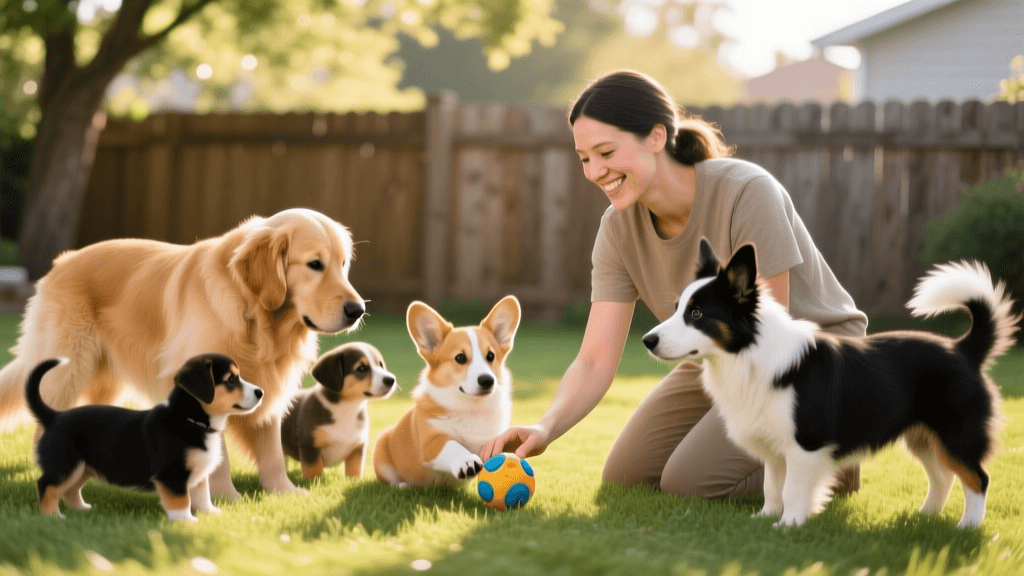
The second trimester is the time to establish physical boundaries and alter daily routines. If the nursery will be off-limits, install a pet gate now and teach your puppy that crossing the threshold is forbidden. Use the "Place" command to direct your puppy to a designated mat or bed outside the nursery door, rewarding them heavily for remaining settled. Furthermore, begin adjusting your puppy's walking and feeding schedule to match what it will look like postpartum. If you plan to hire a dog walker or utilize a local doggy daycare, introduce these services now so the puppy does not associate the new caregiver with the sudden disappearance of their primary owner.
Trimester Three: Stroller Training and Mock Scenarios
In the final months before arrival, introduce the baby stroller. Allow the puppy to sniff it while stationary, then begin taking short walks around the house, eventually moving to the neighborhood. Teach your puppy to walk on a loose leash beside the stroller without pulling or lunging. Many behaviorists recommend practicing with a realistic, weighted baby doll wrapped in a receiving blanket. Hold the doll, rock it gently, and reward your puppy for sitting calmly at a distance. This mock scenario helps desensitize the puppy to the protective body language and restricted mobility you will exhibit when holding a real infant.
Essential 2026 Gear for a Seamless Transition
Equipping your home with the right tools can drastically reduce the friction of this life transition. The pet technology market in 2026 offers several innovative solutions specifically suited for multi-generational households.
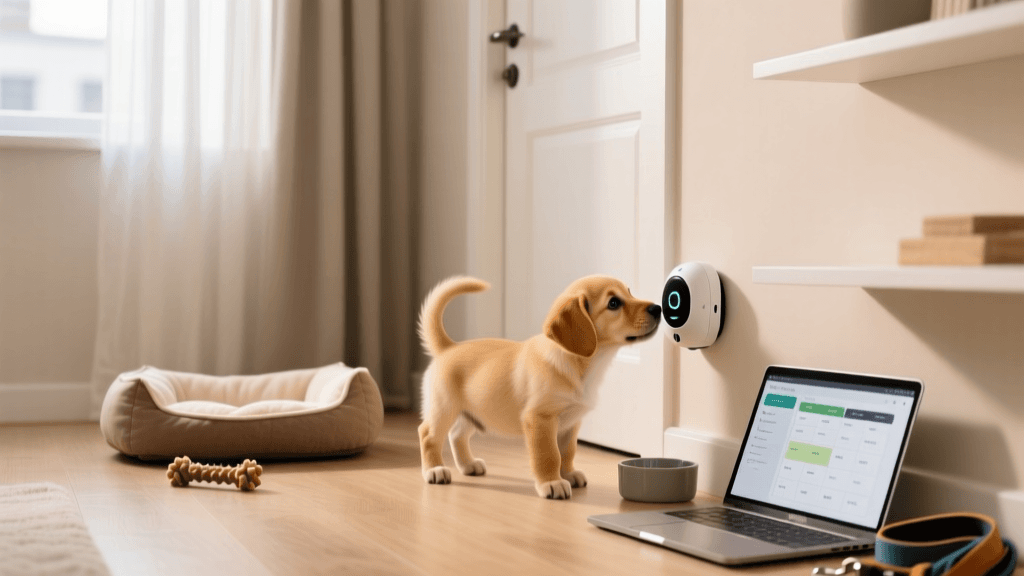
- Smart Pet Monitors with AI Tracking: The latest 2026 models of smart cameras, such as the Furbo 360, feature AI-driven behavioral alerts. These cameras can distinguish between a puppy's normal play and anxiety-induced pacing or barking, sending targeted notifications to your phone while you are in the nursery. The treat-tossing feature allows you to reward your puppy for settling on their mat remotely.
- Synthetic Pheromone Diffusers: Products like the Adaptil Calm Home Diffuser release synthetic dog-appeasing pheromones (DAP) that mimic the comforting scent of a nursing mother dog. Plugging these into the rooms where the puppy and baby will spend the most time can significantly lower baseline cortisol levels in the puppy during the chaotic first few weeks.
- Interactive Enrichment Feeders: When you are nursing or putting the baby down for a nap, you need the puppy to be occupied and quiet. Frozen enrichment toys, such as the KONG Classic stuffed with a mixture of plain pumpkin puree and kibble, provide 30 to 45 minutes of silent, mentally stimulating activity that tires the puppy out without requiring your direct supervision.
The Hospital Homecoming: First Introductions
The day you bring the baby home is highly emotional and often chaotic. The American Academy of Pediatrics advises that the initial greeting should be managed carefully to prevent overwhelming the dog. Before bringing the baby inside, have a partner or family member take the puppy for a long, exhausting walk to burn off excess energy. When you enter the home, leave the baby in the car or with another adult outside, and greet your puppy calmly. Allow the puppy to expend their initial excitement over your return.
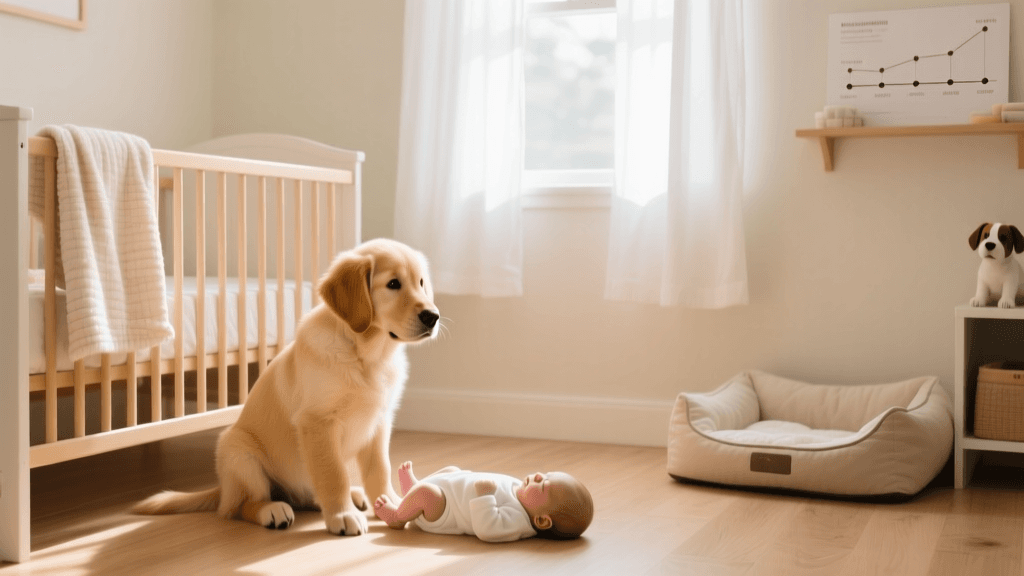
Once the puppy is settled, introduce the baby. Keep the puppy on a secure leash and ask them to sit or go to their "Place" mat. Allow the puppy to observe the baby from a safe distance of five to ten feet. Toss high-value treats to the puppy for any calm behavior, such as soft eyes, a relaxed posture, or a gentle sniff toward the baby's feet. Never force the puppy to approach the baby, and never leave them unsupervised together, even for a split second.
Managing Postpartum Life and Puppy Enrichment
The first 30 days postpartum are characterized by sleep deprivation and unpredictable schedules. Your puppy may experience a temporary regression in house training or exhibit attention-seeking behaviors. It is vital to maintain grace and consistency. Rely on your pre-established enrichment routines to keep the puppy mentally fatigued. Utilize snuffle mats, lick mats, and puzzle toys to replace some of the physical exercise that you may not have the time or energy to provide.
Remember to carve out just ten minutes a day for one-on-one connection with your puppy. A brief, focused training session in the backyard or a quiet moment of grooming can reassure your puppy that they are still a valued member of the family. By leaning on proactive preparation, modern enrichment tools, and structured boundary setting, you can guide your puppy through this monumental life transition, laying the foundation for a beautiful, lifelong bond between your child and their canine sibling.
beth-carrasco
All our authors care for dogs every day — read more of their work on the authors page.