Preparing Your Home for a New Dog: First-Time Owner Guide
Learn how to puppy-proof your space and gather first-day essentials with our comprehensive home preparation guide for first-time dog owners.
The Excitement and Reality of Bringing a Dog Home
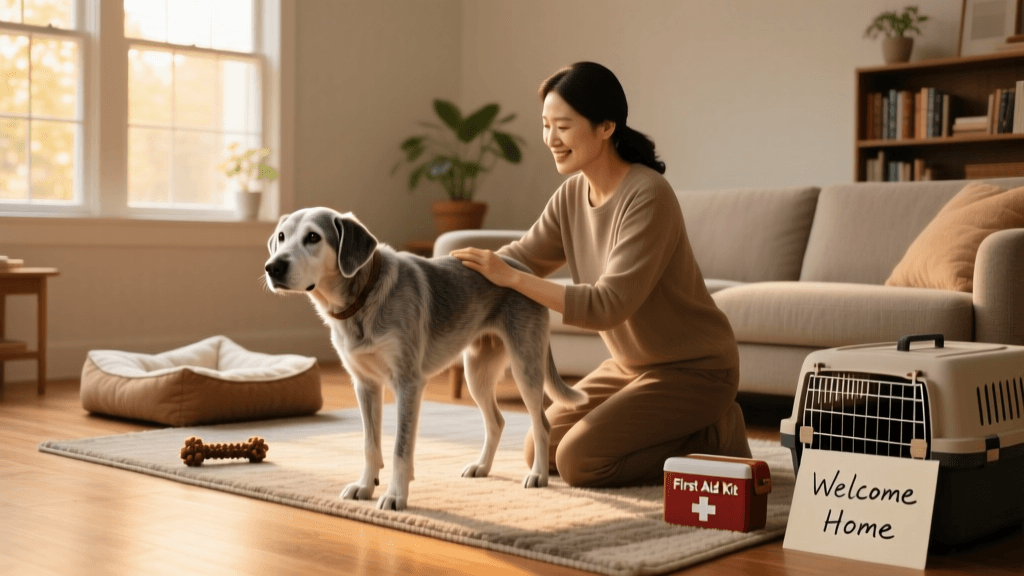
Bringing a new dog into your life is an unforgettable milestone. Whether you are adopting a rescue mutt from a local shelter or bringing home a purebred puppy, the excitement is palpable. However, for first-time dog owners, that excitement can quickly turn into overwhelm if your home is not properly prepared. Dogs, especially puppies and anxious rescues, explore the world with their mouths and noses. What looks like a safe, cozy living room to you might be an obstacle course of hazards to them. Preparing your home is not just about buying cute toys and premium kibble; it is about creating a secure, structured environment that sets your new companion up for long-term success.
In this comprehensive first-time owner guide, we will walk you through room-by-room puppy-proofing, essential gear budgeting, and the crucial first 24 hours of your dog's arrival. By taking the time to prepare your space before your dog crosses the threshold, you are actively preventing destructive behaviors, accidental poisonings, and unnecessary stress for both you and your new best friend.
Understanding the Canine Mindset During Transition
Before picking up a hammer to secure baseboards or buying bulk treats, it is vital to understand how a new dog perceives an unfamiliar environment. Dogs are highly sensitive to their surroundings. A new home means new scents, new sounds, and a complete lack of established territory. This sensory overload can lead to stress-induced behaviors such as chewing, digging, or inappropriate elimination. By proactively setting up "safe zones" and removing environmental stressors, you help regulate your dog's nervous system. According to the American Veterinary Medical Association (AVMA), early environmental management is one of the most effective ways to prevent behavioral issues before they even begin.
Step 1: Room-by-Room Puppy-Proofing and Dog-Proofing
Puppy-proofing is essentially the same as baby-proofing, but with the added challenge of a creature that can jump, climb, and chew through tough materials. Let us break down the preparation by room.
The Kitchen and Dining Area
The kitchen is arguably the most dangerous room for a new dog. Food scraps, dropped medications, and accessible trash cans pose severe risks. Invest in a heavy-duty, locking trash can, such as the Simplehuman Dual Compartment Rectangular Step Can, which prevents dogs from nosing open the lid. Store all toxic human foods—such as grapes, raisins, onions, garlic, and anything containing the artificial sweetener xylitol—in high cabinets. Furthermore, the U.S. Food and Drug Administration (FDA) recommends keeping pet food and treats stored in secure, airtight containers to prevent contamination and stop your dog from gorging themselves if left unsupervised.
Living Spaces and Bedrooms
Living rooms are full of entanglement and choking hazards. Use cord concealers or bitter-tasting sprays like Grannick's Bitter Apple to deter chewing on television and lamp wires. Get down on your hands and knees to view the room from your dog's perspective. Pick up stray socks, children's toys, and loose change. Houseplants are another major concern. Many popular indoor plants, including pothos, philodendrons, and sago palms, are highly toxic to dogs. Consult the ASPCA's Toxic and Non-Toxic Plants guide to audit your indoor greenery and move dangerous flora to high shelves or outdoor patios.
Bathrooms and Laundry Rooms
Keep toilet lids closed at all times to prevent dogs from drinking chemically treated bowl water or accidentally drowning. Store all cleaning supplies, laundry pods, and human medications in latched cabinets. Laundry rooms should be kept behind closed doors, as puppies love to burrow into piles of dirty laundry, which can lead to ingestion of fabric or entrapment.
Step 2: The Essential First-Day Shopping List and Budget
Walking into a pet supply store can be paralyzing for a first-time owner. To avoid overspending on unnecessary gadgets, focus on the core essentials that promote safety, hygiene, and comfort. Below is a structured budget and shopping list tailored for a medium-sized dog.
| Item Category | Recommended Product | Estimated Cost | Priority Level |
|---|---|---|---|
| Crate | MidWest Life Stages Double Door (36-inch or 42-inch) | $60 - $90 | Essential |
| Enzymatic Cleaner | Nature's Miracle Advanced Stain and Odor Eliminator | $15 - $20 | Essential |
| Chew Toys | KONG Classic Red Rubber Toy (Large) | $15 - $18 | Essential |
| Collar and Leash | 1-inch Nylon Collar and 6-foot Standard Leash | $20 - $35 | Essential |
| Food and Water Bowls | Stainless Steel Tip-Proof Bowls (Set of 2) | $15 - $25 | Essential |
| Containment | Regalo Easy Step Walk-Through Baby Gate | $35 - $45 | Highly Recommended |
| Bedding | Washable Crate Pad (avoid plush beds for heavy chewers) | $20 - $30 | Optional initially |
Pro-Tip for First-Time Owners: Do not buy expensive orthopedic beds for the first month. Puppies and anxious rescues are prone to destructive chewing when left alone. Stick to a simple, washable crate pad or folded towels until your dog has proven they will not destroy their bedding.
Step 3: Setting Up the Decompression Zone
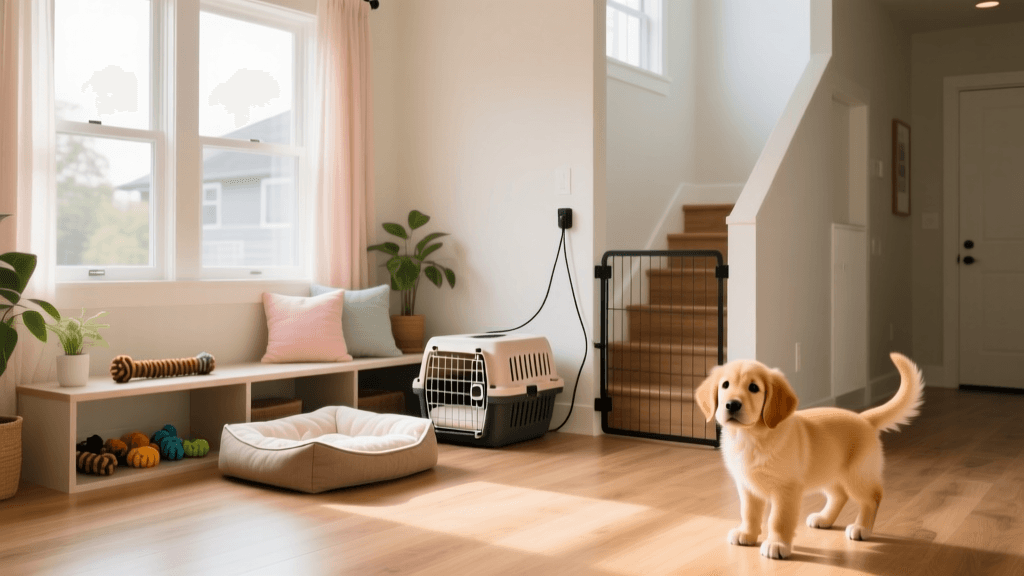
Before your dog arrives, designate a "decompression zone." This is a quiet, low-traffic area of your home—such as a spare bedroom, a gated-off corner of the living room, or a large bathroom—where your dog can retreat when overwhelmed. Set up their crate in this zone with the door securely tied open, add their water bowl, and place a few interactive toys inside. When a dog first arrives, they do not need immediate access to the entire house. Giving them too much space too soon can trigger anxiety and make house-training incredibly difficult. The decompression zone serves as their sanctuary, allowing them to observe their new family from a safe distance without the pressure of navigating a massive, unfamiliar territory.
Step 4: Establishing Family Rules Before Arrival
A new dog thrives on consistency, and inconsistency is the enemy of good training. Before the dog comes home, hold a family meeting to establish the house rules. Decide on the following:
- Furniture Privileges: Is the dog allowed on the couch or the bed? If the answer is no, everyone must enforce it from minute one.
- Feeding Schedules: Who is responsible for morning and evening feedings? Where will the food be stored and served?
- Potty Breaks: Establish a rotating schedule for bathroom breaks, especially if you work from home or have multiple family members. Puppies generally need a bathroom break every one to two hours.
- Command Vocabulary: Agree on the words you will use for basic commands. If one person says "Down" to mean get off the couch, and another uses "Down" to mean lie on the floor, the dog will become deeply confused. Use "Off" for furniture and "Down" for lying down.
Step 5: The First 24 Hours Survival Guide
The first day home is critical for setting the tone of your relationship. When you first bring your dog home, take them directly to their designated outdoor potty spot before they even enter the house. Keep them on a leash and allow them to sniff and eliminate. Praise them calmly and reward them with a high-value treat immediately after they go.
Once inside, keep the leash attached to you or your dog for the first few hours. This prevents them from wandering off to find a hidden corner to have an accident and allows you to gently redirect them if they begin to sniff out forbidden areas. Introduce them to their decompression zone, offer them a stuffed KONG toy, and let them settle. Avoid inviting friends and neighbors over for a "welcome party." While well-intentioned, a crowd of strangers is incredibly stressful for a dog navigating a major life transition.
Finally, remember the widely respected "3-3-3 Rule" of dog adoption. It takes roughly 3 days for a dog to decompress and realize they are safe, 3 weeks for them to learn your daily routine and show their true personality, and 3 months for them to fully bond and feel completely at home. By preparing your home thoroughly and managing your expectations, you are laying the groundwork for a beautiful, lifelong partnership with your new canine companion.
hannah-wickes
All our authors care for dogs every day — read more of their work on the authors page.