Step-by-Step Potty Training Guide for Newly Adopted Dogs
Discover a step-by-step potty training guide for newly adopted dogs. Learn scheduling, crate training, and positive reinforcement tips for success.
Welcome Home: Setting Up for Potty Training Success
Bringing a newly adopted dog or puppy into your home is a monumental occasion filled with joy, tail wags, and new routines. However, amidst the excitement of selecting the perfect collar and stocking up on premium kibble, new owners often face an immediate and daunting hurdle: housebreaking. Whether you have brought home an eight-week-old puppy or a three-year-old rescue from a shelter, establishing a reliable elimination routine is the cornerstone of a harmonious human-canine relationship. This comprehensive, step-by-step potty training guide for newly adopted dogs will walk you through the exact methodologies used by professional trainers to build lasting habits from day one.
The Science of Canine Elimination Habits
Before diving into the practical steps, it is crucial to understand the physiological and psychological factors governing your dog's bathroom habits. Puppies under the age of sixteen weeks physically lack complete voluntary control over their sphincter muscles. This means that even if they want to hold it, their bodies simply cannot accommodate the urge for extended periods. Furthermore, dogs are den animals by nature. According to the ASPCA, dogs possess an innate instinct to keep their sleeping areas clean, which is the foundational principle behind crate training. By leveraging this natural instinct and pairing it with positive reinforcement, we can accelerate the learning curve and minimize indoor accidents.
Step 1: Establish a Strict Potty Schedule
Consistency is the single most important variable in housebreaking. Dogs thrive on predictability, and their digestive systems operate on a relatively strict biological clock. You must take your new dog out at critical transition points throughout the day: immediately upon waking up, within fifteen minutes after eating or drinking, after a vigorous play session, and right before bedtime. To help you manage expectations and plan your day, refer to the age-based bladder capacity chart below.
| Dog Age | Max Bladder Capacity | Daytime Potty Breaks | Nighttime Potty Breaks |
|---|---|---|---|
| 8-10 Weeks | 1-2 Hours | Every 1-2 Hours | Every 2-3 Hours |
| 11-14 Weeks | 2-3 Hours | Every 2 Hours | Every 4 Hours |
| 15-16 Weeks | 3-4 Hours | Every 3 Hours | Every 4-6 Hours |
| Adult Rescue Dogs | 6-8 Hours | Every 4-6 Hours | Usually 0 (can hold 8 hrs) |
Stick to this schedule relentlessly for the first three weeks. Even if your dog does not eliminate immediately, the act of going to the designated spot builds a powerful associative memory.
Step 2: Choose and Prepare the Potty Zone
Select a specific outdoor area for your dog to use as their bathroom. This spot should be relatively quiet, easily accessible, and away from high-traffic areas of your yard. When you take your dog out, lead them directly to this exact spot on a leash. The lingering scent of previous eliminations will act as a natural olfactory trigger, signaling to your dog that this is the appropriate place to do their business. If you live in an apartment or lack immediate yard access, you may need to designate an indoor potty zone using products like Glad for Pets Black Charcoal Puppy Pads, though transitioning to outdoor elimination should remain the ultimate goal.
Step 3: Master the Art of Supervision and Confinement
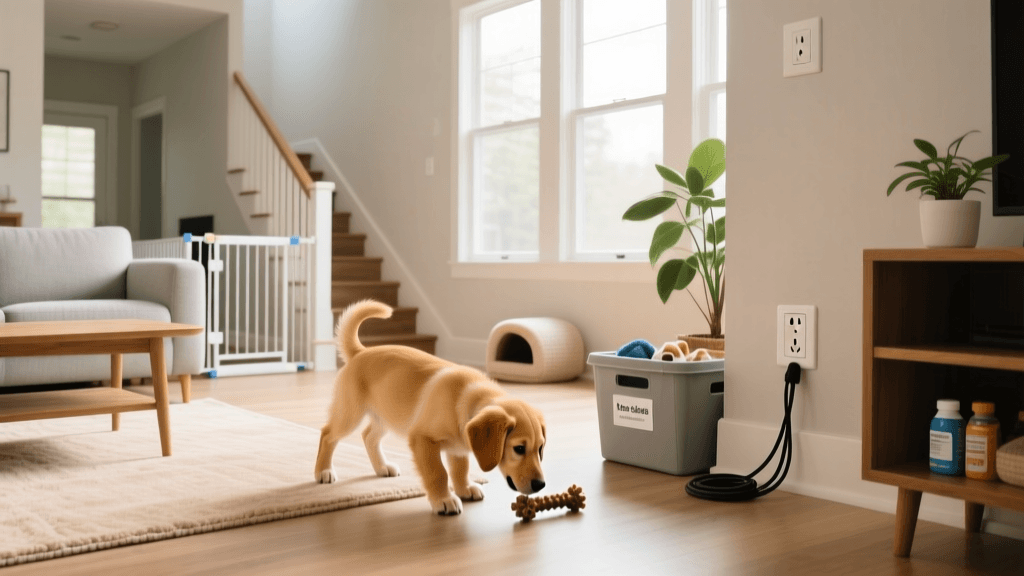
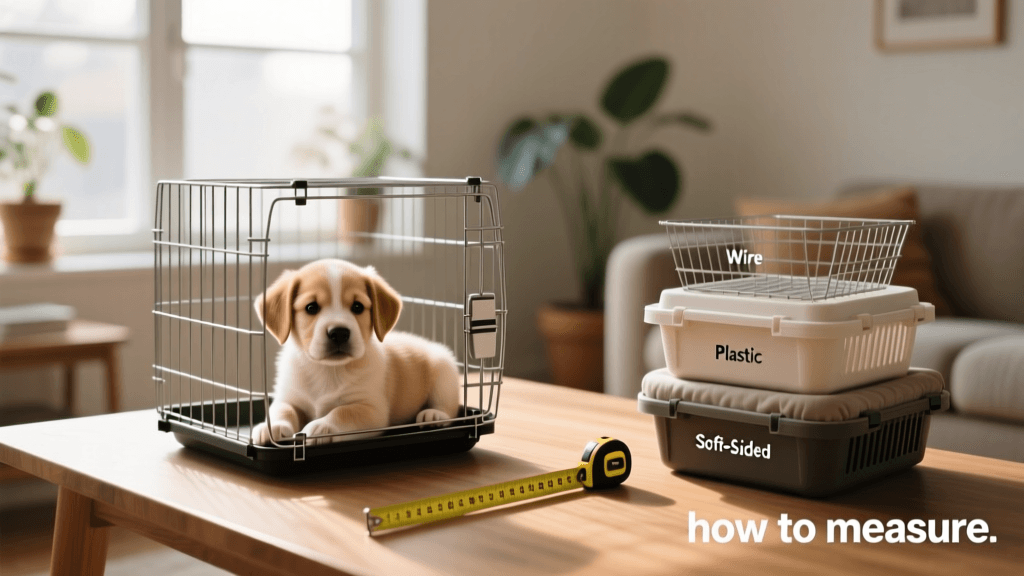
When your newly adopted dog is inside and not in their crate, they must be under 100% active supervision. The Humane Society of the United States strongly recommends the 'umbilical cord' method for the first few weeks. This involves tethering your dog's leash to your belt loop or a heavy piece of furniture near you, ensuring they cannot wander off to a hidden corner to have an accident. If you cannot actively watch your dog—perhaps you need to take a shower or cook dinner—they must be placed in a properly sized crate or a secure exercise pen. A crate that is too large will allow the dog to eliminate in one corner and sleep in the other, completely defeating the purpose of den-training.
Step 4: Reward and Reinforce Immediately
The timing of your reward is just as critical as the reward itself. According to the American Kennel Club (AKC), you must deliver a high-value treat and enthusiastic verbal praise within one to two seconds of your dog finishing their elimination. Do not wait until you return inside the house, as the dog will associate the reward with coming indoors rather than the act of going potty outside. Keep a treat pouch filled with small, soft training treats, such as Zuke's Mini Naturals, by the door at all times. Use a specific cue word like 'Go Potty' or 'Do Your Business' while they are in the act, which will eventually allow you to command them to eliminate on cue during inclement weather or travel.
Handling Accidents: What to Do and What Not to Do
Accidents are an inevitable part of the housebreaking process. How you react to them will dictate how quickly your dog learns. If you catch your dog in the act, clap your hands loudly to interrupt the behavior, immediately scoop them up or leash them, and carry them outside to their potty zone to finish. Never yell, rub their nose in the mess, or use physical punishment. Dogs do not possess the cognitive ability to connect a delayed punishment with a past action; they will only learn to fear you and hide their accidents behind furniture. To clean indoor accidents, you must use an enzymatic cleaner like Nature's Miracle Advanced Stain and Odor Eliminator. Standard household cleaners often contain ammonia, which mimics the scent of urine and actually encourages the dog to re-soil the same spot.
Nighttime Potty Training Strategies
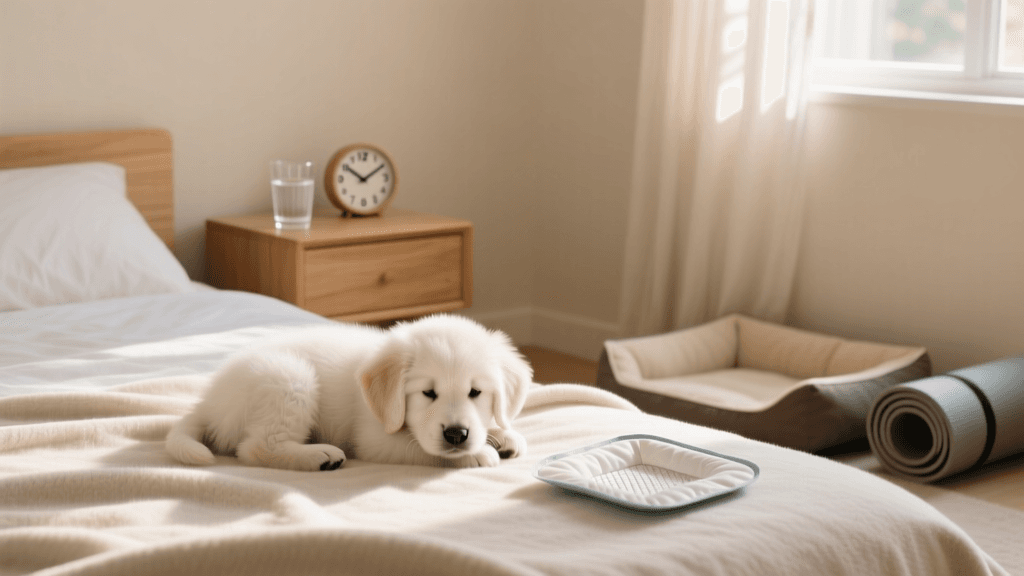
Nighttime can be particularly challenging for new owners. To set your dog up for success, remove their water bowl approximately two hours before bedtime. Take them out for a final potty break right before you go to sleep, and place their crate in your bedroom or an adjacent hallway. Being close to your scent and hearing your breathing will reduce separation anxiety, which is a common trigger for stress-induced elimination. If your puppy whines in the middle of the night, take them out immediately on a leash, keep the interaction completely boring and silent, and return them to the crate the moment they finish. Consider using a behavioral aid like the SmartPetLove Snuggle Puppy, which includes a simulated heartbeat and heat pack to soothe anxious rescue dogs and young puppies alike.
Essential Potty Training Supplies Checklist
- Properly Sized Crate: Such as the MidWest Homes for Pets iCrate, featuring a divider panel to adjust the space as your puppy grows.
- Enzymatic Cleaner: Nature's Miracle or Rocco & Roxie Professional Strength Stain & Odor Eliminator.
- High-Value Treats: Small, easily digestible options like Zuke's Mini Naturals or freeze-dried beef liver.
- Treat Pouch: A wearable pouch with a magnetic closure for instant access.
- Long-Line Leash: A 15-foot biothane leash to give your dog room to sniff and find the perfect spot while maintaining control.
- Exercise Pen: For safe confinement when the crate is not appropriate or during playtime.
- Baby Gates: To block off carpeted rooms or areas where you cannot maintain direct line-of-sight supervision.
Patience and consistency are your greatest tools. A newly adopted dog is navigating a completely foreign environment with new smells, new rules, and new people. Give them the grace to learn at their own pace, and celebrate every small victory.
By following this step-by-step potty training guide, maintaining a rigid schedule, and utilizing positive reinforcement, you will establish a foundation of trust and clear communication. Housebreaking is not a sprint; it is a marathon that requires dedication. Stay consistent, manage the environment to prevent failures, and soon enough, your newly adopted dog will be fully house-trained and seamlessly integrated into your family's daily routine.
robin-maitland
All our authors care for dogs every day — read more of their work on the authors page.