Puppy Proofing Your Home: A First-Time Owner Guide
Discover essential puppy proofing tips, first-day setup checklists, and cost estimates to prepare your home for a new dog. Perfect for first-time owners.
Welcome Home: Why Puppy Proofing Matters
Bringing a new puppy or rescue dog home is one of the most exciting milestones in life. However, for first-time dog owners, the transition can quickly turn from a joyful experience into a stressful ordeal if the home is not properly prepared. Puppies explore the world with their mouths, and adult rescue dogs may suffer from anxiety or curiosity that leads them to investigate off-limits areas. According to the ASPCA Animal Poison Control Center, tens of thousands of pets are exposed to household toxins, human medications, and dangerous foods every single year. Puppy proofing is not just about protecting your belongings; it is a critical safety measure that can save your dog's life and your wallet from expensive emergency vet bills.
This comprehensive first-time owner guide will walk you through the exact steps, measurements, and product recommendations needed to puppy-proof your home and set up a successful first-day environment.
Room-by-Room Puppy Proofing Checklist
Before your dog's paws ever touch your floors, you need to conduct a thorough sweep of your living space. Get down on your hands and knees to view your home from a dog's eye level. Here is what you need to address in the most high-risk areas of your house.
The Kitchen: Toxins and Trash
The kitchen is arguably the most dangerous room for a new dog. Countertops must be completely cleared of toxic foods such as grapes, raisins, onions, garlic, and anything containing xylitol, a common artificial sweetener in peanut butter and sugar-free gums that causes rapid hypoglycemia and liver failure in dogs.
- Trash Cans: Invest in a heavy-duty, locking trash can. The Simplehuman 13-Gallon Step Can with a lockable lid (approx. $80) is highly recommended to prevent dumpster-diving, which can lead to fatal intestinal blockages or pancreatitis from fatty scraps.
- Cleaning Supplies: Move all bleach, ammonia, and floor cleaners to cabinets at least 4 feet off the ground, or install magnetic child-proof locks on lower cabinets.
- Dishwasher: Always check the dishwasher before closing it. Dogs love to lick food residue off knives and plates, which can result in severe lacerations.
The Living Room: Cords and Flora
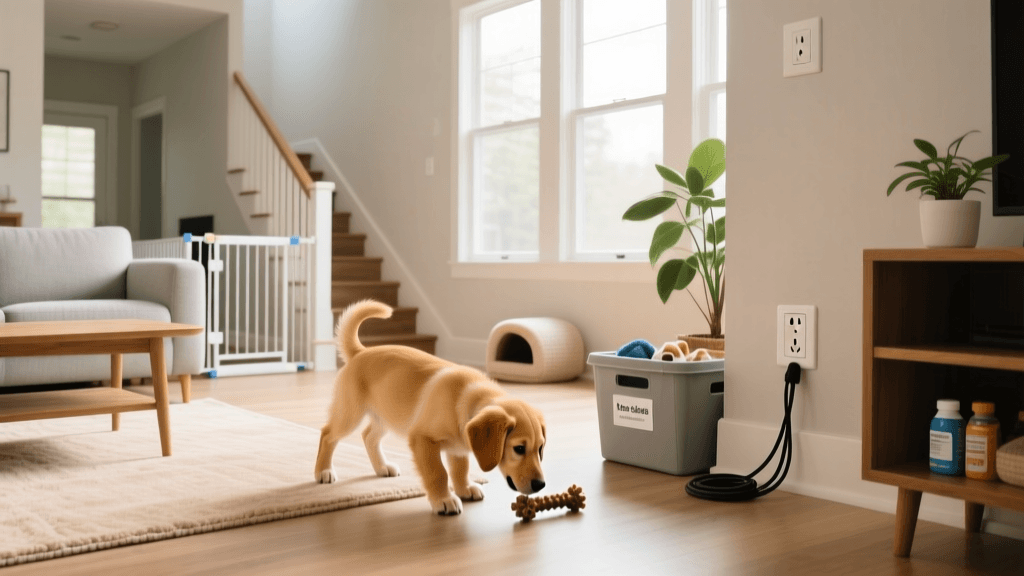
Living rooms are full of entanglement and chewing hazards. Electrical cords are particularly enticing to teething puppies due to the rubbery texture of the casing, which can lead to severe oral burns or electrocution.
- Cord Management: Use split loom tubing or rigid cable concealers like the J-Cord Channel Cable Cover ($15 for a 10-pack) to hide TV and lamp wires. Never leave phone chargers dangling off the edge of a table.
- Houseplants: Many common indoor plants are highly toxic to dogs. Sago palms, lilies, and pothos can cause liver failure or severe gastrointestinal distress. Consult the ASPCA's Toxic and Non-Toxic Plants list and remove any hazardous greenery to a high shelf or a closed room.
- Furniture Hazards: Be mindful of reclining chairs and rocking chairs. A puppy can easily be crushed or suffer a broken tail if they hide underneath moving mechanical parts.
The Bathroom: Medications and Drowning Hazards
Bathrooms present unique risks, primarily involving human medications and water hazards.
- Medications: Never leave pill bottles on the counter. Dogs can easily chew through plastic amber bottles. Store all vitamins, NSAIDs, and prescriptions in a latched medicine cabinet.
- Toilets: Keep the toilet lid closed at all times. Puppies can easily fall in and drown, or drink water contaminated with harsh bowl cleaners or drop-in bleach tablets.
The First-Day Essentials Setup
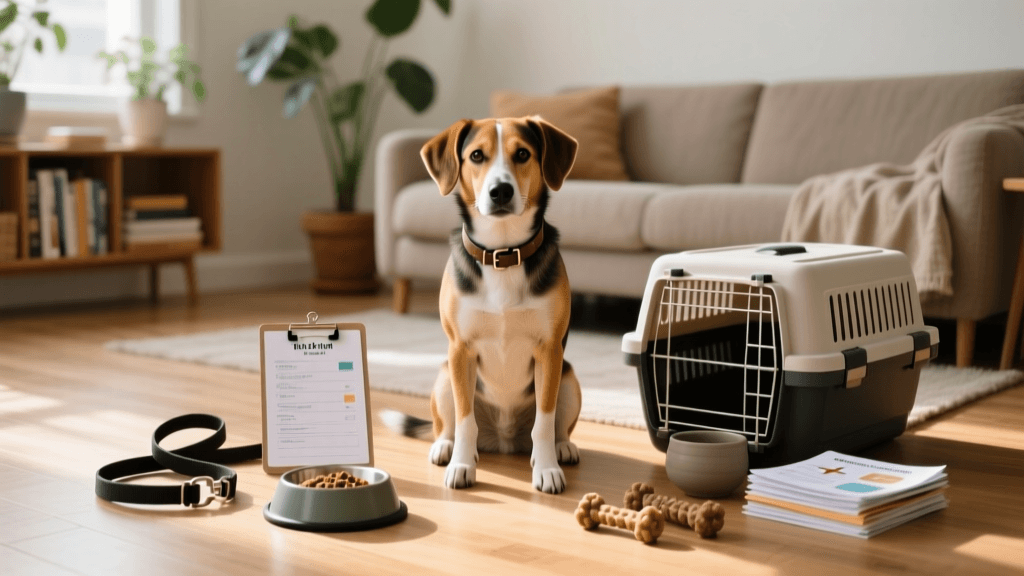
Preparing a designated safe zone is a core recommendation by the American Kennel Club (AKC) for bringing a new dog home. This space provides a sanctuary where the dog can decompress without being overwhelmed by the entire house. Setting this up requires specific gear tailored to your dog's projected adult size.
Cost and Product Breakdown
Below is a practical breakdown of the essential first-day setup items, including estimated costs and specific product recommendations for a medium-sized breed like a Beagle or Cocker Spaniel.
| Item Category | Recommended Product | Measurements and Details | Estimated Cost |
|---|---|---|---|
| Primary Crate | MidWest iCrate Double Door | 36 inch L x 23 inch W x 25 inch H (includes divider panel) | $65.00 |
| Exercise Playpen | Amazon Basics 8-Panel Metal Pen | 24 inch Height (ideal for puppies under 40 lbs) | $45.00 |
| Enzymatic Cleaner | Nature's Miracle Advanced Stain and Odor | 32 oz spray bottle (essential for urine) | $14.00 |
| Chew Toys | KONG Classic (Red) and Nylabone Puppy Chew | Medium size for dogs 15-35 lbs | $22.00 |
| Containment Gate | Regalo Easy Step Walk Thru Baby Gate | Fits hallways 29 to 39 inches wide | $40.00 |
| Calming Bed | Best Friends by Sheri Donut Bed | 23 inch diameter, machine washable | $35.00 |
Total Estimated First-Day Setup Cost: $221.00
Establishing a Safe Zone: Crate and Pen Training
First-time owners often make the mistake of giving a new puppy full run of the house on day one. This leads to potty training regression, separation anxiety, and destroyed furniture. Instead, utilize the Crate and Pen method. Place the crate inside the exercise pen. Leave the crate door open and cover the pen floor with puppy pads or a washable rug, leaving a designated potty area in the far corner of the pen if you will be away for extended periods.
This setup mimics a den environment. Dogs naturally avoid soiling their immediate sleeping area, which accelerates housebreaking. When you are actively supervising, the dog can be out in the living room attached to a 6-foot leash clipped to your belt, a technique known as umbilical cord training that prevents sneaking off to chew baseboards.
The First 24 Hours: Timing and Routine
The Humane Society of the United States emphasizes that routine is the foundation of a well-adjusted dog. The first 24 hours are about establishing boundaries, building trust, and managing overstimulation. Do not invite friends and family over on the first day; allow your dog to acclimate to their new pack in peace.
First-Day Timeline and Potty Schedule
Puppies under six months old have incredibly small bladders. A general rule of thumb is that a puppy can hold their bladder for one hour per month of age. However, during active play or right after eating, they will need to go out much sooner.
Patience and consistency are your greatest tools during the first week. Every time your puppy eliminates outside, reward them immediately with a high-value treat like boiled chicken or a freeze-dried liver bite. You are building a positive association with the outdoors.
- 8:00 AM - Wake Up and Immediate Potty: Carry the puppy outside immediately upon waking. Do not let them walk through the house, as excitement can trigger an accident.
- 8:30 AM - Breakfast: Serve measured meals rather than free-feeding. This regulates their digestive tract and makes potty schedules predictable.
- 9:00 AM - Potty Break and Play: Take them out again 20 to 30 minutes after eating. Engage in 15 minutes of gentle play with the KONG toy.
- 9:30 AM - Nap Time: Puppies require 18 to 20 hours of sleep a day. Place them in the crate with a snuggle puppy toy that mimics a mother's heartbeat.
- 11:30 AM - Potty and Training: Take them out, then spend 5 minutes teaching their name using small training treats.
- 12:00 PM - Lunch and Nap: Repeat the morning feeding and crating routine.
- 3:00 PM - Potty and Exploration: Allow supervised exploration of one new puppy-proofed room using the umbilical cord leash method.
- 6:00 PM - Dinner and Wind Down: Final meal of the day. Remove water bowls by 8:00 PM to help them sleep through the night.
- 10:00 PM - Final Potty and Bedtime: Take them out for a boring, quiet potty break. Place them in the crate, cover it with a breathable blanket, and turn on a white noise machine to drown out household sounds. If they cry at night, wait for a brief pause in the whining before opening the crate so you do not reinforce the vocalization.
Final Thoughts for the First-Time Owner
Preparing your home and establishing a rigid schedule before your dog arrives is the single most effective way to ensure a smooth transition. By investing in proper containment gear, removing hidden hazards, and committing to a strict potty and nap routine, you set the stage for a lifetime of good behavior and mutual trust. Remember that mistakes will happen. Keep your enzymatic cleaner close, take a deep breath, and enjoy the incredible journey of raising your new best friend.
priya-sutaria
All our authors care for dogs every day — read more of their work on the authors page.