Force-Free Puppy Zone Setup: Top Positive Reinforcement Gear 2026
Discover the best force-free gear to set up a positive reinforcement puppy zone in 2026. Learn expert tips for crate training, enrichment, and safe spaces.
Welcome Home: The Force-Free Philosophy for 2026
Bringing a new dog or puppy into your home is one of life's most exciting milestones. However, the transition can be overwhelming for both you and your new canine companion. In 2026, the gold standard for dog training and behavioral development has firmly shifted away from outdated dominance-based theories and toward positive reinforcement (R+) and force-free methodologies. As the American Veterinary Society of Animal Behavior (AVSAB) consistently highlights, reward-based training is not only more humane but significantly more effective for long-term behavioral health and bonding.
Setting up a dedicated 'Puppy Zone' or safe space is a cornerstone of force-free dog ownership. This zone is not a place of isolation or punishment; rather, it is a sanctuary where your dog can decompress, engage in species-appropriate enrichment, and learn to self-soothe. By carefully selecting the right gear and utilizing positive reinforcement techniques, you can prevent unwanted behaviors like destructive chewing or separation anxiety before they even begin.
Designing the Ultimate Positive Reinforcement Puppy Zone
A successful force-free setup relies on managing the environment to set your dog up for success. If a puppy cannot access your favorite shoes, they cannot chew them, meaning you never have to use aversive corrections. Here is the essential gear you need to build a positive, engaging, and safe environment for your new dog in 2026.
1. The Safe Haven: Force-Free Crate and Playpen Setup
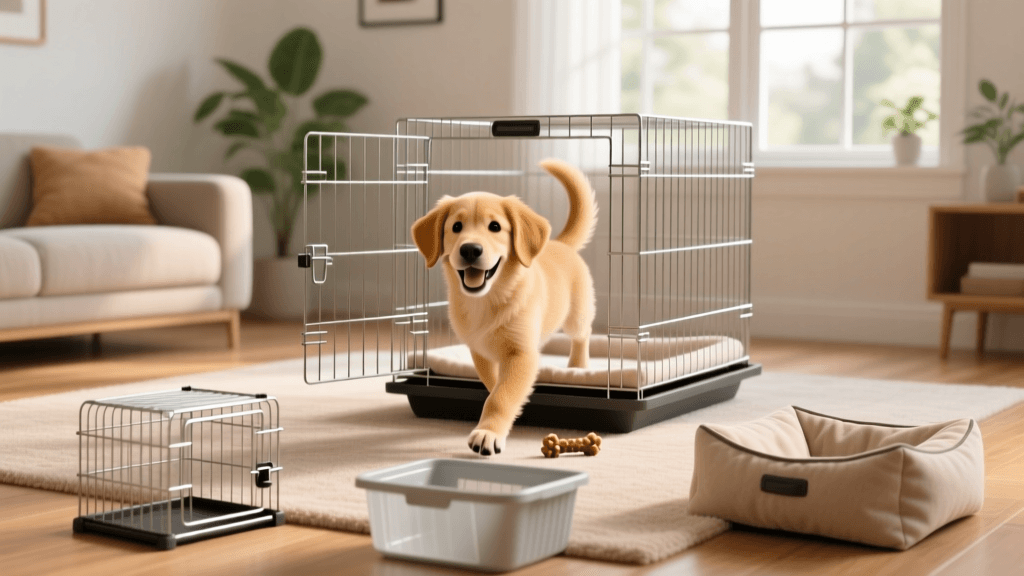
The crate should be introduced as a cozy den, never a jail. For a medium-sized breed, a 36-inch wire crate with an adjustable divider panel (such as the MidWest Ultima Pro, retailing around $95 in 2026) is ideal. The divider allows you to expand the space as your puppy grows, ensuring the sleeping area remains snug enough to encourage bladder control without giving them enough room to soil one corner and sleep in another.
Pair the crate with an eco-friendly, modular playpen like the Fable Pets Eco-Pen (approx. $130). This creates a larger 'apartment' for your puppy when you are home but unable to actively supervise. Attach the crate to the playpen with the door left open, giving the dog the agency to choose between the enclosed security of the crate and the slightly more open playpen area. Agency and choice are critical components of modern force-free handling.
2. Enrichment and Decompression Tools
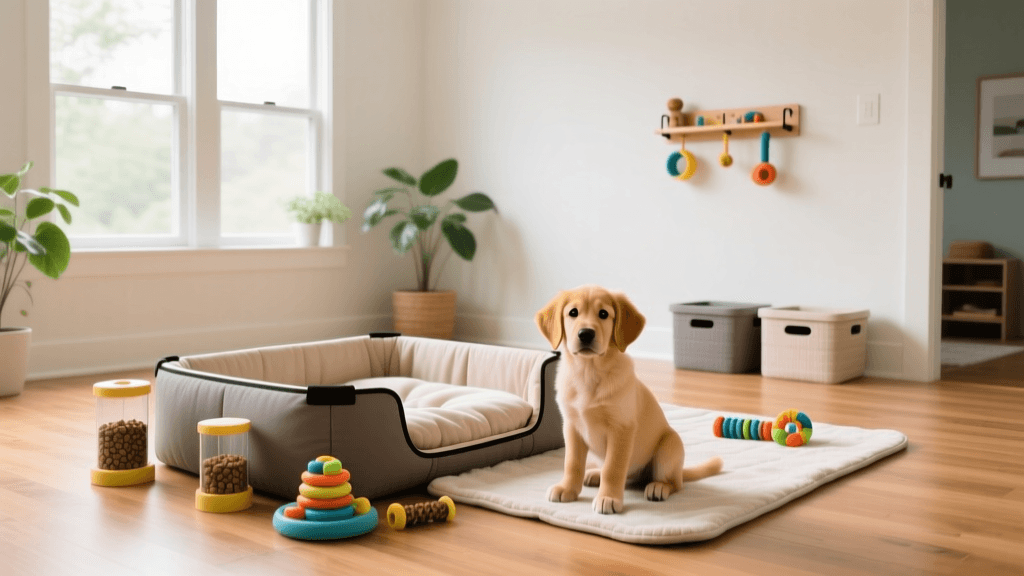
Physical exercise alone will not tire out a working or high-energy breed; mental enrichment is equally vital. Licking and chewing are naturally soothing behaviors for dogs that release endorphins and lower heart rates. Equip your zone with a Hyper Pet IQ Treat Mat ($15-$20) for spreading soft foods like plain pumpkin puree or goat's milk, and freeze it for a long-lasting, calming activity.
For meal feeding, ditch the traditional food bowl. Instead, use the West Paw Toppl ($25). This interlocking puzzle toy forces your puppy to use their paws and nose to extract kibble, turning a five-minute meal into a twenty-minute cognitive workout. This prevents gulping, aids digestion, and builds confidence through problem-solving.
3. High-Value Reward Stations
Keep a dedicated 'reward station' on a counter near the puppy zone. This should include a treat pouch (like the Fenzi Dog Sports Treat Pouch, $35) that is easy to clean and quick to access, alongside a variety of high-value rewards such as freeze-dried beef liver, boiled chicken, and commercial training treats like Zuke's Mini Naturals. In force-free training, timing is everything. Having your rewards prepped and within arm's reach ensures you can mark and reinforce desired behaviors—like four paws on the floor or a quiet settle—within one to two seconds.
Comparison Chart: Force-Free Enrichment Toys for New Puppies
| Toy Name | Best For | Material | Approx. 2026 Price |
|---|---|---|---|
| West Paw Toppl | Meal feeding, cognitive puzzles | Zogoflex (Dishwasher safe) | $25.00 |
| Hyper Pet IQ Treat Mat | Calming, decompression, licking | Food-grade silicone | $18.00 |
| Snuggle Puppy Heartbeat Toy | Nighttime crate anxiety, rescue transitions | Plush with electronic heartbeat | $45.00 |
| Kong Classic (Puppy Rubber) | Chewing, teething relief, stuffing | Softer pink/blue natural rubber | $16.00 |
Step-by-Step: Shaping Crate Love Without Force
Force-free crate training relies on classical and operant conditioning. You want the puppy to feel that the crate is the source of all good things. Never push, pull, or lure a puppy into a crate and shut the door. Instead, follow this shaping protocol:
- Days 1-3 (Building Positive Associations): Toss high-value treats into the back of the crate. Let the puppy go in, eat the treat, and immediately come back out. Repeat this 20-30 times a day. Do not close the door. You are building a history of reinforcement.
- Days 4-6 (Adding Duration): Once the puppy eagerly runs in, ask them to 'sit' or 'down' inside. Feed treats continuously for 5 seconds, then 10 seconds, then 30 seconds. If the puppy breaks position or tries to leave, simply reset without verbal correction. The absence of a reward is information enough.
- Days 7-10 (Closing the Door): Give the puppy a stuffed, frozen Kong inside the crate. Close the door quietly while they eat. Open the door *before* they finish and before they show any signs of distress. Gradually increase the time the door remains closed by increments of just 10 to 15 seconds per session.
By utilizing a marker word like 'Yes!' or a clicker the exact moment the puppy makes a good choice, you bridge the gap between the behavior and the reward, accelerating the learning process without inducing fear.
Pheromones and Calming Aids: Science-Backed Support
To further support a force-free transition, incorporate dog-appeasing pheromones (DAP) into your puppy zone. Products like the Adaptil Junior Diffuser ($45 for a starter kit in 2026) release synthetic copies of the pheromones a mother dog produces while nursing. According to experts associated with the Fear Free Happy Homes initiative, environmental enrichment combined with calming pheromones can significantly reduce stress-related vocalization and pacing in newly adopted dogs.
Plug the diffuser into an outlet near the puppy zone at least 24 hours before bringing your dog home. Ensure the diffuser is not placed under furniture or near open windows, as this impedes the dispersion of the pheromones. This passive, force-free intervention provides a subconscious layer of comfort, making your active training sessions much more successful.
Expert Sources and Further Reading
As you embark on your journey with your new dog, continue to educate yourself on modern, science-based behavioral practices. The following resources are invaluable for any force-free dog owner:
- American Veterinary Society of Animal Behavior (AVSAB) Position Statements: Essential reading on puppy socialization, dominance theory debunking, and reward-based training guidelines.
- Fear Free Pets: Happy Homes Program: Comprehensive guides on reducing fear, anxiety, and stress in the home environment through environmental modification and positive reinforcement.
- ASPCA General Dog Care: A reliable, up-to-date resource for baseline health, nutrition, and positive handling techniques for dogs of all ages.
Investing in the right gear and committing to a force-free philosophy from day one will lay the foundation for a deeply trusting, joyful relationship with your dog for years to come.
robin-maitland
All our authors care for dogs every day — read more of their work on the authors page.