Best Dog Crates for New Puppies: The Ultimate Buyer Guide
Discover the best dog crates for new puppies. Compare wire, plastic, and soft-sided crates to find the perfect fit, size, and budget for your new dog.
Why Every New Puppy Needs a Crate
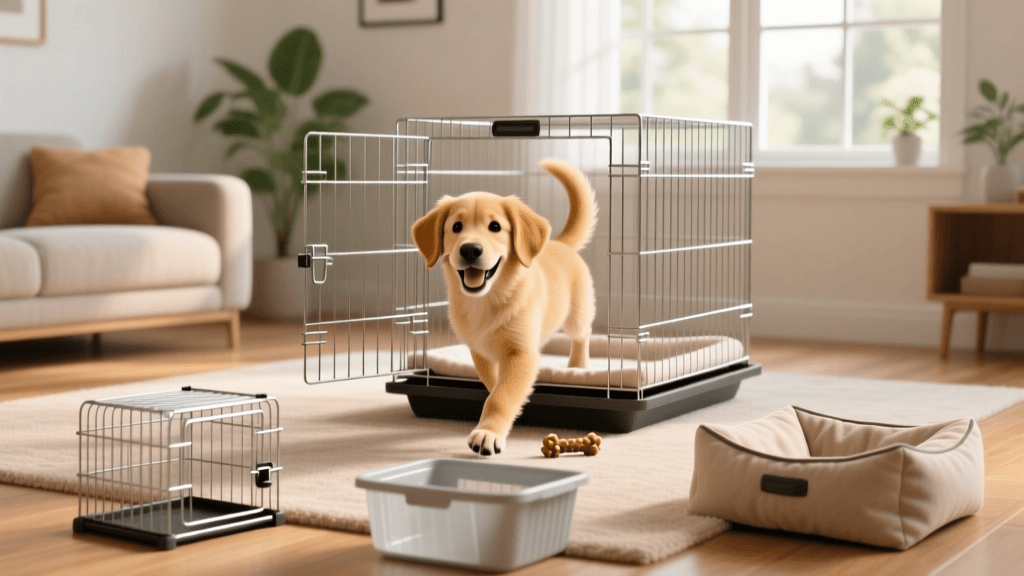
Bringing a new puppy home is an exhilarating experience, but it also comes with a host of responsibilities and necessary purchases. Among the most critical items on your new puppy shopping list is a high-quality dog crate. While some new owners view crates as canine jails, animal behaviorists and veterinarians widely recognize them as essential tools for house training, safety, and providing a secure den for your dog.
According to the American Kennel Club (AKC), a crate taps into a dog's natural den instinct, offering them a personal sanctuary where they can retreat when overwhelmed by the sights and sounds of a busy household. Furthermore, crates are invaluable for preventing destructive chewing and household accidents when you cannot directly supervise your new pet. But with hundreds of options on the market, how do you choose the right one? This buyer's guide breaks down the best dog crates for new puppies, complete with sizing charts, cost estimates, and expert training tips.
How to Measure Your Puppy for a Crate
Buying a crate that is too large can hinder house training, as puppies may use one corner as a bathroom and the other for sleeping. Conversely, a crate that is too small will cause physical discomfort and anxiety. When buying a crate for a growing puppy, look for models that include an adjustable divider panel. This allows you to expand the living space incrementally as your dog grows, saving you from buying multiple crates over the first year.
To determine the correct maximum size for your adult dog, measure your puppy's expected adult height (from the floor to the top of the head or ears) and length (from the tip of the nose to the base of the tail). Add 2 to 4 inches to both measurements to ensure they can stand up and turn around comfortably.
Puppy Crate Sizing Guide
| Expected Adult Weight | Recommended Crate Length | Common Breed Examples |
|---|---|---|
| 1 - 10 lbs | 18 - 22 inches | Chihuahua, Yorkshire Terrier, Pomeranian |
| 11 - 25 lbs | 24 inches | Pug, French Bulldog, Miniature Schnauzer |
| 26 - 40 lbs | 30 inches | Beagle, Cocker Spaniel, Welsh Corgi |
| 41 - 70 lbs | 36 inches | Border Collie, Bulldog, Standard Poodle |
| 71 - 90 lbs | 42 inches | Labrador Retriever, Golden Retriever, Boxer |
| 90+ lbs | 48 inches | Great Dane, Mastiff, Saint Bernard |
Types of Dog Crates: Pros, Cons, and Top Picks
1. Wire Crates: The Versatile Standard
Top Pick: MidWest Homes for Pets iCrate Double Door Dog Crate
Estimated Cost: $50 - $90
Best For: House training, general home use, and growing puppies.
Wire crates are the most popular choice for new puppy owners. They offer excellent ventilation, visibility, and typically fold flat for easy storage or transport. The MidWest iCrate is an industry standard because it includes a leak-proof plastic pan and an adjustable divider panel, making it incredibly cost-effective for a growing puppy. The dual-door design allows for flexible placement in your home. However, wire crates are heavy, can be noisy if your puppy paws at the metal, and do not provide much insulation or privacy unless covered with a breathable blanket.
2. Plastic Travel Crates: The Airline-Compliant Den
Top Pick: Petmate Sky Kennel
Estimated Cost: $80 - $130
Best For: Travel, flying, and puppies that prefer a cozier, darker den.
If you plan to travel with your puppy, a hard plastic crate is a necessity. The Petmate Sky Kennel meets most airline cargo requirements and features heavy-duty plastic with a secure, vault-like door. The enclosed sides create a darker, more den-like environment, which can help anxious puppies sleep better and block out distracting household movements. The downside is that plastic crates are bulky, difficult to store when not in use, and offer less cross-breeze airflow than wire models.
3. Soft-Sided Crates: The Portable Option
Top Pick: EliteField 3-Door Folding Soft Dog Crate
Estimated Cost: $40 - $70
Best For: Car trips, outdoor events, and fully house-trained older dogs.
Soft-sided crates are lightweight and highly portable. The EliteField model features mesh windows for ventilation and multiple access doors. However, we do not recommend soft crates for new puppies. Puppies are teething and prone to destructive chewing; a determined puppy will chew through the mesh or fabric in minutes, potentially ingesting dangerous materials or escaping. Save the soft crate for when your dog is fully mature and reliably crate-trained.
4. Furniture-Style Crates: The Aesthetic Choice
Top Pick: Frisco Wooden Dog Crate End Table
Estimated Cost: $150 - $250
Best For: Living rooms, small spaces, and dogs that do not chew wood.
Furniture crates double as end tables or nightstands, allowing the crate to blend seamlessly into your home decor. The Frisco Wooden Crate is constructed from engineered wood and features a sturdy metal wire door. While beautiful, wooden crates are not ideal for teething puppies who might gnaw on the bars or wooden edges, leading to costly damage and potential veterinary bills. They are also heavier and more difficult to sanitize in the event of a house-training accident.
Buyer's Comparison Chart
| Crate Type | Durability | Portability | Puppy Safe? | Best Use Case |
|---|---|---|---|---|
| Wire (MidWest) | High | Medium (Folds) | Yes (with divider) | Everyday home use & training |
| Plastic (Petmate) | Very High | Low (Bulky) | Yes | Airline travel & secure dens |
| Soft-Sided (EliteField) | Low | Very High | No (Chewing hazard) | Travel for adult dogs |
| Furniture (Frisco) | Medium | None (Heavy) | Caution (Wood chewing) | Living room decor |
Essential Crate Accessories to Buy
The crate itself is just the foundation. To ensure your puppy associates the crate with comfort and positive experiences, you will need a few key accessories:
- Washable Crate Pad: Avoid thick, plush beds for young puppies, as they may tear them apart and ingest the stuffing, leading to intestinal blockages. Opt for a thin, durable, machine-washable fleece pad (approx. $15-$25). Avoid cedar or pine shavings, as the aromatic oils can cause respiratory irritation in young dogs.
- Heartbeat Toy: The Snuggle Puppy (~$40) includes a simulated heartbeat and disposable heat pack, which mimics the feeling of sleeping with littermates and drastically reduces first-night whining and separation anxiety.
- Interactive Treat Toys: A classic KONG rubber toy (~$15) stuffed with frozen puppy-safe yogurt or mashed bananas will keep your dog occupied and build positive associations with crate time.
- Crate Cover: A fitted canvas cover (~$20) helps block out visual stimuli and light, signaling to your puppy that it is time to sleep and wind down.
Expert Tips for Crate Training Success
Purchasing the right crate is only half the battle; proper introduction is vital. The Humane Society of the United States emphasizes that a crate should never be used as a form of punishment. It must remain a positive, rewarding space where the dog feels entirely secure.
Start by leaving the door open and tossing high-value treats inside. Feed your puppy their meals in the crate to build a strong positive correlation. Gradually increase the amount of time the door is closed while you sit nearby, eventually working up to leaving the room. Keep early crating sessions short—no more than a few hours at a time, as young puppies have limited bladder control. A general rule of thumb is that a puppy can hold their bladder for one hour per month of age, plus one.
Additionally, the ASPCA recommends ensuring your puppy gets plenty of physical exercise and mental stimulation before being crated. A tired puppy is much more likely to settle down and sleep quietly in their crate. By investing in a high-quality, appropriately sized crate and following expert-backed training protocols, you will provide your new puppy with a lifelong sanctuary and save yourself from countless household mishaps during the crucial first months of ownership.
tom-renshaw
All our authors care for dogs every day — read more of their work on the authors page.