First Day Home: A Step-by-Step Dog Training Setup Guide
Discover our step-by-step first day home dog training guide. Learn essential setup tips, crate training basics, and potty schedules for your new pup.
Welcome Home: Setting the Stage for Success
Bringing a new dog into your life is a monumental milestone, but the first 24 hours are critical for establishing long-term behavioral patterns. Many new owners make the mistake of treating the first day purely as a celebration, overwhelming the dog with visitors, new spaces, and inconsistent rules. From a professional training perspective, day one is about decompression, boundary setting, and establishing a predictable routine. This step-by-step guide will walk you through the exact training setup, essential gear, and hourly schedule you need to ensure your new dog transitions smoothly into their forever home.
Step 1: Pre-Arrival Preparation and Essential Gear
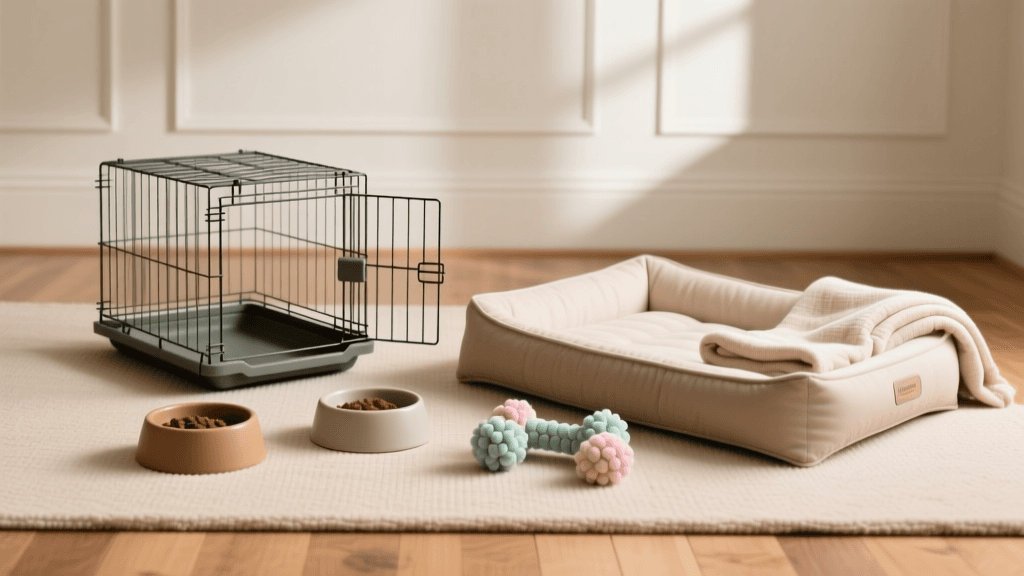
Before your dog's paws ever touch your floor, you must prepare a structured environment. Dogs thrive on predictability, and having the right training tools ready eliminates day-one chaos. Here is your essential shopping list, complete with estimated costs and specific measurements for a medium-sized dog (30-50 lbs):
- 36-Inch Wire Crate ($50 - $80): A wire crate is preferred over soft-sided ones for initial training because it provides visibility and ventilation. Ensure it includes a divider panel so you can adjust the space as a puppy grows. The dog should be able to stand, turn around, and lie down comfortably, but not have enough room to potty in one corner and sleep in the other.
- 6-Foot Nylon or Leather Leash ($15 - $25): Avoid retractable leashes entirely. A standard 6-foot leash gives you precise control and teaches the dog to stay within your immediate proximity, which is vital for loose-leash training and potty breaks.
- Enzymatic Cleaner ($12 - $18): Products like Nature's Miracle or Rocco & Roxie break down the uric acid in dog urine. Standard household cleaners will not eliminate the scent, which can trigger repeat marking or accidents in the same spot.
- Stuffable Rubber Treat Toy ($12 - $16): The classic Kong toy is an absolute necessity. Stuff it with dog-safe peanut butter and kibble, then freeze it. This provides mental enrichment and serves as a positive association tool for crate training.
- High-Value Training Treats ($8 - $15): Invest in soft, pungent treats like freeze-dried liver or boiled chicken breast. Cut them into pea-sized pieces to keep caloric intake low while maximizing training motivation.
Step 2: The First Hour - Decompression and Boundaries
According to the Humane Society of the United States, the transition to a new home is highly stressful for dogs, often triggering a 'fight or flight' response. When you first arrive home, do not immediately unleash the dog inside the house. Instead, follow this step-by-step arrival protocol:
- The Yard Walk (15-20 minutes): Keep the dog on the 6-foot leash and walk them around the perimeter of your yard or the immediate outdoor area. Allow them to sniff and, crucially, wait for them to eliminate. The moment they do, use a marker word like 'Yes!' and reward them with a high-value treat. This establishes your yard as the primary potty zone.
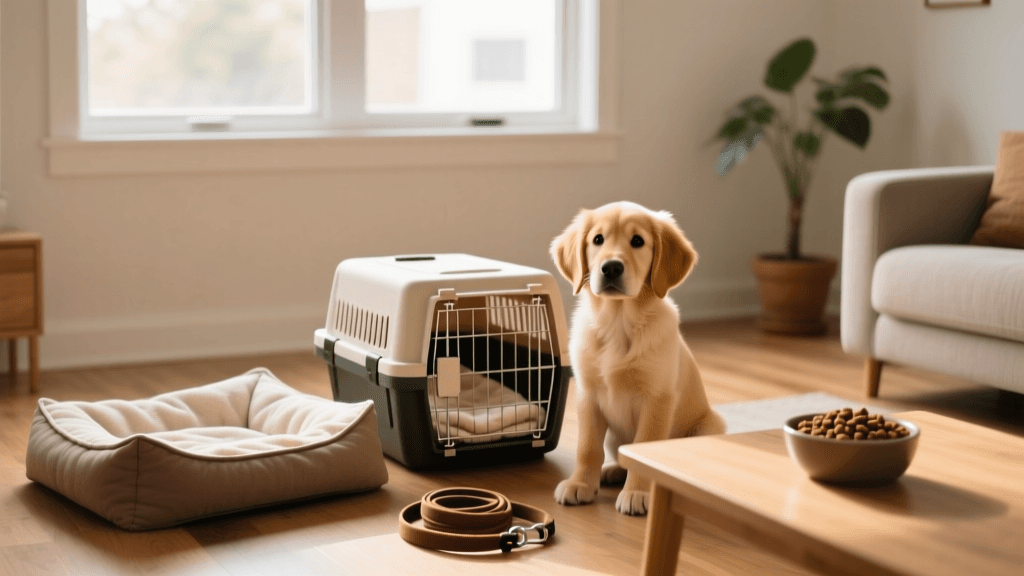
- The Guided Tour (10 minutes): Bring the dog inside on-leash. Do not give them free roam of the entire house. Guide them through the main living areas and immediately lead them to their designated 'safe space' (their crate or a gated pen area).
- The Decompression Period (1-2 hours): Remove the leash, offer them the frozen treat toy, and allow them to settle in their designated area. Ignore them during this time. Let them observe the household sounds and smells without the pressure of direct interaction.
Step 3: Establishing a Potty Training Schedule
Potty training begins the very first minute the dog is home. The most common cause of indoor accidents is an unmanaged bladder and a lack of supervision. You must take the dog out on a strict schedule, not just when they 'seem' to need to go. The American Kennel Club (AKC) emphasizes that proactive scheduling is the cornerstone of successful housebreaking.
Use the following data table to determine your dog's maximum bladder capacity and required potty break intervals based on their age:
| Dog Age | Approximate Bladder Capacity | Daytime Potty Interval | Nighttime Wake-Up Schedule |
|---|---|---|---|
| 8 - 10 Weeks | 1 - 1.5 Hours | Every 60 minutes | Every 2 - 3 hours |
| 11 - 14 Weeks | 2 - 3 Hours | Every 90 minutes | Every 3 - 4 hours |
| 15 - 24 Weeks | 3 - 4 Hours | Every 2 hours | Every 4 - 5 hours |
| Adult (Rescue) | 6 - 8 Hours | Every 3 - 4 hours | Usually sleeps through |
Training Rule: Always carry the dog or walk them out on-leash to the exact same spot in the yard. Use a consistent cue word like 'Go potty.' If they do not eliminate within 5 minutes, bring them back inside, place them in their crate for 10 minutes, and try again. This prevents them from learning that going outside is just playtime.
Step 4: Introduction to the Crate on Day One
Crate training is not about confinement; it is about creating a den-like sanctuary that aids in potty training and prevents destructive chewing. On the first day, your goal is simply to build a positive emotional response to the crate.
- Step A: The Open Door Policy. Place the crate in a high-traffic family area, like the living room. Keep the door securely propped open. Toss a few high-value treats inside and let the dog retrieve them and exit immediately.
- Step B: Mealtime Association. Serve the dog's first dinner inside the crate. Place the bowl all the way at the back. If the dog is hesitant, place it near the entrance and gradually move it further back over subsequent meals.
- Step C: The First Closure. Once the dog is comfortably eating or chewing their frozen toy inside, gently close the door. Do not latch it yet. Sit right next to the crate, offering quiet praise. After 5 minutes, open the door before they finish their activity and ask to be let out.
According to the ASPCA, a crate should never be used as a punishment. It must remain a positive, stress-free zone to effectively aid in behavioral training and housebreaking.
Step 5: The First Night Routine
The first night is notoriously difficult. Puppies and newly adopted rescue dogs often cry when left alone in the dark. To mitigate separation distress, place the crate in your bedroom for the first two weeks. This allows the dog to hear your breathing and smell your scent, which lowers their cortisol levels.
Set an alarm based on the nighttime wake-up schedule in the table above. When the alarm goes off, keep the lights dim, avoid speaking or making eye contact, leash the dog, carry them directly outside to their potty spot, reward the elimination, and immediately return them to the crate. Keeping nighttime potty breaks strictly 'business-only' teaches the dog that nighttime is for sleeping, not playing.
Common First-Day Mistakes to Avoid
Even well-intentioned owners can accidentally sabotage their training setup on day one. Avoid these critical errors:
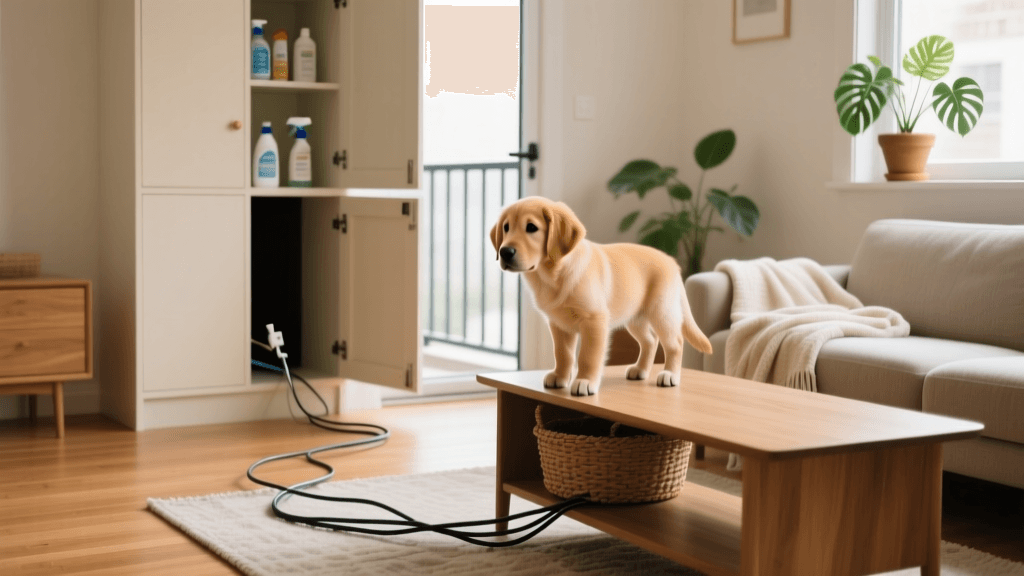
- The 'Freedom' Mistake: Allowing the new dog unsupervised free-roam access to the house. This almost guarantees an indoor potty accident and the potential ingestion of dangerous household items. Use baby gates or a long leash tethered to your belt to maintain 100% supervision.
- The 'Welcome Party' Mistake: Inviting friends and extended family over on the first day. This overstimulates the dog, leading to stress-induced diarrhea, nipping, and an inability to settle in their crate.
- The 'Consolation' Mistake: Petting and soothing the dog with a high-pitched voice when they whine in the crate. This inadvertently rewards and reinforces the whining behavior. Instead, wait for a brief moment of silence before opening the crate door.
Conclusion
The first day home sets the trajectory for your dog's entire behavioral development. By preparing your gear in advance, enforcing a strict potty schedule, and introducing the crate as a positive sanctuary, you bypass the most common behavioral hurdles new owners face. Stay patient, remain consistent with your boundaries, and remember that training is a marathon, not a sprint. Your dedication on day one will yield a confident, well-adjusted, and beautifully trained companion for years to come.
marcus-aldridge
All our authors care for dogs every day — read more of their work on the authors page.