Expert Q&A: Overcoming Leash Reactivity in Rescue Dogs
Veterinary behaviorists and certified trainers answer top questions on curing leash reactivity, covering thresholds, gear, and high-value treats.

Expert Q&A: Decoding and Curing Leash Reactivity
Leash reactivity is one of the most frustrating and misunderstood behavioral issues in modern dog ownership. Whether your dog barks, lunges, or whines at the sight of other dogs, people, or even moving vehicles, the experience can turn a simple neighborhood walk into a stressful chore. But is your dog truly aggressive, or are they simply overwhelmed? To separate fact from fiction, we sat down with a veterinary behaviorist and a Certified Professional Dog Trainer (CPDT) to answer your most pressing questions about leash reactivity, threshold management, and the exact gear and treats you need to succeed.
Meet Our Expert Panel
- Dr. Sarah Jenkins, DVM, DACVB: A board-certified veterinary behaviorist specializing in fear-based anxiety and psychopharmacology in canines.
- Marcus Thorne, CPDT-KA: A certified professional dog trainer with over a decade of experience in force-free behavioral modification and rescue dog rehabilitation.
Q1: What Exactly is Leash Reactivity? Is It Aggression?
Marcus (Trainer): Reactivity is essentially an overreaction to a specific trigger. While it looks explosive, it is rarely rooted in a desire to do harm. Most leash-reactive dogs are exhibiting fear-based or frustration-based responses. The leash restricts their natural flight response, leaving them feeling trapped. When a dog feels trapped, their fight-or-flight system defaults to 'fight' as a defensive mechanism.
Dr. Jenkins (Vet): From a neurological standpoint, reactivity is an amygdala hijack. When your dog spots a trigger, their brain floods with cortisol and adrenaline, bypassing the prefrontal cortex where logical learning occurs. This is why you cannot simply 'correct' a reactive dog into listening. As noted in the ASPCA's guide on dog aggression, distinguishing between true predatory aggression and fear-based defensive posturing is critical. True aggression is often quiet and targeted, whereas reactivity is loud, theatrical, and designed to increase distance from the trigger.
Q2: Which Walking Equipment Actually Prevents Lunging?
Marcus (Trainer): The right equipment will not cure reactivity, but it will give you the physical management needed to keep your dog under their stress threshold while you train. I strictly recommend force-free gear. Aversive tools like prong or shock collars suppress the outward symptoms (barking) while amplifying the internal panic, often leading to a dog that bites without warning.
Dr. Jenkins (Vet): I completely agree. The American Veterinary Society of Animal Behavior (AVSAB) strongly advises against the use of punishment-based collars due to the severe risk of exacerbating fear and anxiety. Here is a breakdown of the equipment we recommend for reactive dogs:
| Equipment Type | Estimated Cost | Mechanism of Action | Best Use Case |
|---|---|---|---|
| Front-Clip Harness (e.g., Ruffwear Front Range) | $35 - $45 | Redirects forward momentum sideways when the dog pulls. | Mild to moderate pullers; everyday training walks. |
| Head Halter (e.g., Petsafe Gentle Leader) | $15 - $25 | Controls the head, naturally steering the body away from triggers. | Severe lunging; large, powerful breeds requiring immediate physical management. |
| Back-Clip Harness | $25 - $40 | Distributes pressure across the chest and back. | Non-reactive dogs; running or hiking. Avoid for active reactivity training. |
| Double-Clip Training Leash | $20 - $30 | Attaches to both the front and back rings of a harness simultaneously. | Maximum steering control for dogs that slip out of standard gear. |
Pro Tip: Pair your harness with a sturdy, 6-to-8-foot biothane leash. Avoid retractable leashes entirely, as they teach dogs that pulling creates more slack and offer zero emergency stopping power.
Q3: How Do We Measure and Respect the 'Threshold'?
Dr. Jenkins (Vet): The threshold is the exact distance at which your dog notices a trigger but remains cognitively capable of learning. If your dog is barking, lunging, or refusing treats, they are over threshold. At that point, the learning center of the brain is offline.
Marcus (Trainer): Managing this distance is the cornerstone of desensitization. We use a protocol called the 'Look At That' (LAT) game, developed by Leslie McDevitt. Here is the exact actionable protocol:
- Find Your Baseline Distance: For some dogs, this is 50 feet; for others, it is 150 feet. Find the distance where your dog notices the trigger but will still eat a treat.
- Mark and Reward: The moment your dog looks at the trigger, say 'Yes!' or click your clicker, and immediately deliver a high-value treat.
- Repeat and Reorient: The goal is to change the dog's emotional response. Trigger = Good things happen. Over weeks, you will notice your dog voluntarily looking at the trigger and then immediately looking back at you for their reward.
- Decrease Distance Gradually: Only close the gap by 5 to 10 feet once your dog is consistently relaxed at the current distance.
According to the Humane Society of the United States, consistent, positive desensitization and counter-conditioning are the most humane and effective methods for modifying aggressive or reactive behaviors over time.
Q4: What Treats Should I Use for High-Stress Training?
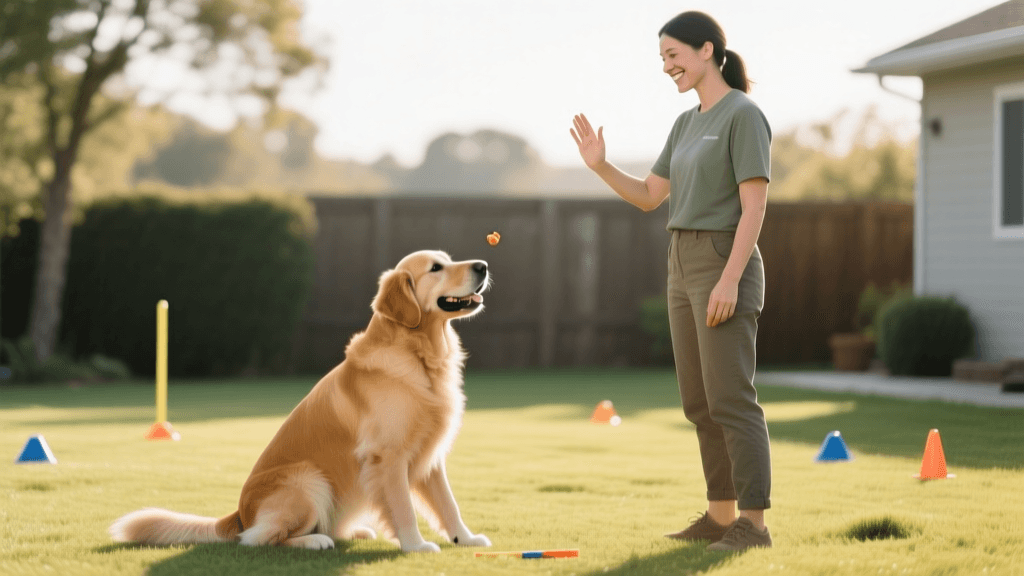
Marcus (Trainer): You cannot use dry kibble when a dog is surrounded by the scent of squirrels and other dogs. You need to pay them like a professional athlete. I categorize treats into three tiers:
- Low Value (Home/Base Level): Dry kibble or standard biscuit treats. Use these for basic obedience in your living room.
- Medium Value (Mild Distractions): Training treats like Zuke's Mini Naturals (under 3 calories each) or Bil-Jac small bites. Use these in the yard or quiet streets.
- High Value (Reactivity/High Stress): Real meat. Freeze-dried beef liver, boiled chicken breast, or string cheese. Use these exclusively when working near triggers.
Dr. Jenkins (Vet): The only caveat is calorie management. A 50-pound dog should not consume an extra 500 calories a day in training treats, which leads to obesity and joint stress. To mitigate this, use pea-sized portions of high-value meats, or feed your dog's daily kibble allowance out of a treat pouch during training sessions rather than from a bowl. For extremely high-value reinforcement, try Stella & Chewy's freeze-dried raw patties, broken into tiny pieces.
Q5: When is it Time to Seek Medication?
Dr. Jenkins (Vet): There is a pervasive myth that behavioral medication is a 'last resort' or a failure of training. In reality, psychopharmacology is a bridge that makes training possible. If your dog is chronically stressed, their baseline cortisol levels are constantly elevated, making it neurologically impossible to form new, positive associations.
Marcus (Trainer): I often see owners struggle for months with a dog that is simply too panicked to eat treats on walks. Once a vet introduces medication, it is like watching a fog lift. Suddenly, the dog can actually process the training.
Dr. Jenkins (Vet): Exactly. We typically look at SSRIs (Selective Serotonin Reuptake Inhibitors) like fluoxetine (Prozac) for long-term daily anxiety management, which takes 4 to 8 weeks to reach full efficacy in the canine brain. For acute situational anxiety—like a necessary vet visit or a loud construction zone—we might prescribe fast-acting options like trazodone or gabapentin to be given 2 hours before the event. Always consult a board-certified veterinary behaviorist or your primary vet to tailor a safe pharmacological plan alongside your behavioral modification protocol.
Final Thoughts on Consistency
Overcoming leash reactivity is not a weekend project; it is a lifestyle adjustment. By utilizing the proper front-clip harness, respecting your dog's spatial threshold, utilizing ultra-high-value treats, and consulting with veterinary professionals when necessary, you can fundamentally change how your dog views the world. Remember, every walk is an opportunity to build trust. Keep your sessions short (15-20 minutes), end on a positive note, and celebrate the small victories.
priya-sutaria
All our authors care for dogs every day — read more of their work on the authors page.