Case Study: Overcoming Severe Dog Separation Anxiety
Discover how one owner conquered severe dog separation anxiety using desensitization, specific routines, and camera monitoring in this detailed case study.

The Modern Dilemma: Post-Pandemic Separation Anxiety
As the world shifted back to in-office work and bustling social calendars, a silent crisis emerged in millions of households: canine separation anxiety. Dogs adopted or raised during the era of constant human presence suddenly found themselves alone for eight or more hours a day. The result was a spike in destructive behavior, noise complaints, and immense stress for both pets and their owners. According to the ASPCA, separation anxiety is triggered when a dog becomes upset because of separation from their guardians, manifesting as a genuine panic response rather than an act of spite or disobedience.
In this comprehensive case study, we follow the journey of a dedicated dog owner and her rescue dog as they tackle severe separation-related behaviors. By utilizing data-driven tracking, environmental management, and systematic desensitization, they transformed a chaotic daily routine into a peaceful, predictable lifestyle. If you are struggling with a dog who cannot cope with being left alone, this real-life blueprint offers actionable steps, specific product recommendations, and realistic timelines to help you reclaim your life with your dog.
Case Study Profile: Meet Barnaby the Beagle Mix
Barnaby is a three-year-old, 45-pound Beagle mix adopted during the height of the pandemic. For the first two years of his life, his owner, Sarah, worked exclusively from home. Barnaby was never left alone for more than 20 minutes. When Sarah's company mandated a return to the office three days a week, the daily routine shattered.
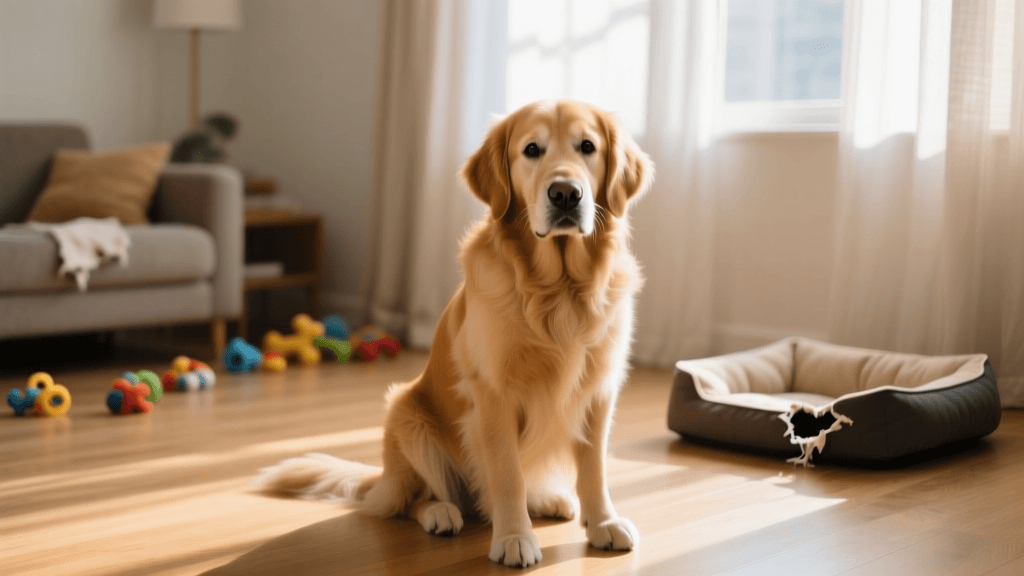
The Problem: Within the first week of Sarah's return to the office, neighbors reported continuous howling. Sarah returned home to find shredded couch cushions, scratched door frames, and inappropriate elimination on the rug. Barnaby was exhibiting classic, severe separation anxiety. Sarah's goal was clear: she needed Barnaby to be comfortable home alone for up to four hours on her remote work days, while utilizing doggy daycare for her longer eight-hour office days. However, to even get him into a daycare, he needed to stop panicking during the initial drop-off and crating periods.
Phase 1: Baseline Assessment and Data Collection
Before implementing any training, it was crucial to understand the exact triggers and timeline of Barnaby's anxiety. Sarah invested in a Furbo 360 Dog Camera ($199.00), which features treat-tossing capabilities, 360-degree panning, and bark alerts. For one full week, Sarah simulated her departure routine while monitoring Barnaby from a coffee shop down the street.
The data revealed a critical insight: Barnaby's anxiety did not begin when the door closed. It began the moment Sarah initiated 'pre-departure cues'—actions that predicted her leaving. Below is a snapshot of the Week 1 Behavior Log.
| Time of Day | Trigger Event | Barnaby's Reaction | Duration of Distress |
|---|---|---|---|
| 7:45 AM | Sarah puts on work shoes | Pacing, whining, following closely | 15 minutes |
| 8:00 AM | Sarah picks up car keys | Panting, trembling, hiding under bed | 10 minutes |
| 8:10 AM | Sarah opens and closes front door | Immediate howling, scratching at door | 45+ minutes |
| 12:30 PM | Loud truck passes outside | Sudden barking spike, pacing resumes | 20 minutes |
This data proved that Barnaby was living in a state of anticipatory dread. The Humane Society of the United States emphasizes that treating separation anxiety requires addressing both the pre-departure triggers and the actual isolation period through gradual desensitization.
Phase 2: Environmental Management and Gear
To set Barnaby up for success, Sarah overhauled his environment to reduce sensory triggers and provide calming outlets. The initial setup required a financial investment, but it was essential for the behavioral modification plan.
- Adaptil Calm Home Diffuser Starter Kit ($79.99): Plugged into the outlet in Barnaby's primary safe room (the living room). This diffuser releases synthetic dog-appeasing pheromones that mimic those produced by a nursing mother dog, promoting a baseline sense of security.
- KONG Classic Extreme, Large ($14.99): Filled with a mixture of wet dog food, plain pumpkin puree, and kibble, then frozen solid overnight. This provided a high-value, long-lasting enrichment activity designed to counter-condition the act of being left alone.
- LectroFan High Fidelity White Noise Machine ($49.95): Placed near the front window to mask the sound of hallway footsteps, elevator dings, and passing traffic, which the camera data showed were secondary triggers for Barnaby's barking.
- Zesty Paws Calming Bites ($25.99): An over-the-counter supplement containing L-Theanine and Chamomile, given 45 minutes before planned training departures to lower his overall arousal threshold.
Total Initial Gear Cost: Approximately $370.00.
Phase 3: The Desensitization Protocol
With the environment managed, the active training began. The golden rule of separation anxiety training is to never push the dog past their threshold. If the dog panics, the training session has failed, and the dog has practiced the unwanted behavior. Sarah committed to a strict, incremental protocol.
Step 1: Neutralizing Pre-Departure Cues (Weeks 2-3)
Sarah spent two weeks completely desensitizing Barnaby to her departure cues. She would put on her work shoes, then sit on the couch and read a book. She would pick up her car keys, jingle them, and then make a cup of coffee. She did this 15 to 20 times a day. By the end of Week 3, Barnaby no longer panted or paced when he heard the keys; he simply opened one eye from his dog bed, realizing the keys no longer predicted isolation.
Step 2: Micro-Departures (Weeks 4-5)
Once the cues were neutralized, Sarah began micro-departures. She gave Barnaby his frozen KONG, stepped outside the front door, closed it, and immediately re-entered. She did not say goodbye, nor did she greet Barnaby upon returning. The goal was to make leaving and returning utterly boring and predictable.
- Days 1-3: 3-second departures (10 repetitions per session, twice a day).
- Days 4-6: 10-second departures.
- Days 7-10: 30-second departures.
- Days 11-14: 1-minute to 5-minute departures.
Sarah monitored the Furbo camera constantly. If Barnaby stopped eating his KONG or showed signs of stress (lip licking, yawning, pacing), she knew she had pushed too fast and needed to drop back down to a shorter time interval.
Step 3: Scaling Up and Variable Timing (Weeks 6-8)
Once Barnaby was comfortable with 5-minute absences, Sarah began varying the times to prevent him from predicting her return. She would leave for 2 minutes, then 7 minutes, then 1 minute, then 15 minutes. This variability is crucial for building resilience and preventing the dog from 'counting down the clock' and becoming anxious near the expected return time.
Phase 4: Real-World Application and Setbacks
Progress is rarely linear. In Week 7, Sarah experienced a significant setback. She stepped out for a planned 20-minute absence, but a delivery driver aggressively banged on the door and left a package. The sudden, loud noise triggered a panic response. When Sarah returned, Barnaby was panting heavily, drooling, and had scratched the paint off the door frame.
Instead of getting frustrated, Sarah recognized that the threshold had been breached due to an environmental variable outside her control. She immediately implemented a 'reset day,' doing nothing but easy, low-stress sniff walks and returning to 1-minute micro-departures the following day. She also introduced a 'safe space' cue, training Barnaby to go to a specific elevated cot in the living room where he felt most secure, tossing high-value treats like boiled chicken breast onto the cot to build a positive emotional response to that specific location.
Phase 5: Achieving the Milestone
By Week 12, Barnaby was successfully handling 90-minute absences while chewing on his frozen KONG and resting on his elevated cot. The howling had completely ceased, and the neighbors were no longer complaining. While an 8-hour solo stint was still beyond his current capabilities (and would likely require a mid-day dog walker or daycare), Sarah's hybrid work schedule was now fully manageable. Barnaby could comfortably stay home alone during her morning remote work hours, and she could run errands or go out to dinner without the paralyzing guilt and worry that once dominated her life.
Key Takeaways for Your Daily Routine
Barnaby's case study highlights that overcoming separation anxiety is not about quick fixes or punitive measures; it is about systematic, empathetic behavioral modification. Here are the core takeaways to integrate into your daily life with your dog:
- Ditch the Goodbyes and Hellos: Ignoring your dog for 10 minutes before you leave and 10 minutes after you return lowers the emotional contrast between your presence and absence.
- Invest in Monitoring: You cannot manage what you cannot measure. A pet camera is non-negotiable for tracking stress signals like panting, pacing, and refusal to eat treats.
- Enrichment is a Tool, Not a Cure: Food puzzles like the KONG are excellent for counter-conditioning, but they will not cure clinical anxiety if the dog is pushed past their threshold. Use them in tandem with micro-departures.
- Manage the Environment: Masking outside noises with white noise and utilizing pheromone diffusers can significantly lower your dog's baseline stress levels, making training more effective.
Patience is the most critical component of any behavior modification plan. You are rewriting your dog's emotional response to isolation, and that takes time, consistency, and a willingness to take a step backward when setbacks occur.
Living with a dog suffering from separation anxiety is emotionally and physically exhausting, but as Barnaby's journey proves, with the right data, tools, and protocol, you can restore peace to your home and give your dog the confidence to thrive, even when you are apart.
hannah-wickes
All our authors care for dogs every day — read more of their work on the authors page.