Essential Dog First Aid Kit Checklist & Emergency Plan
Learn how to build a comprehensive dog first aid kit and create an emergency action plan to handle common canine crises safely and effectively.
Why Every Dog Owner Needs a First Aid Kit
Sharing your life with a dog brings immeasurable joy, but it also comes with the profound responsibility of keeping them safe. Accidents and sudden illnesses can strike at any moment, whether you are relaxing at home, hiking on a remote trail, or traveling across the country. In these critical moments, having a well-stocked dog first aid kit and a clear emergency action plan can mean the difference between a minor scare and a life-threatening tragedy. According to the American Veterinary Medical Association (AVMA), being prepared for emergencies is a fundamental aspect of responsible pet ownership, especially when natural disasters or sudden accidents disrupt access to immediate veterinary care.
A canine first aid kit is not meant to replace professional veterinary treatment. Instead, it serves as a vital bridge, allowing you to stabilize your dog, prevent further injury, and manage pain or bleeding during the crucial minutes it takes to transport them to an emergency animal hospital. Time is tissue in emergency medicine; knowing exactly where your supplies are and how to use them can save your dog's life.
The Ultimate Dog First Aid Kit Checklist
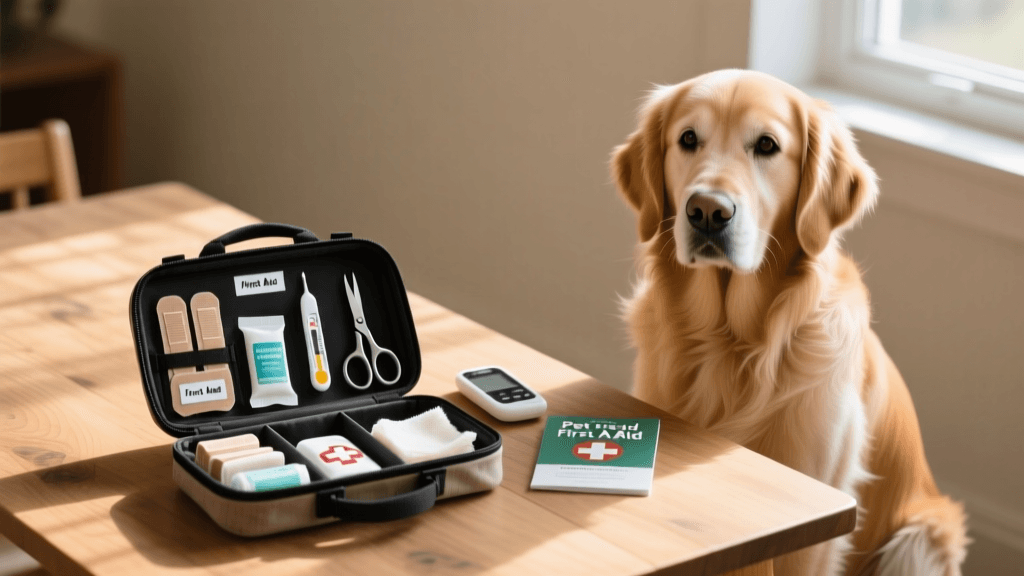
Building a kit from scratch is often more cost-effective and comprehensive than buying a pre-made human kit, which may lack pet-specific supplies. Below is a structured breakdown of the essential items you need to include in your dog's first aid kit.
| Item Category | Specific Supplies | Primary Purpose |
|---|---|---|
| Bandaging | Non-stick sterile pads, Vetrap, medical tape | Covering wounds, applying pressure, securing dressings |
| Cleaning | Saline solution, antibacterial wipes, chlorhexidine | Flushing eyes/wounds, cleaning minor abrasions |
| Tools | Blunt-nosed scissors, tweezers, digital thermometer | Cutting tape, removing ticks/debris, checking vitals |
| Medications | Styptic powder, 3% hydrogen peroxide, diphenhydramine | Stopping nail bleeds, inducing vomiting (if directed), allergy relief |
| Restraint | Soft muzzle, spare leash, emergency blanket | Preventing bites from pain/shock, keeping the dog warm |
Wound Care and Bandaging
When dealing with lacerations or abrasions, you need supplies that will not stick to the wound bed. Stock up on Telfa (non-stick) sterile pads. To secure these pads, use self-adhering bandage wrap, commonly known by the brand name Vetwrap. Unlike human adhesive bandages, Vetwrap clings to itself and will not pull on your dog's fur when removed. Always keep a roll of 1-inch and 2-inch medical tape, as well as a pair of blunt-nosed trauma scissors to safely cut away fur or bandages without risking a secondary puncture wound.
Medications and Fluids
Include a bottle of sterile saline eye wash to flush out dirt, debris, or chemical irritants from your dog's eyes. For minor cuts and scrapes, a water-based antibacterial ointment (free of pain relievers like lidocaine, which can be toxic to dogs) is useful. You must also include a small bottle of 3% hydrogen peroxide. However, the ASPCA strongly warns that you should NEVER use hydrogen peroxide to induce vomiting unless explicitly instructed to do so by a veterinarian or a certified pet poison control center, as it can cause severe aspiration pneumonia or worsen internal damage from caustic substances. Additionally, keep a container of styptic powder (like Kwik Stop) to instantly halt bleeding if you accidentally clip your dog's nail too short.
Tools and Restraints
Even the sweetest, most well-trained dog may bite when experiencing severe pain or shock. A soft, adjustable basket muzzle is a non-negotiable safety tool for your kit. Additionally, pack a digital rectal thermometer (normal canine temperature ranges from 101.0°F to 102.5°F), fine-tipped tweezers for tick or splinter removal, and a thermal emergency blanket to prevent shock-induced hypothermia during transport.
Handling Common Household Dog Emergencies
Having the supplies is only half the battle; you must also know how to deploy them under pressure. Here is how to handle three of the most common household emergencies.
Choking
If your dog is pawing frantically at their mouth, coughing violently, or turning blue, they may be choking. First, restrain your dog safely. Open their mouth and look for the obstruction. If you can clearly see and easily grasp the object with your fingers or tweezers, remove it. If the object is lodged deep in the throat, do not blindly sweep your fingers, as you may push it further down. Instead, perform a modified Heimlich maneuver. For small dogs, lay them on their back and apply quick, upward thrusts just below the rib cage. For large dogs, stand behind them, wrap your arms around their waist, make a fist just below the rib cage, and pull upward and forward in three to five quick thrusts. Check the mouth again after the thrusts.
Toxin Ingestion
If you suspect your dog has ingested a toxic substance (such as chocolate, xylitol, grapes, or rat poison), do not wait for symptoms to appear. Immediately call the ASPCA Animal Poison Control Center at (888) 426-4435 or the Pet Poison Helpline at (855) 764-7661. Have your dog's weight, the name of the ingested product, and the estimated amount consumed ready. Follow their instructions precisely. They will tell you whether to bring the dog to the vet immediately, administer activated charcoal, or use the 3% hydrogen peroxide from your kit to induce vomiting.
Severe Bleeding
For deep lacerations or puncture wounds, apply direct, firm pressure to the site using a sterile non-stick pad and a clean towel. Maintain uninterrupted pressure for at least three to five minutes to allow a clot to form. If blood soaks through the towel, do not remove it; simply add more layers on top and continue pressing. Once the bleeding slows, secure the dressing tightly with Vetwrap, ensuring it is snug enough to maintain pressure but loose enough that you can slip two fingers underneath to prevent cutting off circulation.
Creating Your Emergency Action Plan
An emergency action plan removes the panic from a crisis. Take an hour this weekend to establish the following protocols:
- Identify 24/7 Emergency Vets: Locate the closest 24-hour emergency animal hospital to your home, as well as one near your workplace or regular walking routes. Save their addresses and phone numbers in your phone and write them on a magnet for your refrigerator.
- Assemble a Pet First Aid Manual: Consider enrolling in a certified course. The American Red Cross offers Pet First Aid classes that provide interactive, step-by-step guidance for handling over 50 pet emergencies.
- Prepare a Go-Bag: Keep a duplicate, smaller version of your first aid kit in your car's glove compartment or your hiking backpack.
- Keep Medical Records Handy: Store a physical and digital copy of your dog's vaccination records, current medications, and baseline health conditions in your kit. This is crucial if you are forced to use an unfamiliar emergency clinic.
When to Skip First Aid and Rush to the Vet
While first aid is invaluable for stabilizing minor injuries, certain symptoms indicate a life-threatening crisis that requires immediate professional intervention. Do not waste time trying to treat the following conditions at home; safely restrain your dog and drive to the nearest emergency veterinary hospital immediately:
- Gastric Dilatation-Volvulus (Bloat): Characterized by a hard, distended abdomen, unproductive retching, and extreme restlessness. This is a fatal condition if not operated on within hours.
- Seizures: Especially if they last longer than three minutes or occur in clusters.
- Hit by Car or Blunt Force Trauma: Even if the dog appears to walk away unharmed, internal bleeding or a ruptured bladder may be present.
- Difficulty Breathing: Open-mouth breathing in dogs, pale or blue-tinged gums, and excessive coughing indicate severe respiratory distress or heart failure.
- Inability to Urinate: Straining without producing urine can indicate a urinary blockage, which can cause fatal kidney failure or bladder rupture within 24 hours.
Life with your dog is an adventure filled with unpredictable moments. By assembling a comprehensive first aid kit, memorizing emergency protocols, and establishing a clear action plan, you are providing your canine companion with the ultimate safety net. Preparation is the highest form of love you can offer your dog when seconds truly count.
marcus-aldridge
All our authors care for dogs every day — read more of their work on the authors page.