Low-Impact OA Dog Training & Enrichment: 2026 Guide
Discover 2026 low-impact training, mental enrichment, and cooperative care techniques to keep your osteoarthritis dog stimulated and pain-free.
Osteoarthritis (OA) is a degenerative joint disease that affects a significant portion of the aging canine population. As we navigate the veterinary landscape of 2026, pain management has evolved dramatically. Treatments like monthly anti-NGF monoclonal antibody injections (such as Librela) and advanced class IV laser therapies have revolutionized how we manage canine joint pain. However, while these 2026 medical marvels successfully mask pain and reduce inflammation, they do not reverse the underlying mechanical degradation of the joints. Consequently, high-impact training activities—such as agility, flyball, repetitive fetch, and intense heel-work—must be retired to prevent further cartilage wear. But does a diagnosis of OA mean the end of training? Absolutely not. In fact, training becomes more critical than ever. When physical exertion is limited, behavioral issues born from boredom and frustration can quickly arise. The secret to keeping your OA dog happy, obedient, and fulfilled lies in pivoting from physical exhaustion to mental enrichment and cooperative care.
The 2026 Paradigm Shift: Mental vs. Physical Fatigue
Veterinary behaviorists and rehabilitation specialists in 2026 heavily emphasize the concept of "cognitive fatigue." For a dog with compromised joints, a 15-minute session of intense mental problem-solving can be just as exhausting and satisfying as a two-mile hike. According to the Washington State University College of Veterinary Medicine, managing OA requires a strict multimodal approach that heavily features weight management and controlled, low-impact exercise. Mental exercise prevents weight gain by keeping the dog engaged, burning calories through brain activity, and satisfying their natural working drives without placing destructive torque on their hips, knees, or spine. By shifting your training focus to scent work, puzzle-solving, and husbandry behaviors, you maintain your dog's obedience and bond while strictly honoring their physical limitations.
Cooperative Care Training for OA Medical Routines
Dogs undergoing OA treatment in 2026 require frequent handling. Whether it is time for their monthly Librela injection, daily administration of NSAIDs, at-home massage, or veterinary acupuncture, your dog needs to be comfortable being touched and manipulated. Cooperative care training empowers your dog to voluntarily participate in their own medical care, drastically reducing stress for both the dog and the veterinary staff.
The Chin Rest Behavior
The chin rest is a foundational cooperative care behavior. It teaches the dog to rest their chin on a designated target (like your palm, a yoga block, or a specialized veterinary stand) and hold still. To train this, present your hand or a target object. The moment your dog's chin makes contact, mark the behavior with a clicker or a verbal "yes" and reward with a high-value treat. Gradually increase the duration they must hold their chin in place before receiving the reward. This behavior is invaluable when a veterinary technician needs to examine the dog's neck, administer eye drops, or draw blood from the jugular vein, allowing the dog to remain in a comfortable, seated, or standing position without needing to be physically restrained.
Lateral Recumbency on a Mat
Teaching your dog to lie on their side (lateral recumbency) on a specific orthopedic mat is crucial for at-home therapies and vet exams. Start with your dog on a comfortable, non-slip mat. Lure them into a "down" position, then slowly guide a treat toward their shoulder to encourage them to roll onto their hip. Mark and reward any slight shift in weight. Over weeks of shaping, you can build this into a full side-lying position. This is particularly beneficial for dogs receiving at-home laser therapy or therapeutic massage, as it provides the handler with full access to the affected joints while the dog remains relaxed and in control.
Low-Impact Trick Training & Scent Work
Scent work is widely considered the ultimate sport for senior and mobility-impaired dogs. The American Kennel Club (AKC) Scent Work program highlights that this activity mimics the natural foraging instincts of canines, requiring zero jumping, running, or hard turns. You can set up "box searches" in your living room using cardboard boxes and hide cotton swabs scented with birch or anise essential oil. The dog simply walks at their own pace, sniffing out the odor. A 20-minute scent work session provides immense mental stimulation and builds confidence.
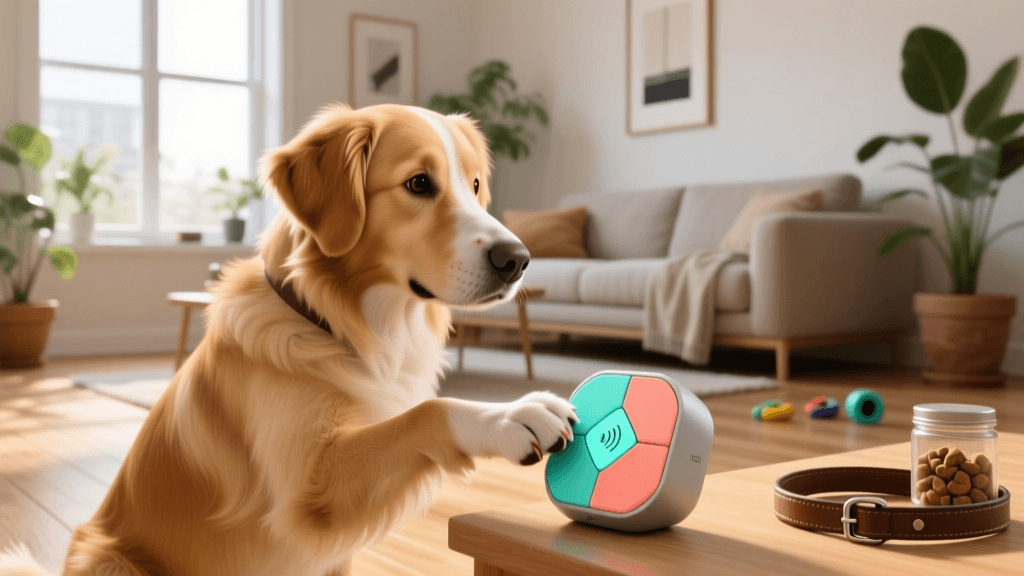
Another vital low-impact skill is "Hand Targeting" (teaching the dog to touch their nose to your palm). Targeting is an incredible tool for guiding a dog with OA onto an orthopedic bed, into a vehicle, or onto a non-slip ramp without the need for physical lifting. Lifting a 75-pound Labrador with severe hip dysplasia can cause the dog pain and result in injury to the owner. By using a hand target, you allow the dog to navigate their environment using their own muscle control, guided entirely by positive reinforcement.
Desensitization to Mobility Aids and Slings
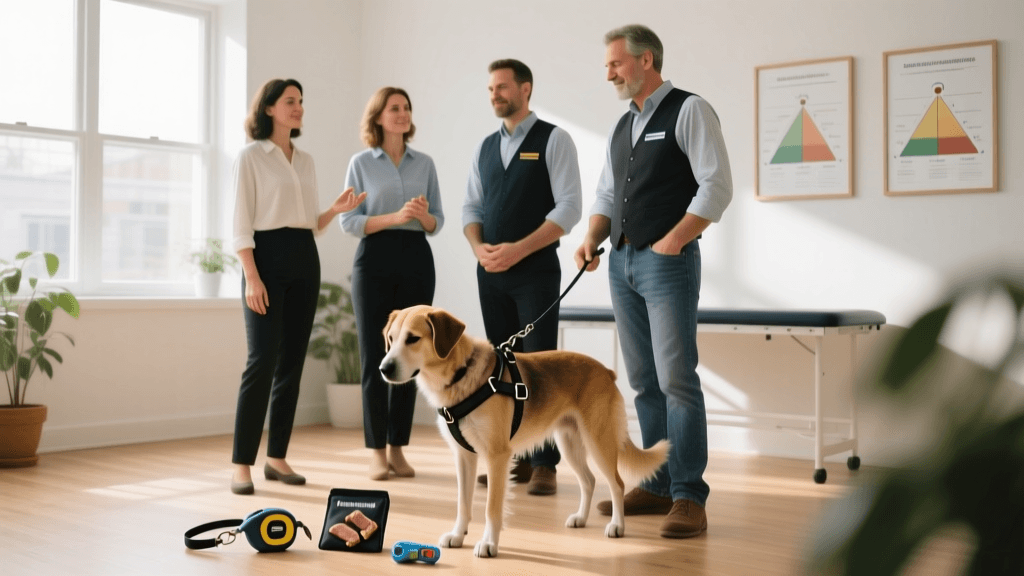
As OA progresses, many dogs in 2026 benefit from mobility aids such as hind-lift harnesses or canine wheelchairs. However, introducing these devices without prior training can cause fear and resistance. Behavioral desensitization is a critical training step. Begin by simply placing the harness or sling near your dog's resting area and rewarding any calm investigation. Next, practice touching the harness to their back for one second, marking, and treating. Over several weeks, shape the behavior until the dog voluntarily steps into the leg loops and stands calmly while the harness is clipped. This systematic desensitization ensures that when your dog truly needs physical support to navigate stairs or go outside for potty breaks, the equipment is associated with safety and rewards, not fear and restriction.
Recommended 2026 Enrichment Gear for OA Dogs
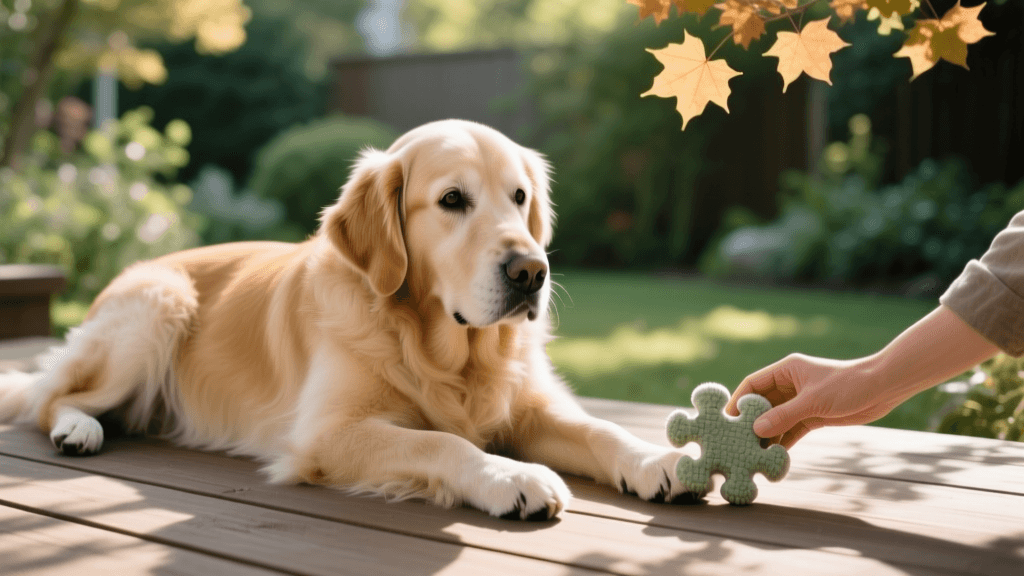
To facilitate low-impact training, investing in the right gear is essential. In 2026, the market offers exceptional products designed specifically for mobility-impaired dogs. First, an elevated, orthopedic training cot (such as the Kuranda AluminFrame or high-density memory foam alternatives) provides a firm, supportive surface that is easy for stiff dogs to step onto, unlike plush beds that require awkward climbing. Second, interactive lick mats (like the West Paw Toppl) and high-quality snuffle mats encourage natural foraging behaviors while the dog remains comfortably stationary. Finally, adjustable puzzle toys, such as the Outward Hound Dog Brick, allow you to increase cognitive difficulty without requiring physical manipulation from the dog.
Structured Weekly Low-Impact Training Schedule
Consistency is key to maintaining your dog's cognitive health. Below is a sample weekly training schedule designed for a dog with moderate to severe OA.
| Day | Activity | Duration | Primary Benefit |
|---|---|---|---|
| Monday | Indoor Scent Work (Box Searches) | 15 mins | Olfactory stimulation, confidence building |
| Tuesday | Cooperative Care (Chin Rest & Handling) | 10 mins | Medical compliance, stress reduction |
| Wednesday | Lick Mat & Decompression Rest | 20 mins | Soothing anxiety, passive enrichment |
| Thursday | Hand Targeting & Gentle Stretching | 15 mins | Mobility guidance, joint awareness |
| Friday | Scent Work (New Room/Environment) | 15 mins | Environmental generalization |
| Saturday | Mat Training & Relaxation Protocol | 20 mins | Impulse control, settling on cue |
| Sunday | Free Choice Sniffari (Grass Leash Walk) | 30 mins | Low-impact physical movement, autonomy |
Behavioral Conditioning for Chronic Pain
It is vital to acknowledge that chronic pain can alter a dog's temperament. Even with the best 2026 pain management protocols, dogs with OA may experience breakthrough pain, leading to irritability, resource guarding, or reactivity when approached while resting. The ASPCA Dog Enrichment Guide emphasizes that consistent mental enrichment significantly reduces stress and anxiety in dogs, which can mitigate pain-induced behavioral changes. Additionally, muzzle conditioning is a highly recommended, proactive training step for OA dogs. Teaching your dog to happily wear a basket muzzle using positive reinforcement ensures that if they are ever in severe pain and need emergency veterinary handling, they can be safely managed without the added stress of a novel, frightening restraint device.
Conclusion
A diagnosis of osteoarthritis marks a transition in your dog's life, but it does not mark the end of their training journey. By embracing the 2026 standards of mental enrichment, cooperative care, and low-impact cognitive challenges, you can provide your dog with a rich, fulfilling, and purpose-driven life. Training is no longer about physical compliance or athletic prowess; it is about communication, comfort, and maintaining the profound bond you share with your canine companion. Adapt your methods, respect their physical boundaries, and watch your senior dog thrive through the power of mental engagement.
jonas-cole
All our authors care for dogs every day — read more of their work on the authors page.