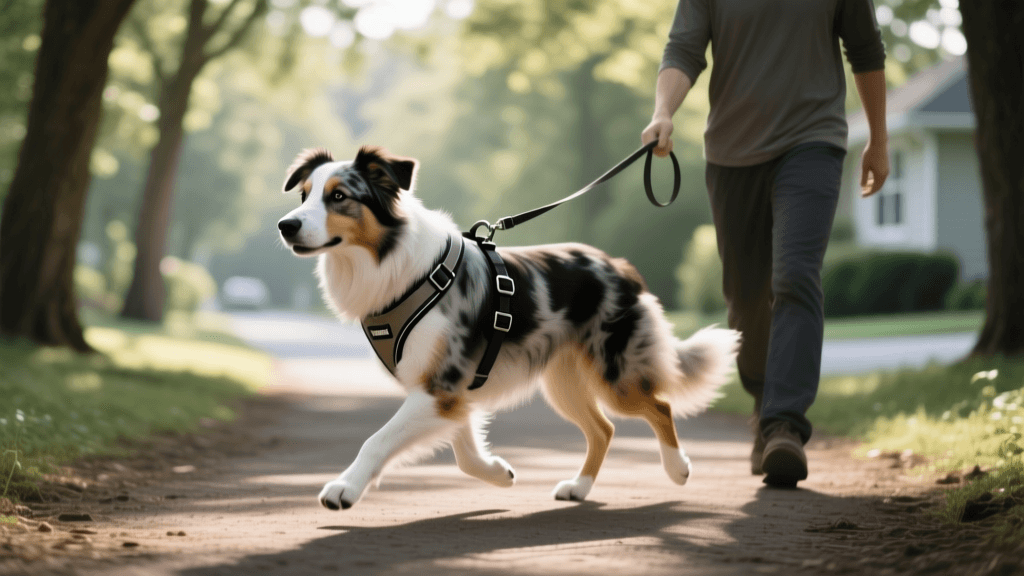
The Psychology of Pulling: No-Pull Harnesses & Dog Behavior 2026
Discover the psychology behind why dogs pull and how front-clip no-pull harnesses alter canine body language and leash reactivity for better walks.
The Psychology of Pulling: Why Dogs Drag Us Down the Street
Every dog owner is familiar with the frustrating sensation of being dragged down the sidewalk by an eager, lunging dog. While it is easy to assume that a pulling dog is simply being stubborn, dominant, or poorly trained, modern canine behavioral science tells a very different story. In 2026, veterinary behaviorists and certified dog trainers emphasize that pulling is rarely a sign of disobedience. Instead, it is deeply rooted in canine biomechanics and instinctual psychology. To truly understand your dog and transform your daily walks, you must first understand the 'opposition reflex' and how the right equipment—specifically, a front-clip no-pull harness—can fundamentally alter your dog's mental state and body language.
The Instinctual Drive: Understanding the Opposition Reflex
The primary psychological driver behind leash pulling is a phenomenon known as the opposition reflex, or thigmotaxis. This is an involuntary, instinctual response where a dog naturally pushes against physical pressure. If you lean against a dog, they will lean back. If pressure is applied to their chest or neck via a collar or a back-clip harness, their instinct is to forge forward against that resistance.
When a dog wears a traditional back-clip harness, the point of leverage is placed directly over their center of gravity and strongest muscle groups—the shoulders and chest. This setup mimics the biomechanics of sled-pulling. The dog feels pressure on their back, the opposition reflex triggers, and they lean into the harness, effectively turning themselves into a freight train. From a psychological standpoint, the dog is not trying to dominate you; they are simply responding to physical stimuli exactly as their biology dictates. Understanding this reflex is the first step toward empathizing with your dog and choosing equipment that works with their psychology, rather than against it.
Biomechanics of the Front-Clip No-Pull Harness
A front-clip no-pull harness completely changes the biomechanical and psychological feedback loop. By attaching the leash to a D-ring located on the dog's sternum (the front of the chest), you alter their center of gravity. When the dog surges forward and hits the end of the leash, the front attachment point gently pivots their chest and shoulders back toward the handler.
This physical redirection causes a psychological 'reset.' Because the dog's forward momentum is interrupted and their body is turned sideways, they are physically unable to continue pulling with full force. More importantly, this physical pivot breaks their visual fixation on whatever triggered the pulling—be it a squirrel, another dog, or a fascinating scent. By disrupting the visual lock, the front-clip harness lowers the dog's arousal levels, bringing them out of a reactive, adrenaline-fueled state and back into a cognitive space where they can listen to your cues.
The Importance of the Y-Shaped Design in 2026
Not all front-clip harnesses are created equal. As of 2026, veterinary orthopedic specialists strongly recommend Y-shaped front-clip harnesses. Harnesses with a horizontal strap across the chest can restrict the natural extension of the dog's shoulder joints, leading to altered gaits and long-term joint issues. A Y-shaped harness clears the shoulder blades, allowing for full, natural biomechanical movement while still providing the steering control of a front clip. Premium ergonomic Y-front harnesses currently range from $45 to $85, representing a vital investment in both your dog's physical health and behavioral modification.
Decoding Canine Body Language on the Leash
Using a no-pull harness allows you to become a keen observer of your dog's body language. When a dog is in a state of high arousal or reactivity, their body language screams tension: ears are pinned forward or rigidly swiveled, the tail may be stiff and high, and their weight is shifted entirely onto their front paws. This is the posture of a dog preparing to lunge.
When you utilize a front-clip harness and apply gentle, guiding pressure, you will often see an immediate shift in their body language. The physical turn breaks the tension. You may notice your dog blinking rapidly (a calming signal), their ears relaxing to the sides, and their weight shifting back onto their hindquarters. Recognizing these subtle shifts is crucial. It tells you that the dog's nervous system is down-regulating from 'fight or flight' back to 'rest and digest,' making it the perfect moment to reward them with a high-value treat.
The 2026 Veterinary Consensus on Leash Equipment
The consensus among modern animal behaviorists is clear: force-free, humane equipment yields the best long-term behavioral results. The American Veterinary Society of Animal Behavior (AVSAB) strongly advocates against the use of aversive tools like choke chains, prong collars, and shock collars, noting that these tools suppress behavior through fear and pain without addressing the underlying emotional state of the dog. Instead, they recommend positive reinforcement paired with humane management tools like front-clip harnesses.
Furthermore, organizations like the Humane Society of the United States emphasize that walking should be a mentally enriching experience for the dog. A front-clip harness provides the handler with the control needed to keep the dog safe without inflicting tracheal damage or psychological distress, aligning perfectly with modern, science-based training methodologies.
Harness Comparison Chart: Behavioral Impact
To help you understand how different tools affect your dog's psychology and body mechanics, review the comparison table below:
| Equipment Type | Opposition Reflex Trigger | Impact on Body Language | Best Behavioral Use Case |
|---|---|---|---|
| Back-Clip Harness | High (Encourages leaning) | Weight shifted forward, rigid posture | Brachycephalic breeds, hiking, canicross |
| Front-Clip No-Pull Harness | Low (Redirects momentum) | Breaks visual fixation, relaxes shoulders | Leash reactivity, pulling, loose-leash training |
| Head Halter | None (Controls the muzzle) | Can cause pawing at face, stress signals | Severe aggression/lunging (requires desensitization) |
| Flat Collar | Moderate (Tracheal pressure) | Neck tension, coughing, gagging | Holding ID tags only; not recommended for walking |
Actionable 2026 Training Protocol for Leash Reactivity
A front-clip no-pull harness is a management tool, not a magic wand. To truly understand and help your dog, you must pair the harness with a proactive training protocol. Here is a highly effective, three-step methodology recommended by certified behavior consultants this year:
Step 1: The 'U-Turn' Reset
When your dog spots a trigger (like another dog) and their body language stiffens, do not wait for them to hit the end of the leash. The moment you see the visual lock, say a cheerful cue word like 'Let's Go!' and immediately execute a 180-degree U-turn. The front-clip harness will make this turn smooth and prevent choking. This teaches the dog that seeing a trigger predicts a fun game of following you, rather than a stressful confrontation.
Step 2: Reward Zone Mapping
Dogs learn spatially. If you only give treats when the dog is sitting directly in front of you, they will constantly check in and then surge forward. Instead, use the 'Reward Zone' technique. Deliver treats down by your pant seam, slightly behind your leg. This encourages the dog to voluntarily drop their head and shift their weight backward, naturally disengaging their opposition reflex and promoting a relaxed, heel-adjacent position.
Step 3: Harness Desensitization
Many dogs develop 'harness reactivity,' where the mere sight of the walking gear causes them to become over-aroused before they even step outside. Counter-condition this by leaving the Y-front harness on the floor during meal times. Scatter high-value kibble around and through the neck hole. This builds a positive psychological association with the equipment, ensuring your dog starts the walk in a calm, receptive learning state.
Conclusion
Understanding your dog requires looking past the frustrating behavior of pulling and recognizing the biological and psychological mechanisms driving it. The opposition reflex is a natural instinct, not a personal affront. By upgrading to an ergonomic, Y-shaped front-clip no-pull harness, you are not just buying a piece of nylon and metal; you are providing your dog with biomechanical comfort and psychological clarity. Combine this tool with modern, force-free training techniques, and your daily walks will transform from a stressful tug-of-war into a harmonious, bonding experience.
anouk-beaumont
All our authors care for dogs every day — read more of their work on the authors page.