Decoding Seasonal Noise Phobias in Dogs: Storms & Fireworks
Learn why dogs fear summer storms and winter fireworks. Discover the psychology of noise phobias and actionable seasonal care tips to soothe your pup.
The Psychology Behind Canine Noise Aversion
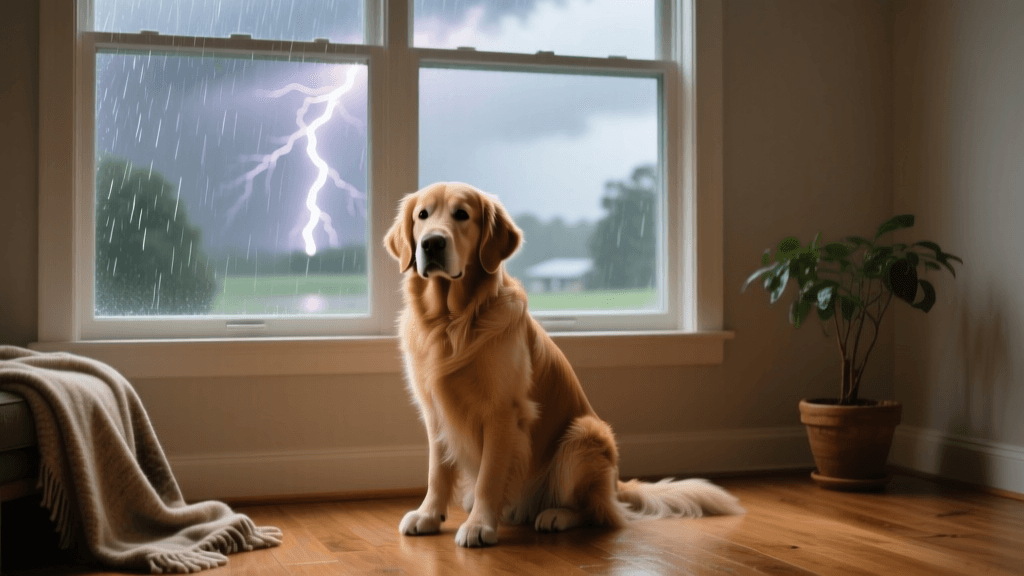
When your dog paces, pants, or hides during a loud seasonal event, they are not simply 'being dramatic.' Noise phobia in dogs is a complex psychological and physiological response rooted in their evolutionary biology. Unlike humans, who can rationalize the source of a loud bang or a flash of light, dogs rely heavily on their acute senses to interpret their environment. When those senses are overwhelmed, the canine amygdala—the brain's fear center—triggers an intense fight-or-flight response.
According to the Fear Free Pets organization, noise aversions can quickly escalate into full-blown phobias through classical conditioning. A dog that experiences a mildly startling thunderclap may begin to associate the drop in barometric pressure, the smell of ozone, and the darkening sky with impending terror. Over time, the anticipatory anxiety becomes just as debilitating as the reaction to the noise itself. Understanding this psychological framework is the first step in providing effective seasonal care for your dog.
Summer vs. Winter: How Seasonal Triggers Differ
While both summer thunderstorms and winter fireworks induce panic, the sensory triggers and behavioral manifestations differ significantly. Recognizing these nuances allows you to tailor your seasonal care strategy to the specific environmental stressors your dog faces.
Summer Thunderstorms: Barometric Pressure and Static Electricity
Many dog owners notice their pets becoming anxious hours before the first drop of rain falls. This is not a myth; it is a documented sensory phenomenon. Dogs are highly sensitive to drops in barometric pressure, which can cause discomfort in their inner ears. Furthermore, the American Kennel Club (AKC) notes that dogs can actually feel the static electricity that builds up in the air before a storm. This static charge can accumulate in their fur, delivering mild, unpredictable shocks, especially when they touch metal objects like water bowls or crate doors.
Behavioral Signs: Seeking grounded spaces (like bathtubs or tiled floors to discharge static), excessive panting, drooling, and attempts to escape the house.
Winter Fireworks: Unpredictability and High Decibels
Winter holidays bring a different kind of auditory assault. Fireworks and firecrackers are characterized by their sheer volume, often exceeding 120 decibels, and their absolute unpredictability. Unlike storms, which have a gradual buildup and a predictable weather pattern, fireworks offer no environmental warning. The sudden, high-frequency explosions trigger an immediate startle reflex. Additionally, the visual stimuli of flashing lights against a dark winter sky add a layer of sensory overload that storms rarely produce.
Behavioral Signs: Frantic pacing, destructive scratching at doors or windows, trembling, and vocalization (whining or howling).
Comparison Chart: Summer Storms vs. Winter Fireworks Management
| Feature | Summer Thunderstorms | Winter Fireworks |
|---|---|---|
| Primary Trigger | Static electricity, pressure drops, low-frequency rumble | High-decibel sudden bangs, unpredictability, flashing lights |
| Warning Time | 1 to 4 hours (weather tracking possible) | None (sudden onset) |
| Physical Sensation | Static shocks on fur, ear pressure | Vibrations felt through the floorboards |
| Best Physical Aid | Anti-static cape (e.g., Storm Shield, ~$45) | Canine ear protection (e.g., Mutt Muffs, ~$65) |
| Environmental Fix | Humidifier to reduce static, dim lights | Blackout curtains, heavy bass white noise |
Actionable Seasonal Care: Creating a 'Safe Bunker'
To mitigate the psychological impact of these seasonal events, you must proactively create a sensory-deprivation 'bunker' for your dog. This should be established weeks before the peak of storm season or the winter holidays so your dog associates the space with safety, not panic.
- Location and Dimensions: Choose an interior room with no exterior walls or windows, such as a large walk-in closet or a basement bathroom. If using a crate, ensure it is appropriately sized (e.g., a 48x36 inch crate for large breeds like German Shepherds) and cover it with a heavy, sound-dampening moving blanket.
- Sound Masking: Standard white noise is often too high-pitched to mask the low-frequency rumble of thunder. Instead, use a machine like the LectroFan High Fidelity White Noise Machine (~$40) and set it to 'Brown Noise.' Keep the volume between 50 and 60 decibels—loud enough to mask outside sounds, but not so loud that it causes hearing fatigue.
- Pheromone Therapy: Plug in an Adaptil Optimum Diffuser (~$30) in the bunker room at least 48 hours before a predicted event. This releases synthetic dog-appeasing pheromones that mimic the calming signals of a nursing mother dog.
- Timing of Supplements: If you use over-the-counter calming chews (such as Zesty Paws Calming Bites, ~$28), administer them exactly 45 to 60 minutes before the anticipated noise event. Giving them after the dog is already panicked is largely ineffective, as the digestive system slows down during a fight-or-flight response.
Desensitization and Counterconditioning Techniques
While a safe bunker manages the immediate crisis, long-term psychological healing requires desensitization. This process rewires the canine brain to associate loud noises with positive outcomes rather than impending doom.
'The goal of counterconditioning is not to force the dog to endure the noise, but to change their emotional response to the trigger from fear to anticipation of a reward.' — Humane Society of the United States
Step-by-Step Protocol:
- Baseline Testing: Play a recording of thunder or fireworks on your phone at an almost imperceptible volume (around 20 decibels). If your dog shows no signs of stress (ears back, lip licking, yawning), proceed.
- Pair with High-Value Rewards: While the audio plays, feed your dog a continuous stream of high-value treats, such as boiled chicken or freeze-dried liver. The moment you stop the audio, the treats stop.
- Gradual Increment: Over the course of several weeks, increase the volume by only 3 to 5 decibels per session. If your dog shows anxiety, you have increased the volume too quickly. Drop it back down to the last successful level.
- Add Environmental Context: Once your dog is comfortable with the audio at a moderate volume, begin pairing it with environmental cues. For storms, turn on a flashing light to simulate lightning. For fireworks, practice in the evening when the house is dark.
When to Seek Professional Behavioral Help
It is crucial to recognize the limits of at-home seasonal care. If your dog exhibits severe self-injurious behavior—such as breaking teeth on crate bars, tearing out their own nails while trying to dig through doors, or exhibiting extreme dissociation where they do not respond to high-value food or their owner's voice—it is time to consult a veterinary behaviorist. In these severe cases, situational anti-anxiety medications like Trazodone or Sileo (an FDA-approved dexmedetomidine otic gel specifically for noise aversion) may be necessary to lower the dog's baseline arousal enough for behavioral modification to take hold.
Ultimately, understanding your dog's seasonal noise phobias requires empathy, patience, and a willingness to look at the world through their highly sensitive senses. By combining psychological insights with targeted, actionable care, you can transform the most stressful seasons of the year into manageable, and eventually peaceful, experiences for your best friend.
beth-carrasco
All our authors care for dogs every day — read more of their work on the authors page.