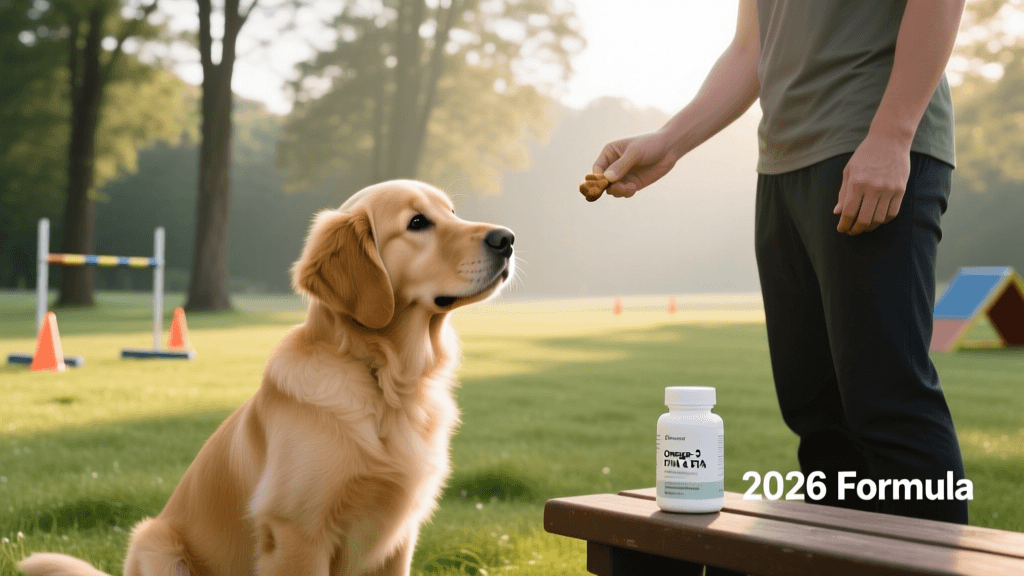
Boost Dog Training Focus With Omega-3 Supplements 2026
Discover how Omega-3 DHA and EPA supplements boost canine cognitive focus and reduce anxiety during obedience training and socialization in 2026.
The Neurological Foundation of Canine Trainability
When we think of dog training, we typically focus on mechanics: marker words, treat placement, leash pressure, and repetition. However, the foundation of all behavioral conditioning and obedience training is neurological. In 2026, the intersection of canine nutrition and cognitive science has become a primary focus for elite dog trainers and veterinary behaviorists. Specifically, Omega-3 fatty acids have emerged as a critical tool for enhancing a dog's ability to learn, retain, and execute complex commands. If your dog struggles to hold a 'stay' command in high-distraction environments or fails to generalize socialization skills outside the living room, the barrier may not be behavioral—it may be biochemical.
Omega-3 fatty acids, primarily docosahexaenoic acid (DHA) and eicosapentaenoic acid (EPA), are essential fats that the canine body cannot produce in sufficient quantities on its own. They must be obtained through diet or targeted supplementation. According to the American Kennel Club, these fatty acids are fundamental to brain health, joint mobility, and immune function. But for the working dog, the agility competitor, or the pet owner struggling with basic obedience, the impact of Omega-3s on synaptic plasticity and emotional regulation is the true game-changer.
DHA vs. EPA: Targeting Specific Training Hurdles
Not all Omega-3s serve the same function in the context of behavioral conditioning. Understanding the distinct roles of DHA and EPA allows trainers to tailor their nutritional support to the specific hurdles their dogs face in the training field.
DHA for Cognitive Acquisition and Trick Learning
DHA is the most abundant Omega-3 fatty acid in the mammalian brain. It is a structural component of neuronal cell membranes and is directly responsible for facilitating synaptic plasticity—the brain's ability to form new neural connections. When you are teaching a puppy foundational commands like 'place' or 'heel', or training an adult dog complex behavior chains for competitive obedience, DHA is the physical building block that allows those new pathways to solidify.
Studies have consistently shown that puppies weaned onto diets rich in DHA demonstrate superior trainability, faster problem-solving skills, and enhanced visual learning compared to their DHA-deficient littermates. For adult dogs learning new tricks or adapting to a new service dog routine, maintaining high levels of DHA ensures that cognitive acquisition remains sharp, reducing the number of repetitions needed for a behavior to become muscle memory.
EPA for Emotional Regulation and Reactivity
While DHA builds the hardware of the brain, EPA acts as the software's cooling system. EPA is highly anti-inflammatory and plays a crucial role in modulating the immune system and reducing neuroinflammation. In the realm of behavioral modification, neuroinflammation is increasingly linked to canine anxiety, hyper-vigilance, and leash reactivity.
If you are working on counter-conditioning with a reactive dog, or attempting to socialize a fearful rescue in a busy group class, high levels of EPA can help lower the dog's baseline stress response. By reducing the inflammatory cytokines that trigger the 'fight or flight' response, EPA allows a dog to remain under the threshold of reactivity, making them more receptive to positive reinforcement and desensitization protocols.
2026 Omega-3 Profiles for Working and Training Dogs
The supplement market has evolved significantly. In 2026, veterinary nutritionists emphasize the importance of the triglyceride form of Omega-3s over the ethyl ester form for superior canine absorption. Below is a comparison of how different EPA/DHA ratios should be utilized based on your current training goals.
| Training Scenario | Ideal EPA:DHA Ratio | Primary Benefit | Recommended Formulation Type |
|---|---|---|---|
| Puppy Obedience & Trick Shaping | 1:2 (High DHA) | Accelerates synaptic pathways and memory retention | Wild-caught salmon oil (Triglyceride form) |
| Leash Reactivity & Counter-Conditioning | 2:1 (High EPA) | Lowers neuroinflammation and anxiety thresholds | Concentrated fish oil capsules |
| Agility & High-Impact Working Dogs | 1.5:1 (Balanced) | Supports cognitive focus while protecting joints | Liposomal Omega-3 liquid pumps |
| Senior Dog Cognitive Retention | 1:3 (Very High DHA) | Delays cognitive dysfunction and maintains routine memory | Algae-based DHA (Sustainable 2026 sourcing) |
Dosing and Timing for Optimal Training Sessions
A common mistake owners make is treating Omega-3s like an acute training treat, expecting immediate results right before a session. Omega-3s require a 'loading phase' to integrate into the cellular membranes of the brain and body. According to guidelines referenced by the World Small Animal Veterinary Association (WSAVA), it typically takes 4 to 8 weeks of consistent daily dosing to see measurable changes in cognitive function and inflammatory markers.
For behavioral conditioning, the dosage is generally calculated based on metabolic body weight rather than just total weight. A standard therapeutic dose for a dog undergoing intensive behavioral modification for anxiety or reactivity is often between 50mg to 75mg of combined EPA/DHA per kilogram of body weight. However, you should always consult with a veterinary nutritionist to tailor the dose, especially if your dog is already consuming a commercial diet fortified with fish oils.
The Role of Antioxidants in Training Diets
When supplementing with high doses of Omega-3s for cognitive enhancement, it is vital to pair them with antioxidants like Vitamin E. Polyunsaturated fats are highly susceptible to oxidative stress and lipid peroxidation. In 2026, premium training supplements routinely include mixed tocopherols or astaxanthin to protect the Omega-3s from breaking down in the digestive tract, ensuring that the DHA actually reaches the canine brain to support those grueling obedience sessions.
Integrating Supplements into Your Behavioral Conditioning Plan
How do you practically apply this science to your daily training regimen? Let us look at two common scenarios where Omega-3 supplementation acts as a force multiplier for your training efforts.
Scenario A: The Distracted Puppy in Group Classes
You are trying to teach your 16-week-old puppy 'watch me' and loose-leash walking in a group socialization class, but they are entirely overwhelmed by the environment. The Protocol: Begin a high-DHA salmon oil supplement at least four weeks prior to the start of group classes. Combine this with short, high-reward training sessions at home. The DHA will support the rapid neurological development required for the puppy to process novel stimuli without experiencing sensory overload, allowing them to generalize the 'watch me' cue much faster in the chaotic class environment.
Scenario B: The Leash-Reactive Adult Rescue
You are working with a certified behaviorist to counter-condition an adult rescue who lunges and barks at other dogs on walks. The dog's arousal levels spike too quickly for treats to work. The Protocol: Implement a high-EPA therapeutic dose to systematically lower systemic inflammation and baseline anxiety. Over the first six weeks, focus purely on environmental management and sub-threshold exposure. By week eight, as the EPA begins to modulate the dog's stress response, you will notice a wider 'window of tolerance,' allowing you to successfully mark and reward calm behavior at closer distances to trigger dogs.
Expert Sources and Veterinary Guidelines
When selecting an Omega-3 supplement to support your dog's training journey, transparency and purity are non-negotiable. Heavy metal contamination and rancid oils can actually induce inflammation, completely defeating the purpose of the supplementation. The Tufts University Cummings Veterinary Medical Center strongly advises pet owners to look for products that carry a Certificate of Analysis (COA) from independent third-party testing organizations, verifying that the product is free from PCBs, mercury, and arsenic.
Furthermore, always store your liquid Omega-3 supplements in the refrigerator and purchase them in dark, opaque bottles to prevent light and heat degradation. A rancid fish oil will smell distinctly foul and should be discarded immediately.
Conclusion: Nutrition as the Ultimate Training Tool
As we navigate the advanced dog training methodologies of 2026, it is clear that obedience and behavioral conditioning do not happen in a vacuum. A dog's ability to focus, retain information, and manage stress is deeply rooted in their neurological and biochemical health. By strategically utilizing DHA for cognitive acquisition and EPA for emotional regulation, you are not just feeding your dog; you are actively optimizing their brain for success. Pair these targeted Omega-3 protocols with positive reinforcement, patience, and expert guidance, and you will unlock a level of trainability and partnership that transforms your daily walks and training sessions into a seamless, joyful experience.
tom-renshaw
All our authors care for dogs every day — read more of their work on the authors page.