Nutrition and Treat Strategies for High-Volume Dog Training
Discover how to manage your dog's diet and choose healthy treats for high-volume training sessions without causing obesity or digestive upset.
The Hidden Caloric Cost of Positive Reinforcement
Positive reinforcement is the gold standard in modern dog training, but it comes with a hidden metabolic cost. When you are shaping a new behavior, proofing a recall in a high-distraction environment, or running multiple repetitions of agility weave poles, you are likely dispensing dozens of treats in a single session. For a small to medium-sized dog, consuming 50 to 100 standard training biscuits in a 20-minute window can easily equate to a human eating several fast-food meals in one sitting. Over time, this caloric surplus leads to canine obesity, joint stress, and a shortened lifespan.
As a senior trainer and canine nutrition advocate, I frequently see well-meaning owners struggle to balance their dog's behavioral conditioning with their physical health. The solution is not to train less, but to train smarter. By understanding the intersection of canine nutrition and behavioral mechanics, you can maintain high-volume training schedules without compromising your dog's waistline or gastrointestinal health.
The 10% Rule: Balancing Meals and Training Rewards
The foundational guideline for canine treat consumption is the '10% Rule.' According to the American Animal Hospital Association (AAHA), treats, chews, and table scraps should never constitute more than 10% of a dog's total daily caloric intake. The remaining 90% must come from a complete and balanced commercial or veterinarian-formulated diet.
Deducting Training Calories from Daily Intake
To implement this during high-volume training, you must actively deduct the calories used in training from your dog's daily meal allowance. Here is a practical breakdown:
- Calculate Daily Needs: A moderately active 30-pound dog requires approximately 900 calories per day.
- Calculate the 10% Threshold: 90 calories are available for treats and training rewards.
- Determine Treat Volume: If your training plan requires 90 repetitions (treats) per day, each treat must be exactly 1 calorie or less.
- Meal Adjustment: Measure out 810 calories of kibble or wet food for breakfast and dinner. If you use kibble for training, simply remove that exact volume from their dinner bowl and place it in your treat pouch.
Choosing the Right Treats: A Nutritional Breakdown
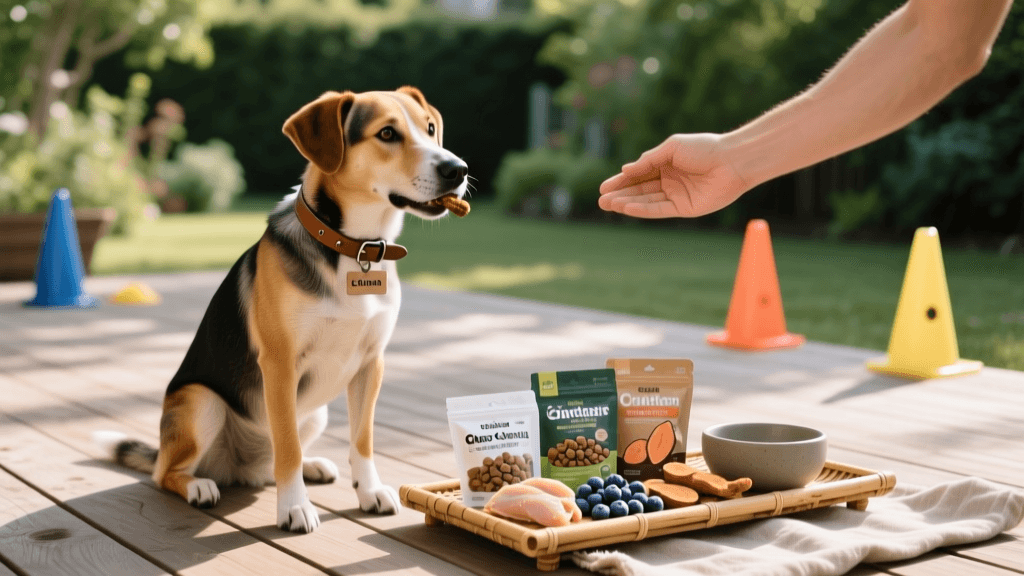
Not all calories are created equal, especially when a dog's digestive system is processing high volumes of novel ingredients. Below is a comparison of popular training rewards, analyzing their caloric density, cost, and best use-case in behavioral conditioning.
| Treat Type | Brand / Example | Calories (Pea-Sized) | Est. Cost per Oz | Best Training Use |
|---|---|---|---|---|
| Commercial Soft Bites | Zuke's Mini Naturals | ~3 kcal | $0.85 | Basic obedience, luring, puppy classes |
| Freeze-Dried Liver | Stewart Pro-Treat Beef Liver | ~1.5 kcal | $1.40 | High distraction recall, reactive dog counter-conditioning |
| Daily Kibble Ration | Purina Pro Plan Savor | ~1 kcal | $0.25 | Clicker shaping, high-repetition agility, nose work |
| Boiled Chicken Breast | Homemade (Shredded) | ~2 kcal | $0.45 | Dogs with severe food allergies, sensitive stomachs |
Navigating Food Allergies and Sensitive GI Tracts
High-volume training is notoriously hard on the canine gastrointestinal tract. Introducing rich, fatty, or novel proteins in large quantities often results in osmotic diarrhea or acute gastroenteritis. If your dog is on a strict elimination diet for environmental or food allergies, training becomes uniquely challenging.
According to experts at the Tufts University Cummings Veterinary Medical Center, pet owners must be hyper-vigilant about hidden ingredients in commercial treats, such as beef flavoring, dairy derivatives, or gluten-based binders, which can trigger allergic flare-ups and ruin weeks of dermatological progress.
Actionable Advice for Sensitive Dogs
- Single-Ingredient Novel Proteins: Use freeze-dried rabbit, venison, or green tripe. These are typically 100% pure meat, eliminating the risk of hidden allergens found in commercial biscuit binders.
- The 'Kibble Paste' Method: For dogs on prescription hydrolyzed protein diets (e.g., Royal Canin HP or Hill's z/d), mix their daily kibble allowance with warm water to create a paste. Load this paste into a reusable silicone treat tube (like the Kong Squeeze). This allows for continuous licking rewards during desensitization protocols without introducing outside ingredients.
- Hydration is Critical: Freeze-dried treats and dry kibble absorb moisture in the gut. When doing high-volume training with dry rewards, ensure your dog has constant access to fresh water, or add a low-sodium bone broth to their evening meal to aid digestion.
Timing, Mechanics, and Gear for Nutritional Efficiency
The physical size of the treat directly impacts training efficiency and caloric intake. The American Kennel Club (AKC) emphasizes that dogs do not care about the size of the treat; they care about the speed of delivery and the scent profile. A treat should be no larger than a green pea (approx. 1/8th of a teaspoon).
Optimizing Your Gear
Fumbling with treat bags slows down your marker-to-reward timing, which can blur the behavioral association. Invest in high-quality training pouches that allow for rapid, one-handed retrieval. The Ruffwear Treat Trader and the Doggone Good Pouch feature magnetic closures or specialized linings that prevent soft treats from sticking to the fabric, ensuring you can deliver the reward within the critical 0.5 to 1.5-second window after your marker word ('Yes!' or a click).
The 'Jackpot' Reward System
Instead of giving three large treats for a massive breakthrough, use the 'jackpot' method: deliver 5 to 10 pea-sized pieces of a low-calorie reward (like boiled chicken breast) in rapid succession. This creates a psychological windfall for the dog, prolonging the dopamine release and reinforcing the behavior heavily, while keeping the total caloric footprint remarkably low.
'The most effective trainers are not the ones who use the most food, but the ones who use food with the most precision. Caloric management is just as much a part of your training plan as your shaping criteria.'
Alternative Reinforcers to Reduce Treat Fatigue
To further protect your dog's nutritional baseline, you must incorporate non-food reinforcers into your training matrix. This is known as the Premack Principle, which involves using a high-probability behavior (something the dog naturally wants to do) to reinforce a low-probability behavior (the training cue).
- Sniffaris: After a successful 'heel' sequence, release the dog with a 'Go Sniff' cue. Olfactory enrichment lowers cortisol and serves as a potent, zero-calorie reward.
- Tug and Play: For high-prey-drive dogs, a 5-second game of tug with a fleece toy is often more reinforcing than liver. This burns calories rather than adding them, making it ideal for overweight dogs undergoing obedience conditioning.
- Life Rewards: Ask for a 'sit' before opening the door to the backyard, or a 'down' before placing the food bowl on the floor. This integrates training into daily life without requiring a single extra calorie.
Conclusion
Training your dog should build their mind without compromising their body. By strictly adhering to the 10% rule, selecting low-calorie and single-ingredient treats, and mastering the mechanics of treat delivery, you can execute rigorous, high-volume training sessions safely. Always consult with your veterinarian or a board-certified veterinary nutritionist if your dog has underlying metabolic conditions like pancreatitis or diabetes before beginning a high-reward training protocol. With the right nutritional strategy, your dog will remain focused, fit, and ready to learn.
tom-renshaw
All our authors care for dogs every day — read more of their work on the authors page.