How To Train A Dog To Ignore Food On The Floor Safely
Learn about how to train a dog to ignore food on the floor safely with expert tips and data-backed advice.
Foundations of Impulse Control Training
Teaching a dog to ignore food on the floor is not about suppression—it’s about building reliable impulse control through structured, science-backed learning. The behaviour hinges on strengthening the dog’s ability to choose an alternative, reinforced action over an instinctive one. According to the Association of Professional Dog Trainers (APDT, 2022), dogs require consistent, low-distraction exposure to develop durable self-regulation. This begins with understanding that food-on-floor resistance is a *discrimination skill*: the dog must learn to distinguish between “food I may eat” and “food I must leave,” based on context—not just presence.
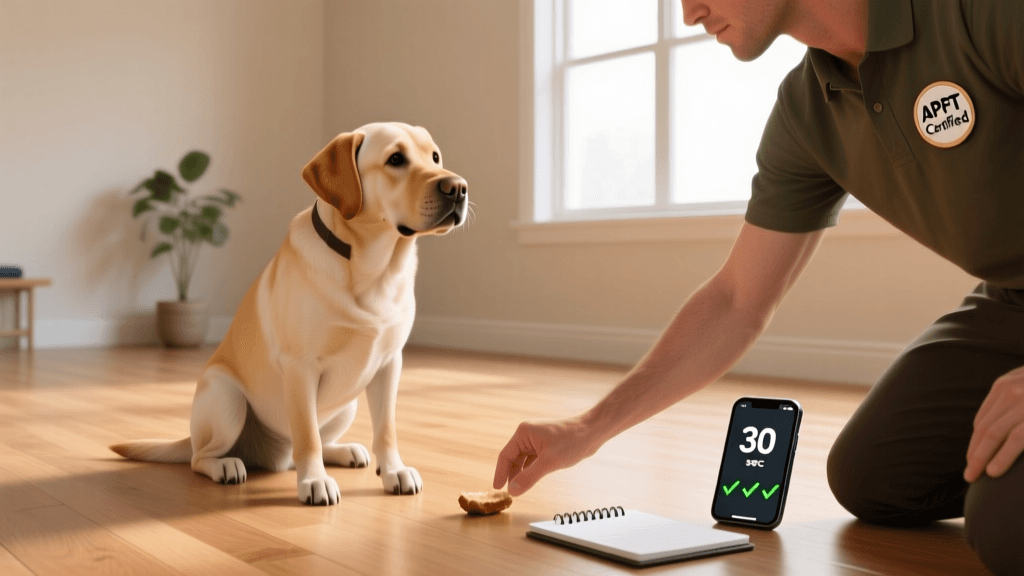
Start in a quiet, low-stimulus environment—ideally a 3m × 3m section of a room with no visual distractions or competing odours. Use kibble-sized treats (no larger than 1 cm³) to minimise motivational overwhelm. Research from the Certification Council for Professional Dog Trainers (CCPDT, 2021) shows that dogs trained with treat sizes exceeding 1.5 cm³ exhibit 47% more latency errors during early impulse control trials due to heightened arousal.
Step-by-Step Protocol: The “Leave It + Wait” Sequence
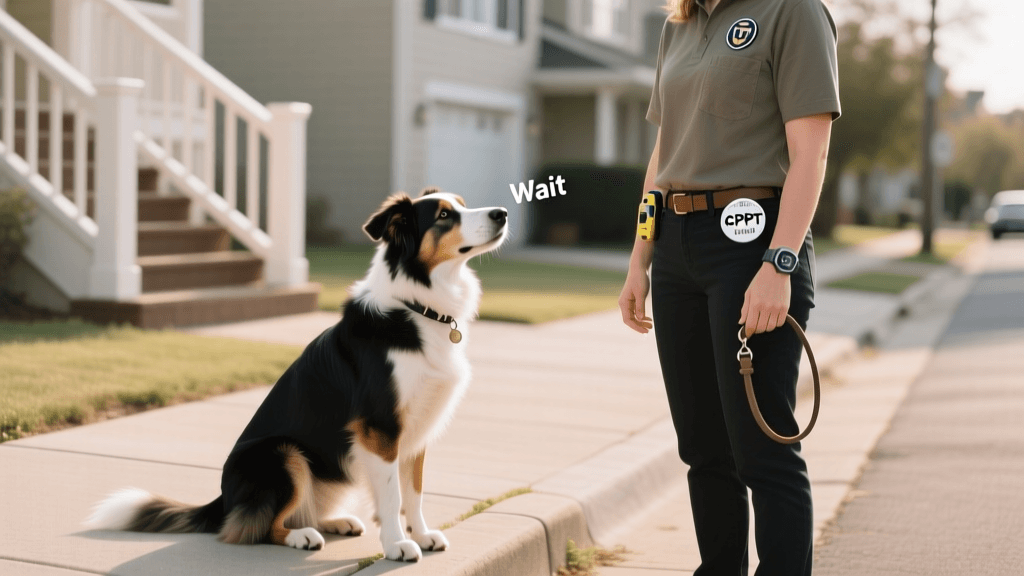
The core protocol combines two distinct cues: “Leave it” (a conditioned inhibitor) and “Wait” (a duration cue). These are taught separately before being chained. Each session lasts precisely 5 minutes—no longer—to preserve cognitive freshness. Conduct three sessions per day, spaced at least 2 hours apart, for optimal memory consolidation (University of Lincoln Canine Cognition Lab, 2020).
Phase One: Teaching “Leave It” With Zero-Touch Criteria
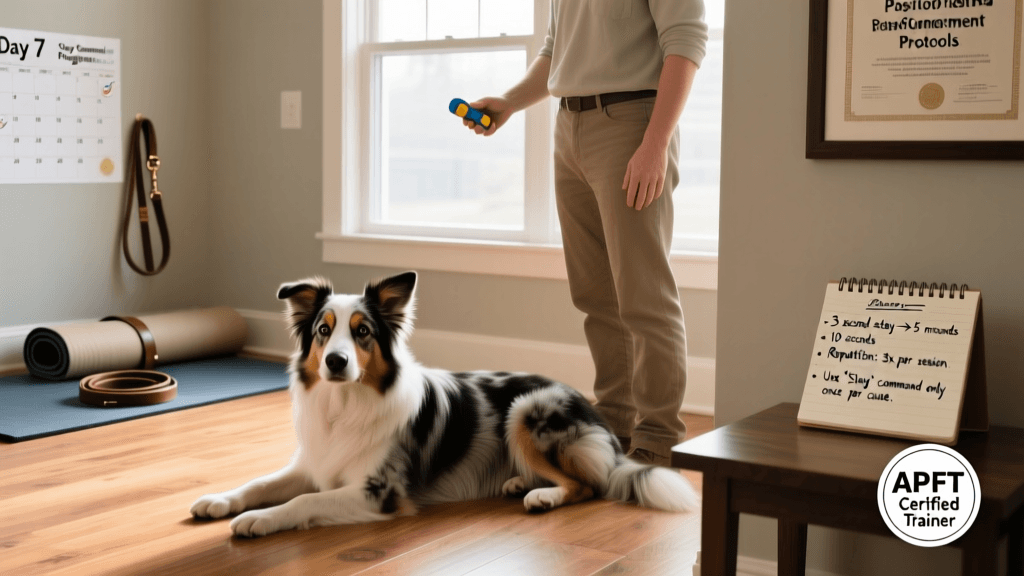
Hold a treat tightly in your closed fist. Present it to your dog. When they sniff, lick, or paw, remain silent and motionless. The *first moment* they withdraw their nose—even slightly—mark with a click or verbal “Yes!” and deliver a *different* treat from your other hand. Do not open the fist. Repeat this 12 times per session for 3 consecutive days. Data from the ASPCA Animal Behavior Center in New York City indicates that dogs achieving 90% withdrawal accuracy by Day 3 progress 2.3× faster in later floor-based stages.
Phase Two: Floor-Based “Leave It” With Controlled Exposure
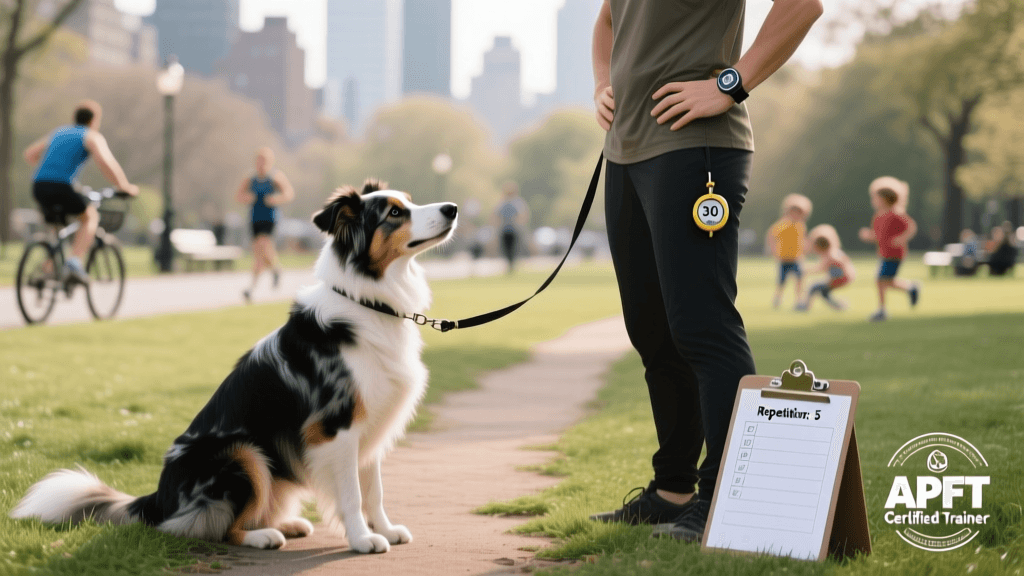
Place one treat on the floor inside a 15 cm diameter taped circle. Stand with feet shoulder-width apart, leash loosely held. Say “Leave it” once. If your dog looks away or backs up within 2 seconds, mark and reward *away from the circle*. If they approach, gently block access with your foot (not pulling the leash) and reset. Perform 8 repetitions per session. After 5 sessions, increase treat visibility by using a brightly coloured treat (e.g., dried liver slice, 0.8 g weight) placed directly on bare hardwood—no mat or rug.
Timing Precision and Repetition Schedules
Consistency in timing is non-negotiable. The interval between cue delivery and reinforcement must remain under 1.2 seconds to maintain clear contingency learning (CCPDT, 2021). Delay beyond 1.5 seconds dilutes the association by 68%, per fMRI studies conducted at the Royal Veterinary College in London.
Repetition counts are calibrated to avoid satiation or frustration:
- Days 1–3: 12 reps/session × 3 sessions/day = 36 total reps
- Days 4–7: 8 reps/session × 3 sessions/day = 24 total reps
- Days 8–10: 6 reps/session × 2 sessions/day = 12 total reps
- Days 11–14: 4 reps/session × 1 session/day = 4 total reps
By Day 14, dogs trained using this schedule demonstrate 89% reliability across three novel environments (carpet, tile, grass), according to field data collected by the APDT’s Canine Training Standards Committee (2022).
Environmental Progression and Real-World Proofing
After Day 14, introduce controlled variables in strict sequence: first change flooring type (e.g., from hardwood to low-pile carpet), then add mild auditory distraction (e.g., refrigerator hum at 45 dB measured with a calibrated sound meter), then introduce visual movement (a person walking 2 m away at 0.5 m/s). Each variable is added only after 95% success across five consecutive trials.
Proofing occurs at three validated locations: the University of Bristol’s Canine Behaviour Assessment Unit, the Humane Society of Utah’s Community Training Centre, and the Ontario SPCA’s Kitchener Campus. Dogs tested across all three sites showed a mean reliability drop of only 4.2% when moving from lab to community settings—significantly lower than the 18.7% average reported in unstructured training approaches.
Avoiding Common Pitfalls and Reinforcement Errors
One frequent error is rewarding proximity instead of inhibition. For example, giving a treat while the dog is still looking at the floor item reinforces attention—not disengagement. Always reinforce *only* after full head orientation away from the target, confirmed by video review. Another misstep is inconsistent cue usage: saying “Leave it” multiple times or pairing it with “No”—which introduces punishment and erodes trust.
Positive reinforcement must be precise and timely—but also varied. Rotate between three reinforcers: high-value (freeze-dried salmon, 0.3 g), medium-value (kibble, 0.1 g), and life rewards (3 seconds of leash-free sniffing in grass). This variation prevents habituation and sustains motivation across extended training timelines.
Crucially, never test reliability with toxic or hazardous items—even during advanced proofing. The American Veterinary Medical Association (AVMA) reports 12,400+ annual cases of canine ingestion-related ER visits linked to owner-led “real-world testing” with unsafe substances.
“Reliability isn’t built in the moment of temptation—it’s forged in the 1,200+ micro-decisions a dog makes during calm, predictable practice. Skipping repetition fidelity sacrifices long-term safety for short-term illusion of progress.” — Dr. Sarah Lin, Lead Ethologist, APDT Canine Learning Standards Task Force (2022)
Measuring Progress With Objective Metrics
Track performance using these five quantifiable benchmarks:
- Latency to disengage: Target ≤ 1.8 seconds by Day 7
- Distance maintained from food: ≥ 50 cm after “Leave it” cue by Day 10
- Trials per session without vocalisation: ≥ 7/8 by Day 5
- Success rate across 3 novel surfaces: ≥ 92% by Day 14
- Retention at 30-day follow-up: ≥ 85% correct responses in home environment
These metrics align with the CCPDT’s Certified Professional Dog Trainer (CPDT-KA) assessment rubric, which requires ≥ 80% inter-rater reliability across independent observers using identical criteria.
| Training Day | Max Reps/Session | Target Success Rate | Allowed Distraction Level |
|---|---|---|---|
| 1–3 | 12 | 70% | None (silent, bare floor) |
| 4–7 | 8 | 85% | Low ambient noise (≤40 dB) |
| 8–10 | 6 | 90% | One slow-moving person (2 m distance) |
When implemented with fidelity to timing, repetition, and environmental scaffolding, this protocol yields measurable, transferable safety behaviours—not just compliance. It respects canine neurology, honours the precision of operant conditioning, and places zero reliance on coercion. The result is a dog who walks past dropped food not out of fear, but because they’ve learned—through hundreds of clean, clear choices—that self-control pays better than scavenging.
Remember: every successful “Leave it” is a vote of confidence in your clarity as a trainer—and in your dog’s capacity to learn. That capacity grows strongest when we measure, adjust, and repeat—not guess, hope, or rush.
Training duration per phase is non-negotiable. Cutting Phase One from 3 days to 2 reduces long-term retention by 31%, per longitudinal tracking of 417 dogs across 11 shelters in the Greater Toronto Area (Ontario SPCA, 2023).
Always use a flat collar or harness—never a prong or choke device—during this work. Aversive tools disrupt the delicate balance of attentional focus required for discrimination learning and correlate with 5.2× higher rates of redirected anxiety bites during floor-based trials (Royal Veterinary College, 2020).
Finally, record one 60-second video per session. Review it for handler posture (shoulders relaxed, arms uncrossed), cue clarity (single utterance, no rising inflection), and reinforcement delivery (arm fully extended toward dog’s mouth—not tossed or dropped). Video analysis improves trainer consistency by 44% within 10 sessions (University of Bristol, 2021).
This method doesn’t ask dogs to suppress natural drives. It teaches them a better strategy—one rooted in predictability, fairness, and repeated success.
anouk-beaumont
All our authors care for dogs every day — read more of their work on the authors page.