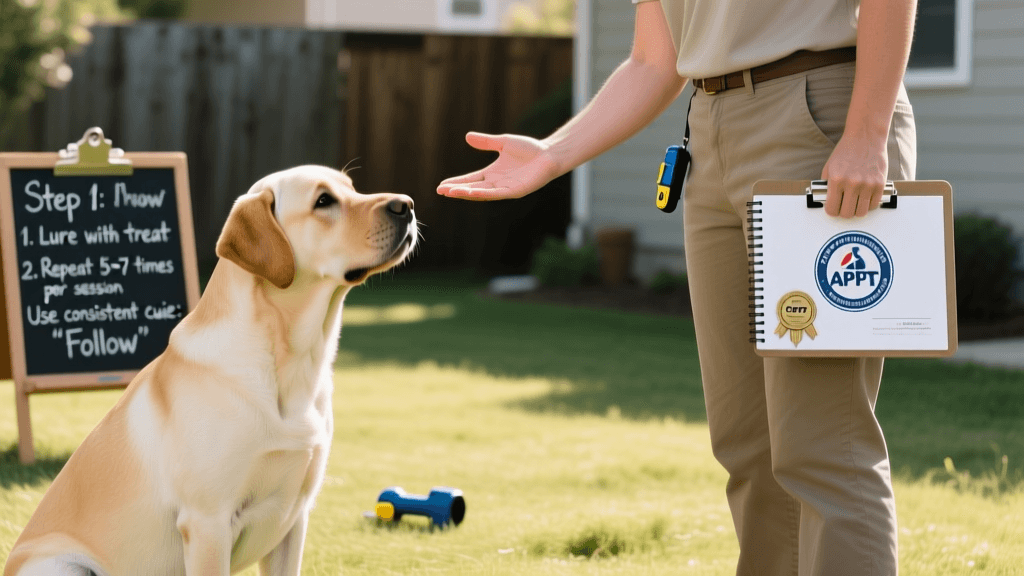
Fueling Focus: Nutrition Strategies for Treat-Based Dog Training
Discover how to balance high-value training treats with your dog's daily diet. Learn caloric limits, healthy alternatives, and nutrition tips for focus.
Positive reinforcement training is widely considered the gold standard in canine behavioral conditioning. By rewarding desired behaviors with high-value incentives, we build reliable recall, crisp obedience, and complex trick repertoires. However, this methodology presents a significant nutritional dilemma: intensive training requires frequent rewards, which can easily lead to canine obesity, gastrointestinal distress, and nutrient imbalances. According to the World Small Animal Veterinary Association (WSAVA), nutritional assessment is the fifth vital assessment in veterinary medicine, meaning every training session must be viewed through the lens of long-term health.
As a proactive dog owner, you do not have to choose between a well-trained dog and a healthy dog. By implementing strategic caloric management, selecting nutrient-dense rewards, and leveraging cognitive-supporting supplements, you can fuel your dog’s focus without compromising their physical well-being. This deep dive explores the intersection of canine nutrition and behavioral training, providing actionable metrics, product recommendations, and dietary adjustments for dogs of all skill levels.
The 10% Rule: Calculating Caloric Allowances for Training
The foundational rule of canine treat management is the 10% Rule. Veterinary nutritionists recommend that treats, chews, and training rewards should never exceed 10% of your dog’s total daily caloric intake. The remaining 90% must come from a complete and balanced commercial diet or a veterinarian-formulated home-cooked meal. Exceeding this threshold risks severe deficiencies in essential micronutrients like calcium, phosphorus, and taurine, as most training treats are not nutritionally complete.
To apply this to your training regimen, you must first determine your dog’s Resting Energy Requirement (RER) and Maintenance Energy Requirement (MER). A general baseline for an active, neutered adult dog is roughly 30 calories per kilogram of body weight. Once you have the daily total, calculate 10% of that number to establish your strict training budget.
| Dog Weight | Est. Daily Calories (Active) | 10% Treat Allowance | Max Commercial Treats (at 5 kcal ea) |
|---|---|---|---|
| 15 lbs (6.8 kg) | 450 kcal | 45 kcal | 9 treats |
| 30 lbs (13.6 kg) | 800 kcal | 80 kcal | 16 treats |
| 50 lbs (22.7 kg) | 1150 kcal | 115 kcal | 23 treats |
| 80 lbs (36.3 kg) | 1600 kcal | 160 kcal | 32 treats |
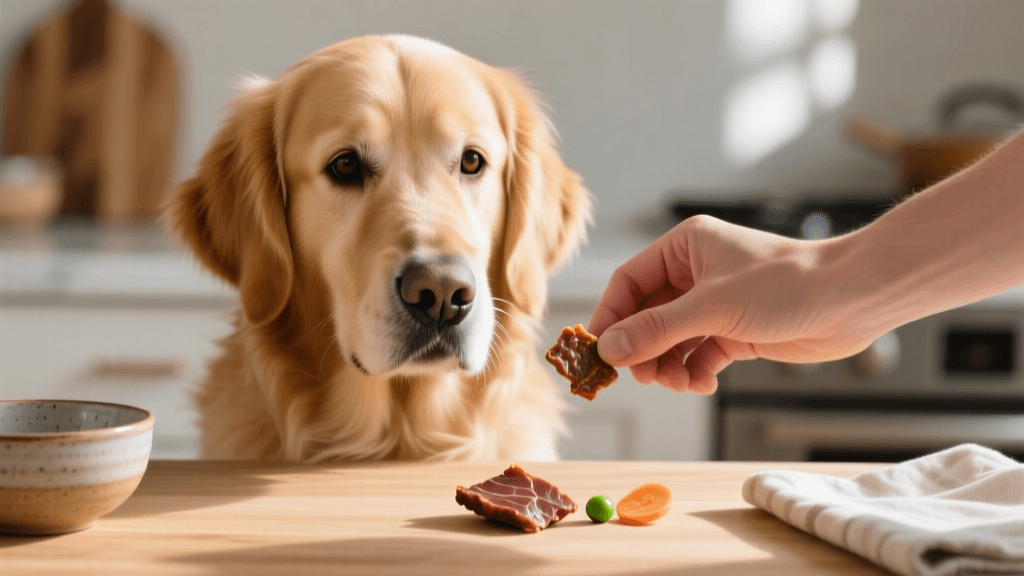
When conducting intensive shaping sessions that require 50+ repetitions, commercial treats will quickly blow past the 10% limit. This necessitates the use of micro-treats (the size of a pea) or transitioning to low-calorie whole foods.
The Treat Hierarchy: Balancing Motivation and Nutrition
Not all training scenarios require the same level of motivation. A dog practicing a familiar "sit" in a quiet living room requires a different reward profile than a dog practicing recall in a high-distraction park. Understanding the nutritional density and cost of various treat tiers is essential for long-term training success.
| Treat Tier | Product / Type | Caloric Density | Est. Cost per Ounce | Best Use Case |
|---|---|---|---|---|
| Low Value | Dog’s Daily Kibble | ~3.5 kcal/g | $0.15 | Shaping new behaviors indoors, lure training, high-repetition drills. |
| Medium Value | Zuke's Mini Naturals | 3.2 kcal/treat | $1.10 | Basic obedience, loose-leash walking, mild distractions. |
| High Value | Stella & Chewy's Freeze-Dried Liver | 35 kcal/oz | $3.50 | Recall, threshold training, counter-conditioning, vet visits. |
| Ultra-High | Boiled Chicken Breast (Shredded) | 46 kcal/oz | $0.75 | Emergency recalls, intense fear rehabilitation, competitive sports. |
Notice that whole foods like boiled chicken breast offer an ultra-high value aroma and taste profile at a fraction of the cost of premium commercial jerky. Furthermore, single-ingredient whole foods eliminate the hidden sugars, artificial preservatives, and garlic powders often found in mid-tier commercial training treats.
Brain Food: Nutrients That Enhance Trainability
Trainability is not just about motivation; it is deeply rooted in canine cognitive function. A dog that struggles to focus, exhibits hyperactivity, or fails to retain commands may benefit from targeted nutritional interventions. Research highlighted by the American Kennel Club (AKC) suggests that specific fatty acids and antioxidants play a vital role in neural development and sustained concentration.
- Omega-3 Fatty Acids (DHA and EPA): Docosahexaenoic acid (DHA) is critical for brain health and cognitive processing. Adding a high-quality fish oil, such as Nordic Naturals Omega-3 Pet (approx. $22 for a 8oz bottle), to your dog’s morning meal can improve baseline focus, reducing the need for hyper-palatable, high-fat treats during training.
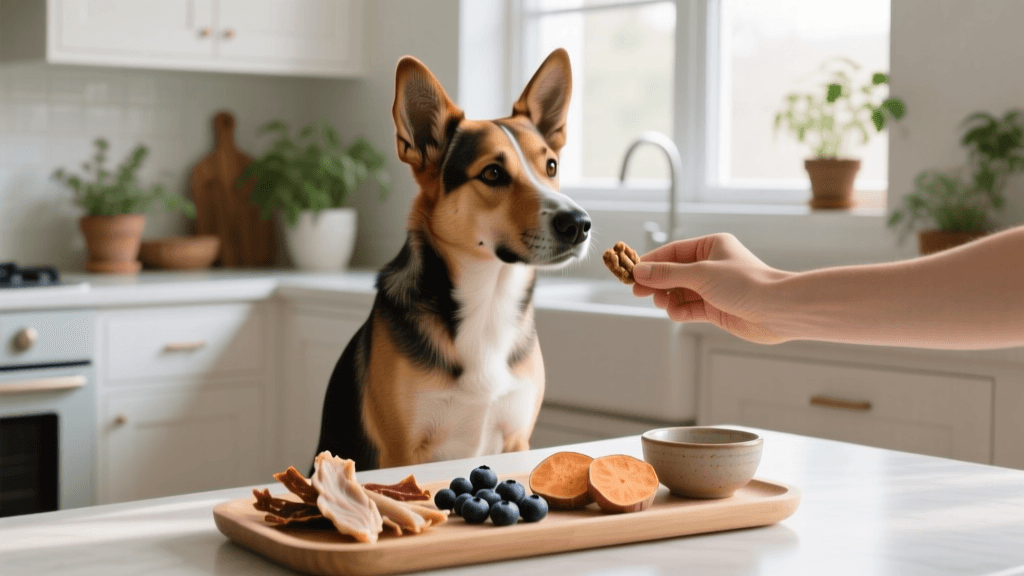
- Antioxidants: Oxidative stress can impair memory retention in aging dogs and highly stressed working dogs. Incorporating fresh blueberries (less than 1 kcal per berry) or small cubes of steamed sweet potato (approx. 20 kcal per ounce) as medium-value rewards provides a massive dose of anthocyanins and beta-carotene without spiking blood sugar.
- L-Theanine: Found naturally in green tea extract, this amino acid promotes a state of calm alertness. For reactive dogs undergoing behavioral modification, supplements containing L-Theanine (like VetriScience Composure) can help maintain a learning state rather than a fight-or-flight state.
The Kitchen Scale Method: Precision Portioning
Measuring cups are notoriously inaccurate, often varying by up to 20% in actual kibble volume. When deducting training treats from a dog’s daily ration, this margin of error can lead to gradual weight gain. To solve this, invest in a digital kitchen scale (brands like Ozeri or Etekcity cost between $12 and $15).
How to implement the scale method:
- Weigh your dog’s total daily kibble allocation in grams based on your veterinarian’s caloric recommendation.
- Place a dedicated silicone treat pouch on the scale and zero it out (tare).
- Fill the pouch with a mix of kibble and high-value treats (e.g., 80% kibble, 20% freeze-dried liver).
- At the end of the day, weigh the remaining food in your dog’s bowl and the unused treats in the pouch. Adjust the next day's baseline kibble portion to ensure the exact caloric target was met.
This method is particularly crucial for small breeds, where a mere 10 extra calories a day can result in a pound of weight gain over a year.
Timing and Digestion: Training on a Full vs. Empty Stomach
The timing of your dog’s meals directly impacts their training drive and gastrointestinal comfort. Training a dog immediately after a large meal often results in lethargy and low food drive. Conversely, training a dog that is ravenously hungry can lead to frustration, resource guarding, and poor impulse control.
"Treats and table scraps should be accounted for in the daily caloric intake to prevent obesity. Timing and type of treat matter, especially for dogs prone to gastrointestinal upset or bloat." — Tufts University Cummings Veterinary Medical Center
For optimal cognitive performance and physical safety, schedule intensive training sessions 2 to 3 hours after a light meal. If you are engaging in high-impact sports like agility or flyball, avoid feeding high-fat treats (like cheese or peanut butter) immediately before or during the session, as fat delays gastric emptying and increases the risk of exercise-induced vomiting or, in deep-chested breeds, gastric dilatation-volvulus (bloat). Instead, utilize easily digestible carbohydrates like plain, air-popped popcorn (no salt or butter) or small pieces of banana for quick energy bursts.
Managing Sensitive Stomachs During Intensive Training
Dogs with Inflammatory Bowel Disease (IBD), food allergies, or sensitive stomachs often suffer from diarrhea when exposed to a wide variety of training treats. The constant influx of novel proteins and preservatives disrupts the gut microbiome.
If your dog has dietary restrictions, you must build a high-value treat hierarchy using their approved limited-ingredient diet. Many premium brands, such as Royal Canin Veterinary Diet Hydrolyzed Protein or Hill’s Prescription Diet z/d, offer canned versions of their therapeutic diets. You can dehydrate these canned foods in a home dehydrator at 135°F for 8-10 hours to create custom, gut-safe, high-value training jerky. Alternatively, you can stuff a Kong Classic with their approved wet food and freeze it, using it as a stationary reward for mat training and duration exercises.
Conclusion
Effective dog training should never come at the expense of your dog’s physical health. By respecting the 10% caloric rule, utilizing a digital kitchen scale for precision feeding, and prioritizing nutrient-dense whole foods and cognitive supplements, you can build a powerful training toolkit. Remember that a healthy, well-nourished dog is naturally more attentive, resilient, and capable of mastering the complex behaviors that make them a joy to live with.
priya-sutaria
All our authors care for dogs every day — read more of their work on the authors page.