Step-by-Step Guide to Teaching Your Dog the Place Command
Learn how to teach your dog the place command with our step-by-step guide. Master this essential obedience skill for a calmer, well-behaved pup.
Introduction to the 'Place' Command
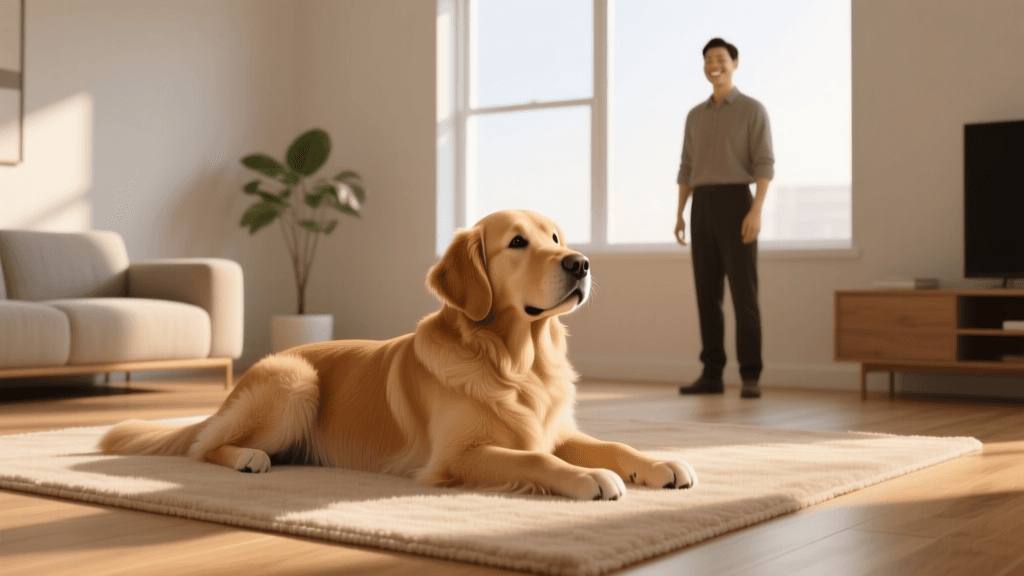
Welcome to Paws-Tales. If you are looking to instill calmness and impulse control in your dog, teaching the 'place' command is one of the most transformative obedience skills you can invest in. Unlike the 'sit' or 'down' commands, which dictate a specific physical posture, the 'place' command designates a specific location where your dog can relax, observe, and settle down. This guide will walk you through a proven, step-by-step methodology to train this behavior reliably, whether you have a rambunctious puppy or a rescue dog learning the ropes.
Why the 'Place' Command is a Game-Changer
The 'place' command is essentially an 'off-switch' for your dog. It is incredibly useful when you have guests over, when you are cooking and need your dog out from underfoot, or when you are sitting at an outdoor cafe and need your dog to remain settled. According to the Fear Free Happy Homes initiative, mat training is heavily endorsed by certified veterinary behaviorists because it gives dogs a designated safe zone that reduces anxiety and promotes mental relaxation. By associating a specific bed or mat with positive reinforcement, you create a portable sanctuary for your dog that travels with you anywhere.
Essential Gear for Success
Before you begin your first training session, gathering the right equipment is crucial for clear communication. While you can use a flat towel or a dog bed, a raised cot is highly recommended for the initial learning phases because it provides a distinct physical boundary that your dog can easily feel and see.
| Item | Recommended Product | Est. Cost | Purpose |
|---|---|---|---|
| Raised Cot | Coolaroo Elevated Pet Bed | $35 - $45 | Provides a clear physical boundary and keeps the dog cool. |
| High-Value Treats | Zuke's Mini Naturals | $6 - $8 | Low-calorie, high-reward bites for rapid repetition. |
| Training Clicker | Starmark Pro-Training Clicker | $5 | Marks the exact moment the dog performs the desired behavior. |
| Long Line | Mendota 15ft Biothane Lead | $20 - $30 | Prevents the dog from leaving the mat during distance training. |
Step 1: Luring and Shaping the Behavior
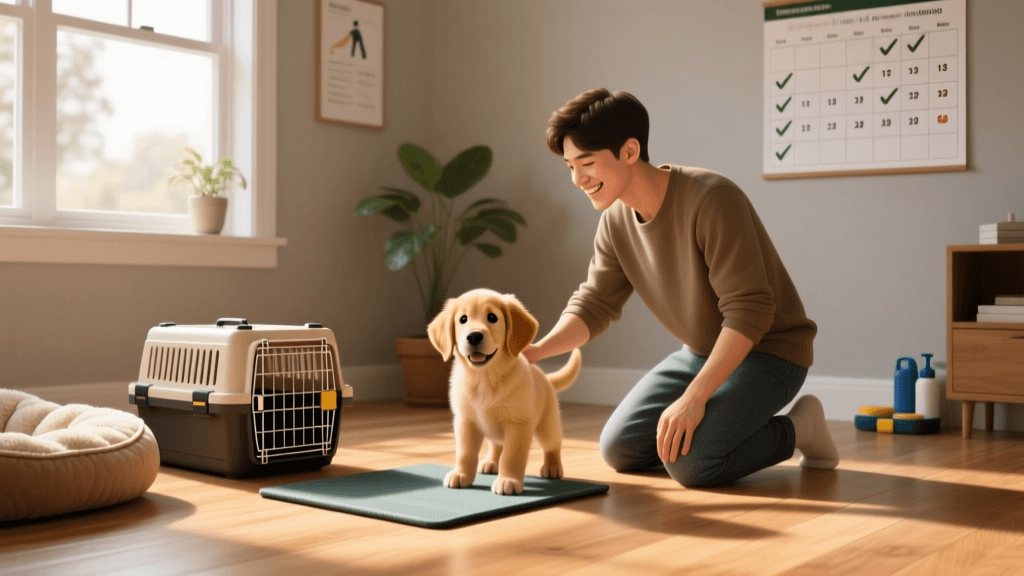
Start in a quiet room with minimal distractions. Place the raised cot on the floor and stand near it with your dog. Hold a high-value treat in your hand and let your dog sniff it. Slowly move your hand toward the center of the cot, luring your dog's nose to follow. The moment all four of your dog's paws are on the cot, click your clicker (or say a marker word like 'Yes!') and give them the treat directly on the bed.
Repeat this process 10 to 15 times. The goal is to create a strong positive association with the cot. Your dog should start jumping onto the bed willingly, anticipating the reward. If your dog is hesitant to step onto the raised surface, reward them for just one paw on the bed, then two paws, gradually raising your criteria until all four paws are on the mat.
Step 2: Adding the Verbal Cue
Once your dog is confidently stepping onto the cot for the treat, it is time to attach the verbal cue. Dogs learn associations best when the cue precedes the action. Say the word 'Place' clearly and enthusiastically exactly one second before you begin your hand lure.
As your dog follows the lure onto the bed, click and treat. Over the next few sessions, begin to fade the hand lure. Say 'Place', point to the bed, and wait. If your dog goes to the bed, click and treat heavily. If they do not, simply reset and try again with a smaller, less obvious hand motion. Fading the lure quickly ensures your dog doesn't become dependent on seeing food to perform the command.
Step 3: Building Duration (The First 'D')
The first of the '3 Ds' of dog training is Duration. Right now, your dog likely jumps on the bed, gets the treat, and immediately jumps off. We need to teach them that staying on the bed is where the rewards happen. When building duration, the Humane Society of the United States recommends incrementally increasing the time between rewards to build patience and impulse control.
Say 'Place'. When your dog gets on the bed, do not click immediately. Wait one full second, then click and treat. Next time, wait three seconds. Then five seconds. If your dog breaks position and leaves the bed, simply withhold the click, gently guide them back without a reward, and try again with a shorter time interval. Feed the treats directly on the mat to reinforce that the mat is the source of good things.
Step 4: Adding Distance (The Second 'D')
Once your dog can comfortably hold their 'place' for 30 seconds while you stand right next to them, you can introduce Distance. Attach your 15-foot long line to your dog's harness for safety. Say 'Place', and once your dog is settled, take one small step backward.
If your dog stays, step back to the mat, click, and deliver the reward. Gradually increase the distance: two steps back, then three, then across the room. If your dog gets up and follows you, use the long line to gently prevent them from leaving the mat area, guide them back, and reset. The long line is a safety net, not a tool for punishment; it simply prevents the dog from practicing the unwanted behavior of breaking their stay.
Step 5: Proofing with Distractions (The Third 'D')
The final 'D' is Distraction. A dog that can hold their place in an empty living room may struggle when the doorbell rings or when a squirrel runs past the window. Begin proofing by introducing mild distractions. Toss a low-value toy a few feet away from the mat. If your dog stays on the mat, click and reward heavily.
Gradually increase the difficulty: bounce a ball, have a family member walk across the room, or simulate knocking on the front door. As noted in the foundational training guidelines by the American Kennel Club (AKC), consistency in your expectations during high-distraction environments is vital for generalizing the behavior to real-world scenarios.
The Importance of the Release Word
Your dog needs to know when the 'place' command is over. Introduce a release word such as 'Free', 'Break', or 'All Done'. After your dog has held their place and you have delivered their final reward, say your release word in an upbeat tone and toss a treat off the mat to encourage them to jump off. This teaches your dog that they must remain on the mat until explicitly told otherwise, removing the guesswork and reducing anxiety.
Troubleshooting Common Challenges
Dog Won't Stay on the Mat
If your dog repeatedly breaks their stay, you are likely increasing the difficulty too quickly. Go back to the last successful step. If they failed at 10 seconds of duration, drop back to 5 seconds. Ensure your treats are high-value enough to compete with the environment. Training in short, 5-minute bursts prevents frustration for both you and your dog.
Dog Gets Up Before the Release Word
If your dog anticipates the end of the exercise and gets up early, avoid scolding them. Simply reset them to the mat without a click or treat, and try again. Make sure you are not accidentally leaning away or making eye contact that signals the training session is over. Maintain a neutral posture until you are ready to give the release word.
Expert Tip: Never use the 'place' command as a punishment or a time-out. The mat should always be associated with positive experiences, relaxation, and rewards. If your dog views the mat as a negative space, they will resist going to it.
Conclusion
Teaching the 'place' command requires patience, consistency, and a structured approach to the 3 Ds of training: Duration, Distance, and Distraction. By utilizing the right gear, such as a raised cot and a long line, and by following this step-by-step guide, you will equip your dog with a lifelong skill that promotes calmness and safety. Remember to keep your training sessions short, positive, and rewarding. With time and practice, your dog will learn to love their 'place', giving you both a more peaceful and harmonious household.
tom-renshaw
All our authors care for dogs every day — read more of their work on the authors page.