The 2026 Training Guide For Quiet Apartment Dog Breeds
Discover 2026 training techniques to keep quiet dog breeds calm in apartments. Learn desensitization for hallway noises and neighbor triggers.
The Reality of Quiet Breeds in High-Density Living
When urban dwellers decide to bring a canine companion into their lives, they often gravitate toward breeds known for their quiet dispositions. Breeds like the Basenji, Greyhound, Shiba Inu, and Cavalier King Charles Spaniel are frequently celebrated as the ultimate apartment dogs. However, a common misconception among new owners is that a naturally quiet breed requires less behavioral conditioning than a vocal breed like a Beagle or German Shepherd. As we navigate the increasingly dense urban environments of 2026, the truth is that quiet dogs still require rigorous, apartment-specific training to maintain their composure and mental well-being.
Living in an apartment complex means sharing walls, floors, and ceilings with dozens of other households. While your quiet breed might not bark at every passing siren, they can still develop severe stress, reactivity, or destructive habits if they are not properly trained to process the constant influx of environmental stimuli. This comprehensive guide will walk you through the essential training protocols required to keep your low-key dog calm, confident, and truly adapted to apartment life.
The Myth of the Naturally Quiet Dog
It is vital to understand that quiet does not mean mute, nor does it mean unbothered. According to the ASPCA's guide on common dog behavior issues, dogs that do not vocalize their stress are often internalizing it, which can lead to displacement behaviors such as excessive licking, pacing, or sudden aggression. A Basenji, for example, is famous for not barking, but they will yodel, scream, or chew through drywall if they suffer from separation anxiety or noise phobia.
Training a quiet apartment dog is not about teaching them to suppress a bark; it is about teaching them emotional regulation. You are building a psychological buffer that prevents the dog from crossing their stress threshold when the environment becomes chaotic. Without this buffer, even the most stoic Greyhound can become a nervous wreck in a high-rise building.
Identifying Modern Apartment Triggers in 2026
The acoustic landscape of apartment buildings has evolved significantly. In 2026, your dog is exposed to a unique array of triggers that previous generations of apartment dogs never had to process. Effective training begins with identifying these specific stimuli:
- Smart Home Chimes and Alerts: The ubiquitous nature of smart doorbells, automated delivery notifications, and intercom buzzers creates a constant barrage of high-frequency digital noises.
- Automated Lobby Systems: Many modern apartment complexes now feature automated package lockers, robotic floor cleaners in the hallways, and drone delivery landing pads on rooftops or balconies, introducing mechanical whirring and thudding sounds.
- Structural Vibrations: Heavy footsteps from upstairs neighbors, the hum of high-capacity HVAC systems, and the vibration of elevators moving through the building's core can cause low-frequency anxiety in sensitive breeds.
Before you begin any desensitization training, spend one week simply observing your dog. Keep a log of every time their ears perk up, they freeze, or they pace. This log will become the curriculum for your training sessions.
Core Training Protocol: The 'Place' Command
The foundational skill for any apartment dog is the 'Place' command. This is not merely asking your dog to sit on a bed; it is about teaching them that their designated mat is an impenetrable safe zone where no apartment noise can harm them. The American Kennel Club's recommendations for apartment dogs heavily emphasize the importance of establishing a dedicated sanctuary space for canine mental health.
Step-by-Step 'Place' Training
- Select the Right Equipment: Choose an elevated cot or a heavily insulated orthopedic mat. Elevated beds are excellent for apartment dogs because they reduce the transmission of floor vibrations from neighbors below.
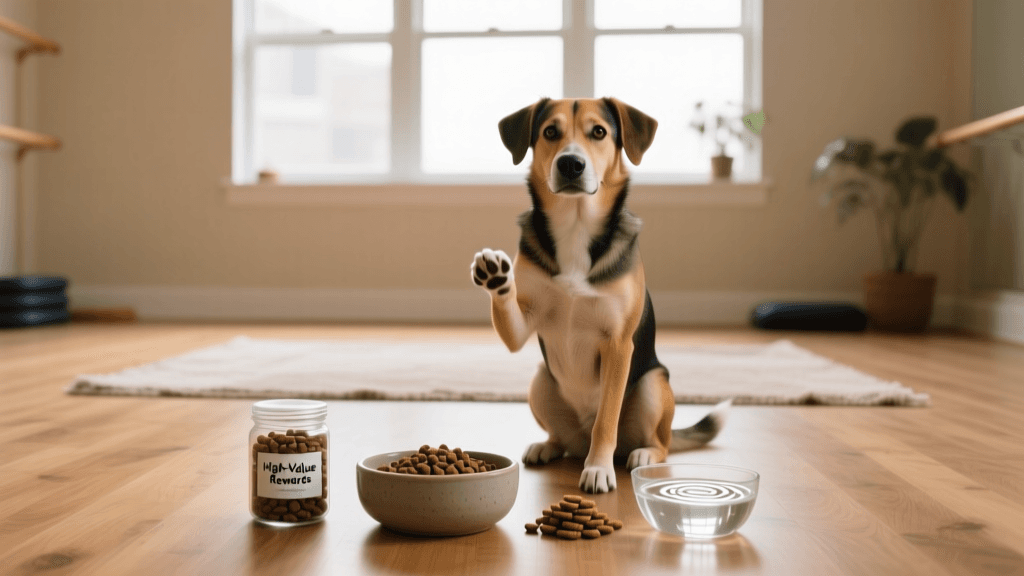
- Lure and Reward: With your dog on a leash, toss a high-value treat onto the mat. The moment all four paws touch the mat, mark the behavior with a clicker or a verbal 'Yes' and offer a secondary reward.
- Introduce the Cue: Once the dog is reliably stepping onto the mat for the tossed treat, introduce the verbal cue 'Place' just before they step on.
- Build Duration with Distractions: This is where apartment training diverges from standard obedience. Ask your dog to go to their 'Place', then play a recording of hallway footsteps or a smart doorbell chime at a very low volume. If they stay on the mat, reward heavily. If they break the command, lower the volume of the audio and try again.
Pro Tip for 2026: Use a smart speaker to play a continuous loop of 'brown noise' or low-frequency ambient sound near your dog's 'Place' mat. This helps mask the unpredictable, sharp noises of apartment living, making it easier for your dog to hold their 'Place' command during stressful moments.
Systematic Desensitization to Hallway Noises
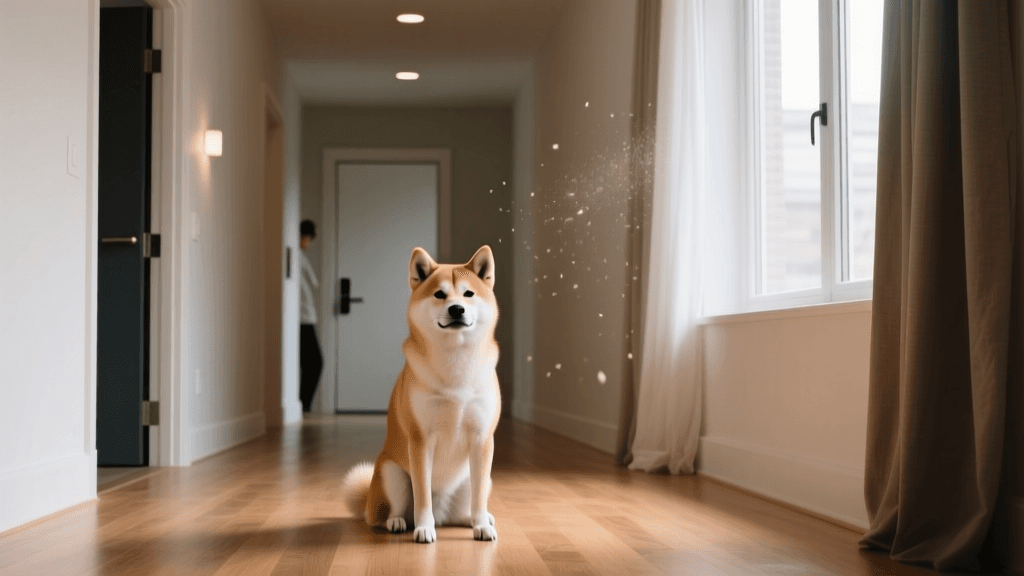
Hallway noise is the number one trigger for apartment reactivity. The sound of a neighbor walking past your front door, the jingle of their keys, or the clatter of a dog walking by can trigger a prey drive or territorial response, even in typically quiet breeds. Systematic desensitization and counter-conditioning (DS/CC) is the gold standard for resolving this.
The Threshold Training Method
You must work with your dog at a volume or distance that keeps them under their reactivity threshold. If your dog reacts to the sound of the apartment door handle jiggling, you need to simulate that sound at a level that elicits curiosity, not fear or aggression.
- Record the sound of your own door handle and hallway footsteps on your smartphone.
- Play the recording at 10% volume while feeding your dog a continuous stream of high-value treats (like boiled chicken or freeze-dried liver).
- Stop the treats the moment the audio stops. The dog learns: 'Hallway noise equals chicken.'
- Gradually increase the volume over several weeks. Eventually, move to real-life scenarios by having a friend walk past your door in the actual hallway while you feed treats inside.
Breed-Specific Training Quirks: A Comparison Guide
Not all quiet breeds process apartment life in the same way. Understanding the genetic predispositions of your specific breed will allow you to tailor your training approach.
| Breed | Vocalization Tendency | Primary Apartment Trigger | Recommended Training Focus |
|---|---|---|---|
| Basenji | Low (Yodels/Screams) | Boredom and visual stimuli from windows | Impulse control and visual barrier training |
| Greyhound | Very Low | Sudden loud noises and floor vibrations | Desensitization to structural sounds |
| Shiba Inu | Low to Moderate | Territorial triggers in shared hallways | Counter-conditioning to neighbor noises |
| Cavalier King Charles | Low | Separation anxiety when left alone | Independence training and enrichment |
| French Bulldog | Low (Grunts/Snores) | Overheating and lack of mental stimulation | Indoor scent work and puzzle games |
Mental Enrichment Over Physical Exhaustion
In an apartment setting, you cannot rely on a massive backyard to tire out your dog. Furthermore, physical exhaustion does not cure behavioral reactivity; a tired dog is often just a cranky dog with a lower threshold for stress. In 2026, the focus of apartment dog training has shifted heavily toward cognitive enrichment.
For quiet breeds that tend to internalize stress, mental work provides a healthy outlet for their energy. Incorporate the following enrichment strategies into your daily routine:
- Scent Work: Hide treats around your apartment and encourage your dog to use their nose to find them. This mimics natural foraging behaviors and is incredibly tiring for the canine brain.
- Lick Mats and Snuffle Mats: The physical act of licking and foraging releases endorphins in the dog's brain, naturally soothing them during high-stress times, such as when the building's maintenance crew is working in the hallway.
- Shaping Games: Use a clicker to teach your dog complex tricks, like closing cabinet doors or turning off a specialized smart-switch. This builds confidence and strengthens the bond between you and your dog.
Recognizing and Addressing Silent Anxiety
Because your dog does not bark, you might mistakenly believe they are perfectly fine when left alone or when exposed to loud noises. However, silent anxiety can be just as damaging to your dog's health. Watch for subtle body language cues that indicate your dog is struggling with apartment life:
- Excessive panting when the room is cool.
- Pacing in tight circles near the front door.
- Refusing high-value treats when the elevator dings down the hall.
- Whale eye (showing the whites of their eyes) when hearing neighbors argue or move furniture.
If you notice these signs, it is crucial to intervene before the anxiety escalates into destructive behavior or physical illness. Consult with a certified veterinary behaviorist who can help you design a modified desensitization plan or discuss short-term anti-anxiety medications to help your dog over the initial hump of their training.
Conclusion: Patience and Consistency
Training a quiet dog breed to thrive in an apartment environment is a marathon, not a sprint. The goal is not to create a robotic dog that ignores its surroundings, but rather to build a resilient companion that trusts you to manage the environment when things get overwhelming. By utilizing the 'Place' command, systematically desensitizing your dog to modern 2026 apartment triggers, and providing deep cognitive enrichment, you can ensure your quiet breed lives a peaceful, happy, and well-adjusted life in the heart of the city. Remember, a quiet dog is a joy to live with, but a well-trained quiet dog is a joy to live with for a lifetime.
priya-sutaria
All our authors care for dogs every day — read more of their work on the authors page.