Top Dog Puzzle Toys 2026: Nina Ottosson vs DIY Enrichment
Discover the best mental enrichment for dogs in 2026. We compare the Nina Ottosson Dog Brick, Outward Hound puzzles, and DIY snuffle mats for cognitive health.
The Science of Canine Cognitive Enrichment in 2026
As we navigate 2026, veterinary behaviorists and certified dog trainers increasingly emphasize that physical exercise alone is not enough to maintain a balanced, happy dog. Mental enrichment and puzzle games have moved from niche training tools to essential components of daily canine care. The olfactory lobe of a dog is proportionally up to 40 times larger than that of a human, meaning that sniffing and foraging activities burn significant cognitive energy. In fact, animal behaviorists often note that 15 minutes of intensive scent work or puzzle-solving can tire a dog out as much as an hour of brisk walking.
According to the American Kennel Club (AKC), mental stimulation helps reduce destructive behaviors, alleviates separation anxiety, and slows cognitive decline in senior dogs. But with the market flooded with options, how do you choose between premium commercial puzzles and DIY enrichment? This guide breaks down the top choices for 2026, comparing the legendary Nina Ottosson Dog Brick, the Outward Hound Hide N Slide, and custom DIY snuffle mats.
Nina Ottosson Dog Brick: The Commercial Gold Standard
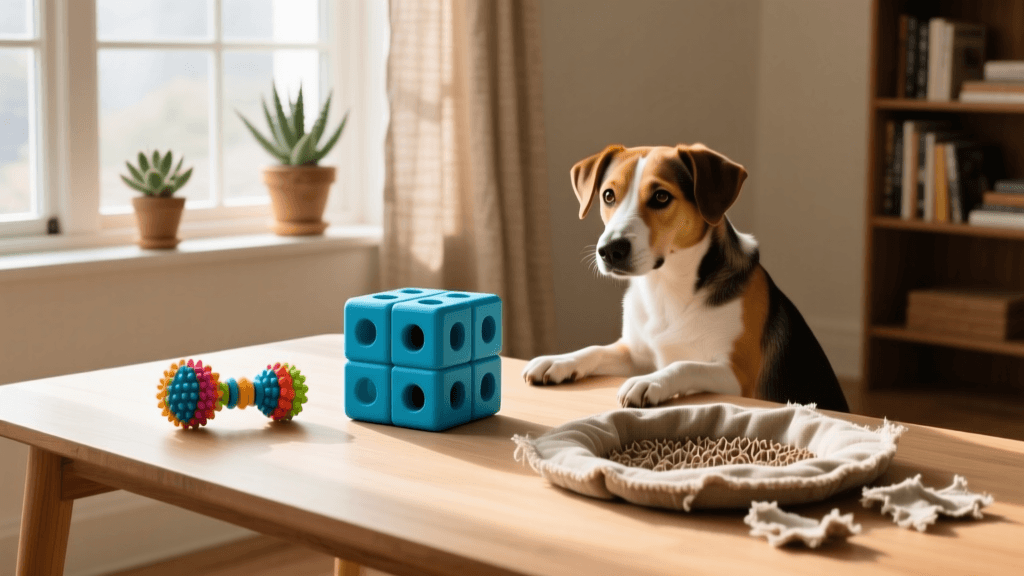
For years, the Nina Ottosson Dog Brick Interactive Treat Puzzle has been a staple in the dog training community, and the 2026 iterations remain top-tier for intermediate learners. Classified as a 'Level 2' puzzle, it is designed for dogs that have mastered basic treat-dispensing toys and are ready for multi-step problem-solving.
Key Features and 2026 Specifications
- Mechanism: The Dog Brick features three distinct treat-hiding compartments. The dog must flip open hinged covers and slide heavy-duty plastic bricks along tracks to reveal the rewards.
- Material Safety: The 2026 models are constructed from BPA-free, phthalate-free, and PVC-free composite materials, ensuring safety if your dog decides to chew on the edges.
- Current Pricing: Retailing at approximately $16.99 in 2026, it offers immense durability for the price point.
- Cleaning: Dishwasher safe on the top rack, which is a massive advantage for hygiene when using raw or wet food spreads.
Best Suited For
The Dog Brick is ideal for intelligent, high-drive breeds like Border Collies, Australian Shepherds, and Belgian Malinois that require sequential problem-solving to stay engaged. It is also excellent for dogs that eat too quickly, as it can be used as an interactive slow feeder.
Outward Hound Hide N Slide: The Beginner's Gateway
If your dog is new to puzzle toys, the Outward Hound Hide N Slide is the perfect entry point. Unlike the Dog Brick, which requires sliding and lifting, the Hide N Slide utilizes swiveling flippers and sliding blocks that are slightly more forgiving for novice paws and snouts.
Key Features and 2026 Specifications
- Mechanism: Features 14 treat compartments hidden beneath swiveling flippers and sliding pegs. The lack of removable parts makes it exceptionally safe for unsupervised beginners.
- Material Safety: Made from non-toxic, easy-to-clean composite wood and plastic blends.
- Current Pricing: Generally available for around $13.99 in 2026, making it a budget-friendly commercial option.
Best Suited For
Puppies, senior dogs experiencing mild cognitive dysfunction, or breeds that are easily frustrated by complex mechanics. The immediate visual and olfactory feedback from the swiveling flippers keeps confidence high during the learning phase.
The Rise of DIY Snuffle Mats and Scent-Work Games
While commercial plastic puzzles are excellent for logical problem-solving, they do not fully engage a dog's primal foraging instincts. Enter the DIY snuffle mat. A snuffle mat is essentially a dense, shaggy rug made from fleece strips tied to a rubber sink mat, designed to mimic the tall grass where wild canids forage for food.
How to Build a 2026 DIY Snuffle Mat
- Materials Needed: A rubber sink mat with holes (approx. $5 at any home goods store) and 2 to 3 yards of anti-pill fleece fabric in various colors (approx. $8).
- Preparation: Cut the fleece into strips measuring 1 inch wide and 7 inches long. You will need roughly 300 strips for a standard 12x18 inch mat.
- Assembly: Thread the fleece strips through the holes of the rubber mat, tying them in loose double knots. Ensure the knots are tight enough to withstand pulling but loose enough to allow the fleece to fan out like grass.
- Usage: Sprinkle dry kibble or freeze-dried treats deep into the fleece layers. The dog must use their nose to track the scent and their tongue to extract the food.
Benefits of Olfactory Enrichment
Research supported by organizations like the Humane Society of the United States highlights that scent-based enrichment drastically lowers cortisol levels in anxious dogs. A DIY snuffle mat costs roughly $13 to make, lasts for months if washed properly, and provides a calming, instinctual outlet that plastic puzzles simply cannot replicate.
Feature Comparison Chart: Commercial vs. DIY Enrichment
To help you decide which mental enrichment route is best for your dog's specific needs, review the comparison table below based on 2026 market data and behavioral outcomes.
| Feature | Nina Ottosson Dog Brick | Outward Hound Hide N Slide | DIY Fleece Snuffle Mat |
|---|---|---|---|
| Primary Stimulus | Logical Problem Solving | Visual & Tactile Discovery | Deep Olfactory Foraging |
| Difficulty Level | Intermediate (Level 2) | Beginner (Level 1-2) | Adjustable (Depth of treat) |
| 2026 Avg. Cost | $16.99 | $13.99 | $13.00 (Materials) |
| Choking Hazard Risk | Low (No removable parts) | None (Fixed mechanisms) | Low (Supervise if chewer) |
| Cleaning Method | Dishwasher Safe | Wipe / Hand Wash | Machine Washable (Cold) |
| Best For Anxiety | Moderate (Requires focus) | Low (Can cause frustration) | High (Calming scent work) |
Step-by-Step Guide: Introducing Puzzle Games to Your Dog
Handing a dog a complex puzzle without guidance is a recipe for frustration, which can lead to the dog chewing or destroying the toy. Follow these training steps to ensure success.
Step 1: The 'Easy Win' Phase
For the first three sessions, make the puzzle incredibly easy. If using the Dog Brick, leave the sliding covers completely open and the hinged flippers propped up. Place high-value treats (like boiled chicken or freeze-dried liver) directly on top of the mechanisms. Let the dog eat the treats off the toy to build a positive association with the object's smell and texture.
Step 2: The Guided Release
During sessions four through six, partially close the compartments. Point to the hidden treat, encourage your dog with an enthusiastic 'Find it!' command, and allow them to use their nose. If they paw at the toy and accidentally move a slider, immediately praise them. Do not move the pieces for them; let them experience the mechanical cause-and-effect.
Step 3: Increasing Difficulty and Fading Prompts
Once your dog is confidently sliding and flipping the compartments, close them entirely. Step back and remain silent. Allow your dog to work through the frustration of a closed compartment. This 'productive struggle' is where the actual cognitive development and dopamine release occur.
Treat Selection for Puzzle Toys
The type of reward you use dictates your dog's motivation level. In 2026, many trainers recommend using a dog's daily kibble allowance for puzzle toys rather than adding extra calories. However, if your dog is a picky eater or easily distracted, you may need to upgrade the reward.
- Low-Value (Daily Use): Dry kibble, carrot chunks, or low-calorie training biscuits. Best for snuffle mats and slow-feeding.
- Medium-Value (Learning Phase): Semi-moist treats, small pieces of cheese, or apple slices. Best for introducing new commercial puzzles.
- High-Value (High Distraction): Boiled chicken breast, freeze-dried minnows, or smear-safe peanut butter (xylitol-free). Use sparingly to maintain novelty.
Safety Precautions and Supervision
While modern puzzle toys are designed with safety in mind, no toy is 100% indestructible. Always supervise your dog during the first few weeks of using any new enrichment tool. If you have a 'power chewer' who attempts to crack the plastic bricks rather than slide them, immediately remove the commercial toy and transition to a DIY snuffle mat or a heavy-duty rubber Kong stuffed with frozen broth. Furthermore, ensure that any DIY fleece mats are stored away when not in use to prevent dogs from ingesting fabric strips, which can cause severe intestinal blockages.
Conclusion: Building a Balanced Enrichment Routine
Mental enrichment is not a one-size-fits-all endeavor. The most successful dog owners in 2026 utilize a rotational system: offering the Nina Ottosson Dog Brick on rainy days when indoor logical play is needed, utilizing the Outward Hound Hide N Slide for quick confidence-building sessions, and deploying the DIY snuffle mat to calm the dog down before bedtime. By understanding the unique cognitive and olfactory needs of your dog, you can transform mealtime and playtime into powerful training opportunities that foster a deeper, more communicative bond between you and your canine companion.
beth-carrasco
All our authors care for dogs every day — read more of their work on the authors page.