Emergency Recall Training: Teach a Lifesaving Whistle Command
Learn how to train an emergency whistle recall to keep your dog safe off-leash. Step-by-step guide with product recommendations and troubleshooting tips.
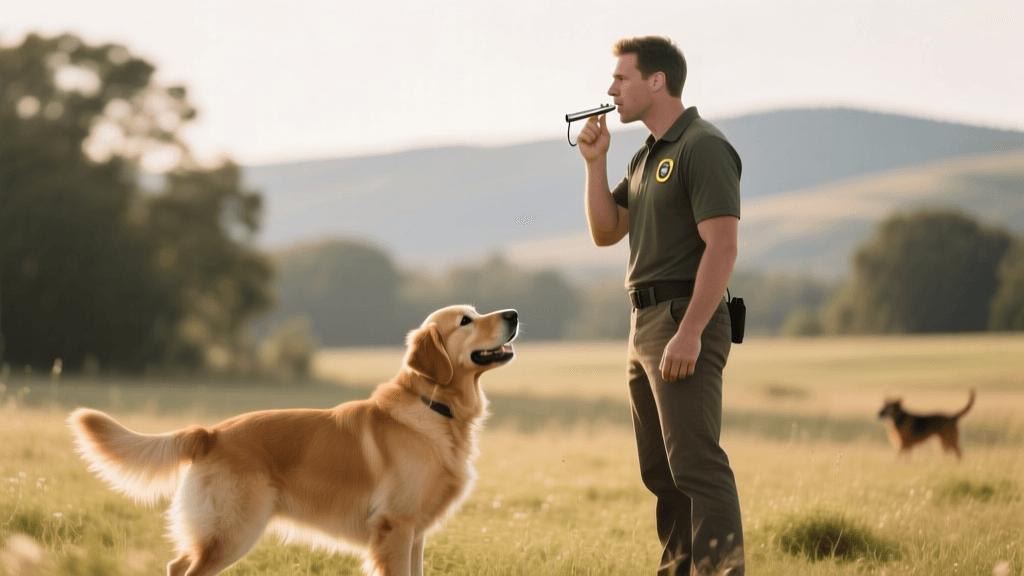
Why Every Dog Needs an Emergency Recall
Every year, thousands of dogs are injured or lost due to broken leashes, open gates, slipped collars, or sudden wildlife encounters. While a standard verbal recall ("Come!") is a foundational obedience skill, it often fails in high-stakes emergencies. When a dog is highly distracted, chasing prey, or terrified by loud noises like fireworks or thunderstorms, their brain enters a state of hyper-arousal. In this state, they can easily tune out the familiar sound of their owner's voice.
This is where an emergency whistle recall becomes a critical, lifesaving safety net. A dog whistle produces a sharp, consistent, and piercing acoustic frequency that cuts through environmental noise and canine distraction. Unlike the human voice, which changes pitch and tone when we are panicked or scared, a whistle sounds exactly the same every single time. According to the ASPCA, a reliable recall is one of the most important behaviors you can teach your dog, and having a specialized emergency cue ensures you have a backup plan when standard commands fail.
Choosing the Right Dog Whistle for Safety
Not all whistles are created equal. For emergency recall training, you need a whistle that is durable, consistent, and appropriate for your dog's hearing sensitivity and your typical environment. The American Kennel Club (AKC) emphasizes that consistency in the auditory cue is paramount for building a conditioned response. Below is a comparison of the top professional-grade whistles used by gun dog trainers and search-and-rescue handlers.
| Whistle Model | Frequency / Pitch | Effective Range | Best Use Case | Approx. Cost |
|---|---|---|---|---|
| Acme 211.5 | 4850 Hz (High) | 100 - 150 yards | Field work, hunting breeds, noisy environments | $12 - $15 |
| Acme 535 Silent | Adjustable (5400-12800 Hz) | Up to 1 mile | Herding breeds, vast open spaces, sensitive neighbors | $15 - $18 |
| SportDOG Roy Gonia | Variable (Pealess) | 50 - 100 yards | Everyday hiking, thick brush, budget-friendly option | $8 - $10 |
Recommendation: For most pet owners and hiking enthusiasts, the Acme 211.5 is the gold standard. It is pealess (meaning it won't freeze in winter or get clogged with saliva), lightweight, and produces a sharp, high-pitched trill that dogs find incredibly easy to locate directionally.
Essential Gear and High-Value Rewards
To train an emergency recall successfully, you need the right equipment to ensure safety while your dog is still learning. Never train off-leash in an unsecured area until the behavior is 100% proofed.
- Long Line: Invest in a 30-foot to 50-foot Biothane long line (e.g., Mendota Pets or High Tail Hustles, approx. $40-$60). Biothane is waterproof, durable, and won't tangle or burn your hands like nylon or cotton.
- Treat Pouch: Use a quick-access pouch like the Ruffwear Treat Trader ($25) or a magnetic-closure pouch. You must be able to deliver the reward within one second of your dog reaching you.
- High-Value Rewards: The emergency recall requires a "jackpot" reward. Dry kibble will not work. Use freeze-dried beef liver, Ziwi Peak air-dried venison (approx. $35 per bag), or boiled chicken breast. The treats should be pea-sized but incredibly pungent and valuable to your dog.
Step-by-Step Emergency Whistle Training Guide
Training an emergency recall relies on classical conditioning (Pavlovian response) followed by operant conditioning. The goal is to make the whistle sound predict a massive, unavoidable reward.
Phase 1: Charging the Whistle (Days 1-7)
Start indoors in a boring, low-distraction environment like your living room or kitchen.
- Stand just two feet away from your dog.
- Blow the whistle using a specific pattern. The standard emergency pattern is three short, sharp blasts (TWEET-TWEET-TWEET), each lasting about 0.5 seconds.
- The exact millisecond you stop blowing, mark the behavior (if you use a clicker) or say "Yes!" and immediately hand over a handful (3-5 pieces) of high-value treats.
- Repeat this 10 times per session, twice a day. Do not call the dog's name. Do not move backward. Just blow, mark, and feed.
Pro Tip: During Phase 1, you are "charging" the whistle. Your dog should start visibly perking up, wagging their tail, and looking at you the moment they hear the first blast. This indicates the Pavlovian association is forming.
Phase 2: Adding Distance and Mild Distractions (Weeks 2-3)
Once your dog reliably expects a treat upon hearing the whistle indoors, move to a fenced yard or use your 30-foot Biothane long line in an open field.
- Let your dog wander to the end of the 15-foot line while sniffing.
- Give the three-blast emergency whistle pattern.
- If your dog turns and runs to you, throw a "jackpot" party: 5 to 10 pieces of high-value treats, enthusiastic praise, and a quick game of tug.
- If your dog ignores the whistle, do not repeat the command. Instead, gently reel them in using the long line, then reward them for arriving (though the reward should be slightly less enthusiastic than if they came voluntarily).
- Gradually increase the distance to 30 feet, then 50 feet over the course of two weeks.
Phase 3: Proofing the Emergency Recall (Weeks 4+)
Now you must simulate real-world distractions. The Humane Society of the United States notes that dogs do not generalize commands well across different environments, meaning a dog that comes when called in the yard might ignore you at the beach.
- The "Drop the Toy" Drill: Toss a favorite toy. Just before the dog reaches it, blow the emergency whistle. If they abandon the toy and return to you, reward them with something even better than the toy (like fresh steak or a game of chase).
- The "Squirrel" Simulation: Have a friend drag a flirt pole or a scent lure across the field. Blow the whistle while the dog is tracking the lure. This mimics the high-prey-drive state of a real emergency.
- The Panic Test: Have a friend drop a metal baking sheet on the ground to create a sudden, loud crash. As the dog startles, blow the whistle. This teaches the dog that the whistle is their "safe zone" cue, even when they are frightened.
Common Mistakes to Avoid
Even experienced handlers can accidentally poison an emergency recall cue. Avoid these critical errors:
- Using the Whistle for Everyday Recalls: The emergency whistle must remain "sacred." If you use it to call your dog in from the yard just to put them in their crate or give them a bath, you will dilute its power. Use your verbal "Come" for daily life; save the whistle for true emergencies or once-a-month maintenance testing.
- Repeating the Command: If you blow TWEET-TWEET-TWEET and the dog ignores you, blowing it five more times teaches the dog that the whistle is just background noise. If they fail, reset the environment, decrease the distance, and try again.
- Punishing the Dog Upon Return: Never, under any circumstances, scold your dog when they finally return to you, even if it took them three minutes and you are frustrated. The dog must always believe that returning to you is the best decision they could possibly make.
- Inconsistent Whistle Pattern: Stick to your chosen pattern (e.g., three short blasts). If you sometimes use two long blasts and other times use four short blasts, the acoustic signature becomes muddy and confusing.
Maintaining the Lifesaving Cue
An emergency recall is not a "train it and forget it" behavior. It requires lifelong maintenance. Once your dog has mastered the whistle, test it once every two weeks in a safe, enclosed area. Always carry your high-value jackpot treats on your hikes. By treating the emergency whistle recall as an ongoing insurance policy rather than a one-time trick, you ensure that if a gate is ever left open or a leash snaps, your dog will instinctively turn away from danger and sprint back to your side.
marcus-aldridge
All our authors care for dogs every day — read more of their work on the authors page.