The First 90 Days: Training Progression Plan For New Dogs
Discover a structured 12-week training progression plan for your new dog. Learn essential milestones, recommended tools, and costs for a smooth transition.

Why You Need a Training Progression Plan
Bringing a new dog into your home is one of the most rewarding experiences you can have, but it can also be incredibly overwhelming. Many new owners make the mistake of trying to teach their new puppy or rescue dog everything at once, leading to frustration for both the human and the canine. This is where a structured training progression plan becomes essential. By breaking down the first 90 days into distinct, manageable phases, you set realistic expectations and build a foundation of trust and communication.
According to the Humane Society of the United States, reward-based training and structured routines are the most effective methods for fostering a well-behaved dog. A progression plan ensures you are not skipping foundational steps, which is a common cause of behavioral regression later in life. Below is a comprehensive, week-by-week roadmap designed to take your new dog from a state of decompression to reliable, real-world obedience.
Phase 1: Days 1-30 (Decompression and Foundation)
The first month is not about teaching complex tricks; it is about establishing safety, routine, and household rules. Whether you have brought home an eight-week-old puppy or a five-year-old rescue, the '3-3-3 Rule' applies: three days to decompress, three weeks to learn your routine, and three months to feel at home. During this phase, your primary goals are potty training, crate acclimation, and name recognition.
Potty Training and Management
Potty training requires meticulous management. Take your dog outside every two hours, immediately after waking up, after every meal, and after vigorous play. When they eliminate outdoors, reward them instantly with a high-value treat and verbal praise. Accidents will happen indoors. When they do, clean the area thoroughly with an enzymatic cleaner like Nature's Miracle Advanced Stain & Odor Eliminator (approx. $12) to completely break down the uric acid crystals and prevent the dog from returning to the same spot.
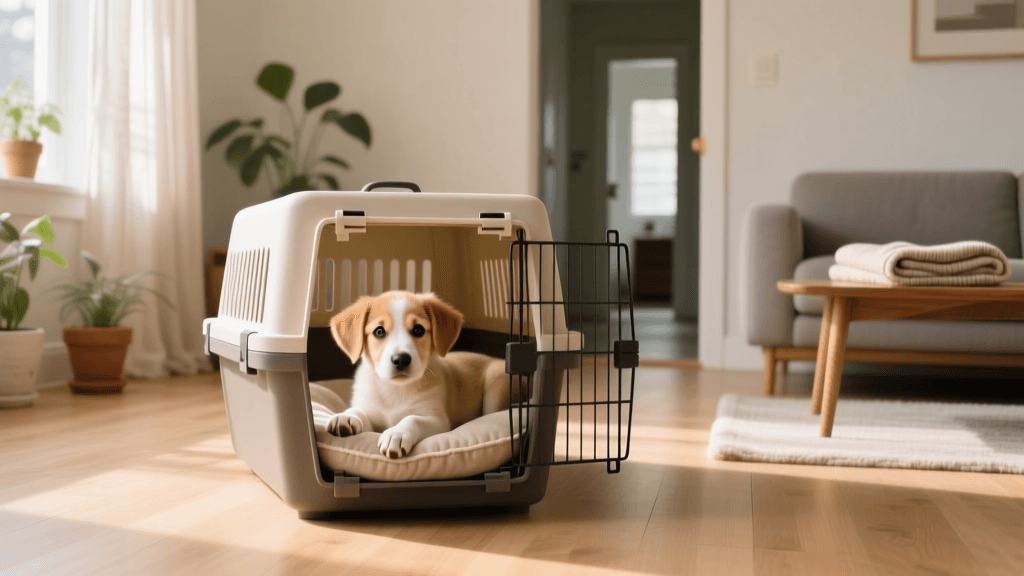
Crate Acclimation
The crate should be a sanctuary, not a punishment zone. To build a positive association, use a Kong Classic (approx. $15) stuffed with plain canned pumpkin and low-sodium chicken broth, then freeze it. Give this to your dog only when they enter the crate. This keeps them occupied and builds a positive emotional response to the confined space. Keep initial crating sessions short (15-30 minutes) while you are home, gradually increasing the duration as the dog settles.
Name Recognition and Engagement
Say your dog's name in a cheerful tone. The moment they make eye contact, mark the behavior with a clicker or a verbal 'Yes!' and give a treat. This simple exercise teaches the dog that paying attention to you is the most rewarding thing they can do, which is the bedrock of all future training.
Phase 2: Days 31-60 (Core Obedience and Leash Skills)
Once your dog has settled into your home's rhythm and understands the basic potty and crate routines, you can transition into active obedience training. Keep training sessions short—no more than 5 to 10 minutes at a time—to prevent mental fatigue and frustration.
Luring Core Behaviors
Focus on the 'Big Four' foundational cues: Sit, Down, Touch (hand target), and Come. Use a soft, high-value treat like Zuke's Mini Naturals (approx. $8 per bag) to lure your dog into position. For example, to teach 'Down', hold a treat to your dog's nose and slowly lower it to the floor between their front paws, then drag it slightly outward. The moment their elbows touch the ground, mark and reward. The ASPCA emphasizes that early, positive reinforcement of these basic cues builds confidence and strengthens the human-animal bond.
Loose-Leash Walking Mechanics
Leash pulling is one of the most common issues new owners face. To combat this, invest in a front-clip harness like the Ruffwear Front Range Harness (approx. $40). The front clip gently redirects the dog's momentum back toward you when they pull. Practice the 'be a tree' method: the moment the leash goes tight, stop walking entirely. Only resume walking when the leash is slack and the dog looks back at you. Reward heavily for walking by your side.
The 'Touch' Command
Teaching your dog to touch their nose to your palm on command is an invaluable tool. It acts as an informal recall, helps nervous dogs focus on you in scary environments, and is a great alternative to 'Sit' for dogs with joint issues. Present your palm, mark when they sniff or bump it, and reward from your other hand.
Phase 3: Days 61-90 (Proofing and Impulse Control)
A dog that obeys in your quiet living room is very different from a dog that obeys at a busy park. Phase three is all about 'proofing'—testing and reinforcing behaviors in the presence of the '3 Ds': Duration, Distance, and Distraction.
Impulse Control: 'Leave It' and 'Wait'
Impulse control keeps your dog safe. Start 'Leave It' by placing a low-value treat on the floor and covering it with your hand. Wait for the dog to stop pawing and sniffing, and the second they back away, mark and reward with a different, higher-value treat from your pocket. Once mastered, practice 'Wait' at doorways and before meals. This teaches the dog that calm behavior, not pushy behavior, gets them what they want.
Recall on a Long Line
Never trust a new dog off-leash in an unenclosed area until their recall is bulletproof. Purchase a 30-foot biothane long line (approx. $25). Biothane is waterproof, doesn't tangle easily, and won't burn your hands. Practice calling your dog in open, low-distraction fields. If they ignore you, gently reel them in without repeating the command, then reset and try again at a shorter distance. Never punish a dog when they finally come to you, even if it took them a long time; coming to you must always result in a reward.
90-Day Training Progression and Budget Breakdown
To help you prepare financially and logistically, here is a structured breakdown of the milestones, required gear, and estimated costs for your first 90 days.
| Phase | Timeframe | Core Milestones | Essential Gear | Estimated Cost |
|---|---|---|---|---|
| Phase 1 | Days 1-30 | Potty Training, Crate Acclimation, Name Recognition | Kong Classic, Enzymatic Cleaner, Clicker | $25 - $35 |
| Phase 2 | Days 31-60 | Sit, Down, Touch, Loose-Leash Walking | Front-Clip Harness, Treat Pouch, Training Treats | $55 - $70 |
| Phase 3 | Days 61-90 | Proofing, Recall, Impulse Control (Leave It) | 30ft Biothane Long Line, High-Value Rewards | $30 - $45 |
Note: Costs are estimates based on standard retail pricing and may vary based on brand selection and dog size. This budget does not include veterinary care, food, or professional training classes.
When to Bring in a Professional
While this progression plan covers the essentials of foundational obedience, some situations require professional intervention. If your new dog displays resource guarding, severe leash reactivity, or fear-based aggression, pause the progression plan and consult a certified professional dog trainer (CPDT) or a veterinary behaviorist. Group classes, which typically cost between $150 and $250 for a six-week session, are excellent for Phase 2 socialization and basic obedience, provided your dog is comfortable around other dogs.
Setting Up for Long-Term Success
The end of the 90-day mark is not the end of training; it is simply the end of the foundation. Training is a lifelong dialogue between you and your dog. By adhering to this structured progression plan, you prevent the common pitfalls of inconsistency and unrealistic expectations. Remember to celebrate the small victories, maintain patience during setbacks, and always end your training sessions on a positive note. With time, consistency, and the right roadmap, your new dog will transform into a confident, well-mannered companion ready to take on the world by your side.
tom-renshaw
All our authors care for dogs every day — read more of their work on the authors page.