Your New Dog's First 30 Days: A Training Progression Plan
Discover a step-by-step 30-day training progression plan for your new dog. Learn daily routines, essential gear, and milestone goals for success.

The Importance of a Structured Training Progression
Bringing a new dog into your home is one of life’s most rewarding experiences, but it can quickly become overwhelming without a clear roadmap. Whether you are bringing home an eight-week-old puppy or a five-year-old rescue, the first month sets the foundation for your lifelong relationship. A structured training progression plan ensures that you are not just reacting to bad behaviors, but proactively building cognitive skills, impulse control, and trust.
According to the American Kennel Club (AKC), short, positive, and consistent training sessions are the key to canine learning. Dogs thrive on predictability. By breaking down the first 30 days into weekly phases, you prevent cognitive overload for your dog and burnout for yourself. This guide provides a comprehensive, actionable progression plan tailored for the critical first month of dog ownership.
Essential Gear and Setup Costs
Before initiating your progression plan, you need the right tools. Avoid corrective collars or retractable leashes, which can hinder positive reinforcement and cause physical injury. Budget approximately $85 to $120 for these foundational items:
- Ruffwear Front Range Harness ($40): A dual-clip harness that offers a front chest clip to gently discourage pulling without restricting shoulder movement.
- 6-Foot Biothane Leash ($25): Biothane is waterproof, odor-proof, and easy to clean. The 6-foot length provides the perfect balance of freedom and control, unlike retractable leashes which teach dogs to pull against tension.
- Kong Classic Red Toy ($15): An essential enrichment tool for food-motivated dogs. Stuff it with wet food and freeze it to create a 20-minute decompression activity.
- PetSafe Box Clicker ($5): A consistent acoustic marker that tells your dog exactly which behavior earned the reward, bridging the gap between action and treat delivery.
Week 1: Decompression, Routine, and Bonding
The first week is not about teaching complex tricks; it is about establishing safety and routine. Rescue organizations often refer to the "3-3-3 Rule" (3 days to decompress, 3 weeks to learn your routine, 3 months to feel at home). During Week 1, your primary goals are potty training, name recognition, and crate/pen acclimation.
Actionable Steps for Week 1:
- Potty Protocol: Take your dog outside every 2 hours, immediately after meals, after play sessions, and right before bed. Use a consistent verbal cue like "Go potty" and reward heavily with high-value treats (like boiled chicken) immediately upon completion.
- Name Recognition: Say your dog’s name once. The moment they make eye contact, click your clicker (or say "Yes!") and deliver a treat. Repeat this 10 times per session, three times a day.
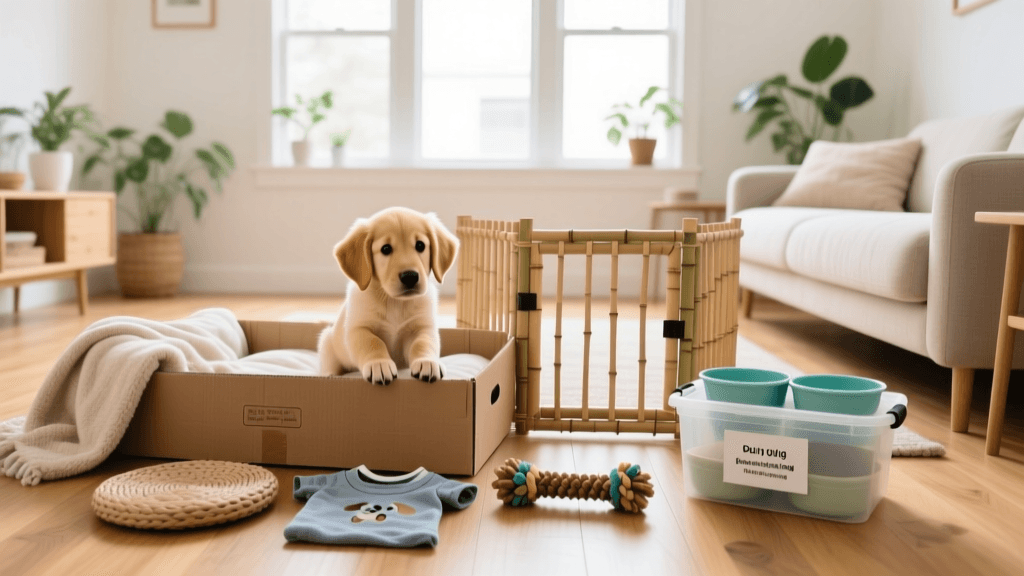
- Decompression Space: Set up a 4x4 foot exercise pen in a quiet corner of your living room. This prevents the dog from making poor choices (like chewing baseboards) while allowing them to observe household activity without being overwhelmed.
Week 2: Foundation Commands and Luring
Once your dog understands that their name yields positive outcomes and they are settling into a potty routine, you can introduce basic foundation behaviors. The Humane Society of the United States strongly advocates for positive reinforcement, noting that reward-based training builds confidence and reduces fear-based aggression.
Actionable Steps for Week 2:
- Luring the "Sit": Hold a pea-sized treat at your dog's nose. Slowly move your hand up and back over their head. As their nose follows the treat, their bottom will naturally lower. The millisecond they sit, mark and reward.
- Luring the "Down": From a sitting position, lower the treat to their nose, then drag it straight down to the floor between their front paws, then slowly pull it toward you along the ground (creating an "L" shape with your hand).
- Hand Targeting ("Touch"): Present your open palm a few inches from your dog's nose. When they sniff or bump it, mark and reward. This is a foundational behavior for recall and moving your dog off furniture without physically handling them.
Pro Tip: Keep training sessions to 5 to 10 minutes maximum. Two 5-minute sessions per day are vastly superior to one grueling 30-minute session, which can lead to frustration and disengagement.
Week 3: Impulse Control and Environmental Socialization
Week 3 shifts the focus from basic obedience to impulse control. A dog that can control its impulses is a safe dog. This is also the time to introduce structured environmental socialization, which is about exposing your dog to new sights, sounds, and surfaces without forcing interactions.
Actionable Steps for Week 3:
- "Leave It" Progression: Place a low-value treat on the floor and cover it with your shoe. When your dog stops sniffing and pulling at your shoe, mark and reward with a different, higher-value treat from your hand. Gradually progress to an uncovered treat, then a dropped treat.
- "Drop It" Protocol: Play with your dog using a low-value toy. Offer a high-value treat right at their nose. When they drop the toy to eat the treat, say "Drop It." Pick up the toy, let them eat the treat, then immediately give the toy back. This teaches them that giving up an item results in a reward and the return of the game.
- Surface Socialization: Take your dog on a "sniffari." Walk them over gravel, grass, metal grates, and wet leaves. Reward them for confidently navigating new textures.
Week 4: Proofing and the Three D's
In the final week of your initial progression plan, you will "proof" the behaviors learned in Weeks 2 and 3. Proofing means teaching the dog that commands apply in various environments, not just in your quiet living room. We do this by manipulating the Three D's: Distance, Duration, and Distraction.
Actionable Steps for Week 4:
- Duration: Ask for a "Sit" or "Down." Delay the click and reward by 1 second, then 2 seconds, then 5 seconds. Build the time they must hold the position before the release cue ("Free!").
- Distance: Ask for a "Sit." Take one half-step back. If they hold it, mark and reward. Gradually increase to one full step, then two steps away.
- Distraction: Practice the "Touch" command in the front yard, then on the sidewalk, then near a quiet street. Introduce mild environmental distractions while maintaining a high rate of reinforcement.
30-Day Training Progression Checklist
Use the table below to track your daily and weekly milestones. Remember that progression is rarely linear; if your dog struggles, drop back to the previous week's criteria and build back up.
| Timeframe | Primary Focus | Key Behaviors & Commands | Daily Time Commitment |
|---|---|---|---|
| Week 1 | Decompression & Routine | Potty training, Name recognition, Crate acclimation | 15 mins (broken into 3x 5-min sessions) |
| Week 2 | Foundation Obedience | Sit, Down, Hand Targeting (Touch) | 15 mins (broken into 3x 5-min sessions) |
| Week 3 | Impulse Control | Leave It, Drop It, Environmental Sniffaris | 20 mins (including outdoor exposure) |
| Week 4 | Proofing (The 3 D's) | Adding Distance, Duration, and Distraction to Week 2 & 3 skills | 20 mins (varying locations) |
Troubleshooting Common Setbacks
Even with a meticulous progression plan, you will encounter setbacks. Potty regression is common around weeks 3 and 4 as the initial "honeymoon phase" ends and the dog tests boundaries. If accidents occur indoors, silently interrupt the behavior, take the dog outside immediately, and reward them for finishing outdoors. Never punish a dog for a potty accident after the fact; they cannot connect the punishment to the action.
Leash biting is another common hurdle. If your dog bites the leash during walks, stop moving immediately. Become a "tree." The moment they release the leash, mark, reward, and resume walking. Alternatively, carry a second toy to redirect their mouth to an appropriate item while walking.
Conclusion: Setting the Stage for Lifelong Success
The first 30 days of bringing a new dog home are demanding, but following a structured training progression plan transforms chaos into communication. By investing in the right gear, prioritizing decompression, and systematically building impulse control, you are not just teaching your dog tricks—you are teaching them how to navigate the human world safely and happily. Stick to the plan, celebrate the small victories, and remember that every positive interaction is a deposit into your lifelong bond.
aaron-whyte
All our authors care for dogs every day — read more of their work on the authors page.