DIY Puppy-Proofing and Homemade First-Day Dog Essentials
Discover budget-friendly DIY puppy-proofing tips and homemade first-day essentials to prepare your home for a new dog safely, comfortably, and creatively.
Why Choose DIY and Homemade Dog Solutions?
Bringing a new dog or puppy into your home is a milestone filled with joy, tail wags, and a fair share of chaos. As a new pet parent, the pressure to buy every gadget, gate, and toy on the market can quickly drain your wallet. However, preparing your home for a new canine companion does not require a massive financial investment. By leaning into DIY and homemade solutions, you can create a safe, engaging, and comfortable environment for your new dog while saving hundreds of dollars.
In this comprehensive guide, we will explore actionable, room-by-room puppy-proofing hacks using everyday household items, alongside step-by-step instructions for crafting essential first-day gear. Whether you are adopting a curious puppy or a senior rescue, these homemade solutions will help you transition smoothly.
Room-by-Room DIY Puppy-Proofing Guide
Puppy-proofing is essentially toddler-proofing, but with the added challenge of sharp teeth and an incredible sense of smell. Before your dog's paws touch your floors, secure your space using these budget-friendly hacks.
The Kitchen: Securing Hazards on a Budget
The kitchen is the most dangerous room for a new dog. Cleaning supplies, human foods, and trash pose severe risks. Instead of purchasing expensive magnetic cabinet locks, use the DIY Tension Rod Hack.
- Materials: 1-inch wooden or metal tension rods (cost: $2 to $4 each).
- Application: Place the tension rod horizontally inside the cabinet, wedged tightly between the two doors just below the handles. This prevents a puppy from pulling the doors open with their paws or nose.
- Cost Savings: A 10-pack of commercial child locks costs around $25, whereas tension rods cost a fraction of the price and leave no sticky residue.
For the trash can, use a heavy-duty bungee cord to secure the lid to the handle or base of the can. If you have a pull-out trash drawer, install a simple hook-and-eye latch on the top edge.
Living Room: Cord Management and Plant Safety
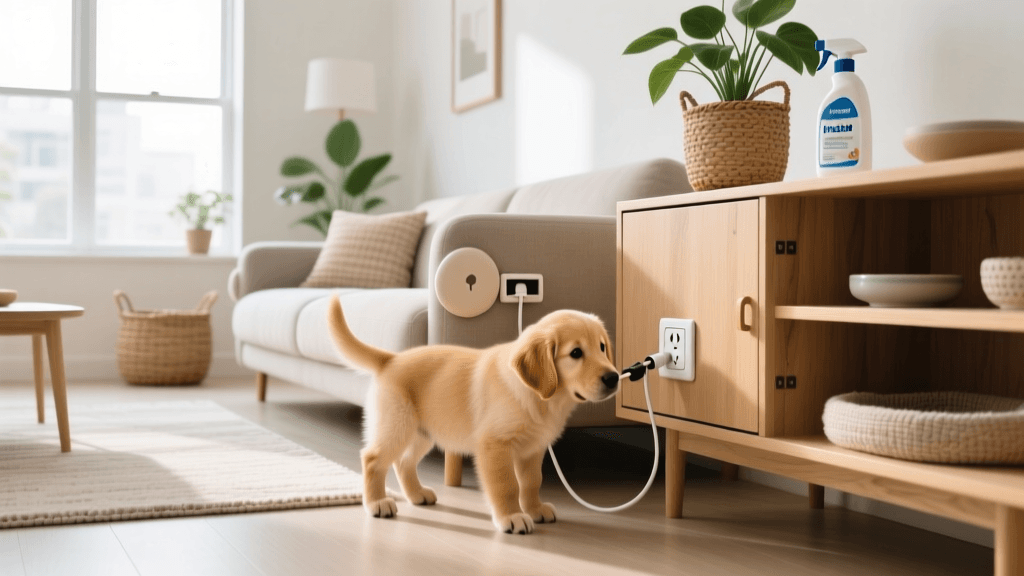
Electrical cords are a major chewing hazard. While commercial cord concealers work, you can make your own using split loom tubing or even upcycled cardboard and heavy-duty tape for temporary setups. Better yet, use empty paper towel rolls to bundle and hide smaller cords behind furniture.
Additionally, you must audit your houseplants. Many common indoor plants, such as sago palms and lilies, are highly toxic. Always cross-reference your greenery with the American Kennel Club's list of poisonous household plants and move toxic varieties to high, unreachable shelves or hang them from the ceiling using DIY macrame hangers.
Homemade First-Day Essentials for Your New Dog
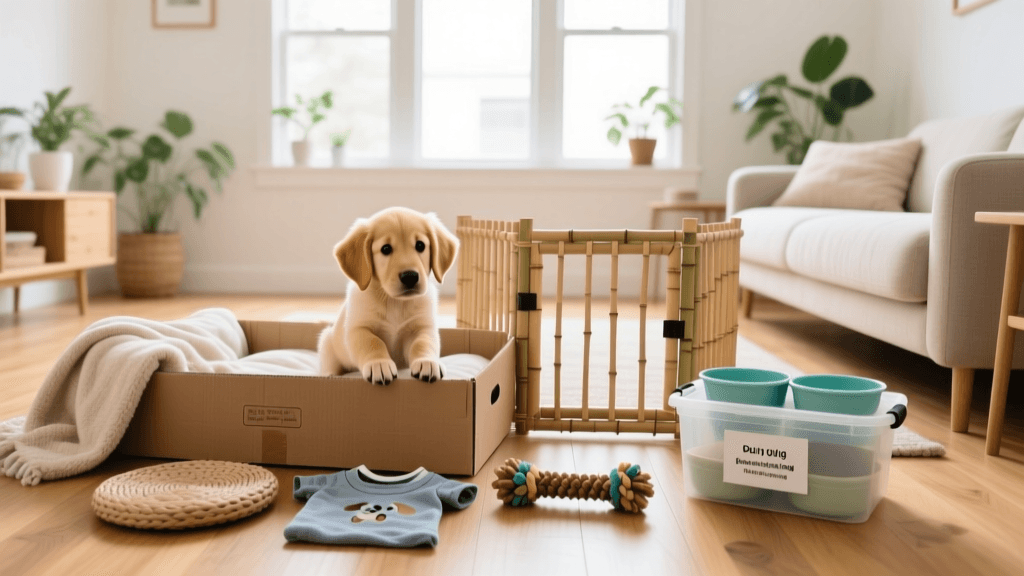
The first 24 hours in a new home are overwhelming for a dog. Having familiar-smelling, engaging, and comforting items ready can drastically reduce separation anxiety and destructive behaviors. Here are three essential DIY projects you can complete this weekend.
1. The Ultimate DIY Fleece Snuffle Mat
A snuffle mat mimics the natural foraging instinct, providing mental stimulation that tires a dog out faster than a physical walk. This is crucial for the first few days when outdoor exploration might be limited.
Materials Needed:
- 1 rubber sink mat with holes (approx. 12x18 inches)
- 2 yards of anti-pill fleece fabric (2 contrasting colors)
- Scissors
Instructions:
- Cut the fleece into strips measuring exactly 1 inch wide and 10 inches long. You will need roughly 150 to 200 strips.
- Take one strip and push one end through a hole in the sink mat, then tie it in a loose double knot on the underside.
- Repeat this process, packing the strips closely together so the rubber base is completely hidden.
- Once finished, scatter your dog's daily kibble ration deep into the fleece strips.
Pro Tip: Wash the mat in a mesh laundry bag on a gentle, cold cycle to keep it clean and smelling fresh.
2. DIY Calming Scent Pillow
Dogs rely heavily on their olfactory senses. A calming pillow bearing your scent can help a new rescue or puppy feel secure in their crate or designated safe zone.
Materials Needed:
- An old, unwashed cotton t-shirt you have worn recently
- Safe stuffing (shredded old towels or dog-safe polyester fiberfill)
- Needle and thread (or a sewing machine)
Instructions:
- Cut the t-shirt into a large square or rectangle, ensuring the fabric retains your natural body scent. Avoid using fabric softeners or strong perfumes.
- Sew three of the edges together using a tight, reinforced stitch to prevent the puppy from tearing it open and ingesting the stuffing.
- Stuff the pillow firmly with the shredded towels. A firmer pillow is harder for teething puppies to shred.
- Sew the final edge shut. Place this in the dog's crate or bed on their first night.
Safety Note: Never add essential oils to the pillow without consulting a veterinarian. Many oils, including tea tree and eucalyptus, are highly toxic to dogs. Always refer to the ASPCA Animal Poison Control Center for guidance on household toxins and essential oils.
3. Homemade Natural Enzymatic Stain Remover
Accidents will happen on day one. Commercial enzymatic cleaners are expensive, but you can mix a highly effective, pet-safe cleaner at home for pennies.
The Recipe:
- 1 cup distilled white vinegar
- 1 cup warm water
- 2 teaspoons baking soda
- 1 teaspoon unscented, dog-safe liquid castile soap
Application: Mix the water and castile soap first, then slowly add the baking soda (it will fizz). Finally, add the vinegar. Spray generously on urine stains, let it sit for 10 minutes to break down the uric acid crystals, and blot dry with a clean microfiber cloth. Never use ammonia-based cleaners, as ammonia smells like urine to dogs and will encourage them to mark the same spot again.
Cost Comparison: Store-Bought vs. DIY Dog Essentials
To illustrate the financial benefits of homemade solutions, here is a breakdown comparing the costs of traditional pet store items versus the DIY alternatives outlined above.
| Item | Average Store-Bought Cost | Estimated DIY Cost | Time to Make |
|---|---|---|---|
| Fleece Snuffle Mat | $30.00 - $45.00 | $12.00 (Fleece & Sink Mat) | 45 - 60 minutes |
| Cabinet Locks (Set of 10) | $20.00 - $35.00 | $8.00 (Tension Rods) | 5 minutes |
| Calming Scent Bed Insert | $15.00 - $25.00 | $0.00 (Upcycled Clothing) | 15 minutes |
| Enzymatic Stain Remover (32oz) | $12.00 - $18.00 | $2.50 (Pantry Ingredients) | 3 minutes |
| Total Estimated Savings | $77.00 - $123.00 | $22.50 | ~1.5 Hours |
Setting Up a DIY Kibble-Dispensing Puzzle Toy
Mental enrichment is just as critical as physical safety. On your dog's first day, they may be too stressed to eat from a standard bowl. A DIY puzzle toy can turn mealtime into an engaging game that builds confidence.
The Cardboard Tube Feeder:
- Save empty toilet paper and paper towel cardboard tubes.
- Fold one end of the tube inward to create a sealed bottom.
- Fill the tube halfway with your dog's kibble or training treats.
- Fold the top end inward to seal it.
- Use scissors to cut two or three small, treat-sized holes in the sides of the tube.
Place these tubes inside a shallow cardboard box. Your dog will have to nudge, paw, and sniff the tubes to release the food. This mimics the scavenging behavior of their wild ancestors and provides a soothing, repetitive activity that lowers cortisol levels during the stressful transition to a new home. Always supervise your dog with cardboard toys to ensure they do not ingest large pieces of paper.
Final Thoughts on Preparing Your Home
Getting a dog is a profound commitment that goes far beyond purchasing a leash and a bag of kibble. By taking a DIY approach to puppy-proofing and creating homemade first-day essentials, you are not just saving money—you are actively engaging in the care and understanding of your new pet's needs.
The time you spend cutting fleece for a snuffle mat or securing cabinets with tension rods is an investment in your dog's safety and mental well-being. As you welcome your new companion across the threshold, you can rest easy knowing your home is a secure, enriching, and loving environment, built by your own two hands. For further reading on preparing your lifestyle and schedule for a new pet, consult the Humane Society's comprehensive guide on dog adoption readiness.
robin-maitland
All our authors care for dogs every day — read more of their work on the authors page.