First 48 Hours With A New Dog: 7 Mistakes You Must Avoid
Bringing a new dog home? Avoid these 7 critical first 48-hour mistakes to ensure a smooth transition, reduce stress, and build a lifelong bond.

The Honeymoon Phase is a Myth: Welcome to Decompression
Bringing a new dog home is an exhilarating milestone. You have the bed ready, the toys purchased, and your heart full of anticipation. However, the reality of a dog's first 48 hours in a new environment is rarely a picture-perfect movie montage. Instead, it is a critical window of decompression. According to animal behaviorists, a dog's cortisol (stress hormone) levels can spike dramatically during transit and initial environmental shifts.
While many guides focus on what you should do, understanding what NOT to do is equally vital. A single misstep in the first two days can trigger anxiety, regression in potty training, and behavioral issues that take months to correct. Below are the 7 most critical 'What NOT to Do' warnings for your dog's first 48 hours, backed by actionable alternatives and expert insights.
7 Critical 'What NOT to Do' Warnings for the First 48 Hours
1. DO NOT Throw a 'Welcome Home' Party
The Mistake: Inviting friends, family, and neighbors over immediately to meet the new dog.
Why It Fails: Dogs rely heavily on routine and familiar scents. A new home already presents a massive sensory overload. Adding loud voices, unpredictable children, and multiple strangers handling the dog will cause severe overstimulation. This can lead to fear-based reactivity or a dog that hides under furniture for the first week.
What To Do Instead: Enforce a strict 'No Visitors' rule for at least the first 7 to 14 days. Allow your dog to map their new territory, learn your scent, and understand the household rhythm in peace. If you must introduce family, do it outdoors in a neutral, quiet space one person at a time.
2. DO NOT Grant Full House Access Immediately
The Mistake: Leaving all interior doors open and allowing the dog to roam freely to 'explore.'
Why It Fails: Unsupervised freedom is the leading cause of early potty training failures and destructive chewing. A dog does not inherently know that a Persian rug is not a grassy lawn, or that baseboards are not chew toys. Furthermore, a large, open space can make an anxious dog feel entirely unprotected.
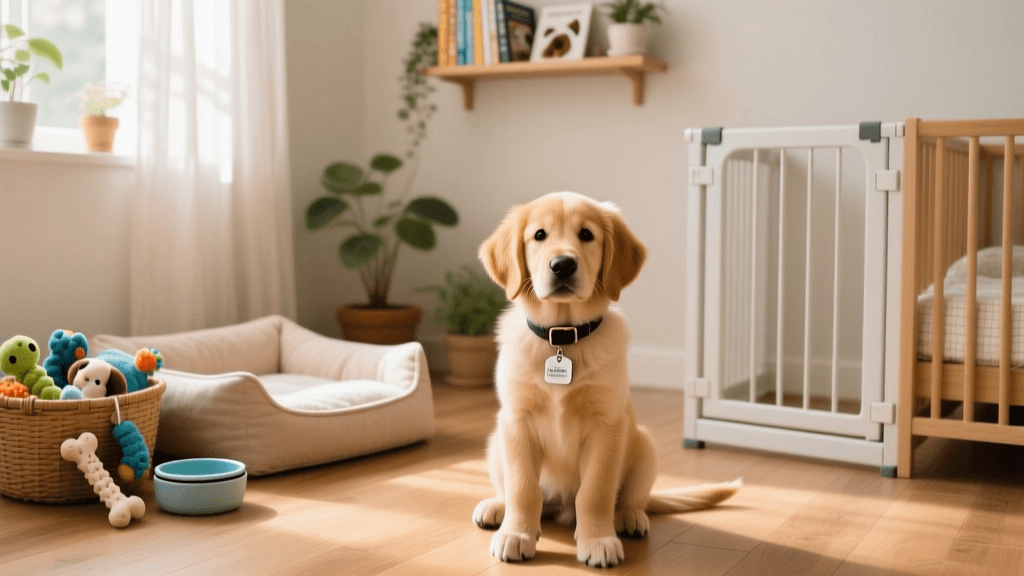
What To Do Instead: Implement the 'Umbilical Cord' method or use physical barriers. Invest in a hardware-mounted pet gate (avoid pressure-mounted gates, which large dogs can easily push over). Look for gates that are at least 30 to 36 inches tall with metal spindles, such as the Carlson Pet Products Design Studio Gate (approx. $60-$85). Restrict the dog to a single, easily cleanable room or a defined pen area when you cannot give them 100% of your active supervision.
3. DO NOT Switch Their Diet Abruptly
The Mistake: Tossing out the shelter or breeder's food and immediately filling their bowl with the premium kibble you bought.
Why It Fails: Sudden dietary changes disrupt the canine gut microbiome, almost guaranteeing gastrointestinal upset, diarrhea, and vomiting within the first 48 hours. This not only causes your dog physical discomfort but also creates immediate potty training setbacks.
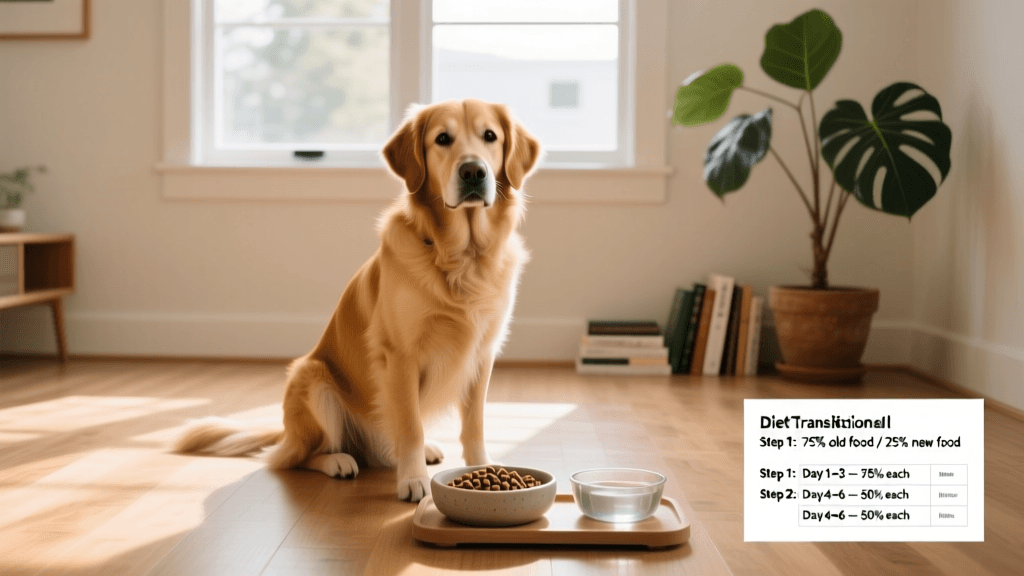
What To Do Instead: Ask the shelter or breeder for a bag of the dog's current food. If you plan to switch brands, follow a strict 7-day transition schedule:
- Days 1-2: 75% old food, 25% new food.
- Days 3-4: 50% old food, 50% new food.
- Days 5-6: 25% old food, 75% new food.
- Day 7: 100% new food.
Pro-Tip: Keep a probiotic like Purina Pro Plan FortiFlora ($15 for a 30-day supply) on hand to sprinkle over meals to support gut health during the transition.
4. DO NOT Force Crate Affection
The Mistake: Physically placing the dog into the crate, shutting the door, and expecting them to self-soothe while you go to work or sleep.
Why It Fails: As noted by the American Kennel Club, a crate must be viewed as a safe den, not a prison. Forcing a stressed dog into a confined space on day one will trigger panic, leading to whining, paw-biting, and a lifelong phobia of the crate.
What To Do Instead: Make the crate the source of all good things. Feed their meals inside the crate with the door open. Use high-value treats like frozen peanut butter stuffed into a KONG Classic (Red Rubber, approx. $15-$20) to build positive associations. Only close the door for short intervals (5-10 minutes) while you are sitting right next to them, gradually increasing the time and distance over the first two weeks.
5. DO NOT Introduce Resident Pets on Day One
The Mistake: Bringing the new dog through the front door and immediately letting your resident dog or cat greet them face-to-face.
Why It Fails: Your home is your resident pet's established territory. An immediate face-to-face introduction can trigger territorial aggression, resource guarding, and severe stress for both animals.
What To Do Instead: Utilize the 'Scent Swapping' technique. Before the new dog arrives, rub a clean towel on your resident pet and place it in the new dog's travel carrier. When the new dog arrives, keep them separated by a closed door or a baby gate. Swap their bedding and allow them to sniff each other's scent under the door for the first 24 to 48 hours. The Humane Society strongly recommends neutral territory introductions (like a quiet park) on a leash before allowing them to share indoor space.
6. DO NOT Bathe Them Immediately
The Mistake: Assuming the dog needs a bath to wash off the 'shelter smell' or travel dirt.
Why It Fails: Bathing is highly stimulating and stressful for many dogs. The noise of the water, the slippery tub, and the handling can push an already overwhelmed dog past their stress threshold. Additionally, frequent bathing can strip natural oils from their coat, leading to dry skin.
What To Do Instead: Use pet-safe grooming wipes (like Earthbath Grooming Wipes, approx. $12) to gently clean their paws and coat. Wait at least one to two weeks before giving them a full bath, allowing them to build trust with you before introducing the vulnerability of the bathtub.
7. DO NOT Overstimulate with Long Walks
The Mistake: Taking the dog on a 3-mile neighborhood tour to 'tire them out' on their first day.
Why It Fails: While physical exercise is important, forced, long-distance leash walking in a new environment is mentally exhausting and can trigger leash reactivity. The dog is busy scanning for threats, not relaxing.
What To Do Instead: Opt for 'Decompression Walks' or 'Sniffaris.' Attach a 15-foot long line (biothane or nylon, approx. $25-$35) to a well-fitted Y-harness. Take them to a quiet, low-traffic grassy area and let them sniff. Sniffing lowers a dog's heart rate and provides immense mental enrichment. Ten minutes of intense sniffing is often more tiring than a 30-minute brisk walk.
The 3-3-3 Decompression Timeline: What to Expect vs. What NOT to Do
Understanding the 3-3-3 rule is essential for managing your expectations. The ASPCA and various rescue organizations emphasize that dogs need time to process their new reality. Below is a structured guide to help you navigate the timeline without making critical errors.
| Timeline | What the Dog is Experiencing | What NOT to Do | Actionable Strategy |
|---|---|---|---|
| First 3 Days | Overwhelmed, scared, unsure of surroundings. May not eat or drink normally. May sleep excessively or pace. | Do NOT force interaction, invite guests, or punish accidents. | Establish a strict potty routine (every 2 hours). Provide a quiet, covered crate space. Use calming aids like an Adaptil diffuser ($30). |
| First 3 Weeks | Settling in, learning routines. True personality starts to show. Testing boundaries and rules. | Do NOT assume the dog is 'fully trained' or drop the house rules. | Begin basic obedience training (sit, stay, recall) using positive reinforcement. Maintain consistent feeding and walking schedules. |
| First 3 Months | Building trust and a secure attachment. Realizing this is their forever home. | Do NOT rush into high-stress environments like crowded dog parks. | Slowly introduce them to new environments, people, and vet visits. Focus on bonding exercises and advanced socialization. |
Final Thoughts: Patience is Your Greatest Tool
The first 48 hours with a new dog are not about establishing dominance or forcing a bond; they are about providing safety, predictability, and calm leadership. By avoiding these seven common mistakes, you are actively preventing behavioral issues before they take root. Remember that every dog is an individual—some may decompress in a day, while others may take weeks. Equip your home with the right hardware-mounted gates, stick to the dietary transition schedule, and let your dog dictate the pace of your new relationship. The patience you exercise today will lay the unbreakable foundation for a lifetime of loyalty and love.
aaron-whyte
All our authors care for dogs every day — read more of their work on the authors page.