Holistic Scent Work Training For Reactive Dogs In 2026
Discover how natural scent-work and foraging techniques can calm reactive dogs in 2026. Learn holistic training steps, gear, and expert tips.
The Paradigm Shift: From Compliance to Decompression
In 2026, the dog training community has fully embraced a holistic philosophy, moving away from rigid, compliance-based obedience models toward nervous-system regulation and natural behavioral conditioning. For reactive dogs—those who exhibit lunging, barking, or extreme fear responses to environmental triggers—traditional sit-stay commands often fail because they do not address the underlying sympathetic nervous system arousal. Instead of forcing a reactive dog to suppress their instincts, holistic trainers are now utilizing natural scent work and foraging to engage the parasympathetic nervous system, effectively 'down-regulating' the dog's stress response. This approach honors the dog's innate biology, using their most powerful sense to create a state of calm, focused flow.
The Neuroscience of Sniffing: A Holistic Regulator
To understand why natural scent work is so effective for reactivity, we must look at canine neurobiology. A dog's olfactory bulb is proportionally 40 times larger than a human's, and the act of sniffing requires intense, localized concentration. When a dog engages in deep, sustained sniffing, their heart rate actually decreases. This is not a myth; it is a measurable physiological response. According to behavioral research highlighted by the Tufts Cummings School of Veterinary Medicine, engaging a dog's primary senses in a low-stress environment helps build neural pathways associated with calmness and confidence.
Furthermore, the Fear Free Pets initiative emphasizes that allowing dogs to engage in species-specific, natural behaviors—like foraging and scent tracking—is a cornerstone of low-stress handling and behavioral rehabilitation. When a reactive dog is allowed to track a natural scent, their brain shifts from the amygdala (the fear and reactivity center) to the prefrontal cortex (the problem-solving center). This neurological shift makes them less likely to react explosively to a distant dog or a loud noise, as their brain is fully occupied in the rewarding, calming task of scent processing.
Why Synthetic Scents Fall Short of Natural Alternatives
While competitive scent work often relies on synthetic hydrosols or heavily processed essential oils, the holistic approach in 2026 favors raw, natural elements. Synthetic scents can sometimes be overwhelming or irritating to a highly sensitive, reactive dog's nasal passages. Instead, holistic behaviorists recommend using natural earth elements, organic herbs, and whole-food foraging matrices. This not only provides a gentler olfactory experience but also connects the dog to their ancestral roots as natural scavengers and hunters.
The 2026 Natural Scent Imprinting Protocol
Below is a step-by-step, actionable protocol for imprinting natural scents and using them to decompress a reactive dog. This method requires patience, a quiet environment, and high-value, species-appropriate rewards.
Phase 1: Natural Scent Imprinting (Weeks 1-2)
Begin in a low-distraction indoor environment. Instead of a plastic scent box, use a natural material like a raw, untreated birch wood block or a small organic cotton pouch filled with dried organic anise seeds and chamomile flowers.
- Step 1: Present the natural scent item to your dog. The moment they sniff it, mark the behavior with a calm, low-pitched 'yes' and reward with a high-value, single-ingredient treat (e.g., freeze-dried beef liver).
- Step 2: Repeat this 10 times per session, keeping sessions under 3 minutes to prevent olfactory fatigue.
- Step 3: Once the dog actively seeks out the birch or anise pouch, begin hiding it in plain sight, then under a natural fiber blanket, encouraging them to use their nose to locate it.
Phase 2: The Outdoor Foraging Matrix (Weeks 3-4)
Move the training to a secure, familiar outdoor space. The goal is to transition the dog from finding a single scent item to engaging in 'scatter foraging,' which mimics natural grazing and hunting behaviors.
- Step 1: Take a handful of your dog's daily kibble or air-dried treats and scatter them across a 10x10 foot patch of natural grass or leaf litter.
- Step 2: Allow the dog to enter the area on a loose leash. Do not guide them; let them sweep the area with their nose.
- Step 3: If your dog becomes frustrated or looks to you for help, gently toss a treat near their nose to re-engage their sniffing reflex. The continuous head-down posture naturally promotes physical relaxation.
Phase 3: Environmental Decompression and Distance (Weeks 5+)
This phase is critical for reactive dogs. You will introduce the scent work in environments where triggers (like other dogs or strangers) are present but kept well below the dog's reactivity threshold.
- Step 1: Find a park or trail where you can maintain a 100-foot distance from known triggers.
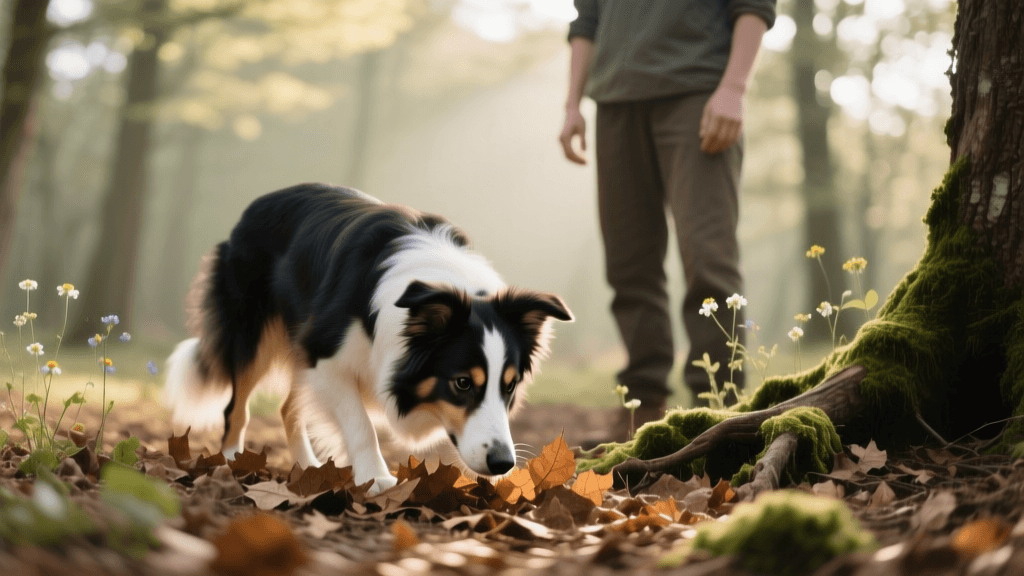
- Step 2: Lay down a 'scent trail' by dragging a natural scent pouch (e.g., dried valerian root or sweet birch bark) through the grass in a winding pattern.
- Step 3: Allow your dog to track the trail. If a trigger appears in the distance, do not command your dog to 'leave it' or 'sit.' Instead, drop a handful of high-value treats directly onto the scent trail. This anchors the dog's nose to the ground, keeping their nervous system regulated despite the visual trigger.
Essential Holistic Gear for Scent Work in 2026
Using the right gear is vital for ensuring your reactive dog feels secure without feeling restrained. In 2026, the market has shifted heavily toward eco-friendly, tactile gear that provides gentle feedback without causing physical discomfort or neck strain.
| Gear Category | Traditional Option | 2026 Holistic Alternative | Estimated Cost (2026) | Why It Works for Reactivity |
|---|---|---|---|---|
| Long Line | Nylon rope or retractable leash | 30ft Biothane Long Line (Earth Tones) | $55 - $85 | Biothane is soft on the hands, doesn't tangle in brush, and allows for smooth, friction-free decompression. |
| Harness | Front-clip restrictive harness | Y-Shaped Padded Fleece Harness | $70 - $110 | Allows full shoulder extension and unrestricted breathing, vital for deep sniffing and nervous system regulation. |
| Scent Vessel | Plastic scent tins with magnets | Organic Cotton & Hemp Foraging Pouches | $15 - $25 | Natural fibers hold organic scents better and are safe if the dog decides to mouth or chew the item. |
| High-Value Reward | Processed training biscuits | Freeze-Dried Raw Venison or Green Tripe | $20 - $35 | Species-appropriate, high-odor proteins that naturally stimulate the dog's prey drive and focus. |
Integrating Holistic Supplements with Training
Training a reactive dog holistically means looking at the whole animal, including their internal biochemistry. In 2026, veterinary behaviorists frequently recommend pairing scent-work training with targeted nutritional support to lower baseline anxiety. The ASPCA and other major animal welfare organizations advocate for consulting with a holistic veterinarian before introducing new supplements, but several natural options have become staples in the reactive dog community.
- L-Theanine & Organic Chamomile: Administered 45 minutes before a decompression walk, this combination promotes alpha-brain wave production, helping the dog remain in a state of relaxed alertness.
- Full-Spectrum Hemp Extract (CBD): With stricter 2026 veterinary regulations ensuring purity and accurate dosing, high-quality CBD oil is widely used to reduce systemic inflammation and blunt the cortisol spike associated with reactive episodes.
- Probiotic-Brain Axis Support: Emerging holistic science shows that a healthy gut microbiome directly influences a dog's stress response. Incorporating a canine-specific, multi-strain probiotic into their daily meals can improve their resilience to environmental stressors over time.
Creating a Weekly Decompression Schedule
Consistency is the bedrock of behavioral conditioning. A reactive dog cannot thrive on a schedule that only includes high-stress obedience classes or rushed, on-leash potty breaks. To see lasting changes in your dog's reactivity, implement a weekly holistic schedule:
- Monday & Wednesday: 20-minute indoor natural scent imprinting sessions followed by a 10-minute canine massage or TTouch session.
- Tuesday & Thursday: 30-minute 'sniffaris' in a quiet, natural environment using a 30-foot biothane long line. No obedience commands; only foraging and exploring.
- Saturday: Structured scent-trail tracking in a slightly more stimulating environment, practicing threshold management and distance from triggers.
- Sunday: Complete rest day. Provide a frozen, holistic enrichment toy (e.g., bone broth and blueberries frozen in a natural rubber mold) to encourage indoor licking and chewing, which releases endorphins.
Conclusion: Honoring the Dog's Nature
As we navigate the evolving landscape of dog training in 2026, the most profound lesson is that we cannot force a reactive dog to be calm; we can only provide them with the natural outlets they need to calm themselves. By replacing rigid obedience with holistic scent work, natural foraging, and nervous-system-aware gear, we empower our dogs to process their environment confidently. This natural approach not only diminishes reactive behaviors but also deepens the bond between human and hound, creating a harmonious life built on mutual trust and biological fulfillment.
priya-sutaria
All our authors care for dogs every day — read more of their work on the authors page.